South Koreans are joyful after Han Kang wins Nobel Prize for literature

Advertisement

Advertise with us

SEOUL, South Korea (AP) — South Koreans reacted with joy and astonishment on Thursday after learning that homegrown writer Han Kang won the Nobel Prize in literature, an unexpected moment that stoked national pride about the country’s growing cultural influence.

Read this article for free:


or

Already have an account? Log in here »

To continue reading, please subscribe:

Subscribe and receive a limited-edition Free Press branded hat or tote.

Digital Subscription

One year of digital access for only $205*

  • Enjoy unlimited reading on winnipegfreepress.com
  • Read the E-Edition, our digital replica newspaper
  • Access News Break, our award-winning app
  • Play interactive puzzles

*First annual payment billed as $205.00 + GST for one year. This annual subscription will automatically renew at $233.00 + GST every 52 weeks (10% off the regular annual price of $259.35). Offer available to new and qualified returning subscribers only. Cancel any time.

To continue reading, please subscribe:

Add Free Press access to your Brandon Sun subscription for only an additional

$1 for the first 4 weeks*

  • Enjoy unlimited reading on winnipegfreepress.com
  • Read the E-Edition, our digital replica newspaper
  • Access News Break, our award-winning app
  • Play interactive puzzles
Start now

*Your next Brandon Sun subscription payment will increase by $1.00 and you will be charged $17.95 plus GST for four weeks. After four weeks, your payment will increase to $24.95 plus GST every four weeks.

Hey there, time traveller!
This article was published 10/10/2024 (706 days ago), so information in it may no longer be current.

SEOUL, South Korea (AP) — South Koreans reacted with joy and astonishment on Thursday after learning that homegrown writer Han Kang won the Nobel Prize in literature, an unexpected moment that stoked national pride about the country’s growing cultural influence.

Han, known for her experimental and often disturbing stories that explore human traumas and violence and incorporate the brutal moments of South Korea’s modern history, is the country’s first writer to win the preeminent award in world literature.

Han’s triumph adds to the growing global influence of South Korean culture, which in recent years included the successes of director Bong Joon-ho’s Oscar-winning “Parasite,” the brutal Netflix survival drama “Squid Game” and K-pop groups like BTS and BLACKPINK.
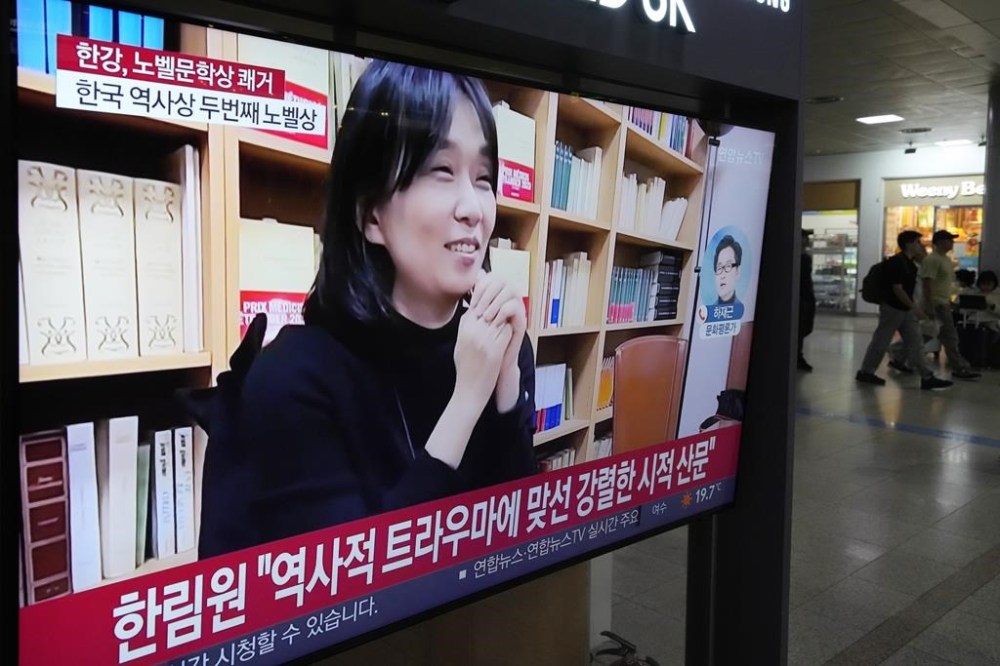
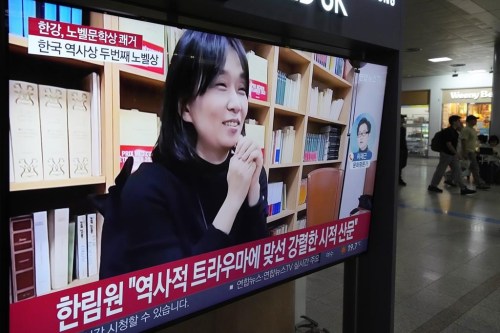
A TV screen shows an image of the winner of the 2024 Nobel Prize in Literature, South Korean writer Han Kang, during a news program at Seoul Railway Station in Seoul, South Korea, Thursday, Oct. 10, 2024. (AP Photo/Ahn Young-joon)

“I’m so surprised and honored,” Han, 53, said in a telephone interview posted on the X account of the Nobel Prize.

As the news spread in South Korea, some online bookstores temporarily froze following a sudden jump in traffic. South Korean social media were flooded with jubilant messages expressing admiration and pride. Some internet users found it meaningful that Han was the first Asian woman to win the award and portrayed it as a statement toward the country’s traditionally male-dominated literature scene.

“It’s always the women who do the big things,” one Facebook user wrote.

In South Korea’s parliament, multiple government hearings were paused as lawmakers cheered and applauded Han’s award.

While visiting Laos for a meeting of Asian leaders, South Korean President Yoon Suk Yeol issued a statement, congratulating Han on her award, calling it a “great achievement in the history of Korean literature” and a “special moment for the nation.”

“You converted the painful wounds of our modern history into great literature,” Yoon wrote. “I send my respects to you for elevating the value of Korean literature.”

A TV screen shows an image of the winner of the 2024 Nobel Prize in Literature, South Korean writer Han Kang, during a news program at Seoul Railway Station in Seoul, South Korea, Thursday, Oct. 10, 2024. (AP Photo/Ahn Young-joon)

Han, the daughter of renowned South Korean novelist Han Seung-won, made her publishing debut as a poet in 1993. She won the International Booker Prize in 2016 for the novel “The Vegetarian,” a story in which a woman’s decision to stop eating meat brings devastating consequences and raises concern among family members that she’s mentally ill. The book sold more than 100,000 in the U.S.

Another one of Han’s well-known novels is “Human Acts,” which is set in 1980 in her birth city of Gwangju and follows a boy searching for the body of a friend who was killed in a violent suppression of a student protest. South Korea’s former military government that year sent troops to Gwangju for a bloody crackdown on pro-democracy protesters that left around 200 people dead and hundreds of others injured.

“The decision came all too sudden. I could also describe it as a feeling of bewilderment,” Han Seung-won, Han’s father, told reporters Friday about the moment he heard the news that his daughter had won the Nobel Prize.

He praised his daughter’s writing, which he described as poetic and exhibiting unique “fantastical realism,” and also commended British translator Deborah Smith, who translated “The Vegetarian” and “The White Book.”

“The translator has somehow managed to convey Han Kang’s sentences, bringing to life the delicate and beautiful prose and melancholic sensibility,” he said.
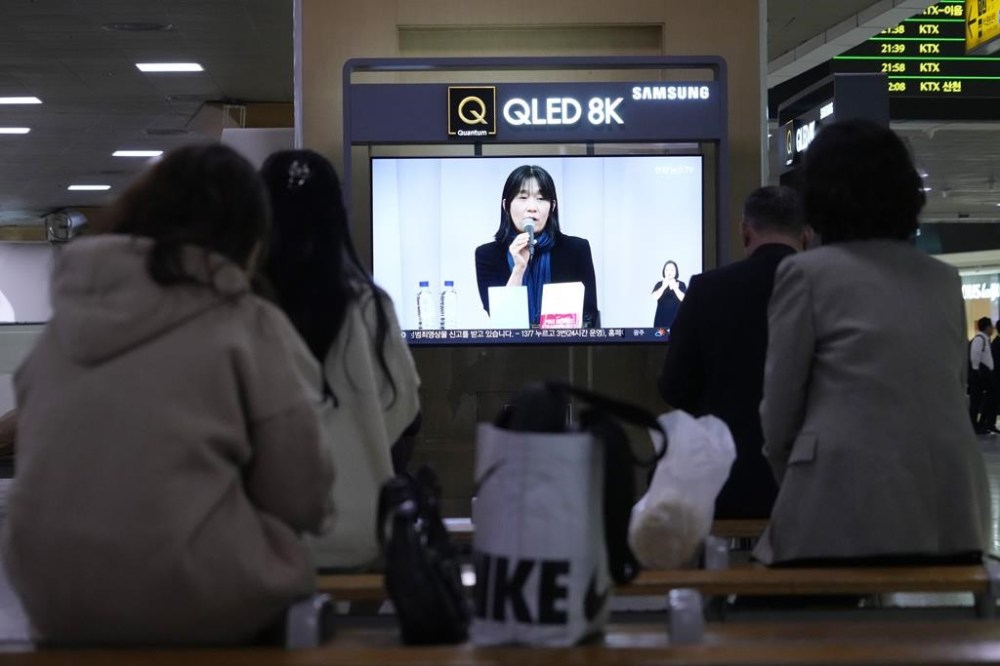
A TV screen shows a file image of the winner of the 2024 Nobel Prize in Literature, South Korean writer Han Kang, during a news program at Seoul Railway Station in Seoul, South Korea, Thursday, Oct. 10, 2024. (AP Photo/Ahn Young-joon)

Han Kang’s award generated excitement among South Korean writers and critics, who in comments to local media expressed hope that it would bring more global attention to South Korean literature. But it remains to be seen whether Han’s stories would become widely popular among casual readers around the world, said Brother Anthony of Taize, a British-born scholar and prolific translator of Korean literature.

“It’s not always an easy read,” he said, describing how her novels are often complicated stories about communication failures, misunderstandings, “unhappy people and troubled relationships and pain.”

If Han’s works have anything in common with South Korea’s other cultural products that garnered international acclaim in recent years, it is that they often reflect the dark side of the country’s society. Both Parasite and Squid Game provided biting commentaries on the country’s deepening inequality and other problems that have many young and poor people describing their lives as a hellish nightmare.

South Korea has one of the largest gaps between rich and poor among developed economies and is grappling with decaying job markets, soaring household debt and a record-low birth rate as struggling couples put off having babies. The country also struggles to deal with the pains of its brutal transition from dictatorship to democracy.

“Korean society is rather dark and it’s probably the aspect that resonates,” Brother Anthony said.
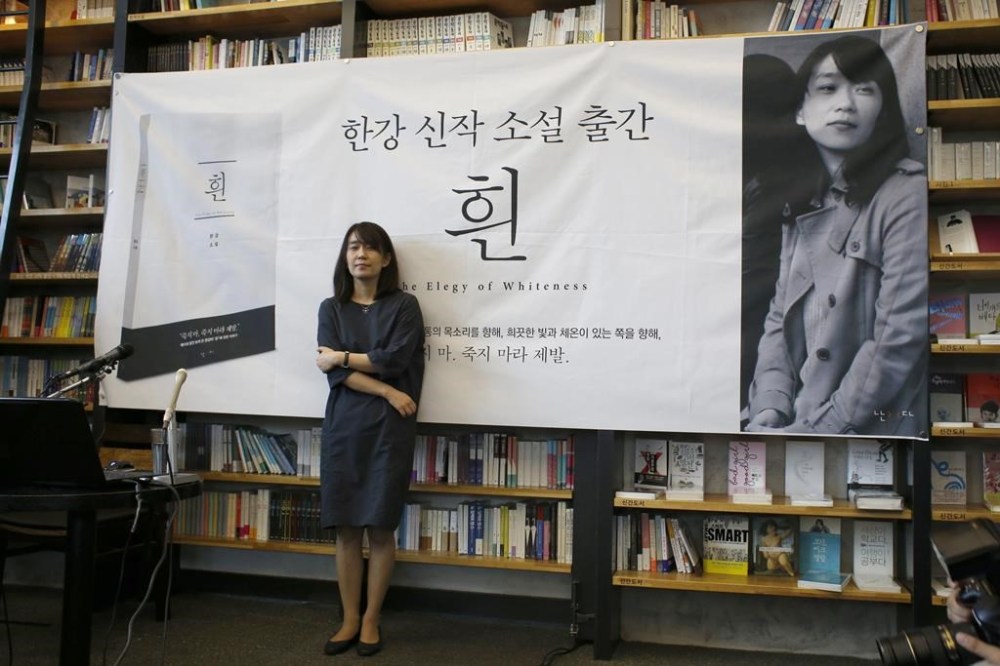
South Korean author Han Kang poses for the media during a news conference in Seoul, South Korea, on May 24, 2016. (AP Photo/Lee Jin-man)

Jung Yoon-young, a 49-year-old resident in Seoul, said Han’s triumph was a refreshing moment for the country during depressing times.

“It’s a miraculous event and really a breath of fresh air,” she said. “I’m grateful and proud.”

Report Error Submit a Tip

More Stories

Winnipeg, police and downtown crime

Editorial 4 minute read Preview

Winnipeg, police and downtown crime

Editorial 4 minute read 2:01 AM CDT

A safer downtown is not much use if people are still afraid to walk there.

That is the uncomfortable message from Winnipeg’s latest police citizen survey, and one city council should take seriously.

Downtown crime has fallen this year, according to the most recent police statistics. Violent crime is down even more. But for most Winnipeggers, the downtown still feels like a place to avoid, particularly after dark.

Only 44 per cent of survey respondents said they feel very or reasonably safe walking alone downtown during the day. At night, that number plunges to just eight per cent. Among women, it is an appalling three per cent, compared with 14 per cent of men.

Read
2:01 AM CDT

Puzzles Palace

1 minute read Monday, Jul. 27, 2026

To solve our puzzles, please subscribe with this special offer: |

Seven years sought for serial harasser

Dean Pritchard 5 minute read Preview

Seven years sought for serial harasser

Dean Pritchard 5 minute read Yesterday at 2:01 AM CDT

Alexander Beaton finished serving a two-year jail sentence for criminally harassing six women and didn’t last two days in the community before he was back at it, sending unwanted obscene messages and videos to a dozen women.

Now prosecutors are seeking a seven-year prison sentence for the 30-year-old Winnipeg man, whose latest string of victims includes a police officer who investigated his earlier crimes.

“He essentially continued (offending) unabated,” Crown attorney Brett Rach told provincial court Judge Malcolm McDonald at a sentencing hearing Friday. “It caused more than a nuisance to these victims — it caused them to fear for their safety.”

Beaton pleaded guilty to 14 charges of criminal harassment, sending indecent communications and breaching court orders for a campaign of harassment waged between 2015 and 2025.

Read
Yesterday at 2:01 AM CDT

Bisons look to bounce back against Dinos at Murray Field

Joshua Frey-Sam 6 minute read Preview

Bisons look to bounce back against Dinos at Murray Field

Joshua Frey-Sam 6 minute read 3:57 PM CDT

Nathan Udoh has been around long enough to know how quickly things can change in the Canada West conference.

The fifth-year Manitoba Bisons receiver is one of the oldest players in a youthful locker room that is experiencing the ebbs and flows of a U Sports season for the first time, and to say his experience if being leaned on would be an understatement.

“I try to lean on that and help guys who haven’t been in these situations just to keep their heads and how hard you have to play,” Udoh said Wednesday. “I think that’s the biggest thing that there is no snap that you take off, and playing with that intensity is really where it starts.”

The Bisons have already endured a roller-coaster two games into the season. After shocking the country by steamrolling the reigning conference champion Saskatchewan Huskies 40-22 in their season-opener, the Bisons fell back to earth in a 22-8 road loss to the Regina Rams last weekend.

Read
3:57 PM CDT

South Koreans are joyful after Han Kang wins Nobel Prize for literature

Kim Tong-hyung, The Associated Press 5 minute read Preview

South Koreans are joyful after Han Kang wins Nobel Prize for literature

Kim Tong-hyung, The Associated Press 5 minute read Friday, Oct. 11, 2024

SEOUL, South Korea (AP) — South Koreans reacted with joy and astonishment on Thursday after learning that homegrown writer Han Kang won the Nobel Prize in literature, an unexpected moment that stoked national pride about the country’s growing cultural influence. Han, known for her experimental and often disturbing stories that explore human traumas and violence and incorporate the brutal moments of South Korea’s modern history, is the country’s first writer to win the preeminent award in world literature. Han’s triumph adds to the growing global influence of South Korean culture, which in recent years included the successes of director Bong […]

Read
Friday, Oct. 11, 2024

Manitoba’s police watchdog is investigating after a man was found dead eight days after officers were unable to locate him following a 911 call from Canupawakpa Dakota First Nation in 2024.

The Independent Investigation Unit said the call came in just after midnight on Nov. 22, 2024, with a disturbance audible in the background. GPS coordinates traced it to the First Nation, 305 kilometres west of Winnipeg, prompting Manitoba First Nations Police Service officers to search the area.

Officers could not find the caller, whom they believed to be a local man. Eight days later, on Nov. 30, MFNPS conducted another search and found a man dead.

The death was initially referred to RCMP Major Crime Services as suspicious. The RCMP later returned the case to MFNPS for possible referral to the IIU because of concerns about the eight-day delay in locating the man. MFNPS notified the IIU on Sept. 15, 2026 — nearly two years after the incident.