A long, hard walk
Moving memoir chronicles difficult path from civil war in Rwanda to life to Canada
Advertisement
Read this article for free:
or
Already have an account? Log in here »
To continue reading, please subscribe:

Digital Subscription
One year of digital access for only $205*
- Enjoy unlimited reading on winnipegfreepress.com
- Read the E-Edition, our digital replica newspaper
- Access News Break, our award-winning app
- Play interactive puzzles
*First annual payment billed as $205.00 + GST for one year. This annual subscription will automatically renew at $233.00 + GST every 52 weeks (10% off the regular annual price of $259.35). Offer available to new and qualified returning subscribers only. Cancel any time.
To continue reading, please subscribe:
Add Free Press access to your Brandon Sun subscription for only an additional
$1 for the first 4 weeks*
- Enjoy unlimited reading on winnipegfreepress.com
- Read the E-Edition, our digital replica newspaper
- Access News Break, our award-winning app
- Play interactive puzzles
*Your next Brandon Sun subscription payment will increase by $1.00 and you will be charged $17.95 plus GST for four weeks. After four weeks, your payment will increase to $24.95 plus GST every four weeks.
Read unlimited articles for free today:
or
Already have an account? Log in here »
Hey there, time traveller!
This article was published 12/10/2024 (721 days ago), so information in it may no longer be current.
In the last century, Western societies have become increasingly aware of differences between genders, races and classes, and more concerned about conflict and violence which attend far too many such distinctions.
However, many places in the world remain far behind the developed world, experiencing tragic polarization, discrimination and largely unchecked interpersonal violence. Rwandan refugee Alpha Nkuranga’s terrifyingly detailed memoir of her upbringing, flight from genocide and resulting “trials and resilience” shows how far imperfect developed cultures have actually progressed.
In the prologue and early chapters of her first book, Nkuranga’s matter-of-fact account of “what it meant to be a girl in a patriarchal culture” includes the agonizing choice her father’s mother had to make. She had married a Belgian man and emigrated to Belgium, where their first son was born. When their second son was born, her husband demanded she choose between her firstborn and her newer, darker child. She moved back to Rwanda with the latter, Nkuranga’s father, who would continue this brutal cycle of violence toward “inferiors,” raping her mother (who would later marry him) and abusing their children.

One for the Wall photo
Alpha Nkuranga was eight when the Rwandan civil war began; she fled with her four-year-old brother.
Of her story she also notes, early on, that “some parts are too painful for me to share.”
The name her father gave her, “Irafasha,” is never explained, nor is her author name, Alpha. Nicknames as she grew up — in Rwanda with her parents, and Uganda with an aunt — included Short and Lucky, although she claims her mother tried to hush up her development, as she could sit up and walk before such things normally happened.
She recalls enduring second-class status in food, furniture and activities; only boys were allowed to climb trees, or engage in premarital sex. “I didn’t know anyone empowered or brave enough to change the ways women were treated,” she writes, “but I often wondered what was the point of being a woman.”
Nkuranga was about eight when the Rwandan civil war erupted. Separated from her blended Hutu-Tutsi family, she fled with her four-year-old brother Elijah.
Through the kindness of strangers and her own indomitable will, the pair made it to a Ugandan refugee camp, and eventually reunited with family in a Tanzanian refugee camp. The stories of hardships, hunger and hopelessness are incredibly difficult to read, or to comprehend.
Throughout, Nkuranga had to dodge casual abuse and violent assumptions that females should submit to males. She had to dress like a young boy, string along teachers and resist advances of police, strangers and even her eventual husband.
Determined to get an education, Nkuranga worked tirelessly, taking pains to achieve in spite of misogyny and violent teaching practices. She earned scholarships to secondary school and, eventually, university.
Transitioning to the modern world from her poverty-stricken childhood and even worse deprivation as a refugee, Nkuranga details first experiences with books and school supplies, computers, banking, cell phones and international travel with wry good humour,.
Eventually she and her husband Omar immigrated to Canada — to Moncton, and later to Kitchener. (Their children were born here.) Their astonished gratitude for the help of agencies and church groups, as well as other immigrants, provides the reader gratifying emotional relief after their extremely difficult journeys — their “walks.”
Nkuranga does not try to explain why some people are more resilient in the face of deprivation and abuse. Trying to give back, she now works with Women’s Crisis Services of Waterloo Region.
While Nkuranga chronicles startling race- and gender-based discrimination, she sometimes sounds fatalistic about ways to end the cycles of dysfunction. Of her brother Elijah’s adult alcoholism and abuse of one wife after another, “it hurt me to hear people tell me that he was just like his father,” she writes.
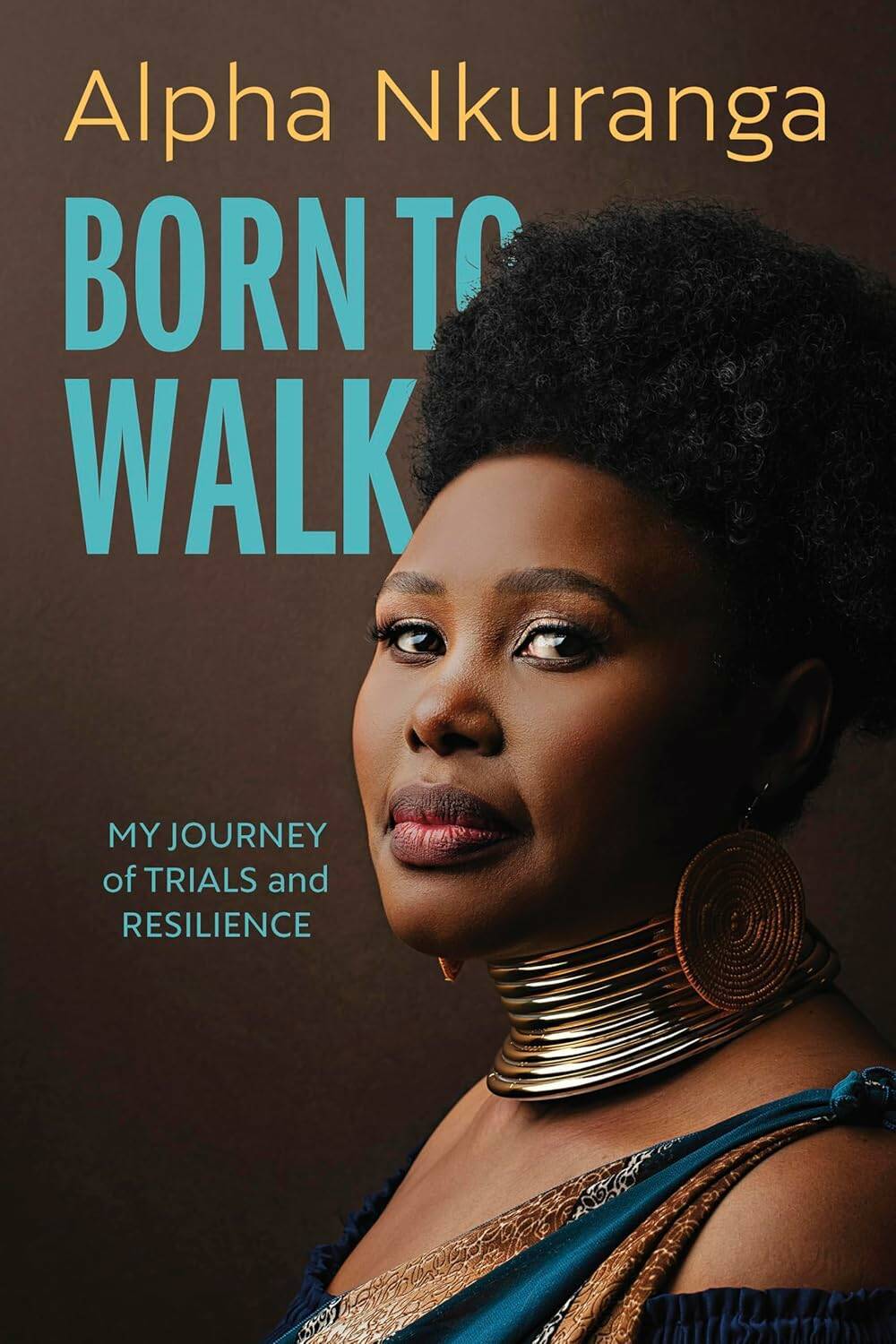
Born to Walk
“I’d been able to pick myself up,” she says, “but Elijah couldn’t do it. He needed help, and no one helped him. He’d learned to use violence as a way of protecting himself.”
Nkuranga frequently wonders how God, or people, allow such injustice and violence to devastate families, cultures and nations. The outrage she feels is muted; “I wanted to enjoy life on my own terms, but I was born a girl,” she writes.
A later trip back to Uganda to connect with family is complicated by her infant son Nathan’s illness. Their plight, and the emotional difficulties while using modern communication and transportation, contrast with the physical difficulties of her childhood flight from genocide.
Her decade and a half of horrific brutality, and eventual achievements, make for an astonishing story. She survived, and overcame years of conditions and circumstances North American readers could hardly imagine living through for months or even weeks.
In her epilogue, she says, “I affirm that I forgive everyone who thought I deserved mistreatment.”
Readers may be inspired to similar forgiveness in far less dire situations, and gratitude for societies and governments which have made real progress to control human evil.
Bill Rambo is a retired teacher from Landmark. He was raised in the Democratic Republic of Congo (later called Zaire) which shares many cultural similarities with Rwanda and Uganda.