A compelling confessional

Accepting, understanding the past pivotal to plight of immigrant pair

Advertisement

Advertise with us

Tasneem Jamal immigrated to Canada in 1975 from Uganda, and works as the writing coach of The X Page Storytelling Workshop and as an editor at the New Quarterly magazine. Set between the 1970s and 2010, and between the Greater Toronto Area and the B.C. interior, I Never Said That I Was Brave is her second novel.

Read this article for free:


or

Already have an account? Log in here »

To continue reading, please subscribe:

Subscribe and receive a limited-edition Free Press branded hat or tote.

Digital Subscription

One year of digital access for only $205*

  • Enjoy unlimited reading on winnipegfreepress.com
  • Read the E-Edition, our digital replica newspaper
  • Access News Break, our award-winning app
  • Play interactive puzzles

*First annual payment billed as $205.00 + GST for one year. This annual subscription will automatically renew at $233.00 + GST every 52 weeks (10% off the regular annual price of $259.35). Offer available to new and qualified returning subscribers only. Cancel any time.

To continue reading, please subscribe:

Add Free Press access to your Brandon Sun subscription for only an additional

$1 for the first 4 weeks*

  • Enjoy unlimited reading on winnipegfreepress.com
  • Read the E-Edition, our digital replica newspaper
  • Access News Break, our award-winning app
  • Play interactive puzzles
Start now

*Your next Brandon Sun subscription payment will increase by $1.00 and you will be charged $17.95 plus GST for four weeks. After four weeks, your payment will increase to $24.95 plus GST every four weeks.

Hey there, time traveller!
This article was published 23/11/2024 (656 days ago), so information in it may no longer be current.

Tasneem Jamal immigrated to Canada in 1975 from Uganda, and works as the writing coach of The X Page Storytelling Workshop and as an editor at the New Quarterly magazine. Set between the 1970s and 2010, and between the Greater Toronto Area and the B.C. interior, I Never Said That I Was Brave is her second novel.

The story is told in first-person by an unnamed protagonist seemingly speaking directly to the reader — an interesting choice as it makes the character universal, but also more remote and unknowable. The protagonist is telling the story as an adult woman looking back on her childhood and young adult years, and her complicated friendship with Miriam.

Like the protagonist, Miriam comes from a traditional Muslim family of South Asian descent who settled in Uganda and end up in Canada. In the very first sentence of the novel’s prologue, we learn Miriam is dead; by the third page, we know she died by suicide, taking her four-year-old daughter with her. Rather than building up to this moment as a surprise, the novel instead is a chronicling of the narrator’s attempt to understand Miriam’s actions by untangling her past.

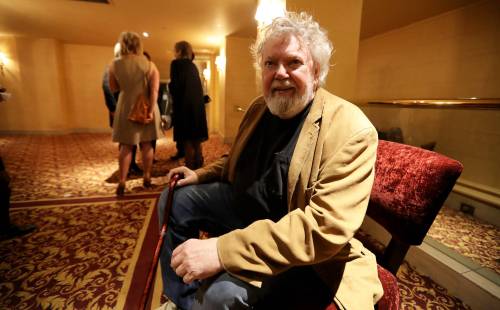
Stan Switalski photo
                                Tasneem Jamal’s novel explores the ways jealousy and resentment test the loyalties of her two main characters.

Stan Switalski photo

Tasneem Jamal’s novel explores the ways jealousy and resentment test the loyalties of her two main characters.

The novel is written in a confessional style that has the feel of oral culture and storytelling; the narrator could be speaking to children or grandchildren, nephews and nieces, or spilling her guts to a date over dinner or coffee.

The language is economical but powerful, delving into both the racist underbelly of Canadian society and the baggage transmitted by their mothers to the narrator and Miriam regarding their identity and purpose as women. In a series of anecdotes, Miriam and the narrator navigate childhood tragedies, playground racism, being the first in their families to attend university as well as the experience of dating and relationships as women whose mothers’ marriages were arranged.

The timeline is not always linear — the narrator veers from decade to decade, with one memory often triggering another in a conversational style. The reader is frequently addressed by the narrator — an example: “I’m getting ahead of myself. I had intended only to tell you about Miriam’s wedding invitation signalling a formal shift in how she addressed herself. Let me get back to describing the early days of our relationship.”

Though the novel explores the big themes of assimilation, identity and differing cultural expectations of women, it is at its heart the story of two specific women. Though they share the same background, they have wildly differing personalities, which create frequent conflict and result in periods of time when they’re not speaking. The narrator is insecure, an observer, a people pleaser, shy, and describes herself as average looking. Miriam, meanwhile, is beautiful, outgoing, popular, charismatic, mercurial, forthright and provocative — and can pass for white.

In two wrenching scenes from her childhood, the narrator is tormented with racial slurs by girls she had considered friends. She doesn’t say a word, keeping her head down, and walks away crying, even when one of the girls starts following her and kicking her. When she tells Miriam, Miriam asks “Why didn’t you kick her back?”

When the narrator and Miriam go out together as young women, it is Miriam who continually draws the attention of men, including those the narrator is interested in. Miriam openly questions her mother’s belief that a woman has no worth without a husband, with a heartbreaking personal cost. It is Miriam who eventually gives the narrator the courage to forge her own path by moving in with her white boyfriend.

Miriam becomes an astrophysicist and the narrator an English teacher, and occasional quotations from poetry or lengthy discussions about the nature of the universe appear. These feel somewhat shoehorned into the novel, detracting rather than enhancing the narrative.
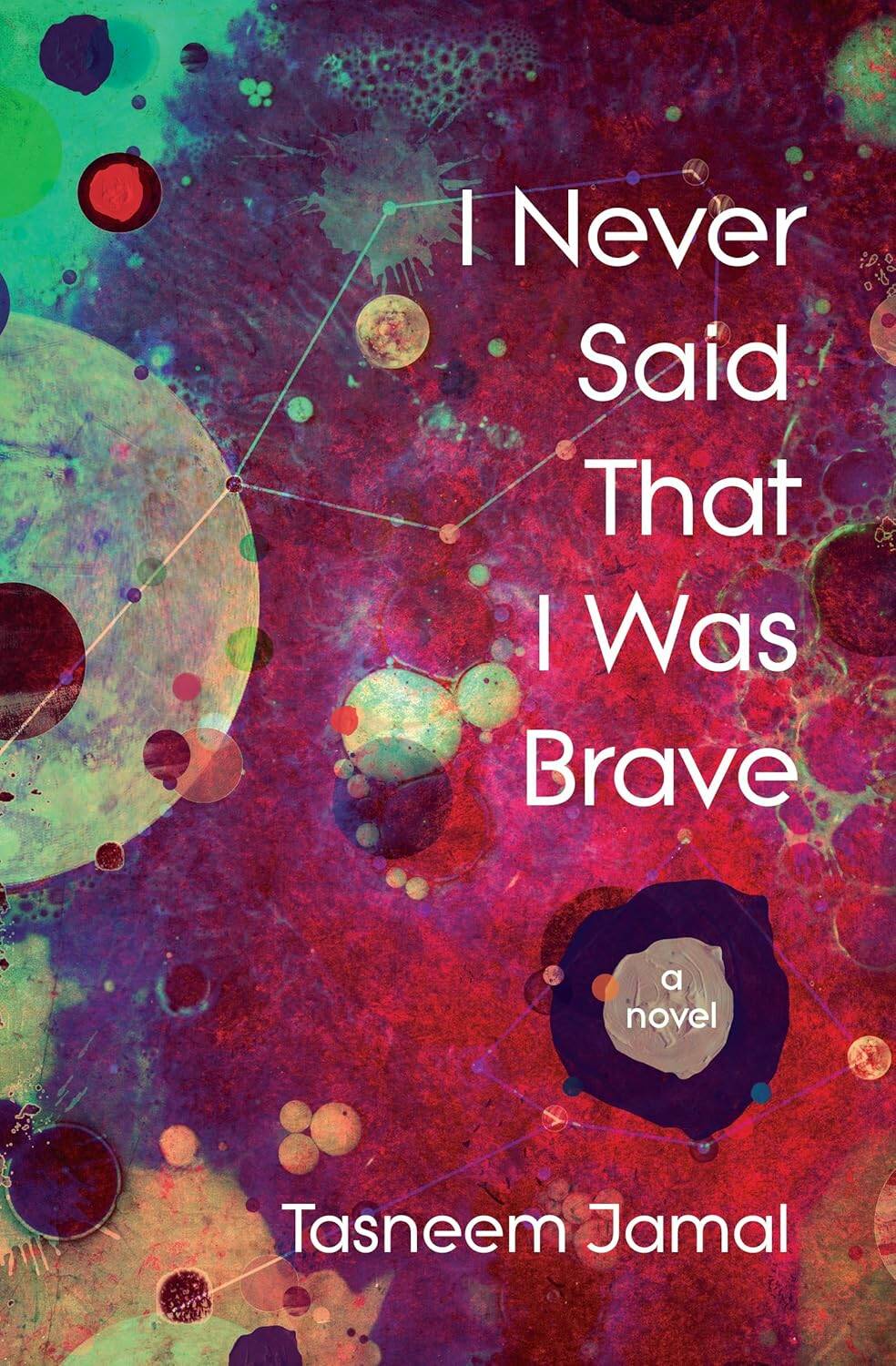
I Never Said That I Was Brave

I Never Said That I Was Brave

The real beauty of I Never Said That I Was Brave is in its exploration of the ways jealousy and resentment test the loyalties of the two main characters. It’s a sometimes-tender, sometimes-urgent portrayal of the intensity of feelings that abound in some female friendships — even more than in male-female romantic relationships.

Both narrator and reader find redemption in the realization that we never escape our pasts, but we can understand and accept them. And this, perhaps, is the meaning of the title: we need not be brave. We are only human.

Zilla Jones is a Winnipeg-based writer of short and long fiction.

Report Error Submit a Tip

More Stories

Today’s horoscope

Georgia Nicols 4 minute read Preview

Today’s horoscope

Georgia Nicols 4 minute read 2:00 AM CDT

MOON ALERT: There are no restrictions to shopping or important decisions today. The new moon is in Virgo.

ARIES (March 21-April 19)

Discussions with partners and close friends will intensify in the next few weeks and financial discussions will favour you. In fact, money might come your way. The new moon is perfect for making resolutions to improve your health.

TAURUS (April 20-May 20)

Read
2:00 AM CDT

‘Huge resource gaps’: judge shortage leads to circuit court cuts

Dean Pritchard 4 minute read Preview

‘Huge resource gaps’: judge shortage leads to circuit court cuts

Dean Pritchard 4 minute read Updated: Yesterday at 6:33 PM CDT

A shortage of judges is forcing Manitoba’s provincial court to slash sittings across the province.

The court announced in a notice to the profession Wednesday that it will be reducing the number of annual court sittings at nine rural circuit locations and St. Boniface provincial court in Winnipeg by 68 sittings, effective April 1, 2027.

The reductions are necessary to balance “access to justice needs with the complement of judicial resources currently insufficient to maintain the current court schedule,” said the notice, signed by provincial court Chief Judge Ryan Rolston.

Affected circuit courts include Altona, Arborg, Beausejour, Easterville, Cranberry Portage, Lundar, Grand Rapids, Moose Lake, and Pine Falls.

Read
Updated: Yesterday at 6:33 PM CDT

Flash, bang … oops: police raid leads to lawsuit

Erik Pindera 4 minute read Preview

Flash, bang … oops: police raid leads to lawsuit

Erik Pindera 4 minute read Yesterday at 6:00 AM CDT

A couple suing the city allege Winnipeg Police Service officers trying to execute a search warrant at their condominium complex rappelled down the side of the building, broke in their glass patio door and fired off a stun grenade before realizing they were in the wrong unit.

Saeid Ghavami and Shahla Shojaei, a married couple who are academics and scientific researchers at the University of Manitoba, filed the lawsuit in Court of King’s Bench last month over the Jan. 31, 2025 incident.

The claim names the City of Winnipeg and several officers involved in the operation, whose identities are, at this point, unknown to the couple, and are referred to as “John Does.”

Officers were attempting to execute the warrant on the third floor of the eight-storey Pembina Highway building, the court filing says. The couple lives on the fourth floor.

Read
Yesterday at 6:00 AM CDT

Supportive housing operator sued after man with dementia walks away

Erik Pindera 4 minute read Preview

Supportive housing operator sued after man with dementia walks away

Erik Pindera 4 minute read 6:00 AM CDT

The Public Guardian and Trustee of Manitoba is suing a health services company after a man with dementia under its care allegedly wandered away from an apartment it operates for vulnerable people and was later found face down in a puddle — unresponsive, hypothermic and severely injured.

The public trustee — a provincial government agency that, among other duties, makes financial and personal care decisions for vulnerable adults who cannot do so themselves — filed the lawsuit against Cambridge Health Inc. and a related numbered company in the Court of King’s Bench earlier this month.

The agency did so on behalf of a now-38-year-old man, who has been under its care since 2018, as a result of his frontotemporal dementia. The disease often starts in mid-life, rather than old age, as is the case with most other forms of dementia.

The lawsuit alleges the man, who resided at a Henderson Highway apartment complex where Cambridge Health operated a supportive residence for people with complex behavioural health issues, was in a common area of the home at about 4:30 p.m. on April 3 last year.

Read
6:00 AM CDT

Ferraro, Skinner getting lay of the land before training camp starts

Mike McIntyre 8 minute read Preview

Ferraro, Skinner getting lay of the land before training camp starts

Mike McIntyre 8 minute read Yesterday at 5:45 PM CDT

They’ve both been around the NHL block a bit, but make no mistake, Stuart Skinner and Mario Ferraro are experiencing some “new kid at school” type jitters this week.

The pair were prized July 1 free agent signings by the Winnipeg Jets and are now quickly trying to get the lay of the land — from teammates and systems and structure to restaurants, schools and the best routes to the rink — in what is a frantic time on both a professional and personal level.

“It’s a big change, right?” Ferraro said Wednesday following a pre-training camp skate at the Hockey For All Centre.

“Like moving cities, getting settled somewhere else, with my family, my wife, my daughter, our two dogs. But I think it’s gone really well and smooth. We found a great place here, and we’re really happy with where we’re living.”

Read
Yesterday at 5:45 PM CDT

Labour board ruling halts Dynacare strike

Carol Sanders and Erik Pindera 6 minute read Preview

Labour board ruling halts Dynacare strike

Carol Sanders and Erik Pindera 6 minute read Tuesday, Sep. 8, 2026

The Manitoba Labour Board has cut short a strike by 350 lab workers employed by Dynacare who administer blood and urine tests for patients in Winnipeg, Brandon and surrounding communities.

The board ruled late Tuesday afternoon that the workers, who hit the picket line at 6 a.m., must return to work Wednesday.

Jason Linklater, president of their union, the Manitoba Association of Health Care Professionals, slammed the board’s decision.

“The Manitoba Labour Board is doing exactly what the government asked them to do: they are taking away our members’ right to fight for fairness,” he said in a statement.

Read
Tuesday, Sep. 8, 2026