Conviction and doubt
Lack of trust in institutions, addictionto certainty key to Kingwell’s musings
Advertisement
Read this article for free:
or
Already have an account? Log in here »
To continue reading, please subscribe:

Digital Subscription
One year of digital access for only $205*
- Enjoy unlimited reading on winnipegfreepress.com
- Read the E-Edition, our digital replica newspaper
- Access News Break, our award-winning app
- Play interactive puzzles
*First annual payment billed as $205.00 + GST for one year. This annual subscription will automatically renew at $233.00 + GST every 52 weeks (10% off the regular annual price of $259.35). Offer available to new and qualified returning subscribers only. Cancel any time.
To continue reading, please subscribe:
Add Free Press access to your Brandon Sun subscription for only an additional
$1 for the first 4 weeks*
- Enjoy unlimited reading on winnipegfreepress.com
- Read the E-Edition, our digital replica newspaper
- Access News Break, our award-winning app
- Play interactive puzzles
*Your next Brandon Sun subscription payment will increase by $1.00 and you will be charged $17.95 plus GST for four weeks. After four weeks, your payment will increase to $24.95 plus GST every four weeks.
Read unlimited articles for free today:
or
Already have an account? Log in here »
Hey there, time traveller!
This article was published 28/12/2024 (576 days ago), so information in it may no longer be current.
Years ago, I saw a graffito declaring “Question Everything” spray painted on a wall. Underneath, someone had added, “Why?”— the second inscription querying not just the convictions of the first artist, but also posing a philosophical question of its own: what are the costs of doubting everything?
These twin themes — conviction and doubt — are the subject of Question Authority by prolific Canadian philosopher Mark Kingwell. It delves into the nature of our crisis of knowledge in the 21st century, in which formerly trusted institutions — education, religion, journalism and governments — are no longer considered dependable or credible. Instead, individuals (and identity groups) are left unmoored, vulnerable to self-reinforced certainty about their own beliefs.
Kingwell refers to this addiction to righteous conviction in one’s own belief as “doxaholism” (in Greek doxa means belief). He likens this rewarding addiction and its temptations to actual substance abuse — something to which he admits considerable lived experience, having undergone two liver transplants owing to his alcoholism.
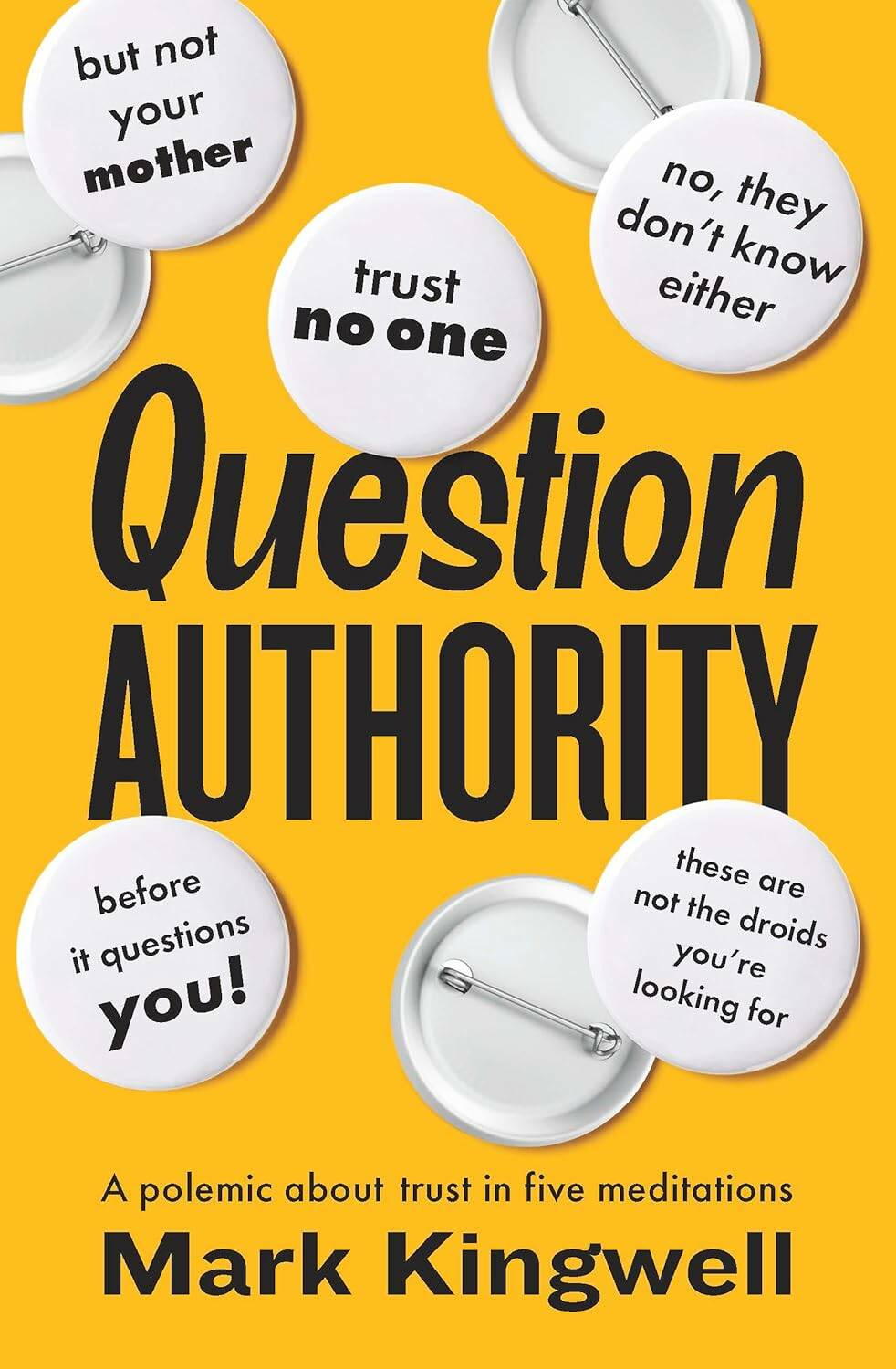
Question Authority
His own life story is a significant element of the book: interspersed between his philosophical musings regarding knowledge claims in contemporary society are reflections of his own youth growing up in Winnipeg, which will be of particular interest to readers of this newspaper.
The book is divided into five parts, or meditations. The first explores the dimensions of our doxaholism; the second the problem of loss of trust in institutions; the third, how that trust might be restored; the fourth examines our traditional sources of authority in terms of how we know what we think we know; while the fifth considers the particular problem of gaining knowledge in an age of political extremism, social media and artificial intelligence.
While touching on eternal themes and citing ancient philosophers, the book is also quite timely, referencing current events such as the Hamas-Israel war and the rhetorical excesses of the recently-concluded U.S. presidential election cycle, including fulminations over “childless cat ladies.”
Throughout, Kingwell weaves a delicate balance, levelling his critiques both at those who peddle reactionary right-wing fever dreams (e.g., QAnon and Pizzagate) and the identitarian obsessions of the “woke” left, who endlessly mine grievances while seeking to police thought and speech through online condemnation and cancellation.
For all his careful meditations, however, Kingwell falls into some surprising (for a philosopher) rhetorical lapses. He argues that hate speech, pseudoscience, falsehoods and nonsense do not constitute free speech. It’s an assertion which is neither morally nor legally true — at least not in the United States, where almost all speech (including hateful rhetoric) is given free reign by virtue of the First Amendment to the Constitution. It also flies in the face of John Stuart Mill’s admonitions in his 1859 essay On Liberty, which argued that falsehoods should not be suppressed in the interests of strengthening our ability to recognize truth.
Kingwell also makes casually dismissive references throughout to “conspiracy theories,” accusing all such skepticism as being equally baseless and toxic, when history teaches that conspiracies orchestrated by powerful interests happen all the time, i.e., Watergate, Iran-Contra, Enron, etc.. More discerning rhetoric is warranted.
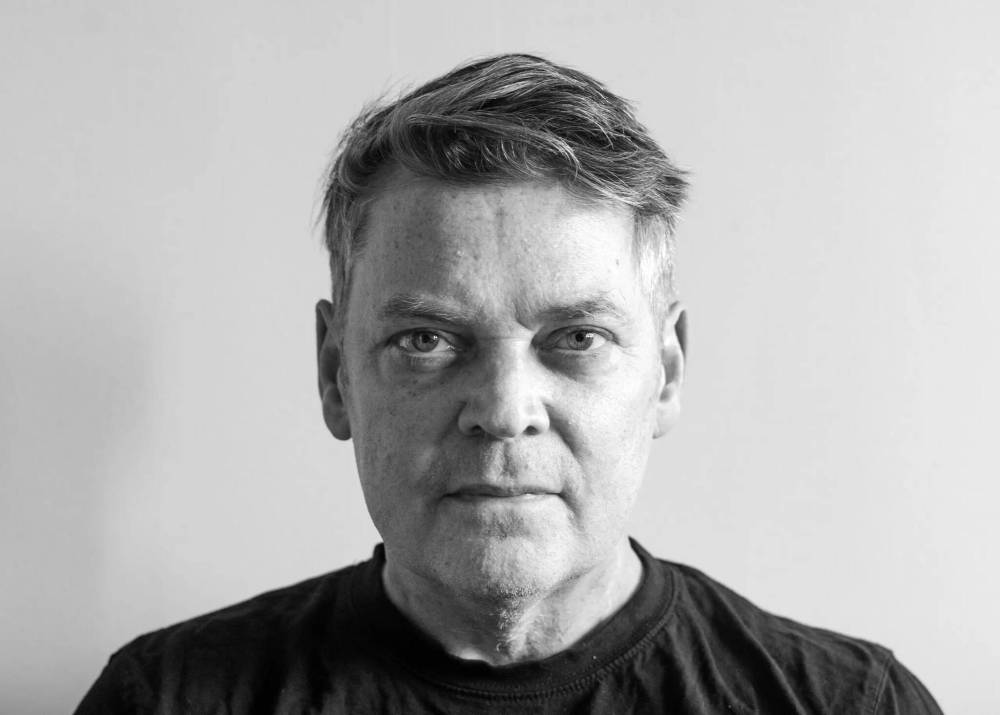
Claire Foran photo
Mark Kingwell touches on timeless themes while also referencing current events such as the ongoing Hamas-Israel war.
His arguments are further weakened somewhat by an occasional lack of consistency and conviction. He will, in one chapter, call out the authoritarian nature of identitarian left, then in another describe concern over cancel culture as a “moral panic” and “right wing bugaboo,” or else couch objections to leftist ideologies in the terms of their “wildest” or “harshest” critics, leaving the reader to wonder if he’s commenting on wokeness, or rather its critics.
In the closing pages, however, Kingwell articulates a thoughtful and pragmatic program for resolving our addiction to certainty, including making the study of philosophy mandatory for high school students. Question Authority would make an excellent introductory text.
Michael Dudley is a librarian at the University of Winnipeg.