A harrowing history
Holocaust memoir a moving account of suffering and survival, cruelty and courage
Advertisement
Read this article for free:
or
Already have an account? Log in here »
To continue reading, please subscribe:

Digital Subscription
One year of digital access for only $205*
- Enjoy unlimited reading on winnipegfreepress.com
- Read the E-Edition, our digital replica newspaper
- Access News Break, our award-winning app
- Play interactive puzzles
*First annual payment billed as $205.00 + GST for one year. This annual subscription will automatically renew at $233.00 + GST every 52 weeks (10% off the regular annual price of $259.35). Offer available to new and qualified returning subscribers only. Cancel any time.
To continue reading, please subscribe:
Add Free Press access to your Brandon Sun subscription for only an additional
$1 for the first 4 weeks*
- Enjoy unlimited reading on winnipegfreepress.com
- Read the E-Edition, our digital replica newspaper
- Access News Break, our award-winning app
- Play interactive puzzles
*Your next Brandon Sun subscription payment will increase by $1.00 and you will be charged $17.95 plus GST for four weeks. After four weeks, your payment will increase to $24.95 plus GST every four weeks.
Read unlimited articles for free today:
or
Already have an account? Log in here »
Hey there, time traveller!
This article was published 08/03/2025 (578 days ago), so information in it may no longer be current.
Do Not Cry When I Die is a fascinating and harrowing story about love, despair, cruelty, courage and survival.
It is the life story that Holocaust survivor Renee Salt has relayed in person to thousands of rapt school children, dignitaries and academics over the course of many decades, and it is a story that finally, thanks to the efforts of British journalist Kate Thompson, has made its way into book form.
Do Not Cry When I Die is a Holocaust memoir that will move and astound even the most seasoned reader of Holocaust memoirs.
Martin Salt photo
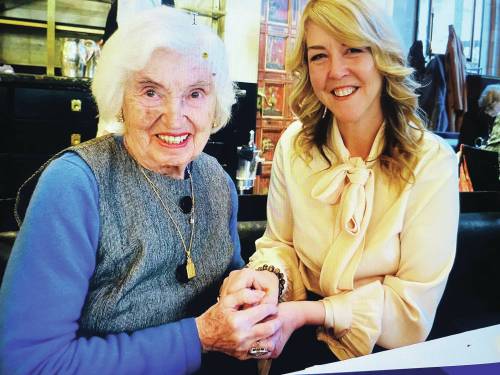
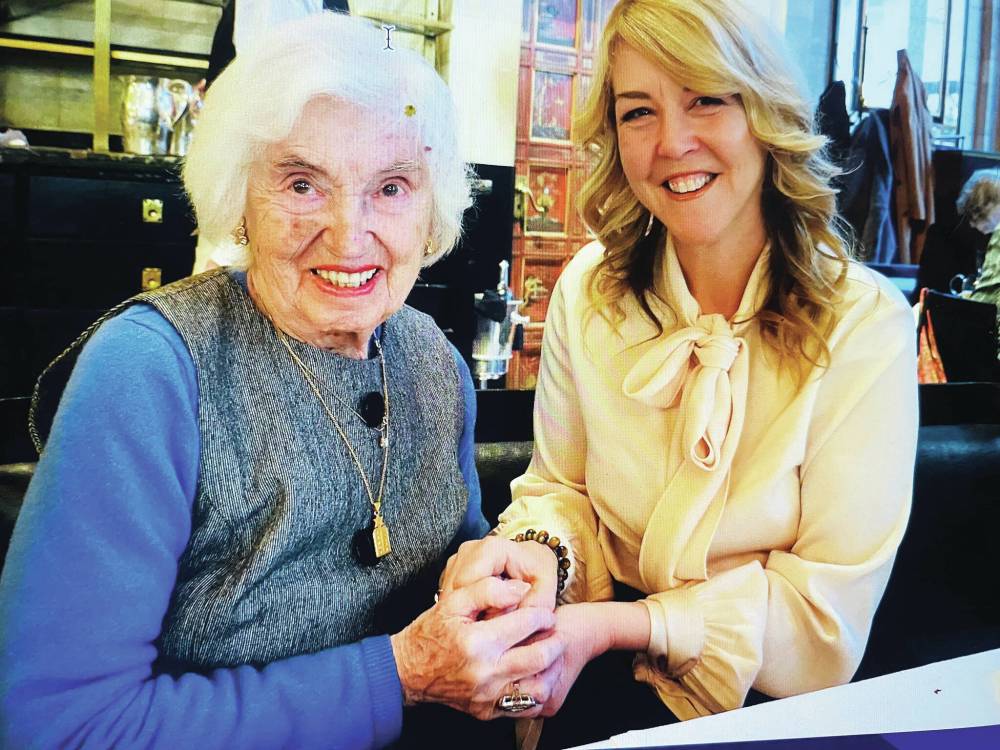
Renee Salt (left) worked with British journalist Kate Thompson (right) to craft her memoir.
At 95 years of age, Salt is one of the world’s oldest living Holocaust survivors. Born in the Polish city of Zdunska Wola, she was 10 years old when the Nazis invaded the country in September 1939 and her happy, carefree family life was destroyed.
The Jews of Zdunska Wola were herded into a ghetto, Salt’s younger sister Stenia was deported to certain death, and thousands of members of the Jewish community were shot in cold blood in the cemetery on the outskirts of town.
The remaining Jews of the city were transported to the Lodz ghetto, and from there, suffering from starvation and disease, to the infamous death camp Auschwitz-Birkenau, where Salt’s father, Szaja, disappeared forever.
In Auschwitz-Birkenau and later in the forced labour camp Bergen-Belsen in Germany, Salt and her mother, Sala, witnessed and experienced unfathomable depravity and violence. They clung to one another for six years, only letting go, 12 days after liberation, when Sala died.
“I only survived because of my mother’s love,” became Salt’s mantra for the rest of her life.
Salt’s vivid and graphic detailed memories comprise half of this book, while Thompson provides historical context for those memories in the other half of the book. That shift back and forth from first to third person takes some getting used to, and unfortunately also results in some repetition, but it is, as Thompson explains, a necessary literary device.
“You might be wondering why the book is written in both the third and first person,” Thompson writes. “Renee was ten when war broke out, fifteen when it finished, and existed largely in a bubble of terror, sickness, exhaustion, and starvation.”
Events happened to her, Thompson continues, but she had no idea of the larger picture. What was Auschwitz? What was happening to other Polish Jews? What did the Allies know? How was the war progressing?
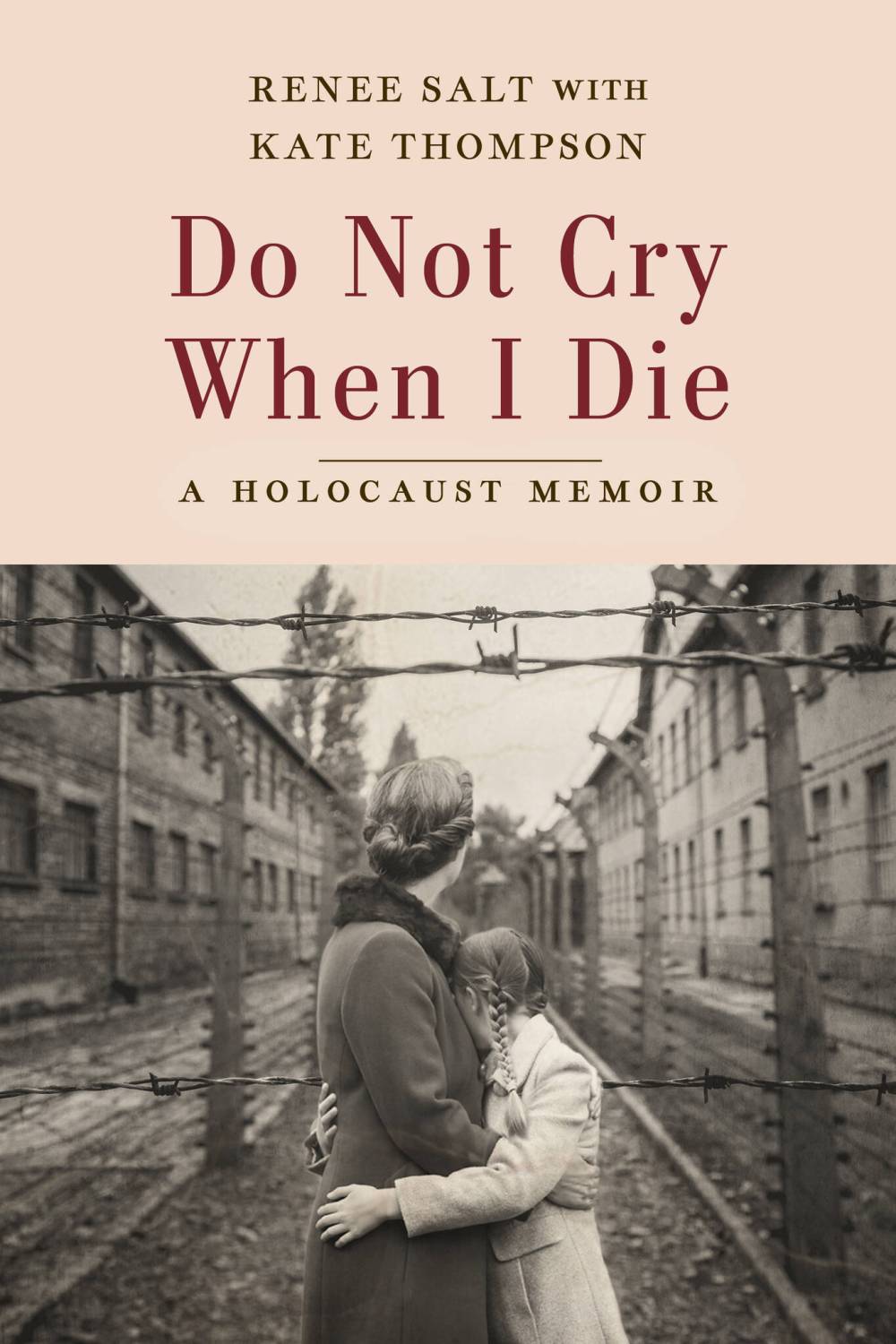
Do Not Cry When I Die
Thompson provides that background in clear and concise prose, by extrapolating on, but never altering, what Salt remembers.
For example, when Salt recalls her arrival at Auschwitz-Birkenau after several days journey in a cramped and suffocating cattle car, she describes the chaos, screaming and bellowing and “the heavily armed Gestapo and SS men with lunging, barking German Shepherd dogs” waiting for them on the platform.
Then, as she so eloquently does throughout the book, Thompson explains that the family “had arrived in the clamorous heat of August 1944. The new unload ramp (Salt) and her mother were standing on had been in use for the past two and a half months… enabling the Nazis to bring transports directly into Birkenau, making the process of mass murder more efficient.”
Salt could not have known that by war’s end more than one million people, most of them Jews, would perish in the gas chambers and ovens of Auschwitz, nor could she know of the horrors that awaited her in Bergen-Belsen. By the time the British army liberated that camp in April 15, 1945, Salt was near death. She collapsed before she could greet her liberators.
Gradually, Salt regained her strength, discarded the skirt and jacket that had been her only clothing for the last six years, and showered and brushed her teeth for the first time in as many years.
She located an aunt, made her way back to Poland, married a Jewish soldier who had helped liberate Bergen-Belsen and started a new life and family with him in England.
Salt never stopped grieving her parents and sister, and for years did not talk about what she had experienced and witnessed during the war years.
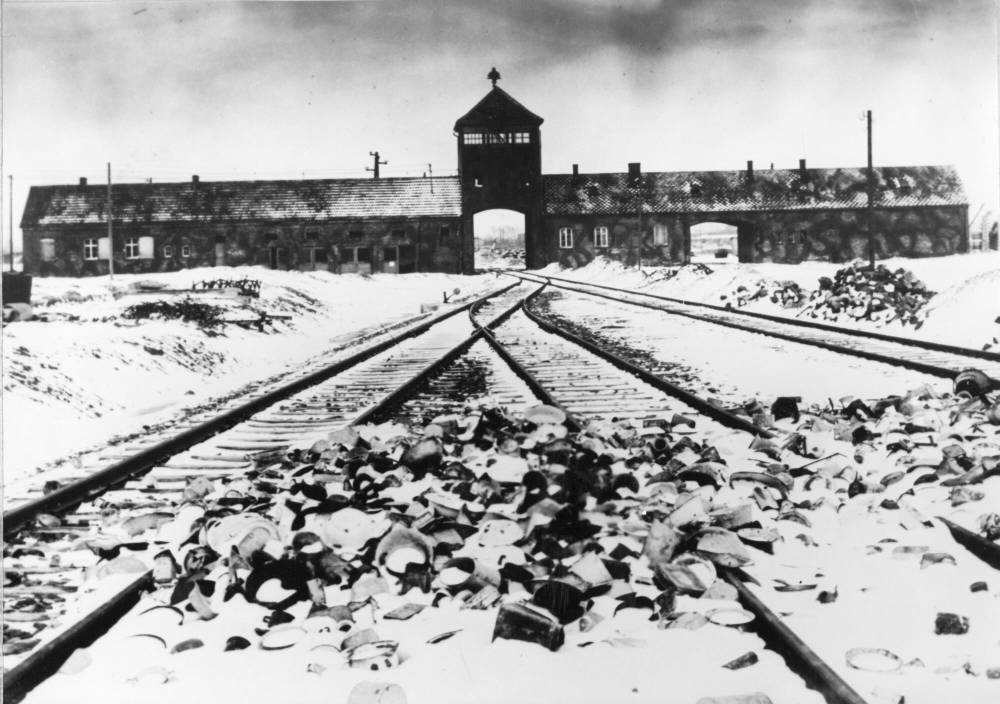
Associated Press files
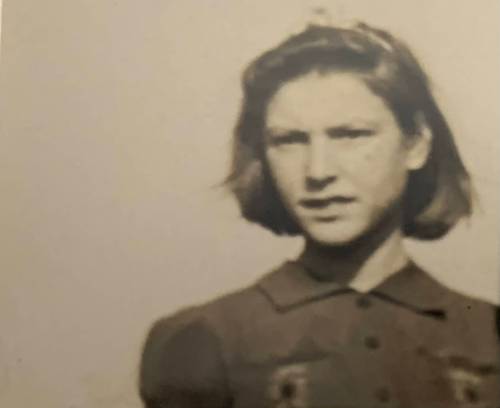
Ninety-five year-old Holocaust survivor Renee Salt first spent time in Auschwitz-Birkenau in Poland before being transferred to the German forced-labour camp at Bergen-Belsen.
Then, when she started talking, she couldn’t stop.
In 2022 Thompson went to a Holocaust event where Salt was the guest speaker. She listened to the older woman’s life story, approached her afterwards and offered to help her write her memoir.
That memoir will now be added to the annals of Holocaust history and serve, as all the other memoirs in that collection do, as a testament to the human capacity for evil — and the human capacity to survive.
Sharon Chisvin is a Winnipeg writer.
History
Updated on Saturday, March 8, 2025 11:37 AM CST: Corrects headline
Updated on Friday, March 14, 2025 6:06 PM CDT: Clarifies name in quote.