Trouble brewing

Conflict between traditional beliefs and Christianity echo through postcolonial Nigerian novel 'This Kind of Trouble'

Advertisement

Advertise with us

This Kind of Trouble is the debut novel by Tochi Eze, a writer and lawyer from Nigeria who recently obtained a Master of Fine Arts degree in creative writing from Florida Atlantic University, and is studying for her Ph.D. in English at the University of Virginia.

Read this article for free:


or

Already have an account? Log in here »

To continue reading, please subscribe:

Subscribe and receive a limited-edition Free Press branded hat or tote.

Digital Subscription

One year of digital access for only $205*

  • Enjoy unlimited reading on winnipegfreepress.com
  • Read the E-Edition, our digital replica newspaper
  • Access News Break, our award-winning app
  • Play interactive puzzles

*First annual payment billed as $205.00 + GST for one year. This annual subscription will automatically renew at $233.00 + GST every 52 weeks (10% off the regular annual price of $259.35). Offer available to new and qualified returning subscribers only. Cancel any time.

To continue reading, please subscribe:

Add Free Press access to your Brandon Sun subscription for only an additional

$1 for the first 4 weeks*

  • Enjoy unlimited reading on winnipegfreepress.com
  • Read the E-Edition, our digital replica newspaper
  • Access News Break, our award-winning app
  • Play interactive puzzles
Start now

*Your next Brandon Sun subscription payment will increase by $1.00 and you will be charged $17.95 plus GST for four weeks. After four weeks, your payment will increase to $24.95 plus GST every four weeks.

Hey there, time traveller!
This article was published 09/08/2025 (413 days ago), so information in it may no longer be current.

This Kind of Trouble is the debut novel by Tochi Eze, a writer and lawyer from Nigeria who recently obtained a Master of Fine Arts degree in creative writing from Florida Atlantic University, and is studying for her Ph.D. in English at the University of Virginia.

The book contains echoes of Chinua Achebe’s 1958 classic Things Fall Apart, which documented life in a pre-colonial Igbo village and the devastation caused by the arrival of the British, first as missionaries and then with the colonial legal system.

This Kind of Trouble takes the reader through the postcolonial landscape, with three timelines: one in 1905 soon after the missionaries have set up shop, one in the 1960s in the early days of independence and one in 2005.
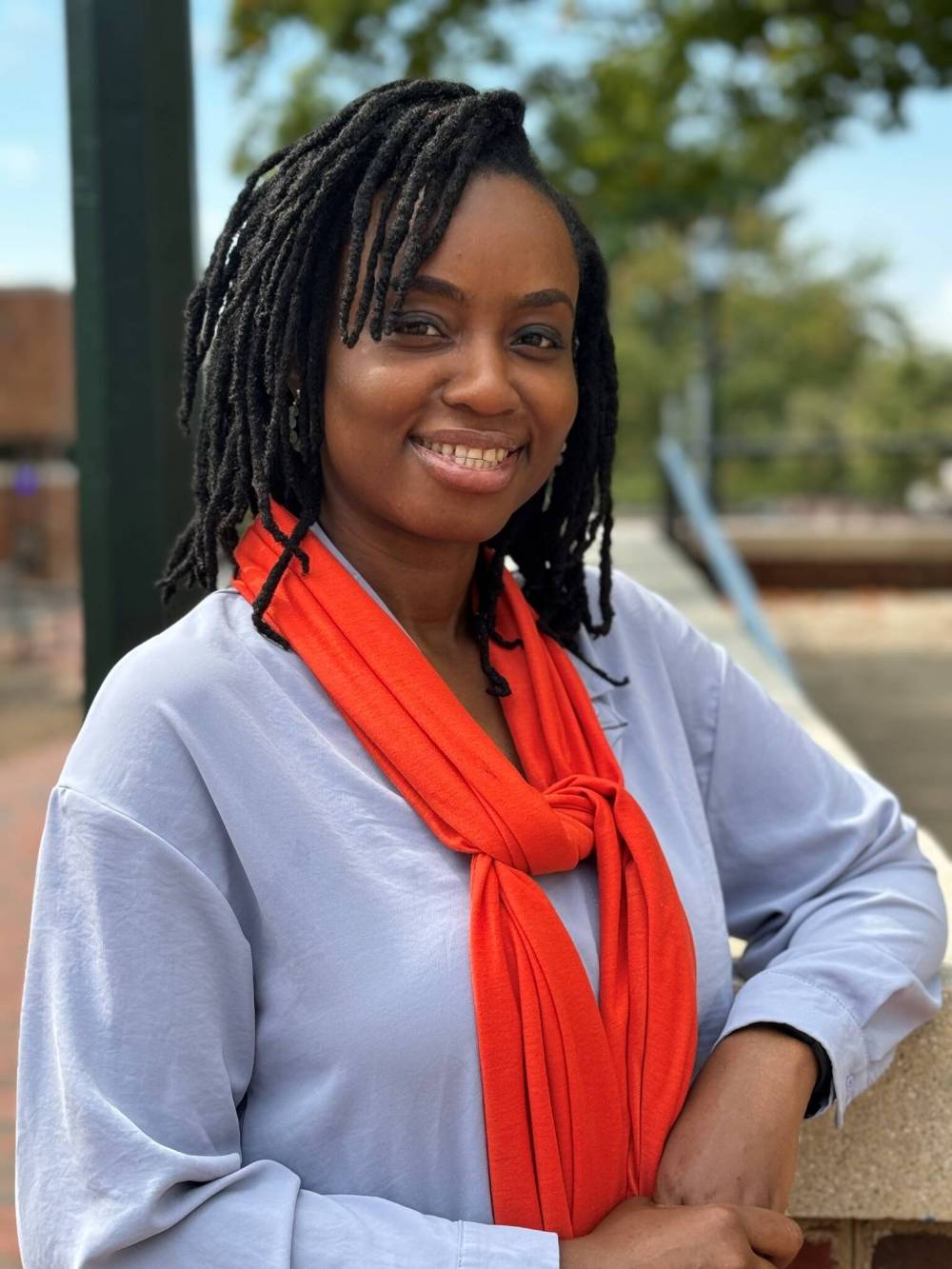
Capps Juliano photo
                                Tochi Eze’s debut novel contains echoes of Chinua Achebe’s 1958 classic Things Fall Apart, albeit tackling similar themes in a quieter fashion.

Capps Juliano photo

Tochi Eze’s debut novel contains echoes of Chinua Achebe’s 1958 classic Things Fall Apart, albeit tackling similar themes in a quieter fashion.

In 1905, the residents of the village of Umomilo are shocked to learn that three young women, believed to be virgins, are pregnant, and look to their tribal leaders for answers. Two of the virgins follow traditional Igbo spirituality while one of them, Phyllis, is a Christian and takes refuge in the church.

In 1962 and 2005, we are introduced to two descendants from Umomilo, Margaret and Benjamin, who engage in a star-crossed love affair. Margaret’s ancestor, who struggled with mental illness, played a gruesome role in the affair of the three virgins, while Benjamin is the descendant of Phyllis. Benjamin’s other three grandparents are white and British, and when he arrives in Nigeria on a work assignment, seeking his roots, he appears white to the Nigerians he meets.

In the 2005 timeline, Benjamin and Margaret have become estranged, and we meet their daughter and grandson, who Margaret believes to be cursed by events in Umimilo a century ago. Margaret becomes very focused on ending the curse that traditional spiritualists had warned would befall her if she married Benjamin, and this leads to the couple reconnecting.

The novel isn’t about Benjamin’s questions of identity, nor is it about his quest to learn the secrets of the past. In fact both he and Margaret abandon their searches into their histories fairly quickly, and the reader only learns of the truth through the omniscient narrator. Mental illness is a constant theme in every generation of the novel, and is depicted as a terrifying condition that causes extreme violence in its sufferers, who have little insight into the damage they are doing.

The conflict between traditional beliefs and Christianity is also explored, though not with the incisiveness of Achebe’s novel or his broad perspective. This Kind of Trouble is a quieter book that focuses intently on one family, rarely zooming out to the wider society. When Eze does do so, the writing is strong and sure, like the traditions it honours.

Eze describes women around the office water cooler with keen observation: “They all laughed, their talk moving between Igbo and English and Yoruba and pidgin, their language so braided that it became its own separate thing.” She writes about traditional village life: “The people of Umomilo were taught to hold one another’s problems the same way the pots collected the first rainwater — each man seeking to help his neighbour… The matter was simple. If it rains, you do not leave your neighbour’s pots attended. When trouble comes, you do not throw your face the other way.”

And, in a moment of introspection: “Margaret considered herself a Christian in every sense, but she was also, like her matriarch, Oriaku, born into a line of priestesses. She had seen what the psalms could do to her anxious heart. But she also knew the sturdy touch of her ancestral rituals.”

This Kind of Trouble

This Kind of Trouble

An omniscient narrator can sometimes create distance between the reader and the characters, which ends up being the case in This Kind of Trouble — we are not given much insight into their thinking. Benjamin especially makes some very troubling and life-changing decisions without much explanation as to why. This might be forgivable if characterization was being sacrificed for the bigger picture.

But while the themes in This Kind of Trouble are intriguing, it’s unclear what the writer is saying about contemporary Nigeria. How does the shadow of the past loom over present life? The ending leaves this question unanswered, and it’s difficult to tell what actually happens to each character and what is the status of the curse. Perhaps Eze wanted to leave things open-ended and allow readers to draw their own conclusions, but it may be a little too ambiguous for some.

Nevertheless, This Kind of Trouble is an interesting and engaging book that allows readers a view into a vibrant and complex society, and Tochi Eze is a very promising writer.

Zilla Jones is a Winnipeg-based writer of short and long fiction. Her debut novel The World So Wide was published in April.


Report Error Submit a Tip

More Stories

No more Jets 1.0 or 2.0: League announces all eras of Winnipeg’s club to be merged

Ken Wiebe 6 minute read Preview

No more Jets 1.0 or 2.0: League announces all eras of Winnipeg’s club to be merged

Ken Wiebe 6 minute read Thursday, Sep. 24, 2026

Mark Scheifele’s goal was always to chase down his mentor and former Barrie Colts head coach Dale Hawerchuk, no matter what the official record book said.

So when the NHL and the Winnipeg Jets announced on Thursday morning that they were consolidating the franchise history to include the 1.0 and 2.0 eras (including the Atlanta Thrashers chapter of the club), Scheifele was among those to give the move two thumbs up.

“Yeah, it clarifies it for you guys more, not as much (for) me,” said Scheifele. “It’s really cool to bring in the old Jets records, and especially Dale. Chasing him down was always on my mind. So, it’s cool to do it actually in the record books.”

Scheifele remains the franchise leader in games played (961) and he’s likely to eclipse Hawerchuk in goals (Scheifele has 372 to Hawerchuk’s 379) and points (Scheifele has 907 to Hawerchuk’s 929) this season. He now has Thomas Steen’s 553 assists in his sights after amassing 535 heading into 2026-27.

Read
Thursday, Sep. 24, 2026

Time for the PUB to review Winnipeg water rates

Editorial 4 minute read Preview

Time for the PUB to review Winnipeg water rates

Editorial 4 minute read 2:01 AM CDT

We take you now to just over a month ago, to the Public Utilities Board and its decision about water and sewer rates for Russell, Binscarth, Angusville, Rossburn and Gambler First Nation.

Why? Just wait.

The area is supplied with water and sewage services by the Russell-Binscarth Water and Wastewater Utility, which has a total of 1,014 customers.

As the PUB noted in an Aug. 27, 2026 order on the utility’s rates, “The [water treatment plant] gets water from two groundwater wells that were upgraded in 2016 and the raw water main was installed in 1984. The water distribution system is primarily cast iron pipe. The raw water line will need to be upgraded in the near future to keep up with demand.”

Read
2:01 AM CDT

Is a better Winnipeg on the horizon?

Tom Brodbeck, Rebecca Chambers, Niigaan Sinclair and Brent Bellamy 20 minute read Preview

Is a better Winnipeg on the horizon?

Tom Brodbeck, Rebecca Chambers, Niigaan Sinclair and Brent Bellamy 20 minute read Yesterday at 4:00 PM CDT

Four Free Press columnists weigh in on the challenges ahead and how the city can become better.

Read
Yesterday at 4:00 PM CDT

Winnipeg a character all its own onscreen

Jen Zoratti 4 minute read Preview

Winnipeg a character all its own onscreen

Jen Zoratti 4 minute read 2:01 AM CDT

Watch something shot in Winnipeg with a Winnipegger, and you will be treated to a live running commentary. We can’t help playing “spot the location.”

When we recognize that field/statue/mall/intersection/theatre, we have to say it. It’s practically civically mandated.

A friend told me she was at a film screening at which people literally applauded footage of the Mint. (That likely would have been 2005’s The Constant Gardener.)

Being excited about seeing Portage Place Mall at Christmastime in the trailer for Violent Night 2 — and then exclaiming, to your husband, “Oh, look, it’s Portage Place Mall at Christmastime!” — is not, I will admit, particularly cosmopolitan behaviour. In fact, I could be accused of suffering from a mild case of Podunkitis.

Read
2:01 AM CDT

Positive anticipation is growing about major housing developments underway in Winnipeg’s downtown

Gabrielle Piché 10 minute read Preview

Positive anticipation is growing about major housing developments underway in Winnipeg’s downtown

Gabrielle Piché 10 minute read Yesterday at 6:00 AM CDT

If traffic is light and the wind is down, Somia Sadiq is able to hear the roar of Winnipeg Jets fans twice: first through her window, then on TV.

From her apartment view high above downtown, she can look out at Graham Avenue’s painted pedestrian landscape, see construction cranes and hear the heavy equipment at work as massive housing projects take shape at The Forks, at what used to be Portage Place shopping centre and at the former Hudson’s Bay building.

Sadiq has lived at 300 Main for 2 1/2 years, a few steps from the city’s famous, windy and reopened-to-pedestrians Portage Avenue intersection. At 42 storeys, it’s the tallest building in Winnipeg.

She is among 18,000 downtown residents who will soon be joined by thousands of others attracted to the city’s core by the new wave of major construction projects.

Read
Yesterday at 6:00 AM CDT

Conflict between traditional beliefs and Christianity echo through postcolonial Nigerian novel 'This Kind of Trouble'

Reviewed by Zilla Jones 5 minute read Preview

Conflict between traditional beliefs and Christianity echo through postcolonial Nigerian novel 'This Kind of Trouble'

Reviewed by Zilla Jones 5 minute read Saturday, Aug. 9, 2025

This Kind of Trouble is the debut novel by Tochi Eze, a writer and lawyer from Nigeria who recently obtained a Master of Fine Arts degree in creative writing from Florida Atlantic University, and is studying for her Ph.D. in English at the University of Virginia.

The book contains echoes of Chinua Achebe’s 1958 classic Things Fall Apart, which documented life in a pre-colonial Igbo village and the devastation caused by the arrival of the British, first as missionaries and then with the colonial legal system.

This Kind of Trouble takes the reader through the postcolonial landscape, with three timelines: one in 1905 soon after the missionaries have set up shop, one in the 1960s in the early days of independence and one in 2005.

In 1905, the residents of the village of Umomilo are shocked to learn that three young women, believed to be virgins, are pregnant, and look to their tribal leaders for answers. Two of the virgins follow traditional Igbo spirituality while one of them, Phyllis, is a Christian and takes refuge in the church.

Read
Saturday, Aug. 9, 2025