Alberta bans sexual images in school library books under revised order
Advertisement
Read this article for free:
or
Already have an account? Log in here »
To continue reading, please subscribe:
Digital Subscription
One year of digital access for only $1.44 a week*
- Enjoy unlimited reading on winnipegfreepress.com
- Read the E-Edition, our digital replica newspaper
- Access News Break, our award-winning app
- Play interactive puzzles
*Billed as $5.77 plus GST every four weeks. After 52 weeks, price increases to the regular rate of $19.95 plus GST every four weeks. Offer available to new and qualified returning subscribers only. Cancel any time.
To continue reading, please subscribe:
Add Free Press access to your Brandon Sun subscription for only an additional
$1 for the first 4 weeks*
- Enjoy unlimited reading on winnipegfreepress.com
- Read the E-Edition, our digital replica newspaper
- Access News Break, our award-winning app
- Play interactive puzzles
*Your next Brandon Sun subscription payment will increase by $1.00 and you will be charged $17.95 plus GST for four weeks. After four weeks, your payment will increase to $24.95 plus GST every four weeks.
Read unlimited articles for free today:
or
Already have an account? Log in here »
Hey there, time traveller!
This article was published 08/09/2025 (413 days ago), so information in it may no longer be current.
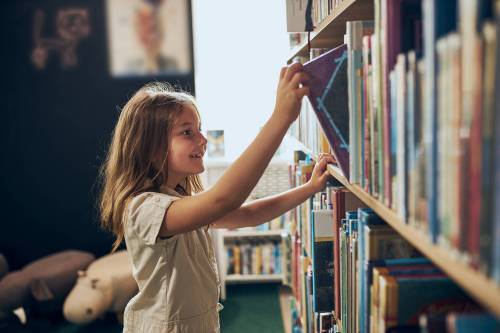
EDMONTON – The Alberta government made good Monday on its promise to revise its school book ban, stating that from now on written descriptions of sex are OK, but images and illustrations of sex are not.
Education Minister Demetrios Nicolaides told reporters that visual depictions had been the government’s main concern from the start.
When asked by reporters why the government wasn’t concerned with written descriptions of explicit sexual material, he said, “An image can be understood and conveyed at any grade level with any degree of comprehension.
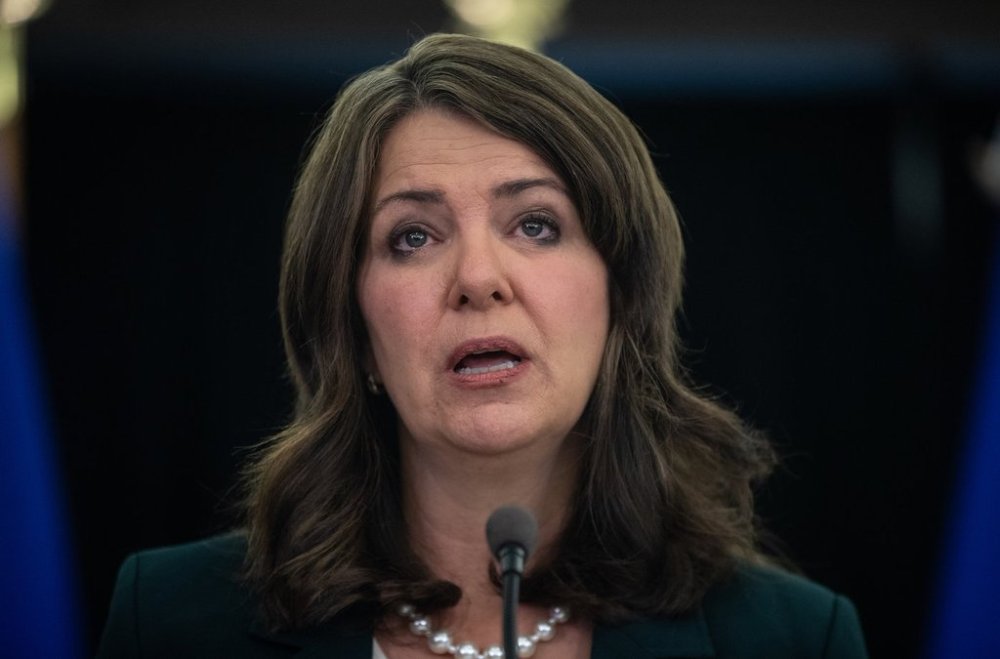
“Whereas, of course, vocabulary and understanding progresses and develops throughout the school year.”
He said the revised order ensures that literary classics, even those that include sexual content, will stay on school library shelves.
“Classic literary works that work to provoke the mind and challenge our thinking are exactly the type of material that should be provided in a school library,” he said.
The change comes after Edmonton’s public school board put together a list of more than 200 titles it was going to take out of schools — including classics like Margaret Atwood’s “The Handmaid’s Tale” — to comply with the initial ministerial order issued in July.
The potential banning of classic titles in Alberta brought worldwide news coverage.
It also led Atwood herself to mock Premier Danielle Smith and her government by crafting a short story to social media about a boy and girl who lived happily ever after practising rapacious capitalism while having kids without having sex.
A number of other famous books were also put on the chopping block, with Edmonton Public listing Maya Angelou’s “I Know Why the Caged Bird Sings” and Aldous Huxley’s “Brave New World” as additional titles that would need to be stripped from libraries in order to comply the government’s initial directive.
Last week, Smith accused the Edmonton public board of intentionally misinterpreting the government’s intent and being heavy-handed with the books it planned to pull from shelves.
Smith at the time said the government was mainly concerned about images and illustrations of explicit sexual content and promised a revised ministerial order to clarify that point.
The government has linked the need for library book rules to four graphic novels officials found in school libraries that contained explicit images of sexual activity.
Due to the policy revision, Nicolaides has extended the deadline given to school boards to remove library books deemed inappropriate to early January, instead of the initial deadline of October.
Nicolaides said the rules were also simplified since the same policy applies across all grade levels, whereas the previous version stipulated different content rules for different grades.
Monday’s policy change came as good news for the Calgary Board of Education, the city’s public school board, which said in a statement that it appreciates the government’s changes and the extended deadline.
Edmonton Public board chair Julie Kusiek confirmed her division will reverse course and not go ahead with stripping the likes of Atwood and Angelou from library shelves.
Tanya Gaw, the founder of a parents advocacy group who had lobbied Nicolaides for the initial changes, said the government’s policy revision was “problematic.”
“I don’t understand the rationale in removing these type of books from the list just because there aren’t any graphics,” said Gaw, the chief executive officer of Action4Canada.
“Pornography is pornography.”
Gaw also said she disagreed with the minister’s argument about images being more easily understood than written passages and questioned what would be done for the children that can read at higher levels.
“Our first priority is to protect children and their hearts and minds because you only get one jab at this, and we … as a society, should be doing that, because once innocence is lost, it’s lost forever.”
Opposition NDP education critic Amanda Chapman said the government had created a mess of a policy and wasted the time and resources of an already overworked education system in the process.
“An enormous amount of resources had to be put in by school boards over the summer months to figure out how to comply with the order,” she said. “Now, of course, it turns out that all that time and resources were completely wasted.
“I guess we’ll find out when the first lists start coming out if the government has to redo their rules again.”
Another policy change made Monday is to have school divisions deliver Nicolaides’ ministry a list of books they plan to remove under the new rules by the end of October.
Nicolaides said those lists won’t need provincial approval, but school boards submitting them in advance would give the government a chance to review them and provide further guidance as necessary.
The new ministerial order also does away with the requirement to have teachers digitally catalogue their personal classroom libraries.
Nicolaides said he had seen social media posts of teachers boxing up books and giving them away to avoid the extra work of cataloguing them, and that was something the province wanted to avoid.
He added that the policy still requires parents to be “informed” of the material kept in classroom libraries.

Jason Schilling, president of the Alberta Teachers’ Association, said the change was too little too late in some cases.
“Those books aren’t coming back,” he said Monday.
‘It’s disappointing and shameful to me that we didn’t have any kind of clarity moving into the start of the school year that saw teachers take such extreme steps of getting rid of materials.”
Schilling said the book ban “was and continues to be an unnecessary overreach by government,” adding that the revision was an attempt by the province to fix a problem that “quite frankly could have been handled with a phone call.”
This report by The Canadian Press was first published Sept. 8, 2025.
Related Articles
Woman ordered to remove social media posts about principal
Advertisement Advertise With Us
Advertisement Advertise With Us