After the Indian Act
Author argues path to First Nations self-determination dependent on dismantling oppressive legislation
Advertisement
Read this article for free:
or
Already have an account? Log in here »
To continue reading, please subscribe:

Digital Subscription
One year of digital access for only $205*
- Enjoy unlimited reading on winnipegfreepress.com
- Read the E-Edition, our digital replica newspaper
- Access News Break, our award-winning app
- Play interactive puzzles
*First annual payment billed as $205.00 + GST for one year. This annual subscription will automatically renew at $233.00 + GST every 52 weeks (10% off the regular annual price of $259.35). Offer available to new and qualified returning subscribers only. Cancel any time.
To continue reading, please subscribe:
Add Free Press access to your Brandon Sun subscription for only an additional
$1 for the first 4 weeks*
- Enjoy unlimited reading on winnipegfreepress.com
- Read the E-Edition, our digital replica newspaper
- Access News Break, our award-winning app
- Play interactive puzzles
*Your next Brandon Sun subscription payment will increase by $1.00 and you will be charged $17.95 plus GST for four weeks. After four weeks, your payment will increase to $24.95 plus GST every four weeks.
Read unlimited articles for free today:
or
Already have an account? Log in here »
Hey there, time traveller!
This article was published 13/09/2025 (389 days ago), so information in it may no longer be current.
Next year marks the 150th anniversary of the Crown’s imposition of the colonial Indian Act of 1876, federal legislation that consolidated earlier state efforts to reframe valued military and economic First Nations allies into childlike wards of the state. It raises interesting questions: Why is the racist Indian Act still, today, the backbone of Canadian federal policy governing Indigenous people? Why are Indigenous leaders not fighting tooth and nail to end the oppressive legislation?
Into this vexing situation steps British Columbia hereditary chief and professional trainer Bob Joseph with his latest book, 21 Things You Need to Know About Indigenous Self-Government.
Joseph makes the argument that First Nations communities can regain at least some of the self-governance, self-determination and self-reliance they had before the “dark days” of the Indian Act, but that means ultimately dismantling the Act.

Fred Greenslade photo
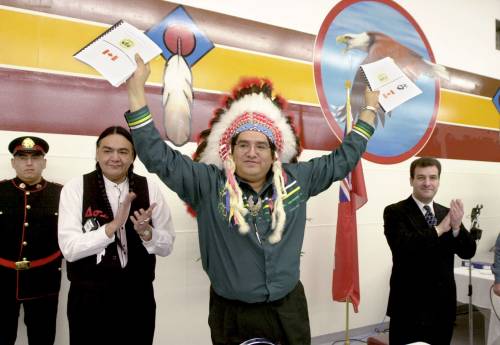
In this 2001 photo, Chief Ken Whitecloud (centre) of Sioux Valley Dakota Nation holds up copies of the agreement in principle for self-government as Manitoba minister of Indian affairs Eric Robinson (left) and his federal counterpart, Robert Nault, applaud. The agreement came into effect in early 2014.
“When the Indian Act is fully dismantled,” writes Joseph, “in the long run, we will have greater economic certainty and opportunity as we will be working with Indigenous governments chosen and supported by the people” and reduced “vitriolic animosity.”
However, the challenge is how to get there in the face of a large federal bureaucracy sedimented into place over 150 years to micromanage the day-to-day existence of First Nations communities (Inuit and Métis controls came later). Joseph’s solution is to go hard and fast into negotiating Indigenous self-government agreements that operate outside the Indian Act. He cites three agreements as models of success: 1975 James Bay and Northern Quebec, 2000 Nisga’a, and 2005 Westbank First Nation. Joseph considers such agreements, although highly complex to negotiate, as a crucial step towards empowering communities to break free of the Indian Act.
However, there have been fewer than 30 self-government agreements implemented since 1975, with the 2014 Sioux Valley Dakota Nation the only one in Manitoba. Clearly, self-government agreements do not have the appeal Joseph would like them to have.
For this, Joseph provides three reasons. The first, he notes, is the lack of trust many First Nations people have in their leaders, who are elected under the Indian Act rules and who are accountable to the source of their power and money — the federal government — rather than to the community’s citizens. Joseph argues that those choosing their leaders using traditional practices can alleviate the distrust and lack of accountability that blocks peoples’ willingness to risk self-governance.
The second reason self-governments lack appeal is fear of change — “better the devil you know.”
Supplied photo
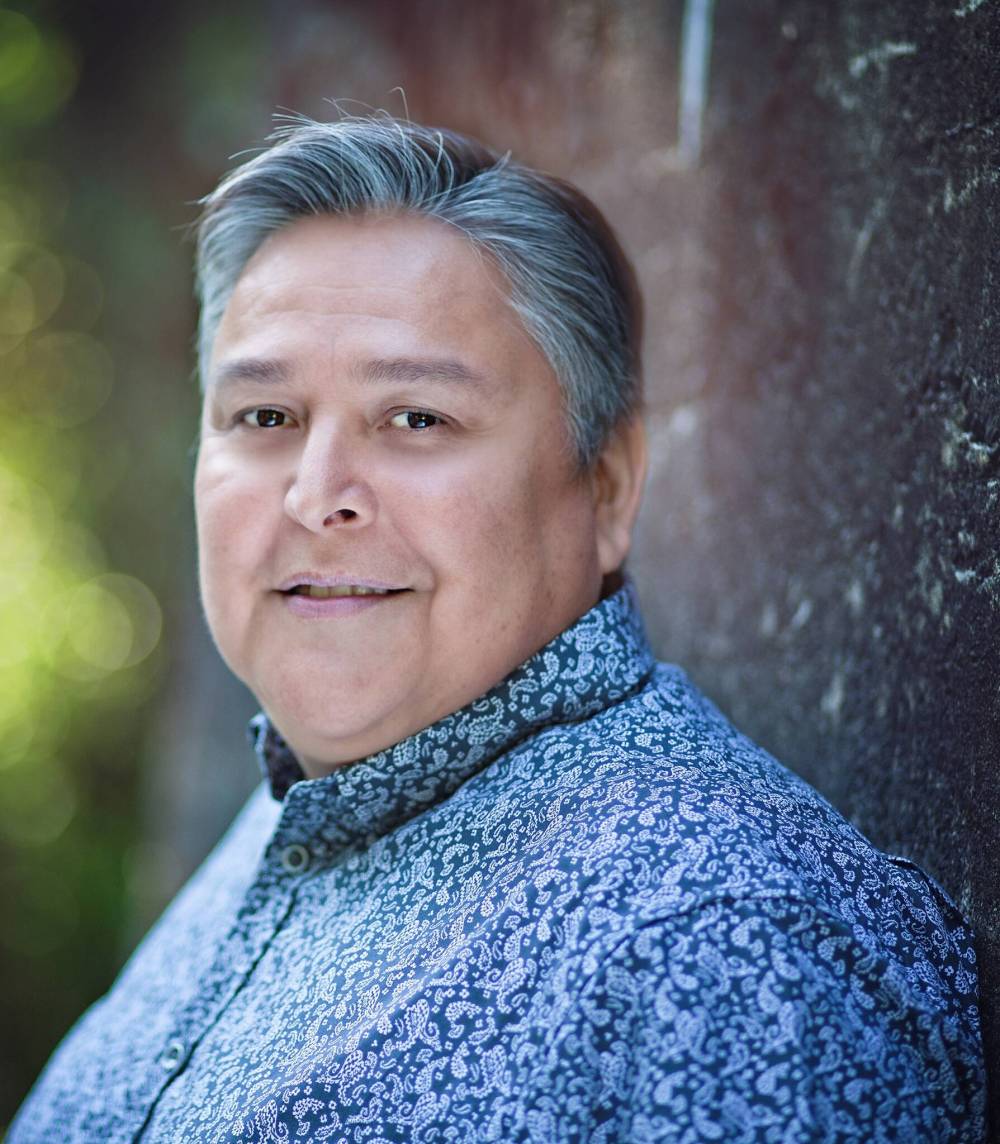
Bob Joseph
Thirdly, Joseph says, the psychological damage inflicted under the legal authorities of the Indian Act — Indian Residential Schools being just one — has lead to the belief by Indigenous people that they can never break free… so they stop even trying.
Joseph is at his best in writing with a conversational and accessible voice about the complex issues facing Indigenous communities and their fraught relationship with the Indian Act. This book follows the style of Joseph’s 2018 book, 21 Things You May Not Know About the Indian Act, which has sold some 170,000 copies — a remarkable achievement for a Canadian author not named Margaret Atwood or Yann Martel. It helps that Joseph has a ready-made market for his books as workshop materials. He has been running Indigenous Corporate Training Inc. based on the Tsawout First Nation in B.C. since 2002 to directly address the vast knowledge gap between Indigenous and non-Indigenous people by developing workshops and training programs for non-Indigenous corporations, Fortune 500 companies, businesses and developers wanting to do business with Indigenous leaders and communities.
This is also a weakness in the book; Joseph makes no mention the self-government agreements he advocates for are seen by some Indigenous leaders as a more sophisticated form of assimilation — moving out from under the Indian Act but remaining under the federal bureaucracy’s control.
And Joseph’s terse dismissal of Indigenous sovereignty — of nations with sovereignty over traditional lands within state boundaries — is jarring. Based on a quotation from First Nation leader Harold Cardinal’s 1970 book The Unjust Society, Joseph startlingly infers that few First Nations communities are interested in sovereignty today. This logic does not stand, given that B.C. Chief George Manuel initiated in 1974 what would become an international Indigenous movement towards sovereignty that fed into the 2007 United Nations Declaration on the Rights of Indigenous Peoples (UNDRIP), ratified by Canada in 2021. There is today significant support in Canada for sovereignty and self-determination.
This book is best read with the understanding that it is workshop material for corporations and businesses whose interests align with the economic development in First Nations communities promised by self-government agreements, and with an appreciation for the much-needed insight Joseph brings to why the Indian Act is still in effect.

21 Things You Need to Know About Indigenous Self-Government
Sheilla Jones is a Winnipeg author whose doctoral research at the University of Manitoba is focused on settler-Indigenous relations.
Bob Joseph will launch 21 Things You Need to Know About Indigenous Self-Government on Thursday, Sept. 25, at 7 p.m. at McNally Robinson Booksellers’ Grant Park location as part of Thin Air 2025.
History
Updated on Saturday, September 13, 2025 9:56 AM CDT: Fixes typo