Elusive by nature
Norwegian biologist mulls human’s impact on flora and fauna — including the revered wolverine
Advertisement
Read this article for free:
or
Already have an account? Log in here »
To continue reading, please subscribe:

Digital Subscription
One year of digital access for only $205*
- Enjoy unlimited reading on winnipegfreepress.com
- Read the E-Edition, our digital replica newspaper
- Access News Break, our award-winning app
- Play interactive puzzles
*First annual payment billed as $205.00 + GST for one year. This annual subscription will automatically renew at $233.00 + GST every 52 weeks (10% off the regular annual price of $259.35). Offer available to new and qualified returning subscribers only. Cancel any time.
To continue reading, please subscribe:
Add Free Press access to your Brandon Sun subscription for only an additional
$1 for the first 4 weeks*
- Enjoy unlimited reading on winnipegfreepress.com
- Read the E-Edition, our digital replica newspaper
- Access News Break, our award-winning app
- Play interactive puzzles
*Your next Brandon Sun subscription payment will increase by $1.00 and you will be charged $17.95 plus GST for four weeks. After four weeks, your payment will increase to $24.95 plus GST every four weeks.
Read unlimited articles for free today:
or
Already have an account? Log in here »
Hey there, time traveller!
This article was published 15/11/2025 (262 days ago), so information in it may no longer be current.
In late February 1972, Dag O. Hessen is backcountry skiing with his father when they encounter wolverine tracks, a novelty for the then-teen. At his enthusiastic insistence, they follow the trail of the elusive “compact bundle of wildness and strength” until it leads down a sheer mountainside, and they must turn back. Dag is disappointed but, as his beloved Dad says, the wolverine is a creature hardly anyone gets to see.
Fifty years later, in Hessen’s first memoir Wolverine Tracks he returns to seek out “the fabled beast” and “that intensity of feeling for nature I recall from my teenage years,” as well as “to savor… just being in nature.” The opportunity is rare; busy with his career as a biologist and award-winning writer, Hessen notes that his outdoor excursions have been “a hasty means of relieving pressure in between duties and obligations… There’s always been this drive to do something useful, to justify my own existence.”
Yet busyness begets more busyness and all the while, he writes, “the river of life runs mercilessly faster.” In his late 60s now, Hessen is reflective, wondering why he hasn’t lived more of his days in nature, “a sanctuary of slowness and analog time.”
Trevor Hagan / Free Press files
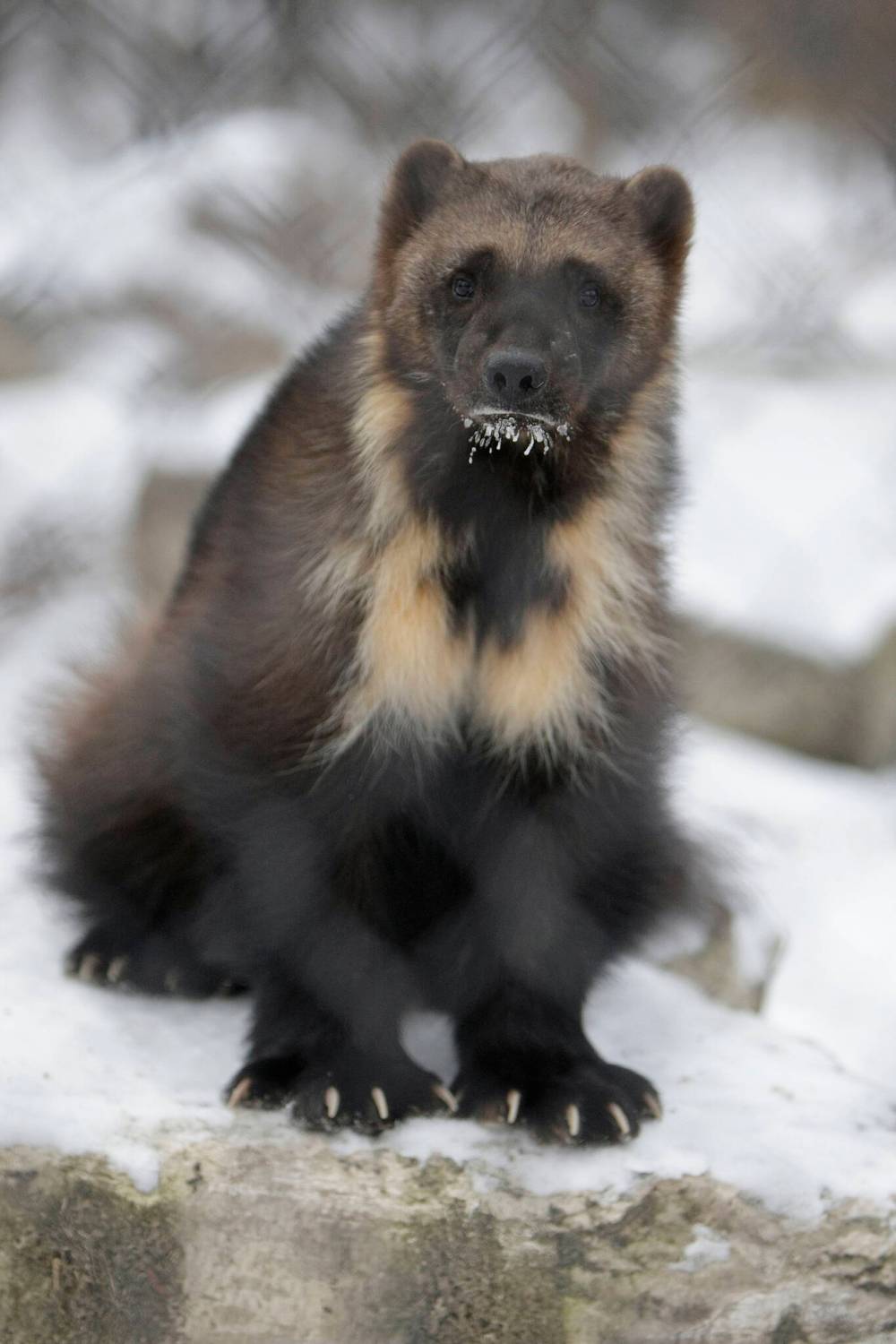
The wolverine lives a simple but rich life as an awe-inspiring adventurer, playful parent and cunning predator.
Setting out from his remote family cabin, Hessen introduces readers to an often-harsh yet beautiful environment of bogs, mountains and forests that sustains not only wolverines but also ptarmigan, hares, weasels, foxes, moose, reindeer, wolves and fish as well as cloudberries, birches and all manner of lichens.
This boreal terrain inspired the author’s passion for the natural world and informed his life’s trajectory. More than that, he writes, “When death broke in… and my sense of meaning crumbled, nature and the mountains became my fixed points of reference.”
Anyone who has lost a loved one understands death’s power to expose the triviality of our day-to-day concerns. When grief alienates us from the commonplace, wilderness offers respite.
However, Hessen observes, humans “have cut the umbilical cord linking us to nature and been left with a profound sense of loss amid all the asphalt and concrete.” And, as Henry David Thoreau wrote over 150 years ago, humanity’s efforts to eliminate “the cougar, panther, lynx, wolverene (sic)” have deprived us of the opportunity “to know an entire heaven and an entire earth.”
Today, Hessen writes, “Norway… sets an annual ceiling of thirty-nine wolverine litters per year.” As for surplus litters, “the female is shot near its den, which is then excavated and the kits are exterminated… It’s hard to imagine a nastier system for managing a threatened species, especially given Norway’s special duty of stewardship as home to more than a quarter of Europe’s wolverine population.”

This is just one among many examples of the “ghastly deed(s)” humankind has perpetrated against wild creatures. They and their habitats are under constant threat from our addiction to riding what Norwegian philosopher Arne Næss termed “the carousel of consumption” and living, as Hessen puts it, “beyond our sustainable means… steal(ing) from the people who will have to live here in fifty, five hundred, or fifty thousand years.”
The antidote, he believes, is nature itself. Nature is, Hessen writes, “a cathedral that doesn’t demand incense and submission, commandments and prohibitions, but can instead offer us the freedom and clarity of thought to see what really matters… to appreciate the rich life by simple means.”
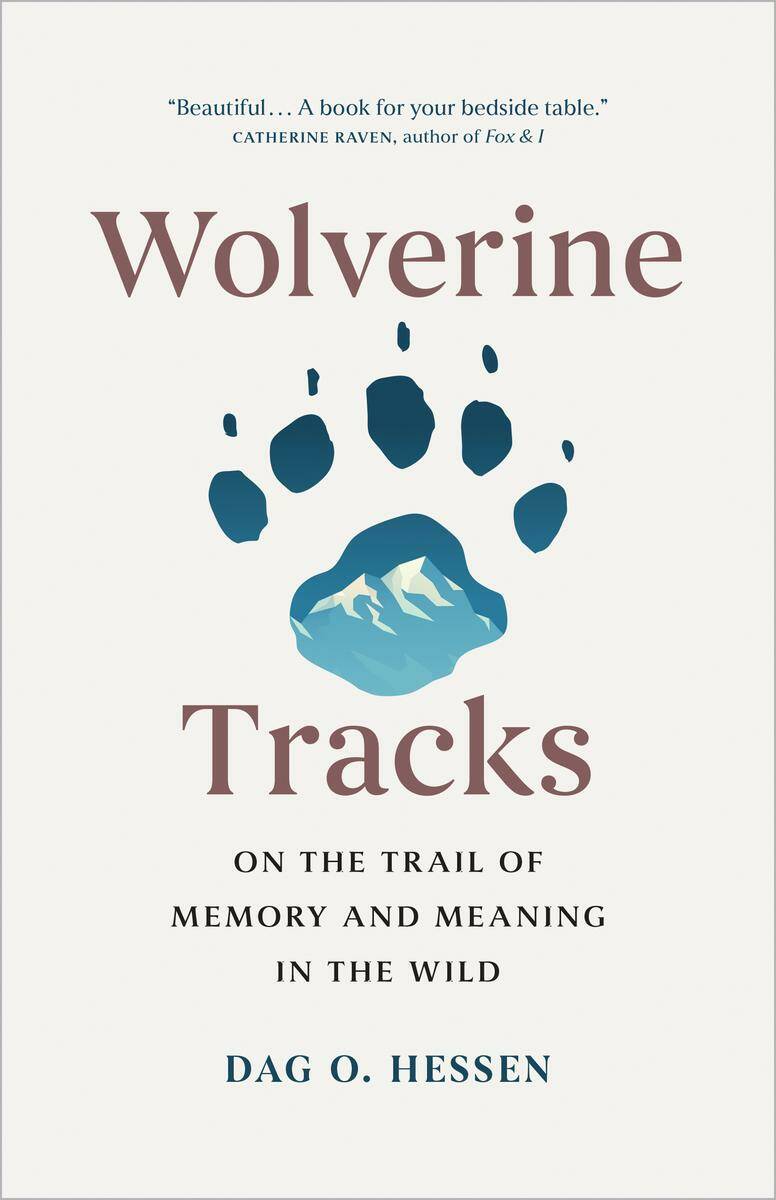
Wolverine Tracks
The very embodiment of wildness, the dynamic wolverine lives a simple but rich life as an awe-inspiring adventurer, playful parent and cunning predator, and deserves our respect. As Hessen posits, “a vestige of the mythical and the mystical still hangs over it,” and its continued existence is an opportunity to know a part of heaven.
Wolverine Tracks is Dag O. Hessen’s well-researched, lovingly written and compelling cri de coeur on behalf of wildness, both without and within.
Jess Woolford longs to see a wild wolverine.