Choosing our stories

Examining the narratives in our lives can help shape us — and imagine the world anew

Advertisement

Advertise with us

If the stories we tell ourselves have the power to limit or enhance our capabilities, then what happens when we abandon the ones that no longer serve us? What role does storytelling play in creating class, race and gender inequities?

Read this article for free:


or

Already have an account? Log in here »

To continue reading, please subscribe:

Subscribe and receive a limited-edition Free Press branded hat or tote.

Digital Subscription

One year of digital access for only $205*

  • Enjoy unlimited reading on winnipegfreepress.com
  • Read the E-Edition, our digital replica newspaper
  • Access News Break, our award-winning app
  • Play interactive puzzles

*First annual payment billed as $205.00 + GST for one year. This annual subscription will automatically renew at $233.00 + GST every 52 weeks (10% off the regular annual price of $259.35). Offer available to new and qualified returning subscribers only. Cancel any time.

To continue reading, please subscribe:

Add Free Press access to your Brandon Sun subscription for only an additional

$1 for the first 4 weeks*

  • Enjoy unlimited reading on winnipegfreepress.com
  • Read the E-Edition, our digital replica newspaper
  • Access News Break, our award-winning app
  • Play interactive puzzles
Start now

*Your next Brandon Sun subscription payment will increase by $1.00 and you will be charged $17.95 plus GST for four weeks. After four weeks, your payment will increase to $24.95 plus GST every four weeks.

Hey there, time traveller!
This article was published 31/01/2026 (246 days ago), so information in it may no longer be current.

If the stories we tell ourselves have the power to limit or enhance our capabilities, then what happens when we abandon the ones that no longer serve us? What role does storytelling play in creating class, race and gender inequities?

These are the central questions at the heart of Jeanette Winterson’s latest work One Aladdin Two Lamps.

The award-winning U.K. writer and cultural figure, best known for her memoir Why Be Happy When You Could Be Normal?, has penned another work of non-fiction that calls into question ancient stories and tropes that shape society. In it she names many factors, people and central narratives — Charles Darwin, Francis Galton, papal bulls and dogmatic declarations, to highlight a few — that have shaped belief systems and created imprisonment for millions born outside the dominant paradigm. The poor, women, people living with disabilities, non-whites, gay, queer and non-binary people — the list continues.
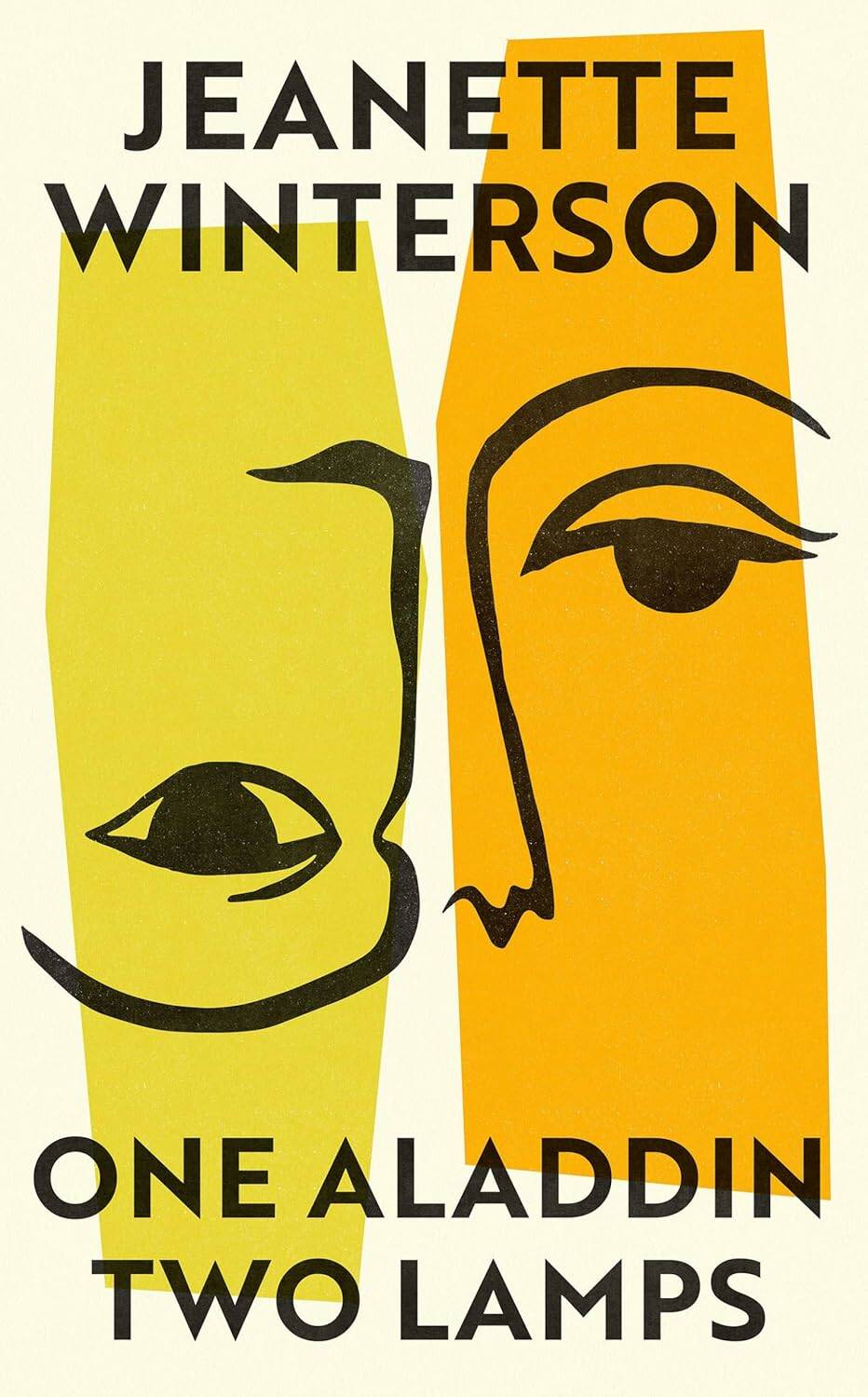
One Aladdin Two Lamps

One Aladdin Two Lamps

In One Aladdin Two Lamps, Winterson offers a new perspective: “I can change the story because I am the story.”

The central thread offers a parallel narrative to One Thousand and One Nights, the beloved collection of Arabic fables that tells the tale of a young woman named Shahrazad who outsmarted a powerful king through storytelling. In it, King Shahryar had taken to marrying a virgin each night and beheading her at dawn to seek revenge against all women for the sins of his unfaithful wife. Shahrazad offers to marry the king and spends the night telling him a story that ends on a cliffhanger.

Come morning, her life is spared one more day so she may continue the story at night. The pattern continues for 1,001 nights.

Winterson’s main premise of One Aladdin Two Lamps is that we all have the power to create a better life and just society by inventing more equitable, person-centric stories.

But first, the reader is taken on a journey of all the “wrong” stories that catalogue our history, such as the “baseless theories” of palaeontologist Thomas Huxley, who wrote “The doctrine that all men are… free and equal is an utterly baseless fiction.”

Those works of Huxley, Darwin and many others, Winterson writes, have created narratives that continue to bind people not born with the “right” story. Take, for example, the author herself — adopted as a child, she was deemed “bad” by her adopted mother.

“What’s bred in the bone comes out in the marrow,” she was often told as a young child.

Winterson’s queerness exacerbated her otherness, making her an outcast at an early age. She sought refuge in a library and literature, where she found tools to rewrite her own story.

Winterson’s narrative becomes a cautionary tale, a warning against the “utterly baseless theories” rooted in eugenics and Victorian patriarchy that are making a comeback.
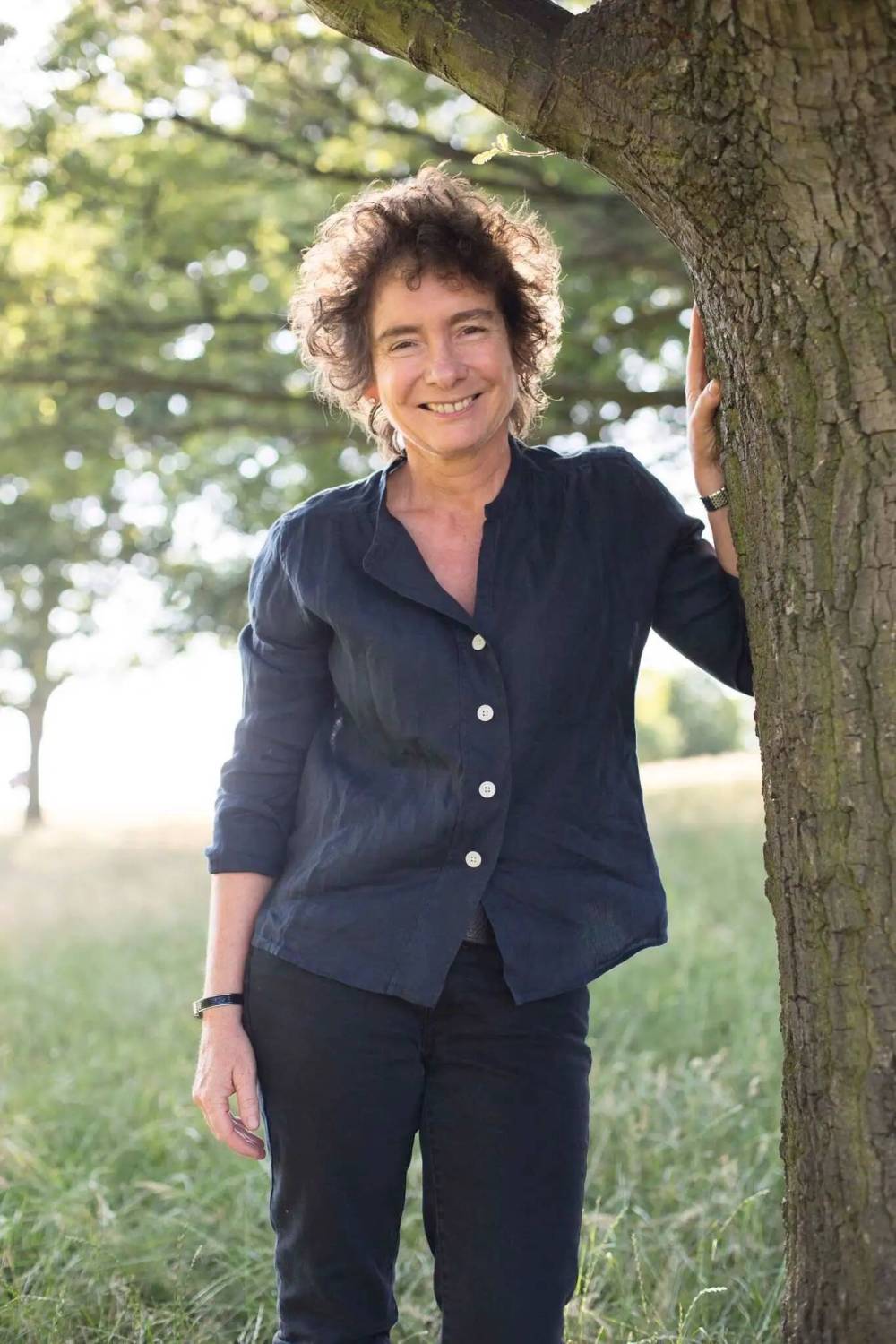
Sarah Churchill photo
                                Jeanette Winterson found the tools to re-write her own story in libraries and literature.

Sarah Churchill photo

Jeanette Winterson found the tools to re-write her own story in libraries and literature.

“Such theories have never gone away, of course, but Fascism made them repellent,” Winterson writes. “After 1945, the social, racial, gender-essentialist ‘natural’ hierarchies that dominated our past have been progressively challenged.”

That is, until now, she warns. Society is once again at an “existential crossroad.”

Part manifesto, part memoir and part feminist reimagining of an ancient Arabic tale, One Aladdin Two Lamps is an overflowing bazaar of stories offered as a call to action.

The complex structure is overwhelming at times, yet never loses sight of its simple premise: an invitation to examine the stories that shape us and to imagine the world anew.

Rochelle Squires is a reader who, admittedly, has never read One Thousand and One Nights but is continually drawn to power of storytelling.


Report Error Submit a Tip

More Stories

Mayoral candidate Vogiatzakis criticized for living outside Winnipeg

Malak Abas 4 minute read Preview

Mayoral candidate Vogiatzakis criticized for living outside Winnipeg

Malak Abas 4 minute read Friday, Oct. 2, 2026

A mayoral hopeful took heat from other candidates Friday for living outside Winnipeg while running in the civic election.

Mike Vogiatzakis’s primary residence is in the Rural Municipality of St. Andrews, about 25 kilometres north of Winnipeg — a community with its own mayor and councillors.

But the funeral director said he owns a home in Winnipeg where he divides his time, and he would move to the city full-time if elected mayor.

“It doesn’t matter where a person lives. Why are we dividing St. Andrews and Manitoba and Winnipeg? I’ve met the criteria to run for mayor,” Vogiatzakis said Friday morning.

Read
Friday, Oct. 2, 2026

Letters, Oct. 3

7 minute read Yesterday at 2:01 AM CDT

A morning in the life …

My very first lesson does not start when I walk into that lecture hall, oh no — it starts long before. It begins when I walk to my car, check the estimated arrival time to the University of Manitoba and hope that Winnipeg traffic agrees with it.

A drive that appears completely manageable changes almost immediately when I’m greeted by a tsunami of orange pylons and a line of cars that appears to go on forever. Traffic moves by the inch, lanes magically disappear and the detour I took yesterday now has a detour of its own. These factors make me do a calculation that I have become all too familiar with. How late can I arrive and still find parking, run to my class across campus and get to class with enough time left to make it worth it?

I have grown used to people saying, “Why not just leave earlier?” I do. But when I’m already leaving for my 8:30 a.m. class at 7 a.m., there’s only so much I can do. This drive that some would think is relaxing is one that feels like an assignment that I didn’t know I had to complete and is due at 8:30 a.m.

Living the dream

Ken Wiebe 7 minute read Preview

Living the dream

Ken Wiebe 7 minute read Yesterday at 4:48 PM CDT

DETROIT – As Tyrel Bauer took a left turn out of the tunnel from the Winnipeg Jets dressing room and into the stands, he was met with a hearty round of applause from the 25 friends and family members who had made the trek from various points around North America.

Bauer had just realized a childhood dream and the significance of the moment was not lost on some of his biggest supporters.

“It was a special walk, for sure. A special walk,” Bauer said on Saturday afternoon before the Jets departed for a two-game road trip that begins on Sunday in Detroit against the Red Wings. “Those people who came – and many more that weren’t there and were cheering on from afar – they’ve always been there.

“I wanted that for my family, maybe even more than I wanted it for me. They’ve been through thick and thin. I’ve stressed mom out quite a bit over the years doing my job. That meant a lot for them and I’m really happy they could be there for it.”

Read
Yesterday at 4:48 PM CDT

Creative powerhouse Perry Rosemond never lost Winnipeg roots

Ben Waldman 7 minute read Preview

Creative powerhouse Perry Rosemond never lost Winnipeg roots

Ben Waldman 7 minute read Yesterday at 6:00 AM CDT

He created King of Kensington, directed the troops in the Royal Canadian Air Farce, and his creative eye was behind the lens for television shows starring Johnny Cash, Tom Jones, Mr. Dress-Up and the Friendly Giant.

He also wrote and developed the Canadian version of Sesame Street during his time as the head of school and preschool programming for CBC in Toronto, and directed a televised special in 2002 for Winnipeg sketch comedy troupe Royal Liechtenstein Theatre Company.

But before his name featured in the credits of some of the most iconic and influential pieces of the Cancon canon, Perry Rosemond was an only child living in a crammed, multi-generational home in Winnipeg’s North End, racing each day to beat the morning bell next door at William Whyte School.

In memoirs that have yet to be published, the late television producer recalled his childhood. “(T)here were 14 of us in the house at 193 Andrews St., and it wasn’t that big of a house,” he writes.

Read
Yesterday at 6:00 AM CDT

Moving drama at MTYP gives voice to boy who changed law

Holly Harris 5 minute read Preview

Moving drama at MTYP gives voice to boy who changed law

Holly Harris 5 minute read Yesterday at 2:37 PM CDT

The heroic true tale of Norway House Cree Nation-born Jordan River Anderson came home Friday night, as Manitoba Theatre for Young People presented Yvette Nolan’s Jordan.

The touring production, a collaboration with Geordie Theatre, runs weekends through Oct. 11, with additional stops in Toronto, Vancouver and Ottawa’s National Arts Centre.

Having several of Anderson’s family members witness the local première underscored the evening with poignancy. Elder and Pine Creek First Nation member Barbara Nepinak added her own dignified presence and prayers following MTYP artistic director Pablo Felices-Luna’s welcoming remarks.

The season-opener also marks the Winnipeg-raised playwright’s homecoming; the Algonquin playwright, director, dramaturg, actor and educator was a fixture in our local theatre community for many years before going on to serve as artistic director for Native Earth Performing Arts from 2003 to ‘11, among other contributions.

Read
Yesterday at 2:37 PM CDT

Bombers get ‘whooped’ in Montreal

Taylor Allen 5 minute read Preview

Bombers get ‘whooped’ in Montreal

Taylor Allen 5 minute read Yesterday at 11:32 PM CDT

MONTREAL — It’s hard to fathom that the Winnipeg Blue Bombers smacked these Montreal Alouettes five weeks ago.

The team that pulled off that 44-28 upset at Princess Auto Stadium was nowhere to be found in La Belle Province on Saturday night.

You can, however, now find them in the basement of the West Division at 7-8 after getting completely outmatched and outclassed by the Als in a 37-10 beatdown.

“This was bad,” left tackle Stanley Bryant told the Free Press postgame. “They basically had their way all around. They whooped our ass.”

Read
Yesterday at 11:32 PM CDT