Medical musings
Local doc ponders patient care, assisted dying and more in personable, thoughtful prose
Advertisement
Read this article for free:
or
Already have an account? Log in here »
To continue reading, please subscribe:

Digital Subscription
One year of digital access for only $205*
- Enjoy unlimited reading on winnipegfreepress.com
- Read the E-Edition, our digital replica newspaper
- Access News Break, our award-winning app
- Play interactive puzzles
*First annual payment billed as $205.00 + GST for one year. This annual subscription will automatically renew at $233.00 + GST every 52 weeks (10% off the regular annual price of $259.35). Offer available to new and qualified returning subscribers only. Cancel any time.
To continue reading, please subscribe:
Add Free Press access to your Brandon Sun subscription for only an additional
$1 for the first 4 weeks*
- Enjoy unlimited reading on winnipegfreepress.com
- Read the E-Edition, our digital replica newspaper
- Access News Break, our award-winning app
- Play interactive puzzles
*Your next Brandon Sun subscription payment will increase by $1.00 and you will be charged $17.95 plus GST for four weeks. After four weeks, your payment will increase to $24.95 plus GST every four weeks.
Read unlimited articles for free today:
or
Already have an account? Log in here »
Hey there, time traveller!
This article was published 14/02/2026 (215 days ago), so information in it may no longer be current.
Who will speak for the dead and dying? Harvey Max Chochinov will.
A Winnipeg palliative-care researcher for four decades, Chochinov has opted to share his writings on the subject in lieu of a biography.
Not to be confused with another Winnipeg physician named Harvey Chochinov, the author added the name of his grandfather Max to avoid confusion.
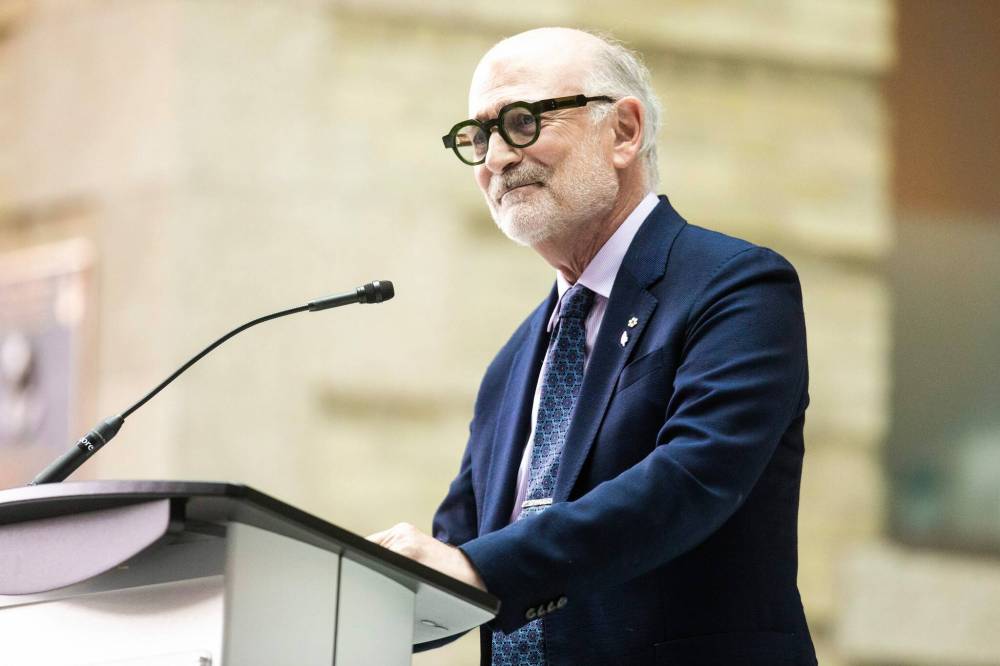
Mikaela MacKenzie / Free Press files
Harvey Max Chochinov (seen here in 2024) infuses his collection with humour while avoiding medical jargon, keeping the reader engaged.
The writings here are drawn from 40 or so years of clinical practice, musing, testing and reflection.
At first glance, it may seem various issues and approaches have met with increased understanding and change for the better here in 2026. Alas, too many current headlines regarding health care in Canada suggest that is not the case.
Making articles first published in medical journals for other medical parties available to the general public can come with some risk.
The first clue that this not the case with In Search of Dignity is the author’s willingness to be known as Harvey rather than the impressive but distancing Dr. Chochinov. The second clue is his sense of humour, and the third the absence of jargon, which helps keep the reader engaged and feeling included.
Any reader will find value in his thoughts found in the piece Dying Well: Why We All Need to Have End-of-Life Conversations. As Chochinov points out, “Not acknowledging death does not make it go away, any more so than talking about it will somehow hasten its arrival.”
There is some repetition in articles written years apart, but not enough to be off-putting — and it indicates the continuity in Chochinov’s thought and his determination in the face of disagreement or indifference.
The heart of his work and approach to palliative care is best summed up in his ABCDs of dignity-conserving care: “A is for attitude, B is for behaviour, C is for compassion and D is for dialogue.”
The claim is that the research shows the importance of the patient being seen as more than their illness. Again and again Chochinov returns to what he calls the PDQ, the Patient Dignity Question, which asks, “What do I need to know about you as a person to take the best care of you possible?”
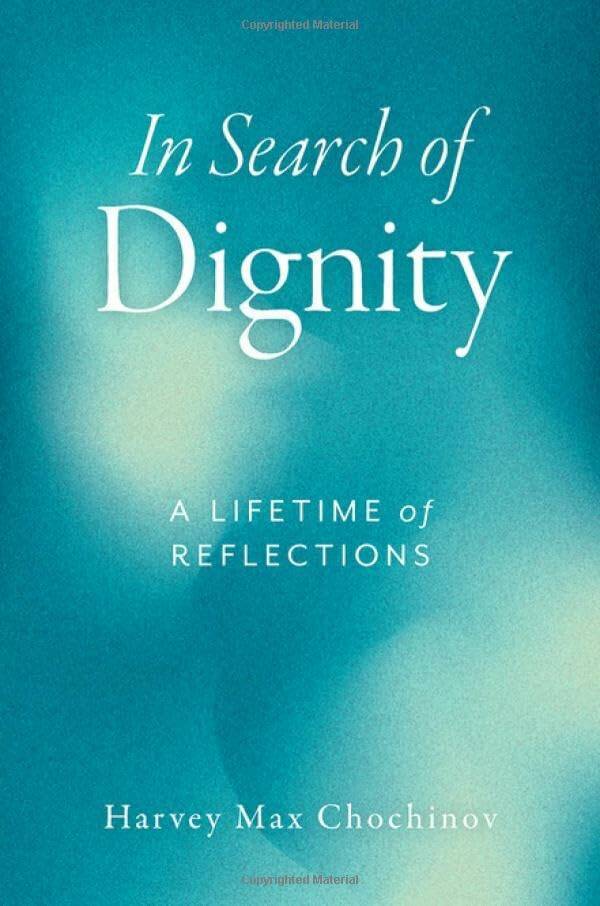
In Search of Dignity
In the face of hallway and assembly-line medicine, Chochinov’s approach is a positive one.
The later articles in Chochinov’s book are the most recent, and here Chochinov asks very pointed questions about medical assistance in dying (MAID). What began as an aid to the terminally ill is expanding to include mental illness, and has led to doctor shopping to move beyond acceptable understanding of palliative care.
The author’s concerns include the argument that “palliative care is part of medicine… MAID can only be considered part of palliative care if this practice resides in the house of medicine. If medicine does not include it, neither can palliative care.”
Chochinov’s years of concern and thoughtfulness are found in one of his summations: “Death is inevitable; suffering ought not to be. I think it will feel like the time before you were born. Knowing our days are numbered makes each one more precious.”
Ron Robinson thinks watching Doc Martin on TV is fun, but not at your hospital bedside.