Peace in the balance
As instability threatens to sweep across the globe, leadup to previous wars offer lessons for today’s powers
Advertisement
Read this article for free:
or
Already have an account? Log in here »
To continue reading, please subscribe:

Digital Subscription
One year of digital access for only $205*
- Enjoy unlimited reading on winnipegfreepress.com
- Read the E-Edition, our digital replica newspaper
- Access News Break, our award-winning app
- Play interactive puzzles
*First annual payment billed as $205.00 + GST for one year. This annual subscription will automatically renew at $233.00 + GST every 52 weeks (10% off the regular annual price of $259.35). Offer available to new and qualified returning subscribers only. Cancel any time.
To continue reading, please subscribe:
Add Free Press access to your Brandon Sun subscription for only an additional
$1 for the first 4 weeks*
- Enjoy unlimited reading on winnipegfreepress.com
- Read the E-Edition, our digital replica newspaper
- Access News Break, our award-winning app
- Play interactive puzzles
*Your next Brandon Sun subscription payment will increase by $1.00 and you will be charged $17.95 plus GST for four weeks. After four weeks, your payment will increase to $24.95 plus GST every four weeks.
Read unlimited articles for free today:
or
Already have an account? Log in here »
Hey there, time traveller!
This article was published 21/03/2026 (196 days ago), so information in it may no longer be current.
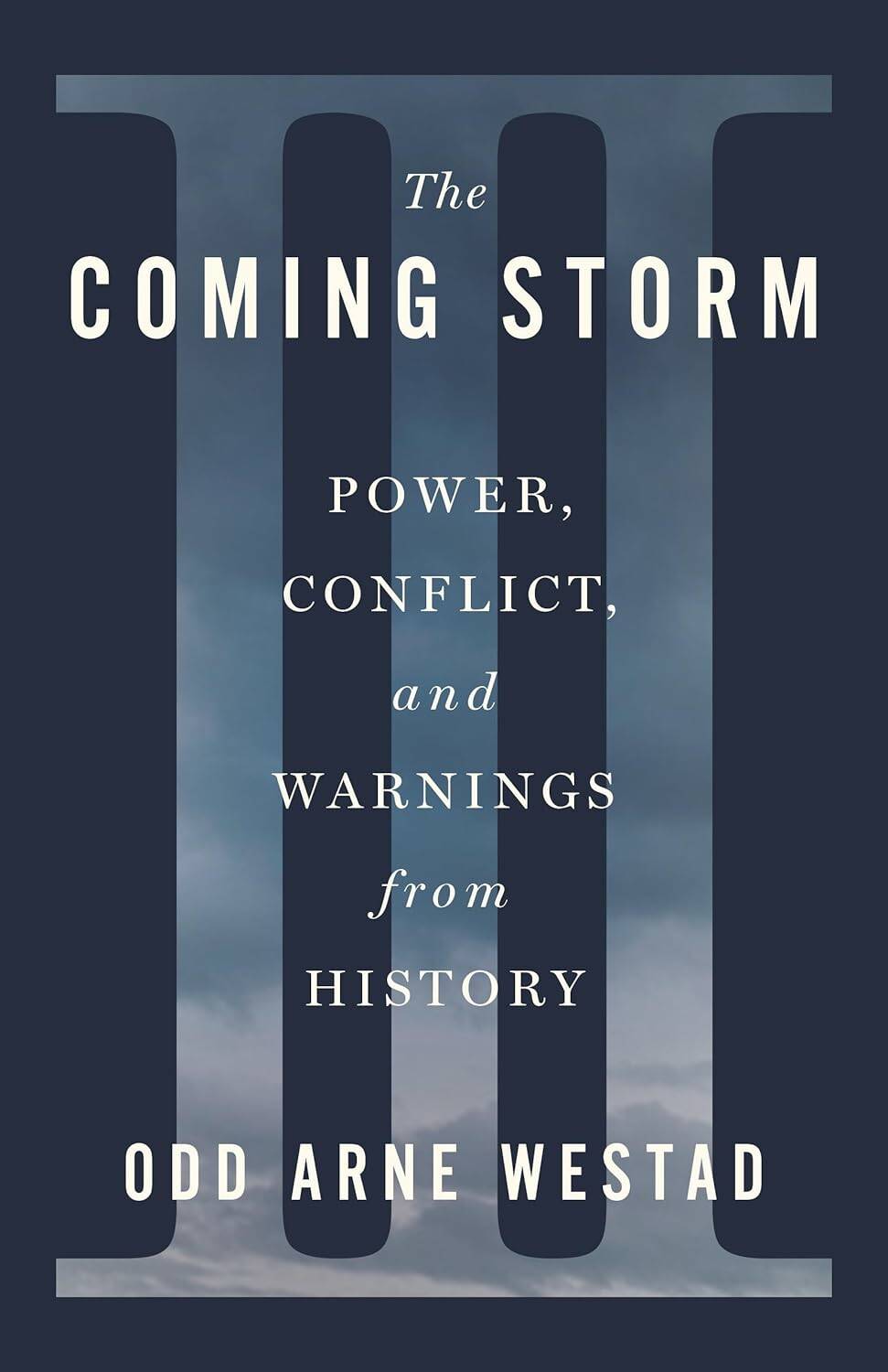
Author Odd Arne Westad probably has more degrees than a thermometer. However, he seems to think us ordinary folks are smarter than we are — at least some of us — because in his new (and 18th) book The Coming Storm he leaves out some critical, basic information.
Nowhere in his book does Westad list the world’s Great Powers, as he calls them, all together. He writes about five of them all at once, and in a manner that leaves the mistaken impression that’s all there are. Later, more of them pop up here and there, if you can keep track. It’s distracting and needless.
Secondly, Westad speaks often in his book of multipolar/multipolarity. But he never unpacks what it is.
Alexander Zemlianichenko / Associated Press files
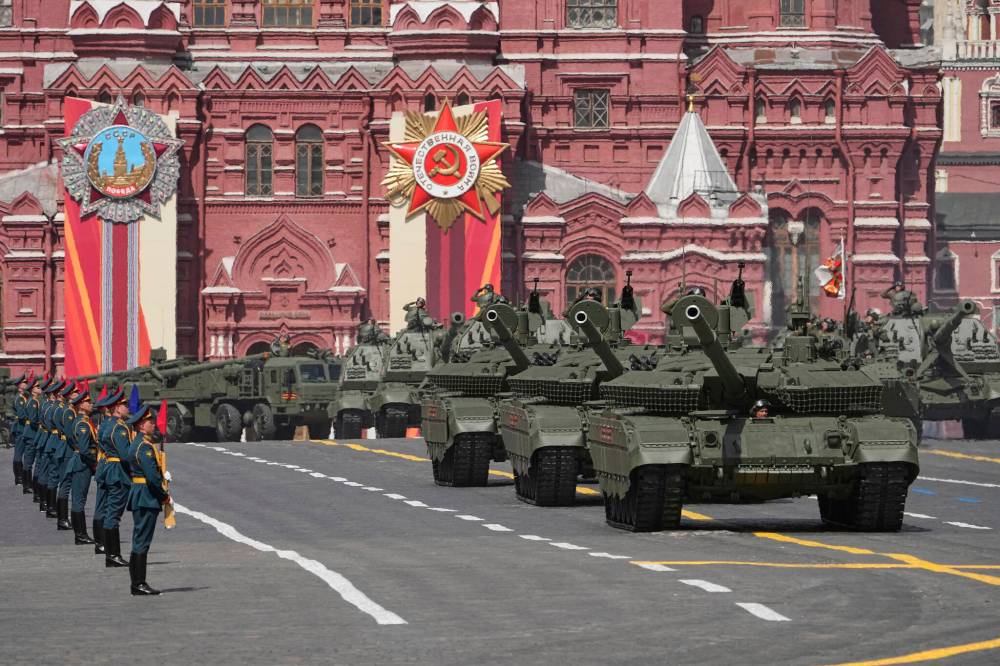
Odd Arne Westad believes what he calls the ‘Great Powers’ must seek compromise, tentative deals on at least some of the issues that are making today’s conflicts more intense.
Westad, a historian at Yale, is already celebrated for his sprawling 2017 book The Cold War: A World History, his intensive study of the causes of the Cold War between the U.S. and the Soviet Union from 1945 to 1991. He has also taught at Harvard and the London School of Economics; his multilingualism (he speaks six languages) helps him research efficiently.
In The Coming Storm, Westad is as perturbed as writer Kenneth Rosen in his recent book Polar War (reviewed in the Free Press on Feb. 21) that humanity is barrelling towards self-destruction this century.
Rosen believes a third world war is coming, and Westad hopes a developing new world order may prevent it.
Westad believes that even if the next war were non-nuclear, “Millions would die. Human development would be set back by a generation, and our children would spend their lifetimes putting the pieces of progress back together again.”
The Great Powers must seek compromise, says Westad, tentative deals for at least some of the issues that today are making conflicts more intense. If not, the cost in human life and suffering, and in social destruction, “would make all other current wars pale in comparison.”
Westad is confident in his analysis of the future, having intimately studied the common factors that existed in the world before the First World War and Second World War, and how these factors helped generate those wars. More importantly, he has identified what he believes would generate a third world war and has come up with ways to avoid it.
A complicating factor in Westad’s rationale is Donald Trump, president of the most powerful nation in the world. He may discredit Westad’s message.
Westad doesn’t mention Trump by name, but does say his country “is going through an era of political and social unrest and a deep fear of decline.”
(“Donald Trump’s presidency threatens much of what is good in this country,” former FBI director James Comey said in A Higher Loyalty in 2018 after he was fired by Trump.)
“If we want to avoid war, we have to prepare for how to avoid it,” Westad says. “The alternative… is war on a scale that the vast majority of us have never experienced.”
Westad describes the issues the Great Powers must address: “One is at least temporary compromises on dangerous issues of sovereignty or territory, such as between the People’s Republic of China and Taiwan. Another is ending ongoing wars, such as in Ukraine and Palestine. A third is not to stifle global trade through tariffs and embargoes. A fourth is to limit arms races in sensitive technologies, A fifth is to co-operate where co-operation is possible, such as on climate issues, pandemics and space exploration.”
Unfortunately, says Westad, “we are not moving toward any such compromises. Instead, we are moving farther away from them.”
The Coming Storm
One of the problems as Westad sees it is that today the Great Powers, as they did before the First World War, “act as if they believe full sovereignty exists only for them and not for smaller countries, be it Iraq or Ukraine.”
Westad explains that “perhaps the most difficult lesson is that the preservation of peace must not make change in the international system impossible.”
For example, he says that means “it is likely that (China) will get at least some of the position of overall influence in East Asia that it searches for.”
As for Ukraine, Westad says: “It is crucial that Ukraine be offered a fast track to EU membership and economic opportunities through working with Europe.”

Finally, Westad concludes that we face uncertain times. “The only thing that is certain is that constellations of power will not remain what they were before and that new solutions will have to be found to keep countries secure and to prevent another world war.
“The task is how to manage the transition to multipolarity without creating the kind of spheres of influence for Great Powers that are based solely on might making right.
“A multipolar world is not something the Great Powers can use or prevent. It is happening today because of changes in the underlying economic and social structure of world affairs.”
He concludes: “On that ambition rests the future of world peace and of generations to come. ”
Barry Craig is a retired journalist.