Sketches of the past
Haddon’s illustrated memoir details troubled upbringing — and a yearning for peace in the present
Advertisement
Read this article for free:
or
Already have an account? Log in here »
To continue reading, please subscribe:

Digital Subscription
One year of digital access for only $205*
- Enjoy unlimited reading on winnipegfreepress.com
- Read the E-Edition, our digital replica newspaper
- Access News Break, our award-winning app
- Play interactive puzzles
*First annual payment billed as $205.00 + GST for one year. This annual subscription will automatically renew at $233.00 + GST every 52 weeks (10% off the regular annual price of $259.35). Offer available to new and qualified returning subscribers only. Cancel any time.
To continue reading, please subscribe:
Add Free Press access to your Brandon Sun subscription for only an additional
$1 for the first 4 weeks*
- Enjoy unlimited reading on winnipegfreepress.com
- Read the E-Edition, our digital replica newspaper
- Access News Break, our award-winning app
- Play interactive puzzles
*Your next Brandon Sun subscription payment will increase by $1.00 and you will be charged $17.95 plus GST for four weeks. After four weeks, your payment will increase to $24.95 plus GST every four weeks.
Read unlimited articles for free today:
or
Already have an account? Log in here »
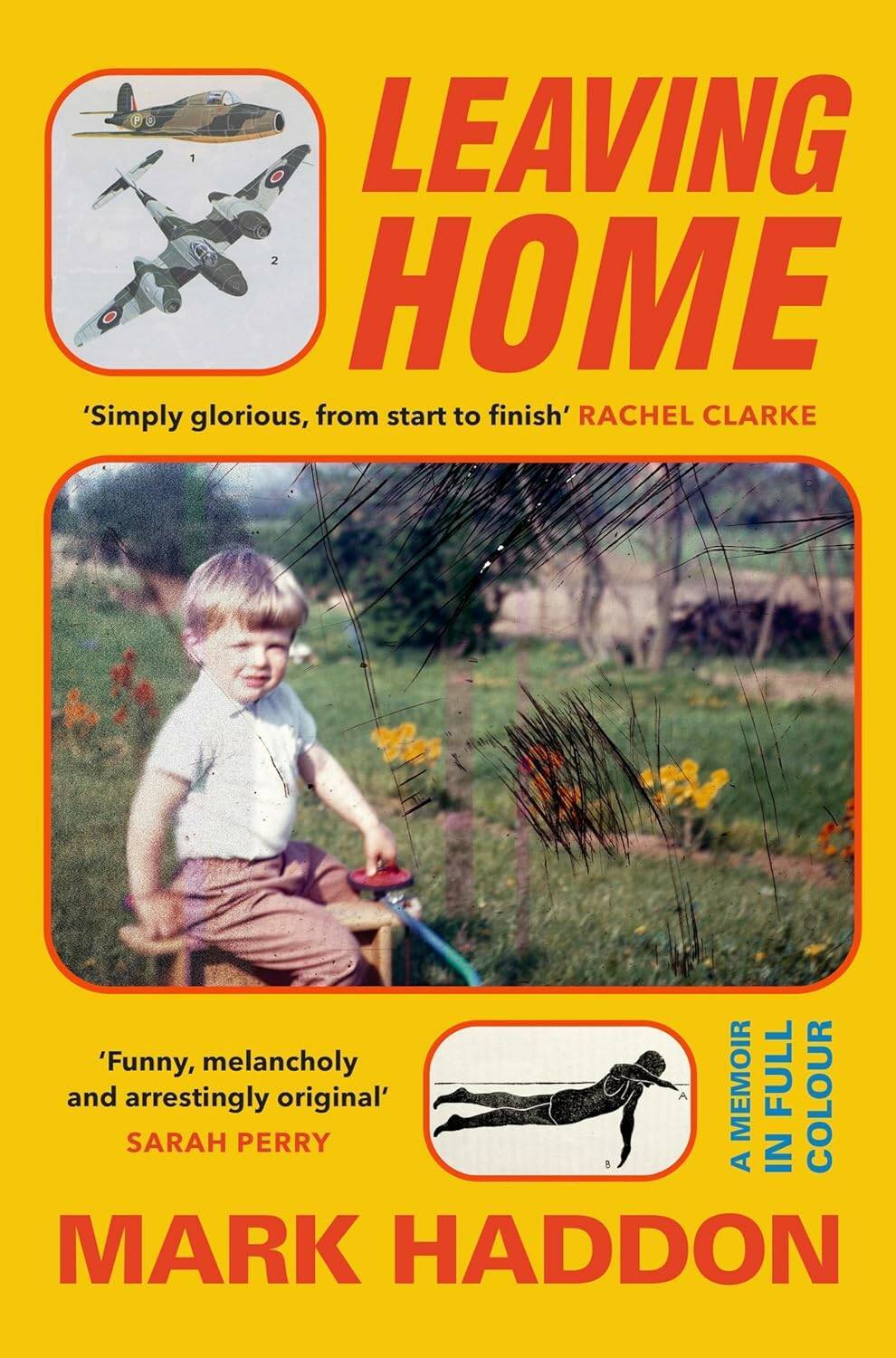
The international success of Mark Haddon’s 2003 novel The Curious Incident of the Dog in the Night-Time propelled the British writer and artist into literary stardom, yet failed to quell his internal discontent and depression. In his illustrated memoir Leaving Home, Haddon reveals how his unhappy childhood, anxious adolescence and generally troubled adult years have directed his writing.
The Curious Incident won the Whitbread Book of the Year Award as well as Los Angeles Times Book Prize for First Fiction. Adapted as a Tony Award-winning play, it was staged at the Royal Manitoba Theatre Centre in 2016. Haddon also wrote the bestselling novels A Spot of Bother and The Red House, as well as a poetry collection, and has written and illustrated children’s books.
Haddon grew up near Northampton in the 1960s. He and his younger sister Fiona were raised by a father who, despite training as an architect, primarily earned his living through designing abattoirs. Their mother likely suffered from undiagnosed and untreated depression, and to the young Haddon her unhappiness and unending criticism led to his feeling of being unloved.
Leaving Home
He includes one colour photo showing his mother as a beautiful, smiling young woman, and wonders why she changed and became so discontented. “She radiates something I never saw her radiate in real life, nor in any later photos, even those in which she is smiling and appears happy… Maybe the picture’s deceptive, but I think that soon after it was taken some kind of light died in her.”
Feeling unwanted, Haddon retreated into the security he discovered in science. A drawing of the solar system wall chart hanging on his bedroom wall was often the last thing he saw before falling asleep. He believed science offers the reassurance of using simple principles to control complex phenomena and finding answers.
His parents managed to afford to send him to boarding school when he was 12, where he tried to fly under the radar and avoid being the target of bullies. “A fear ran constantly under my every waking moment like a deep discordant basso continuo, a fear either that someone might do something to me or that I might be punished for some offence I had unknowingly committed,” Haddon writes.
Along with a photo of five stitches in his arm and drawing of a dog with a bleeding arm, Haddon writes about cutting his arm more deeply than planned in 2024. “I feel fine now, because that’s what cutting does. It’s not the reason I do it. I do it because I’m uncontrollably angry with myself and there’s just too much pressure inside my head,” he says, adding that he understands how the act of cutting can become addictive because it brings calmness.
Haddon eventually assumes responsibility for overseeing his parents’ care as they age. Already placed in a care centre due to dementia, Haddon’s father is found to have an untreatable wound on his toe. The consultant explains that amputation isn’t an option, and that the infection will result in fatal sepsis within six months.
When Haddon tells his mother the news, she is upset that her husband’s death will take that long. During a short visit with her dying husband, she tells him to “just go to sleep.”
Haddon’s own hypochondria first manifested in A Spot of Bother, as the protagonist deals with a lesion he is convinced will be fatal. “Every time I glanced at my own body I saw a lump, a discolouration, a blemish that was the beginning of a lesion that would soon become a tumour,” he writes.

Charles Moriarty photo
Feeling unwanted as a child, Mark Haddon retreated into the security he discovered in science.
One positive part of Haddon’s life is his strong relationship with his wife Sos and their two sons. He credits Sos with keeping him functioning in a relatively normal manner. “She’s been inordinately patient with my sometimes very unwell mind, but never to the point of indulgence,” he writes.
In Leaving Home, Haddon’s prose and illustrations — both his own and other works he has curated — provide a creative view into his life.
Andrea Geary is a freelance writer in Selkirk.