More than just a mystery
Intergenerational, historical whodunit sees pair of women push back against societal norms
Advertisement
Read this article for free:
or
Already have an account? Log in here »
To continue reading, please subscribe:

Digital Subscription
One year of digital access for only $205*
- Enjoy unlimited reading on winnipegfreepress.com
- Read the E-Edition, our digital replica newspaper
- Access News Break, our award-winning app
- Play interactive puzzles
*First annual payment billed as $205.00 + GST for one year. This annual subscription will automatically renew at $233.00 + GST every 52 weeks (10% off the regular annual price of $259.35). Offer available to new and qualified returning subscribers only. Cancel any time.
To continue reading, please subscribe:
Add Free Press access to your Brandon Sun subscription for only an additional
$1 for the first 4 weeks*
- Enjoy unlimited reading on winnipegfreepress.com
- Read the E-Edition, our digital replica newspaper
- Access News Break, our award-winning app
- Play interactive puzzles
*Your next Brandon Sun subscription payment will increase by $1.00 and you will be charged $17.95 plus GST for four weeks. After four weeks, your payment will increase to $24.95 plus GST every four weeks.
Read unlimited articles for free today:
or
Already have an account? Log in here »
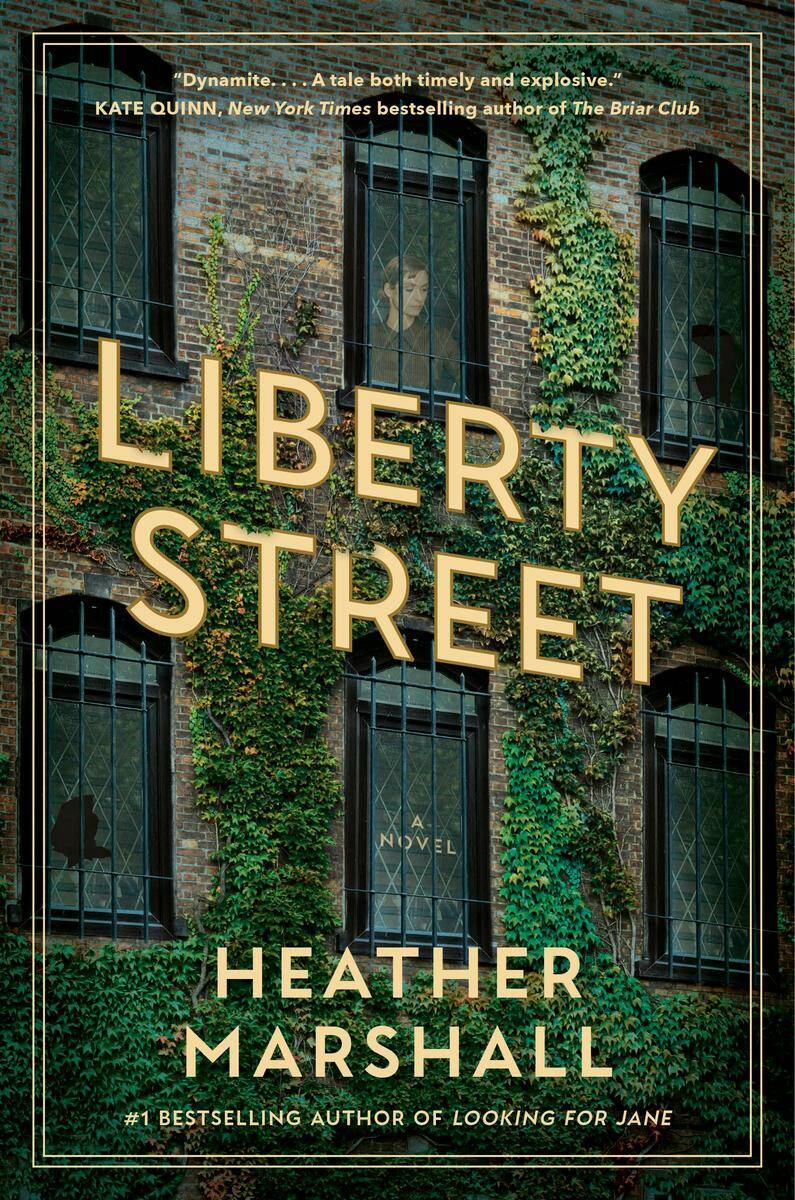
Liberty Street, the third novel by Heather Marshall, Toronto author and self-described “incorrigible feminist,” is a historical mystery both captivating and cautionary, with murder as motivation for societal change.
The story is told through two primary timelines and points of view: Emily Radcliffe in 1961, and detective Rachel Mackenzie in 1996. Each hold strong views on gender inequality of their times — in their pursuit of careers Emily is motivated by ambition, while Rachel is driven by pain.
Rachel’s character is revealed slowly as she works through a puzzling case. In Millgate, Ont. in 1996, decades-old human remains are discovered in an unmarked cemetery plot. Who is this person? Why are they there? Rachel hates unanswered questions. She is guarded about her own life, but as she unravels the mystery, tragic events of her past unfurl.

Amanda Kopcic photo
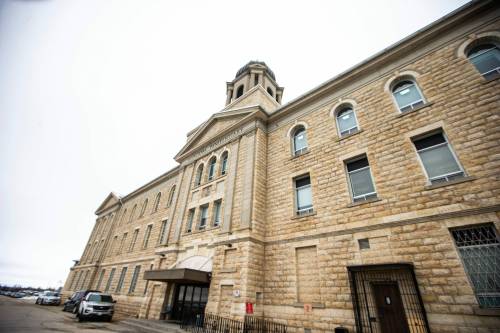
Heather Marshall’s women’s prison is based on a real-life Toronto facility that operated from 1880 to 1969.
We meet Emily in 1961, a young woman working as an editorial assistant in the offices of Toronto woman’s magazine Chatelaine. The magazine is meant to share stories on fashion and home-keeping, however, fierce editor-in-chief Doris Anderson sandwiches in stories on subjects such as spousal abuse and birth control, which go unnoticed by “the boys upstairs” as long as sales remain strong.
Emily has a secret: she doesn’t want to marry her boyfriend — unconventional, in an age where women are encouraged to marry soon, and well. He’d insist she leave her job to tend house and home, which to Emily is a fate akin to death. Inspired by her hero, Nellie Bly, who in 1887 went undercover and wrote on conditions within a women’s asylum, she dreams of becoming a journalist. We understand Emily’s tenacity from the start. We know where she is going, and why.
Her course is set when a delivery driver to the Mercer Prison for Women on Liberty Street is tossed a note over the fence. Because it is a cry for help, outlining starvation and horrendous conditions, he brings it to the police, who laugh it off, and then to Maclean’s magazine. A receptionist sends him downstairs to Chatelaine, which she deems more suited to “woman’s issues.” It reaches Emily who, outraged, brings it to Doris. They devise a daring plan for Emily to go undercover to expose whatever it is that is happening at the prison. Cue the heavy foreboding.
After learning of Ontario’s Female Refugees Act of 1927 — a real act in Ontario’s books, also known as the “Incorrigible Law” — Emily is brought in front of a judge, where she is sentenced to six months in Mercer Prison for being “unmanageable.” And so begins her life in hell.
We alternate between Emily in prison and Rachel on the case, each in pursuit of truth. Inside Mercer, Emily meets women incarcerated for many reasons, including the “hysteria” of post-partum depression or psychosis, homosexuality, and being born transgender.
In her end notes, Marshall explains these characters were inspired by real people. The Mercer Prison for Women was based on the Andrew Mercer Reformatory for Females, which operated from 1880 to 1969.
Just three decades later, though not faced with issues and penalties as extreme, Rachel is a woman in a non-traditional role. She excels at her job yet faces ever-present and often unsubtle inferences that a man would perform better.
Liberty Street
In comparing the imagined lives and challenges of these two women to those of our own — and of our sisters, of our mothers and our daughters — society has come a long way. And yet, not far enough.
Liberty Street is a well-researched balance of fact and fiction that will both illuminate and entertain. It is a most satisfying and well-paced historical mystery. You think you know what will happen, but maybe you don’t.
Anita Daher is an author, actor, mama and nana in Winnipeg.