Grandiose garb
Deep dive into Royal couture reflects social, political context throughout first half of 20th century
Advertisement
Read this article for free:
or
Already have an account? Log in here »
To continue reading, please subscribe:

Digital Subscription
One year of digital access for only $205*
- Enjoy unlimited reading on winnipegfreepress.com
- Read the E-Edition, our digital replica newspaper
- Access News Break, our award-winning app
- Play interactive puzzles
*First annual payment billed as $205.00 + GST for one year. This annual subscription will automatically renew at $233.00 + GST every 52 weeks (10% off the regular annual price of $259.35). Offer available to new and qualified returning subscribers only. Cancel any time.
To continue reading, please subscribe:
Add Free Press access to your Brandon Sun subscription for only an additional
$1 for the first 4 weeks*
- Enjoy unlimited reading on winnipegfreepress.com
- Read the E-Edition, our digital replica newspaper
- Access News Break, our award-winning app
- Play interactive puzzles
*Your next Brandon Sun subscription payment will increase by $1.00 and you will be charged $17.95 plus GST for four weeks. After four weeks, your payment will increase to $24.95 plus GST every four weeks.
Read unlimited articles for free today:
or
Already have an account? Log in here »
Hey there, time traveller!
This article was published 11/04/2026 (188 days ago), so information in it may no longer be current.
Once upon a time, British royals didn’t angst much about their raunchy misdeeds being headlined in the media. Any connection to questionable characters or inappropriate events was more likely dismissed, diminished or ignored by kowtowing newshounds. Publishers turning a blind eye to sketchy royal shenanigans was de rigueur, and everyone liked it that way.
Fast forward 80 years. Today, royal drama and sketchy miscues do the rounds on social media 24-7; it’s the sustenance that scandal-hungry consumers feast on and biographers happily cater to.
Case in point are two recent U.K. titles that became bestsellers weeks before a dustjacket even hit a bookstore: Tom Bower’s Betrayal: Power, Deceit & the Fight for the Future of the Royal Family, and Andrew Lownie’s Entitled: The Rise and Fall of the House of York, a look at the pre-Epstein rise and smutty fall of Andrew Mountbatten-Windsor (formerly Prince Andrew) and Sarah Ferguson.
Canadian Press photo archive
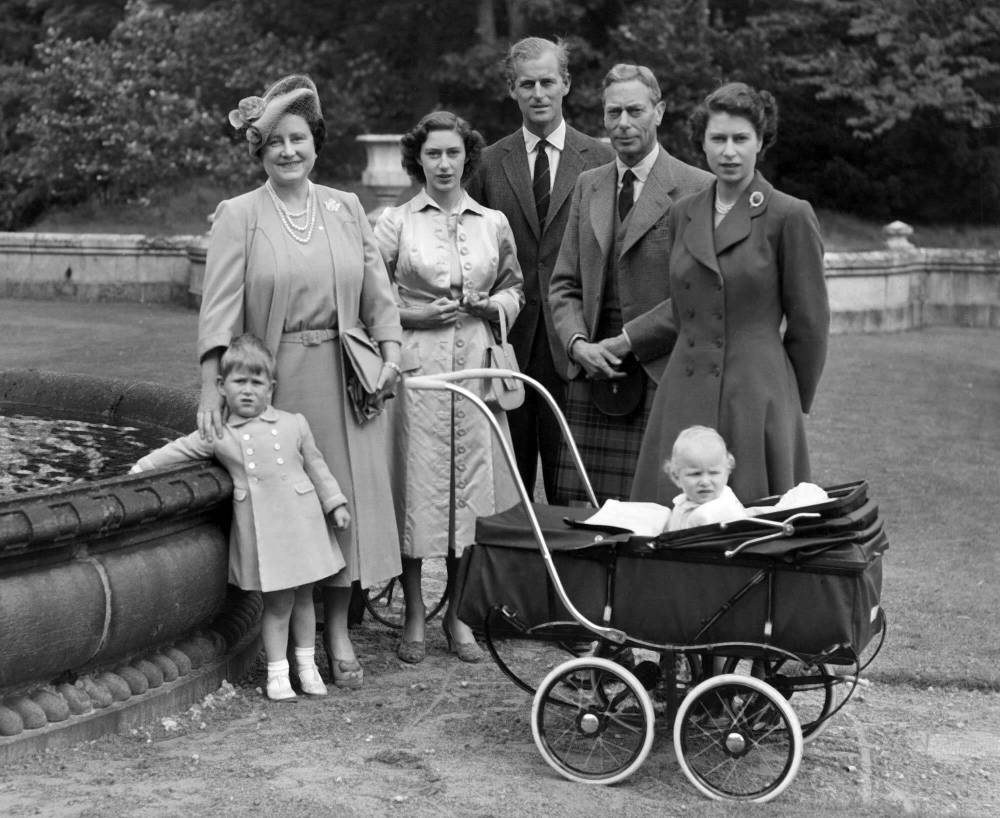
In this 1951 photo, the Royal family (from left: Prince Charles, Queen Elizabeth, Princess Margaret, the Duke of Edinburgh, King George VI, Princess Elizabeth and Princess Anne pose for a photo.
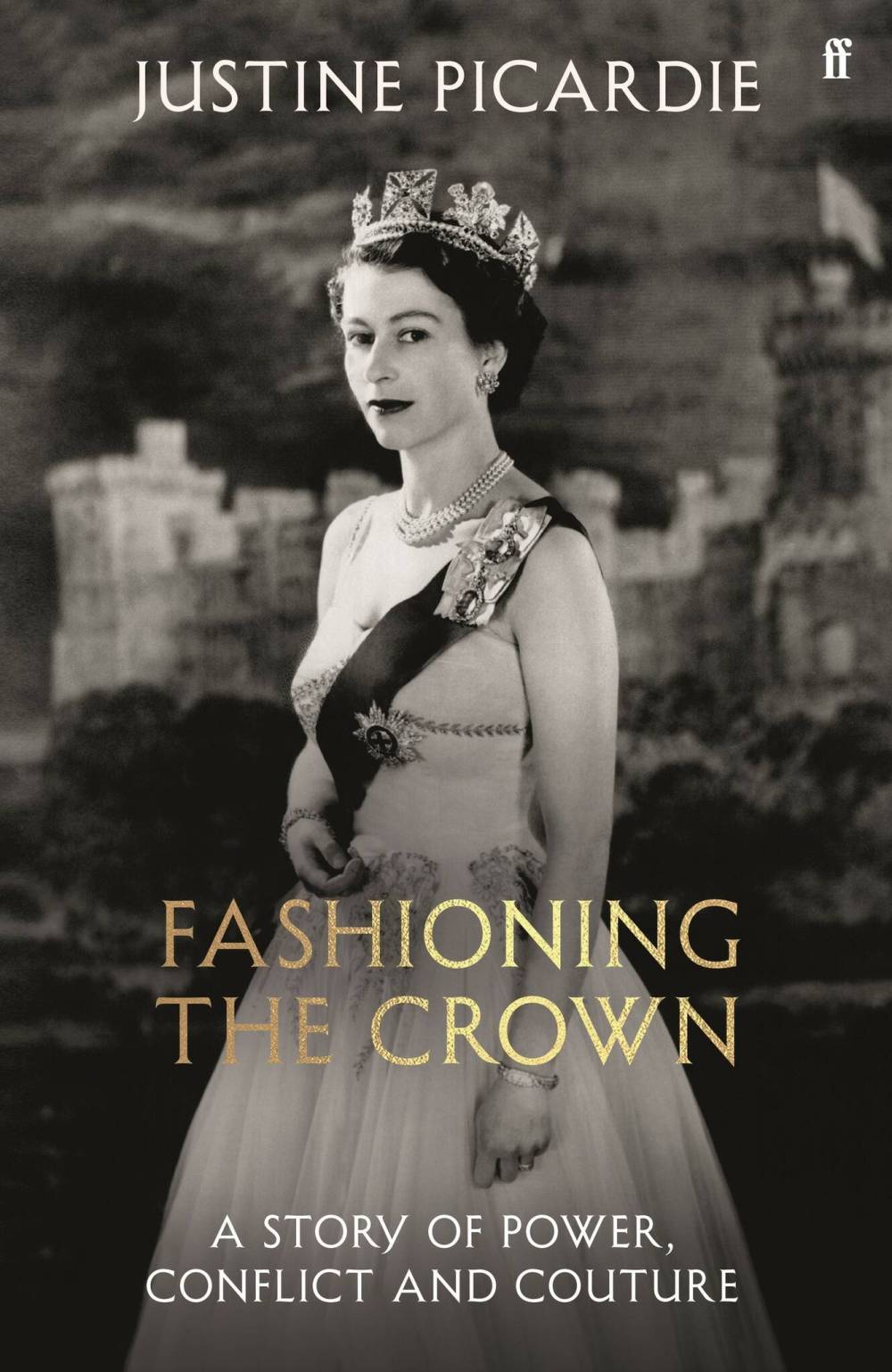
Buried in the current nest of royal tell-alls is Fashioning the Crown: A Story of Power, Conflict and Couture, a serious, hefty book, recently launched with little fanfare and even less hype. And its author Justine Picardie isn’t nettled in the slightest about that.
“I wouldn’t want people to get the wrong idea about this book, that it’s just about pleats and petticoats,” she said in a recent Country Life podcast. “I’ve always been interested in fashion as a way of looking at a wider historical, political and cultural context.”
Fashioning The Crown is no mindless holiday read; it’s for diehard history buffs. Picardie, a British-born fashion writer, biographer and investigative journalist, delivers a well-researched, serious book that connects some of the 20th century’s most turbulent times with the fashion trends of those decades — and the famous couturiers from the 1940s who created those looks while receiving clandestine spy training.
Picardie lives in London with her husband, a godson of the late Prince Philip. That proximity to the British crown helped facilitate unfettered access to the royal information and textile archives stored in Windsor Castle.
While she spent months there perusing thousands of documents and photographs, a bonus, she says, was seeing and handling the late queen’s wardrobe while it was being catalogued for posterity, something Picardie calls “an incredible privilege.”
Canadian Press photo archive
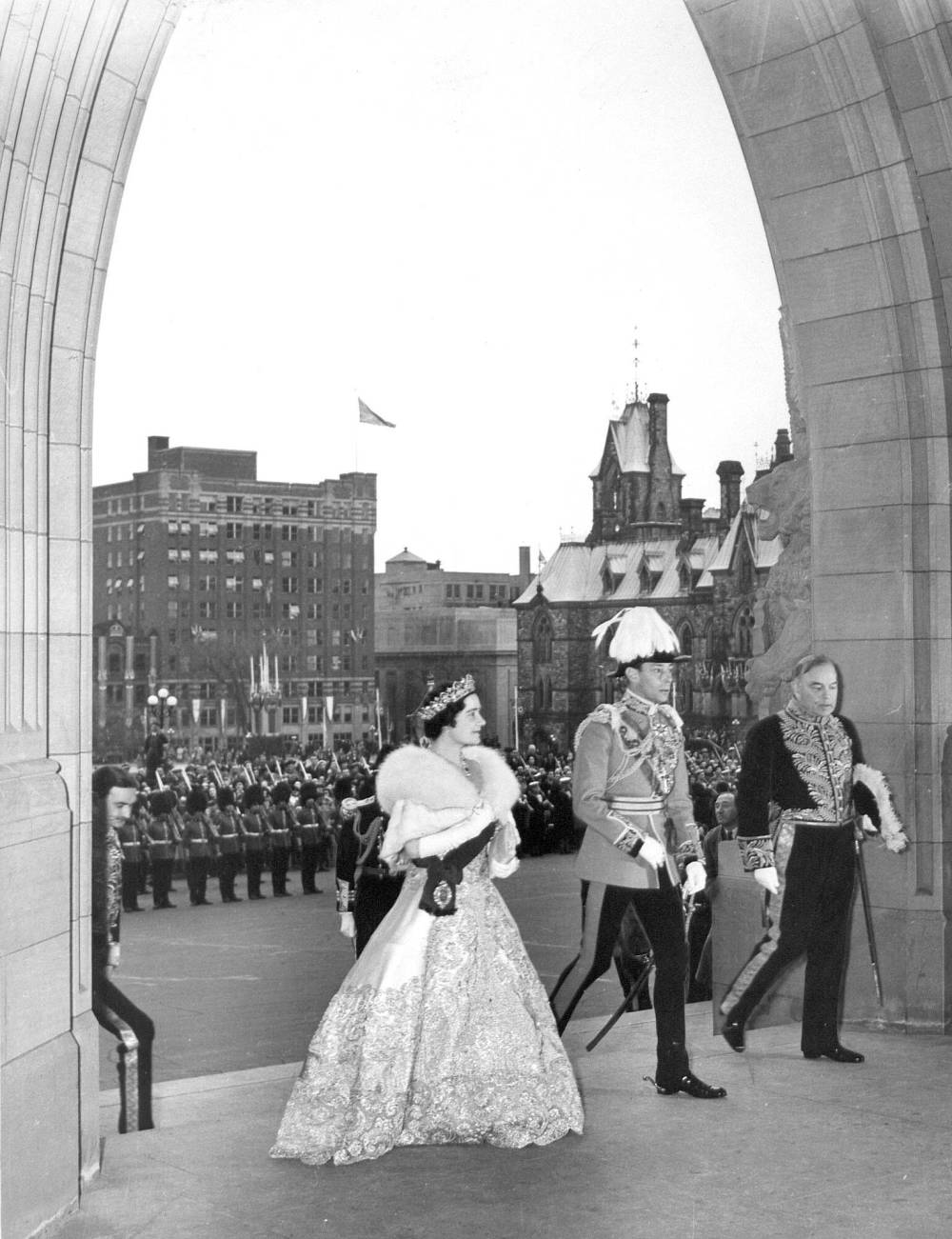
In this 1939 photo, Queen Elizabeth (the Queen Mother) and King George VI (centre) enter the Parliament Buildings in Ottawa with then-prime minister Mackenzie King. Two extra rail cars were needed to accommodate the Queen’s 40 trunks of tour clothes and accessories.
“The link between fashion and Second World War espionage is something I’ve long been interested in,” says Picardie, 65, who even once queriedQueen Elizabeth II on the topic during a stay at Balmoral.

“I knew that there would be an interesting story to tell because of (British couturier) Hardy Aimes’ links to war intelligence,” she says of the famed designer, who she met in the 1990s. Picardie adds that Aimes (1909-2003) never spoke of his spy work during his lifetime and, mysteriously, his official war records are “laundered.”
Fashioning the Crown begins in 1917 when George V, sensing strong anti-German sentiment in England, “fashioned” the new House of Windsor from its previous House of Saxe- Coburg-Gotha Germanic roots. He was one of few male royals to recognize what Picardie calls “the soft power” of regal clothing on public perception. Colour, quantity and quality all mattered equally, Picardie writes, citing the 1939 visit to North America of George VI and Queen Elizabeth (Queen Mother), where two extra rail cars were needed to accommodate the Queen’s 40 trunks of tour clothes and accessories.
Picardie’s book dives deeply into the House of Windsor’s connection to seismic global events, including both world wars, the rise of fascism, the threat of Nazi invasion throughout Europe and the abdication of England’s Edward VIII to marry American divorcée Wallis Simpson. A good chunk of Fashioning is devoted to the flighty, pre- and post-abdication life of the Duke and Duchess of Windsor, as they became known. The book concludes shortly after the 1953 coronation of Elizabeth II.
Of special interest in Picardie’s book are the stunning Cecil Beaton photographs and designer sketches of royal femmes wearing designs by Aimes, Norman Hartnell, Elsa Schiaparelli and Anna Wolkoff. The images dispel any doubt about the connection between a royal’s wardrobe, their character and the times in which they lived.

Richard Phibbs photo
Justine Picardie
GC Cabana-Coldwell is a Winnipeg freelance writer. For fashion-loving history buffs, in April, 200 of the late Queen’s outfits will appear in a Buckingham Palace exhibit called “Queen Elizabeth II: Her Life and Style.”
Fashioning the Crown