The big chill
COVID cohort ponders sex, careers and relationships in quietly satiric prose
Advertisement
Read this article for free:
or
Already have an account? Log in here »
To continue reading, please subscribe:

Digital Subscription
One year of digital access for only $205*
- Enjoy unlimited reading on winnipegfreepress.com
- Read the E-Edition, our digital replica newspaper
- Access News Break, our award-winning app
- Play interactive puzzles
*First annual payment billed as $205.00 + GST for one year. This annual subscription will automatically renew at $233.00 + GST every 52 weeks (10% off the regular annual price of $259.35). Offer available to new and qualified returning subscribers only. Cancel any time.
To continue reading, please subscribe:
Add Free Press access to your Brandon Sun subscription for only an additional
$1 for the first 4 weeks*
- Enjoy unlimited reading on winnipegfreepress.com
- Read the E-Edition, our digital replica newspaper
- Access News Break, our award-winning app
- Play interactive puzzles
*Your next Brandon Sun subscription payment will increase by $1.00 and you will be charged $17.95 plus GST for four weeks. After four weeks, your payment will increase to $24.95 plus GST every four weeks.
Read unlimited articles for free today:
or
Already have an account? Log in here »
Hey there, time traveller!
This article was published 11/04/2026 (185 days ago), so information in it may no longer be current.
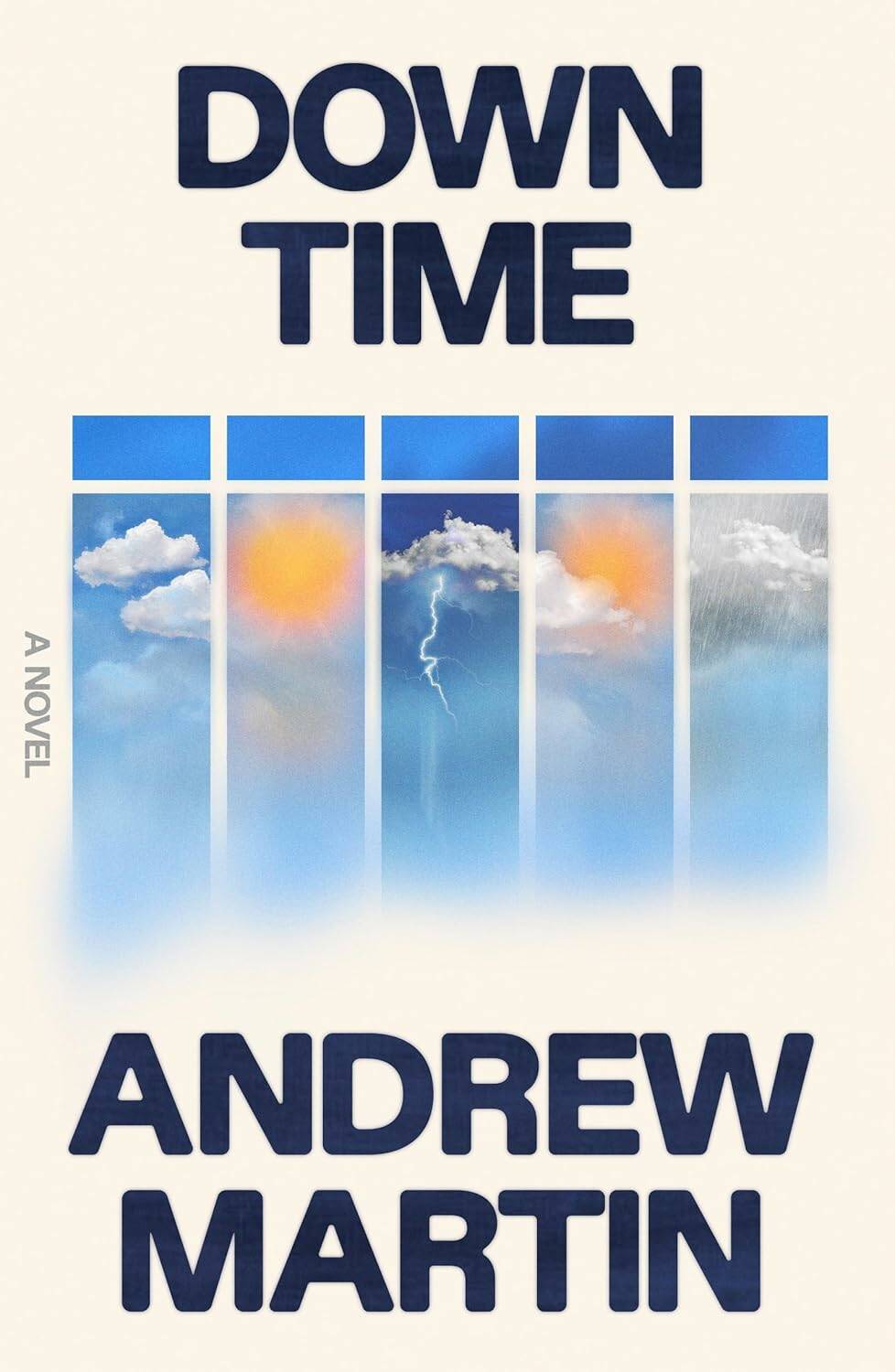
The “down time” referenced in the title of this smart, funny but fatally plotless American literary novel is the COVID-19 pandemic.
It also has a metaphorical meaning. Many of its characters — a group of over-educated, Eastern seaboard artsy liberals, all within shouting distance of middle-age — feel stalled in life.
COVID does not help matters. But a bigger problem, author Andrew Martin suggests, might be too many choices and too much over-thinking.

Caroline Martin photo
Andrew Martin’s literary influences semingly stretch back to the louche worlds of Frank O’Hara’s poetry and the novels of John Cheever and Richard Yates.
Down Time is Martin’s second novel. His 2018 debut, Early Work, turned critics’ heads with its witty depiction of a group of similarly over-educated liberals on the cusp of 30. The New York Times named it one of its five best novels that year.
He followed up in 2021 with a collection of short stories, Cool for America, about, yes, similar folks. Several stories bore evidence of having been written before Early Work.
In Down Time, Martin stays within his fictional universe. His characters are what demographers would call “elder millennials,” born circa 1980 (as Martin himself was).
They are of a recognizable urban-hipster type — the “creative class,” according to U.S. economist Richard Florida’s 20-year-old term, or “symbolic capitalists” in the more recent coinage of American sociologist Musa Al-Gharbi in his book We Have Never Been Woke.
They keep up with cultural trends, read the latest books, listen to U.S. National Public Radio, detest the “orange Cheeto man.”
They also have a Peter Pan-like quality. At 40ish they’re still indulging in too much drink, taking too many drugs and fooling around with inadvisable sexual partners, straight and gay.
Martin narrates, in alternating chapters, from the points of view of four separate characters, three in close third person.
Cassandra teaches history at a Catholic prep school in Boston. (Down Time has an ironic Catholic, or at least lapsed-Catholic, sensibility.) Her addiction-prone live-in boyfriend, Aaron, is fresh out of an “upscale rehab facility.”
Antonia, a tenure- chasing bisexual English prof, has published a trendy book “on depictions of ecocide in film and literature.”
We hear from just one character, Malcolm, also a college English prof but a would-be serious novelist, in the first person.
Here he recalls courting his wife Violet, a medical doctor.
“She loved Auden, Bergman, Sontag — the more self-consciously serious, the better,” Malcolm says. “I tried unsuccessfully to convince her of the merits of Frank O’Hara, and she sounded like I just liked reading about sex and art and New York City.”
Down Time
Martin is well aware that his major topics, too, are “sex, art and New York City.” (Well, don’t forget Boston.) But he is also signalling his literary influences, which stretch back to the louche world of O’Hara’s ’50s poetry, through the novels of John Cheever and Richard Yates and even the hyper-literate 1990s films of writer-director Whit Stillman.
Down Time is also a cousin of comic novelist Gary Shteyngart’s 2021 pandemic-set novel Our Country Friends, although Martin is not as quick on the draw.
Over 300 pages, his characters dissect their careers, their relationship problems, their sex lives (in graphic detail) and the perilous state of American democracy under you-know-who.

Almost all the pleasures of the book are in Martin’s closely observed and quietly satiric prose. But he is two-thirds in before anything resembling a plot turn rears its head.
Finally, a death, a marriage, a pregnancy, hints of adult responsibility being taken!
“Could it be enough,” Cassandra asks at the end, “that the world just kept going?”
That might be reality, but successful fiction demands something more.
Morley Walker is a retired Free Press editor and writer.