Hallowed hall
Johnston’s mythic symbolism in Newfoundland novel excavates the province’s past
Advertisement
Read this article for free:
or
Already have an account? Log in here »
To continue reading, please subscribe:

Digital Subscription
One year of digital access for only $205*
- Enjoy unlimited reading on winnipegfreepress.com
- Read the E-Edition, our digital replica newspaper
- Access News Break, our award-winning app
- Play interactive puzzles
*First annual payment billed as $205.00 + GST for one year. This annual subscription will automatically renew at $233.00 + GST every 52 weeks (10% off the regular annual price of $259.35). Offer available to new and qualified returning subscribers only. Cancel any time.
To continue reading, please subscribe:
Add Free Press access to your Brandon Sun subscription for only an additional
$1 for the first 4 weeks*
- Enjoy unlimited reading on winnipegfreepress.com
- Read the E-Edition, our digital replica newspaper
- Access News Break, our award-winning app
- Play interactive puzzles
*Your next Brandon Sun subscription payment will increase by $1.00 and you will be charged $17.95 plus GST for four weeks. After four weeks, your payment will increase to $24.95 plus GST every four weeks.
Read unlimited articles for free today:
or
Already have an account? Log in here »
In this extremely Catholic novel, veteran Newfoundland writer Wayne Johnston takes aim at the repressive religious environment that formed — or deformed — his home province.
The title character and first-person narrator, Vivian Holloway, is a “novice” in the Catholic meaning of the term — a member of a religious order who has yet to take his or her vows.
It is 1947, and “Vivvy,” at age 28, has just returned to her family home, “the largest private residence in Newfoundland,” after eight years in a convent, failing to become a nun.

Mark Raynes Roberts photo
The pre-Confederation Newfoundland setting of Wayne Johnston’s new novel will be familiar to readers of his other books, such as his best-known work, 1998’s The Colony of Unrequited Dreams.
Apparently, belief in a Christian god is a prerequisite of the job.
Highly irreverent by nature if not nurture, Vivvy takes more pleasure in logic and language than she does in theology. A better title for S. Thomas Aquinas’s Summa Theologica, she jokes, would be “I Guess You’ll Have to Take My Word for It.”
Her parents having died, Vivian is the youngest of 12 siblings, 10 of them male. One of Newfoundland’s most prominent families, the Holloways made their fortune in the cod fishery in the mid-19th century.
This generation of boys were all dispatched to the priesthood. Vivvy’s oldest sister, Freda, became a missionary doctor in Africa. But she returned home after her husband and his pregnant mistress died in a car crash. She came back with the illicit fruit of that union, a now-five-year-old boy, Ivan.
In exchange for her keep, Vivian will serve as Ivan’s tutor. It is thematically apt that Vivian and Ivan’s names are composed of the same letters.
When Vivian was Ivan’s age, she suffered a terrible experience that stunted her growth — she and Ivan are the same height — and left her facially disfigured.
She hides her injuries, even from herself, behind veils of different colours and fabrics, earning her the nickname Salomé after the veiled heroine of Oscar Wilde’s biblically themed 1891 play.
Johnston’s novel takes place over a week in Holloway Hall as Vivvy learns to love Ivan and pushes back against the authoritarian rule of Freda and her brothers.
Johnston devotes most of his 300 pages to an excavation of the past and the various characters associated with the Holloways.
We learn of Vivvy’s lonely childhood, Freda’s years in Africa and the influence of their various brothers, friends and servants.
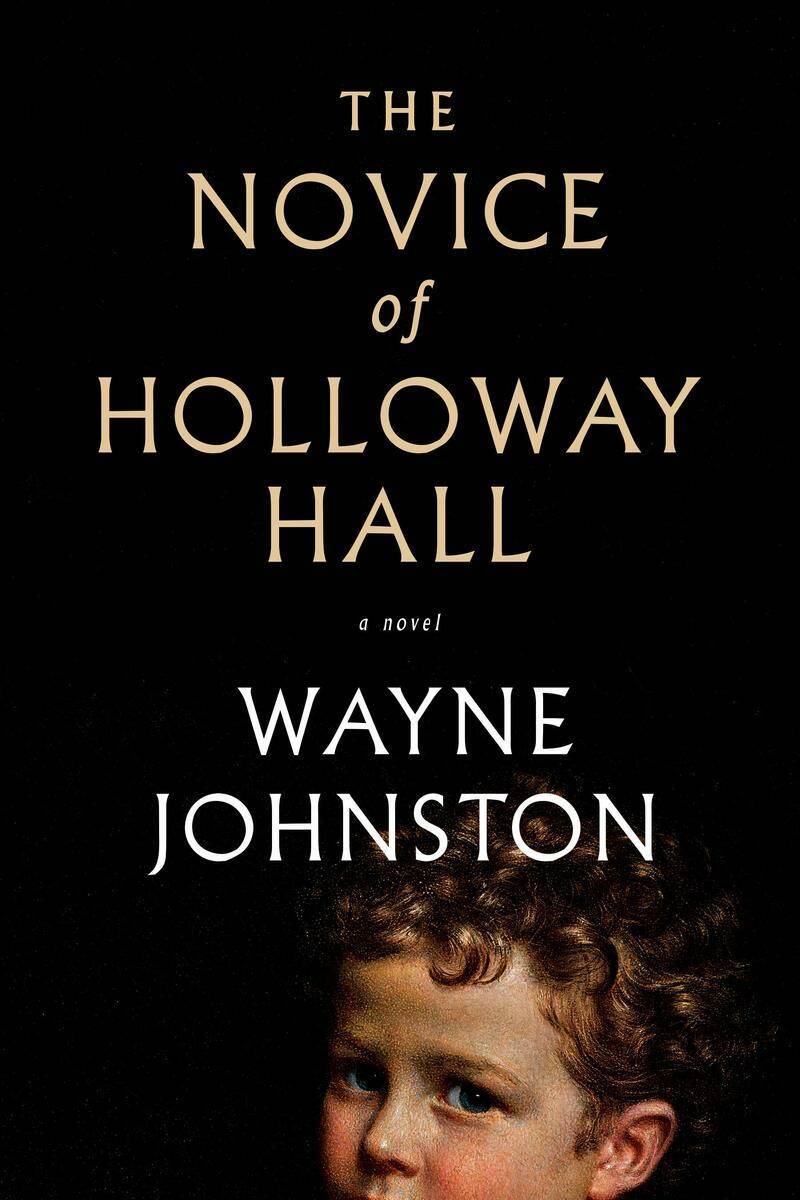
The Novice of Holloway Hall
This all leads to a revelation of the dark secrets that resulted in the long-buried Holloway family shame. Sex plays a big role in a novel that is, on some levels, about sexual repression.
The pre-Confederation Newfoundland setting will be familiar to readers of Johnston’s best-known novel, The Colony of Unrequited Dreams (1998), and its companion sequels, The Custodian of Paradise (2012) and First Snow, Last Light (2023).
With its reliance on mythic symbolism, the novel might remind Canadian readers of Robertson Davies’ 1970s Deptford Trilogy. Vivvy’s girlhood tragedy carries similar weight to the snowball thrown in the early pages of Davies’ Fifth Business.
Johnston, the author of 13 previous titles, among them a couple of memoirs, has long been a master of mellifluous prose (though his countless uses of the non-standard variant “alright” instead of “all right” seems anachronistic). Vivvy’s witty punning and ironic commentary give the book its primary zing.
But the fact that all the action takes place in the past — a common failing of literary novels — does make The Novice of Holloway Hall feel more tedious than it needs to be.
Morley Walker is a retired Free Press editor and writer.