Rum’s role in early Canada uncorked in new account

Advertisement

Advertise with us

Have you ever walked through the rum section of your local Liquor Mart and thought, “I wonder what impact rum had on Canadian history?”

Read this article for free:


or

Already have an account? Log in here »

To continue reading, please subscribe:

Subscribe and receive a limited-edition Free Press branded hat or tote.

Digital Subscription

One year of digital access for only $205*

  • Enjoy unlimited reading on winnipegfreepress.com
  • Read the E-Edition, our digital replica newspaper
  • Access News Break, our award-winning app
  • Play interactive puzzles

*First annual payment billed as $205.00 + GST for one year. This annual subscription will automatically renew at $233.00 + GST every 52 weeks (10% off the regular annual price of $259.35). Offer available to new and qualified returning subscribers only. Cancel any time.

To continue reading, please subscribe:

Add Free Press access to your Brandon Sun subscription for only an additional

$1 for the first 4 weeks*

  • Enjoy unlimited reading on winnipegfreepress.com
  • Read the E-Edition, our digital replica newspaper
  • Access News Break, our award-winning app
  • Play interactive puzzles
Start now

*Your next Brandon Sun subscription payment will increase by $1.00 and you will be charged $17.95 plus GST for four weeks. After four weeks, your payment will increase to $24.95 plus GST every four weeks.

Have you ever walked through the rum section of your local Liquor Mart and thought, “I wonder what impact rum had on Canadian history?”

Most of us haven’t, and apparently neither had Allan Greer, professor emeritus of history at McGill University. For Greer, the question is: “why had rum’s outsized role in the life of pre-Confederation been so long overlooked?” It’s one that he answers thoroughly in his non-fiction work Canada in the Age of Rum.

Greer traces the journey of rum’s influence from the fishery in Newfoundland in the 1670s to the fur trade in Western Canada in the 1830s. In seven tidy chapters, he describes the role of rum in commerce, politics and social organization and how, as he puts it, “the colonies that would later become Canada were awash in a sea of rum.”
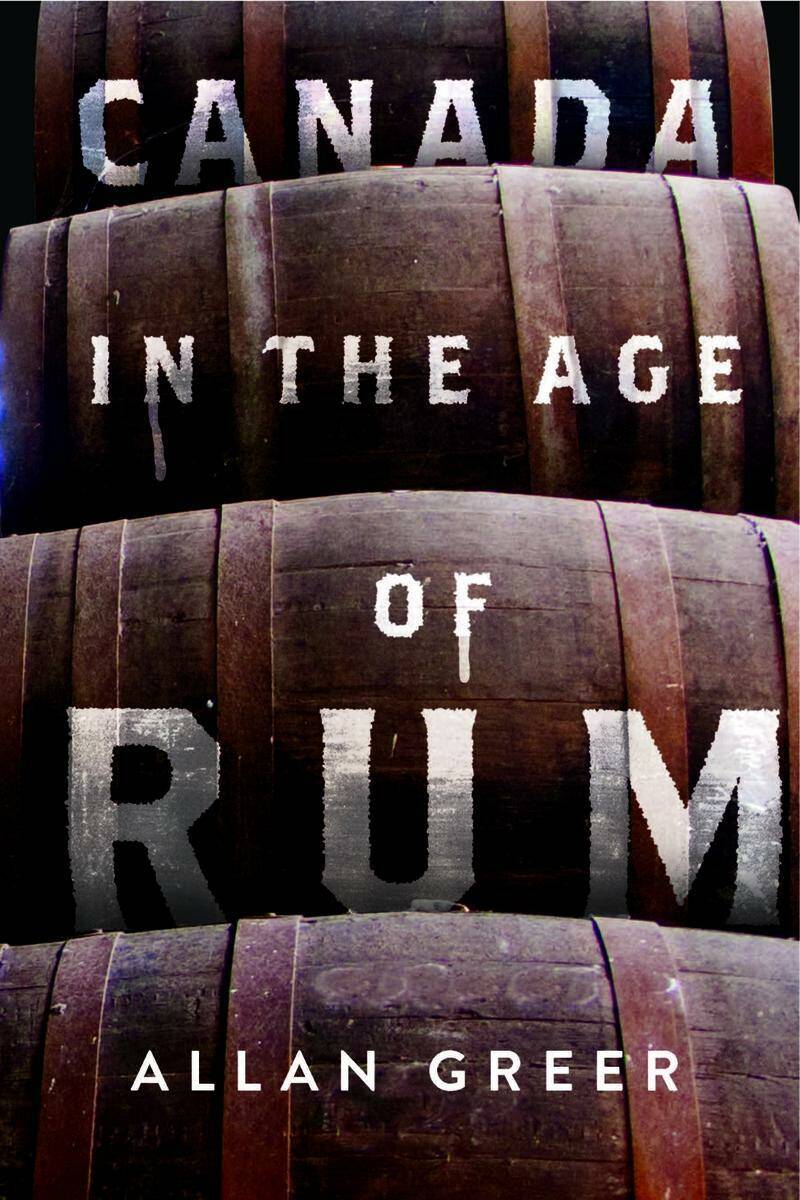
Canada in the Age of Rum

Canada in the Age of Rum

One of the most sensitive relationships is the one between rum and its use by the fur trade. As Greer explains, it is a much more complex and nuanced situation than what we may have understood from our schooling.

He sources perspectives from all the parties concerned — the Hudson’s Bay Company, the North West Company and the Indigenous community — each having their own particular interest in the running of the fur trade.

Greer pays particular attention to the ceremonial aspects of rum with the trade protocols between Indigenous leaders and the company representatives.

Although he focuses on the business end of rum, Greer does not shy away from pointing out the deleterious effects rum had on everyone from those in the fishing ports in Newfoundland to the fur traders in Upper Canada and out west among the Indigenous communities. It was the recognition of the dark side of rum, says Greer, which eventually brought its prevalence into check by the 1830s.

Greer supports his analysis with enough charts and graphs detailing the use and consumption of rum to keep any history buff happy. But where Greer is at his best is in his storytelling. His style is reminiscent of Ken Burns, who fleshes out his focal facts with the lived experience of those involved.

What makes Greer’s style particularly interesting is the “mystery” aspect of the story. If rum was so prevalent during that time, how did it lose its powerful influence? As with some mystery novels, it’s tempting to skip ahead to see how it would all turn out.

Greer’s style makes his work very readable, and this is a perfect summer beach read for those interested in historical non-fiction.

One thing is for sure — once you’ve read Canada in the Age of Rum, you’ll never look at the rum section of your local Liquor Mart the same way.

Bryen Lebar is a retired English teacher looking for a reason to write for money.
Report Error Submit a Tip

More Stories

Chopped trees will leave a ‘blight’ on Windsor Park

Kelly-Anne Riess 3 minute read Preview

Chopped trees will leave a ‘blight’ on Windsor Park

Kelly-Anne Riess 3 minute read 8:04 PM CDT

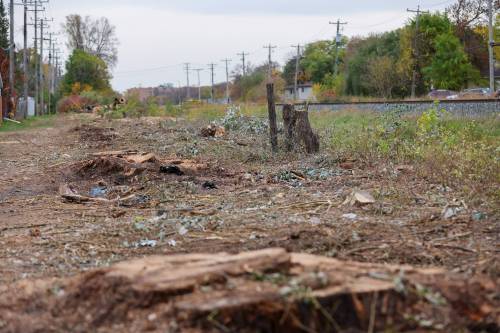
Robert Gordon has watched the trees grow along a popular Windsor Park walking path for nearly six decades.

Now, as Manitoba Hydro cuts them down to protect nearby power lines, he says a familiar part of his childhood neighbourhood is disappearing.

Although he no longer lives in the area, Gordon regularly returns to walk or cycle along the tree-lined path, which runs parallel to Archibald Street.

He was concerned when he recently spotted crews clearing vegetation near the entrance to the path, but initially assumed they were removing brush. When he returned, he discovered the clearing had extended farther along the corridor.

Read
8:04 PM CDT

Get to know your Jet: Mario Ferraro

Mike McIntyre 8 minute read Preview

Get to know your Jet: Mario Ferraro

Mike McIntyre 8 minute read Yesterday at 5:39 PM CDT

A one-on-one conversation with a Winnipeg Jet about the stuff you don't always hear in the media scrum

Read
Yesterday at 5:39 PM CDT

Manitoba last province requiring physical stakes on mineral claims

Gabrielle Piché 5 minute read 8:06 PM CDT

Potential Manitoba mine sites bear decor not seen in other provinces: GPS-enabled claim markers.

All other provinces permitting mining have dropped requirements for prospectors to physically stake land claims.

They’ve all moved to digital systems.

As Manitoba politicians trumpet plans to triple mining production, exploration companies and the local prospectors association warn outdated staking methods will slow progress.

A dozen straight titles for Indigenous trainers at Downs

GEORGE WILLIAMS 6 minute read Preview

A dozen straight titles for Indigenous trainers at Downs

GEORGE WILLIAMS 6 minute read 9:49 PM CDT

THAT’S a wrap!

The 69th season of live racing at Assiniboia Downs came to a close on Wednesday and for the 12th consecutive year the training title was won by an Indigenous horseman.

Trainer Jerry Gourneau of the Turtle Mountain Band of Chippewa in North Dakota won his sixth trainer title at the Downs with a record of 54-45-43 from 280 starts and purse earnings of US$559,191.

And for the eighth straight year, Gourneau’s main owner, former champion race car driver Henry S. Witt, Jr. won the owner title at the Downs. He compiled a record of 46-41-40 from 242 starts and purse earnings of US$535,983.

Read
9:49 PM CDT

Rum’s role in early Canada uncorked in new account

Reviewed by Bryen Lebar 3 minute read Preview

Rum’s role in early Canada uncorked in new account

Reviewed by Bryen Lebar 3 minute read Saturday, Apr. 25, 2026

Have you ever walked through the rum section of your local Liquor Mart and thought, “I wonder what impact rum had on Canadian history?”

Most of us haven’t, and apparently neither had Allan Greer, professor emeritus of history at McGill University. For Greer, the question is: “why had rum’s outsized role in the life of pre-Confederation been so long overlooked?” It’s one that he answers thoroughly in his non-fiction work Canada in the Age of Rum.

Greer traces the journey of rum’s influence from the fishery in Newfoundland in the 1670s to the fur trade in Western Canada in the 1830s. In seven tidy chapters, he describes the role of rum in commerce, politics and social organization and how, as he puts it, “the colonies that would later become Canada were awash in a sea of rum.”

One of the most sensitive relationships is the one between rum and its use by the fur trade. As Greer explains, it is a much more complex and nuanced situation than what we may have understood from our schooling.

Read
Saturday, Apr. 25, 2026

Manitoba worker dead after fall from roof

Matthew Frank 3 minute read Updated: Yesterday at 5:56 PM CDT

The province is investigating after a worker died on the job after falling off a roof last month.

The worker, who was employed by Winnipeg-based Pristine Roofing & Siding, was critically injured on Sept. 22 after falling from a roof during a residential re-roofing project in the Rural Municipality of St. Andrews, a provincial spokesperson said in an email.

The man later died.

The investigation is ongoing, and no other information will be provided, the spokesperson said Thursday.