Mahler’s closing coda
Composer ruminates on life, loss and music in beautifully bleak historical fiction
Advertisement
Read this article for free:
or
Already have an account? Log in here »
To continue reading, please subscribe:

Digital Subscription
One year of digital access for only $205*
- Enjoy unlimited reading on winnipegfreepress.com
- Read the E-Edition, our digital replica newspaper
- Access News Break, our award-winning app
- Play interactive puzzles
*First annual payment billed as $205.00 + GST for one year. This annual subscription will automatically renew at $233.00 + GST every 52 weeks (10% off the regular annual price of $259.35). Offer available to new and qualified returning subscribers only. Cancel any time.
To continue reading, please subscribe:
Add Free Press access to your Brandon Sun subscription for only an additional
$1 for the first 4 weeks*
- Enjoy unlimited reading on winnipegfreepress.com
- Read the E-Edition, our digital replica newspaper
- Access News Break, our award-winning app
- Play interactive puzzles
*Your next Brandon Sun subscription payment will increase by $1.00 and you will be charged $17.95 plus GST for four weeks. After four weeks, your payment will increase to $24.95 plus GST every four weeks.
Read unlimited articles for free today:
or
Already have an account? Log in here »
Robert Seethaler’s The Last Movement is a work of fiction about real-life composer and conductor Gustav Mahler, who was born in Bohemia (now in the Czech Republic) in 1860 and died in Vienna in 1911. Mahler’s symphonies are sometimes said to be the culmination of the Romantic movement in music and of the Austro-German symphonic form itself.
The Vienna-born Seethaler has written eight novels — his book A Whole Life, translated from German to English by Charlotte Colllins (who also translated The Last Movement) was a finalist for the 2016 Man Booker Prize. He currently lives in Berlin, where he also works as an actor.
Having independent knowledge of Mahler’s life and work is not necessary to understand The Last Movement, but would be helpful in grasping the full significance of events recounted, or in looking below the surface of the text.

Moritz Nähr photo / Wikimedia Commons
The Last Movement takes place on the deck of a ship, where composer and conductor Gustav Mahler sits, hoping to see something interesting while reflecting on the past.
The book’s title refers not to one of Mahler’s symphonies, but to the final trip he takes by steamship from New York back to Vienna, where he will shortly die at age 50. Seethaler’s slim novel is a meditation on mortality, and is also a rather bleak look at Mahler’s life.
On the surface, Mahler is a wildly successful, widely celebrated conductor on both sides of the Atlantic. But his conducting career leaves less time for his true love, composition.
While Mahler, who is Jewish, experiences antisemitism from the Viennese public that foreshadows the coming Holocaust, his Jewishness is not a major focus of the novel. This seems a missed opportunity. In real life, Mahler was forced to convert to Catholicism in order to accept an appointment at the Vienna Court Opera — a job which was not open to Jews — and it would have been interesting to see a novelist wrestle with this history.
In The Last Movement, the fictional Mahler’s main preoccupation is his family life. He and his wife, Alma, lost their daughter Maria at age four to scarlet fever and diphteria. They have another daughter, Anna, but their marriage is unhappy, and recognized by both parties to have been a mistake.
Alma has been having an affair with an unnamed architect — those familiar with Mahler’s life will know the architect is the famed Walter Gropius, pioneer of the Bauhaus style, who she later marries. Mahler is aware that Alma is only with him now because she knows he is dying.
Another theme not addressed by the novel is that in real life, Alma Mahler was a composer in her own right, who studied and wrote music until her marriage. The novel presents her only as a wife, mother and lover, and does not imbue her husband with any seeming knowledge of her artistic aspirations.

Urban Zintel photo
Robert Seethaler
Readers looking for insight into Mahler the composer may feel cheated, as very little is said about his symphonies or other great work. One passage addresses Mahler’s well-known contempt for the title Symphony of a Thousand given to his Symphony No. 8 by the impresario Emil Gutmann, and another Mahler’s reverence for Beethoven and desire to play every note Beethoven ever wrote.
The entire novel takes place on the deck of the ship, where Mahler sits in the cold, hoping to see some flying fish or something else of interest. As he waits, his memory flashes back to scenes from his family life in their country house, his grief over the loss of his daughter Maria and his marriage, as well as memories of previous ocean crossings when he worked on his compositions and was amazed at his first sight of New York.
On this voyage, the only person he directly interacts with is a teenage boy working for the naval company, who periodically checks on him on behalf of Alma.
The language of the novel is simple and direct, and Collins’ translation smooth and unobtrusive, even when it slips into philosophy: “A person who felt lonely still had the ability to focus on himself. The self was, as it were, the centre of his world,” Seethaler writes in beautiful but bleak prose.

Mahler’s last journey is marked not by acceptance or forgiveness, but by the realization that there may be nothing after death — and that there is not much to life either. Our achievements and accomplishments fade, and all that is left is whatever relationships we have managed to maintain with our loved ones. Mahler grows more bitter as he reaches this realization and decides that the ocean, which he previously saw as “teeming with living organisms we couldn’t even begin to imagine,” is nothing but “a whore… dirty and cold.”
The penultimate chapter ends with a gorgeous image that underscores the capriciousness of life and the feeling that we are just missing a deeper meaning because we cannot, as Mahler wishes to, “stay a little longer.”
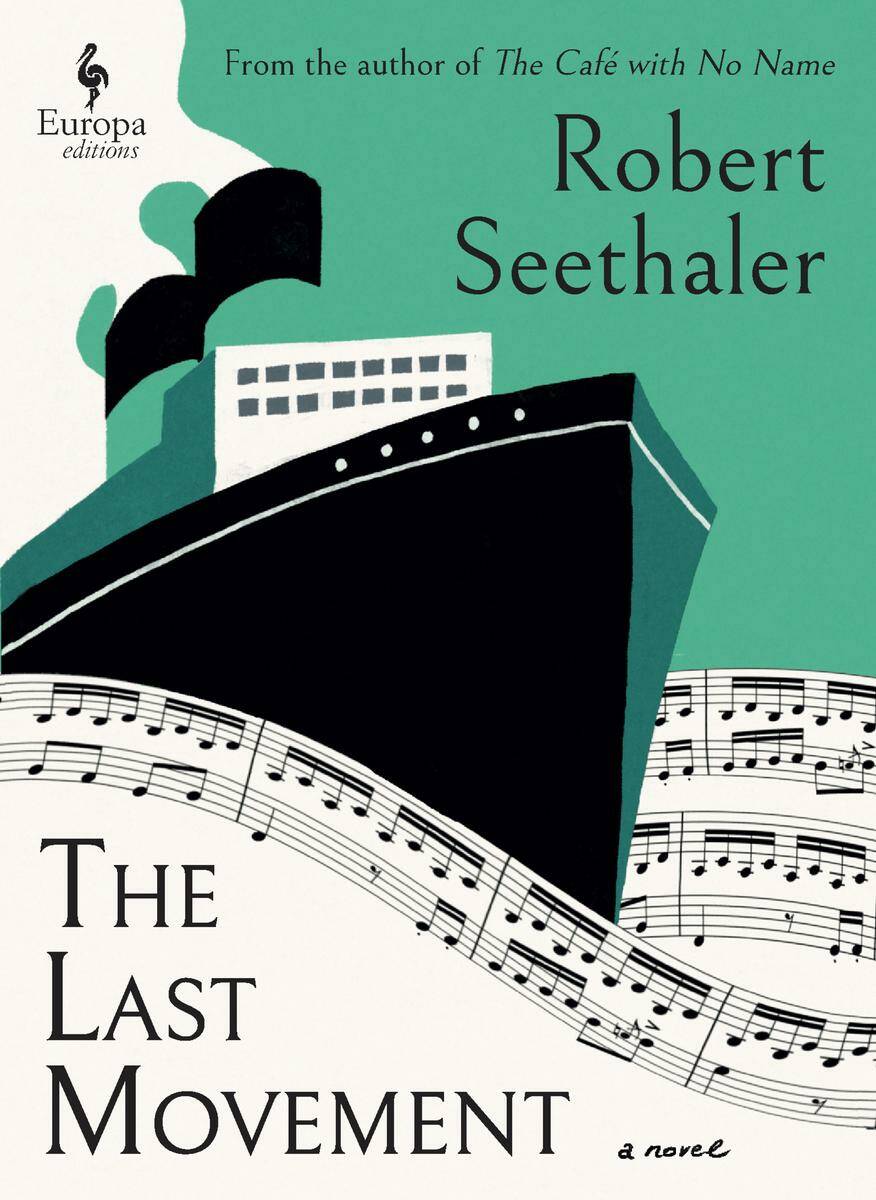
The Last Movement
Yet it is also a moment of hope in that it shows us that the unexpected is always possible, that it is never too late, that there is still beauty in the world, “a usable theme, a wonderful melody, the start of a new movement.”
Seethaler’s mesmerizing conclusion is, however, somewhat weakened by the unnecessary final chapter that does little besides inform the reader that Mahler has, in fact, died.
Zilla Jones is a Winnipeg-based writer of short and long fiction. Her debut novel The World So Wide was published in April 2025.