Making it work… almost
Despite success in Canada, Doug and the Slugs couldn’t break through in the U.S.
Advertisement
Read this article for free:
or
Already have an account? Log in here »
To continue reading, please subscribe:

Digital Subscription
One year of digital access for only $205*
- Enjoy unlimited reading on winnipegfreepress.com
- Read the E-Edition, our digital replica newspaper
- Access News Break, our award-winning app
- Play interactive puzzles
*First annual payment billed as $205.00 + GST for one year. This annual subscription will automatically renew at $233.00 + GST every 52 weeks (10% off the regular annual price of $259.35). Offer available to new and qualified returning subscribers only. Cancel any time.
To continue reading, please subscribe:
Add Free Press access to your Brandon Sun subscription for only an additional
$1 for the first 4 weeks*
- Enjoy unlimited reading on winnipegfreepress.com
- Read the E-Edition, our digital replica newspaper
- Access News Break, our award-winning app
- Play interactive puzzles
*Your next Brandon Sun subscription payment will increase by $1.00 and you will be charged $17.95 plus GST for four weeks. After four weeks, your payment will increase to $24.95 plus GST every four weeks.
Read unlimited articles for free today:
or
Already have an account? Log in here »
Regional musicians, often dismissed as one-hit wonders, provide some great music most people have never heard. Pittsburgh’s Iron City Houserockers and L.A.’s The Call and Warren Zevon, as examples, undeservedly fell through those cracks.
In some ways, Canada is its own region for bands relatively unknown in the United States. Some of the country’s best bands, such as the Tragically Hip and Payola$, barely registered in the lucrative market south of the border.
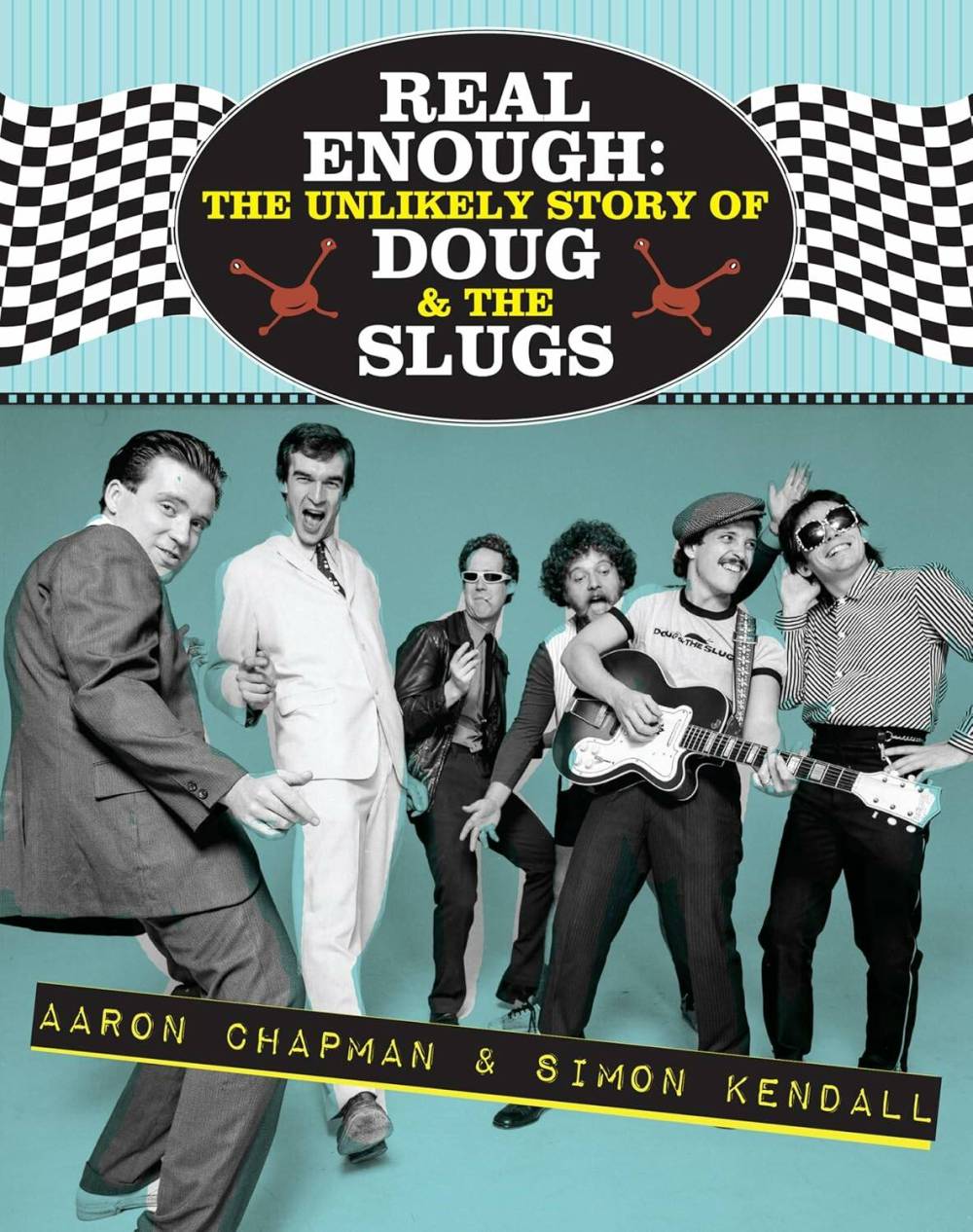
Another example is Vancouver’s Doug and the Slugs who, like the Hip, never had a serious hit in the U.S. They are the subject of this thoughtful and engaging history by longtime Slugs keyboardist and musical director Simon Kendall and writer Aaron Chapman.
RCA
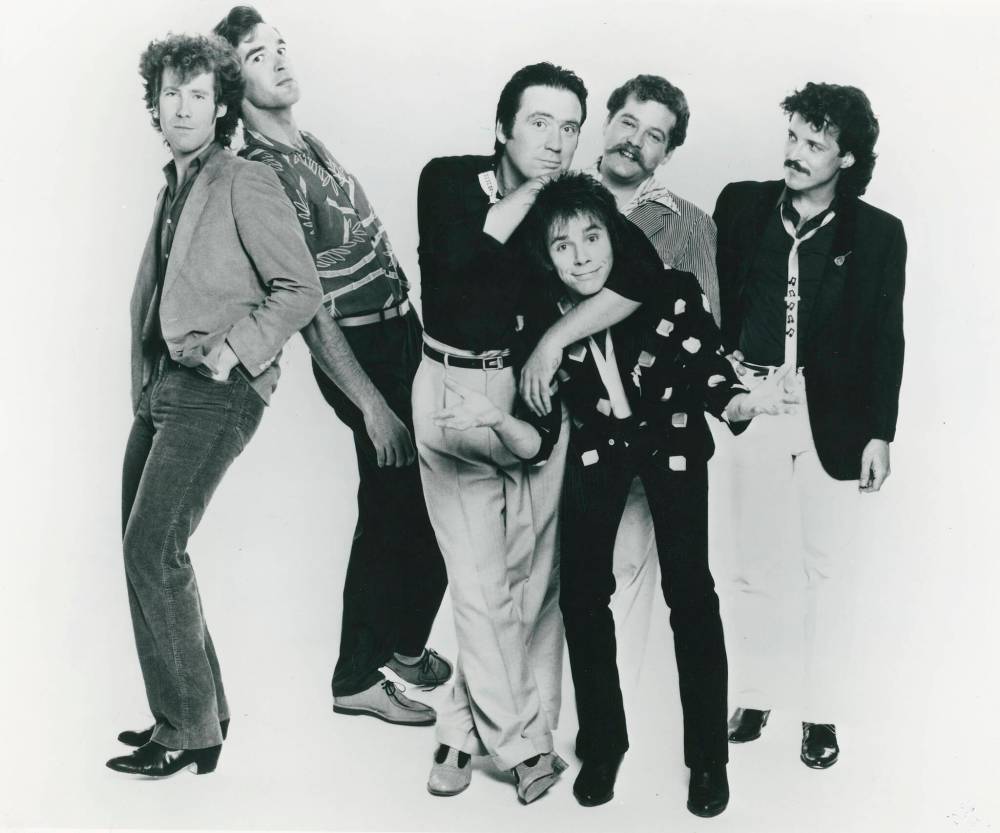
Doug and the Slugs frontman Doug Bennett (third from left) had a flair for interacting with audiences the more the band played. He died in 2004 at age 52.
Touring Canada and occasionally dipping into the northeastern U.S. (they sold out the iconic Bottom Line in New York many times), Doug and the Slugs produced five consecutive top-50 albums in Canada, from 1980’s Cognac and Bologna to 1988’s Tomcat Prowl. Songs such as Too Bad, Making it Work and Day By Day garnered plenty of airplay in Canada as well as a handful of Juno award nominations.
Kendall has recorded with Colin James; he won the 1993 Genie for best original score for Cadillac Girls. Vancouver historian and musician Chapman won B.C. Book Prizes for Vancouver After Dark: The Wild History of a City’s Nightlife and Live at the Commodore, about that iconic venue.
Real Enough has three “narrators,” distinguished by different fonts: Kendall’s first-person recollections, Chapman’s third-person overviews and shorter selections from late frontman Doug Bennett’s journals provide an interestingly multi-faceted chronicle of one of Canada’s greatest relatively unsung bands.
Four of the Slugs met at Vancouver’s Lord Byng Secondary School, called “Showbiz High” because of its many famous graduates (Trooper’s Harry Kalensky, BTO’s Blair Thornton, Da Vinci’s Inquest creator Chris Haddock, musician Dan Mangan and actresses Carly Pope and Cobie Smulders.)
Kendall, guitarists John Burton and Richard Baker and drummer John Watson attended Lord Byng, graduating into Vancouver’s roiling and unfulfilling cover- and bar-band scene.
In 1977, Watson and Burton jammed with Toronto transplant and cartoonist Doug Bennett. Afterward, he and Burton formed a band, playing Bennett’s original songs. In 1978, Bennett wanted to move on with Burton, who brought in his former schoolmates, including Kendall, who was making his living planting trees.
Real Enough
Bennett had a flair for interacting with audiences which burgeoned the more the band played.
“One steady point of friction with the band was… balance between music and Doug’s verbal shenanigans,” Kendall recalls. “Once Doug discovered the power of breaking the fourth wall — interacting directly with the audience — it was hard to contain him.”
Many chapter titles allude to Slugs’ songs, introducing entertaining anecdotes of relentless touring, Canadian chart success and international dreams and disappointments.
Canadian opening slots for big ’80s acts the Boomtown Rats, Chris de Burgh and Huey Lewis and the News elicited hope. “Lewis himself had championed the Slugs,” Campbell notes, but “more dates on the… tour never transpired.”
Manager Sam Feldman (who mortgaged his home to finance Cognac and Bologna) helped k.d. lang get a showcase at The Bottom Line. Kendall regretfully notes the band’s chagrin when lang told an interviewer she “couldn’t face being like Doug and the Slugs, playing in bars forever.”
Kendall wonders if the band’s “dues” couldn’t make up for “independent promotion,” as Frederick Dannen’s 1991 book Hit Men called the under-the-table money required for “airplay, chart position, and record sales” in the ’80s.
Brian Kaufman photo
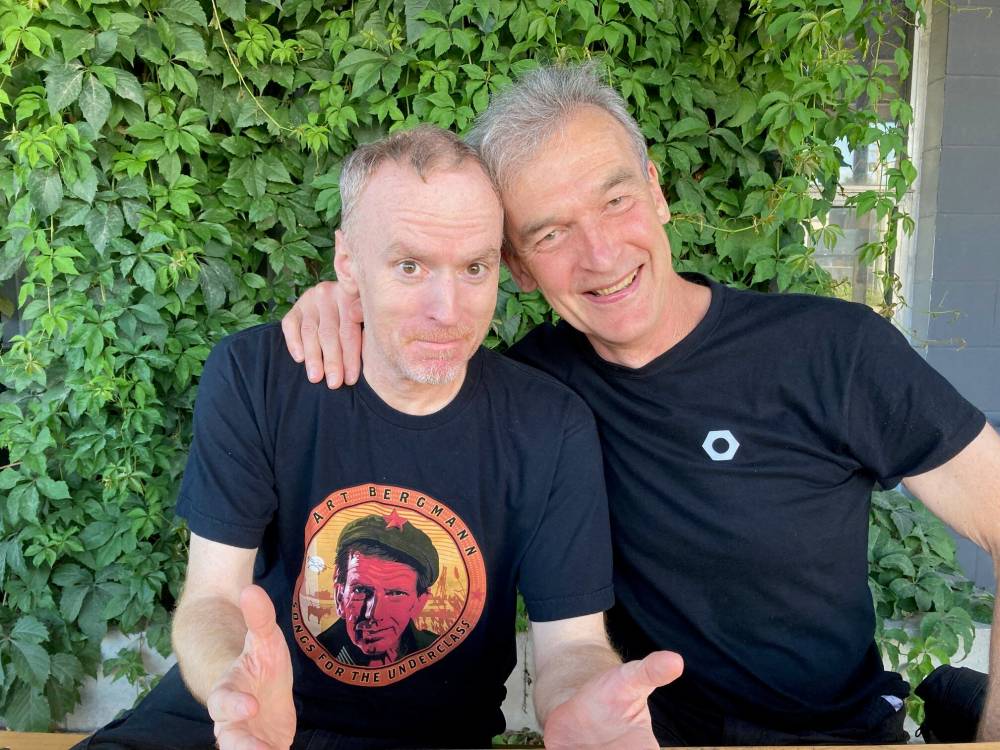
Aaron Chapman (left) is a musican and Simon Kendall was Doug and the Slugs’ keyboardist.
The Slugs continued into the ’90s and beyond, with various members. Kendall gives a touching and affectionate account of Bennett’s 2004 death.
Later reunion concerts with replacement singer Ted Okos, including a 2023 gig with the Vancouver Symphony Orchestra, open and close this nostalgic reminiscence of a great band which deserved so much more.
Bill Rambo is a retired teacher from Landmark who knows fame and fortune do not necessarily coincide with musical greatness.