Deeply moving stories explore notions of loss, home
Advertisement
Read this article for free:
or
Already have an account? Log in here »
To continue reading, please subscribe:

Digital Subscription
One year of digital access for only $205*
- Enjoy unlimited reading on winnipegfreepress.com
- Read the E-Edition, our digital replica newspaper
- Access News Break, our award-winning app
- Play interactive puzzles
*First annual payment billed as $205.00 + GST for one year. This annual subscription will automatically renew at $233.00 + GST every 52 weeks (10% off the regular annual price of $259.35). Offer available to new and qualified returning subscribers only. Cancel any time.
To continue reading, please subscribe:
Add Free Press access to your Brandon Sun subscription for only an additional
$1 for the first 4 weeks*
- Enjoy unlimited reading on winnipegfreepress.com
- Read the E-Edition, our digital replica newspaper
- Access News Break, our award-winning app
- Play interactive puzzles
*Your next Brandon Sun subscription payment will increase by $1.00 and you will be charged $17.95 plus GST for four weeks. After four weeks, your payment will increase to $24.95 plus GST every four weeks.
Read unlimited articles for free today:
or
Already have an account? Log in here »
Dora Dueck’s latest collection of short stories Like a River Divides the Earth is as poetic, wonderful and intriguing as the title itself.
This is the sixth book by the former longtime Winnipeg resident who now lives in B.C. Although the stories are set in various continents and countries, Winnipeg interestingly pops up in several of the tales.
Dueck has been awarded the McNally Robinson Book of the Year Award (The Hidden Thing) and the High Plains Book Award (What You Get at Home). In addition to her fiction, she has written a collection of essays and a memoir (Return Stroke).
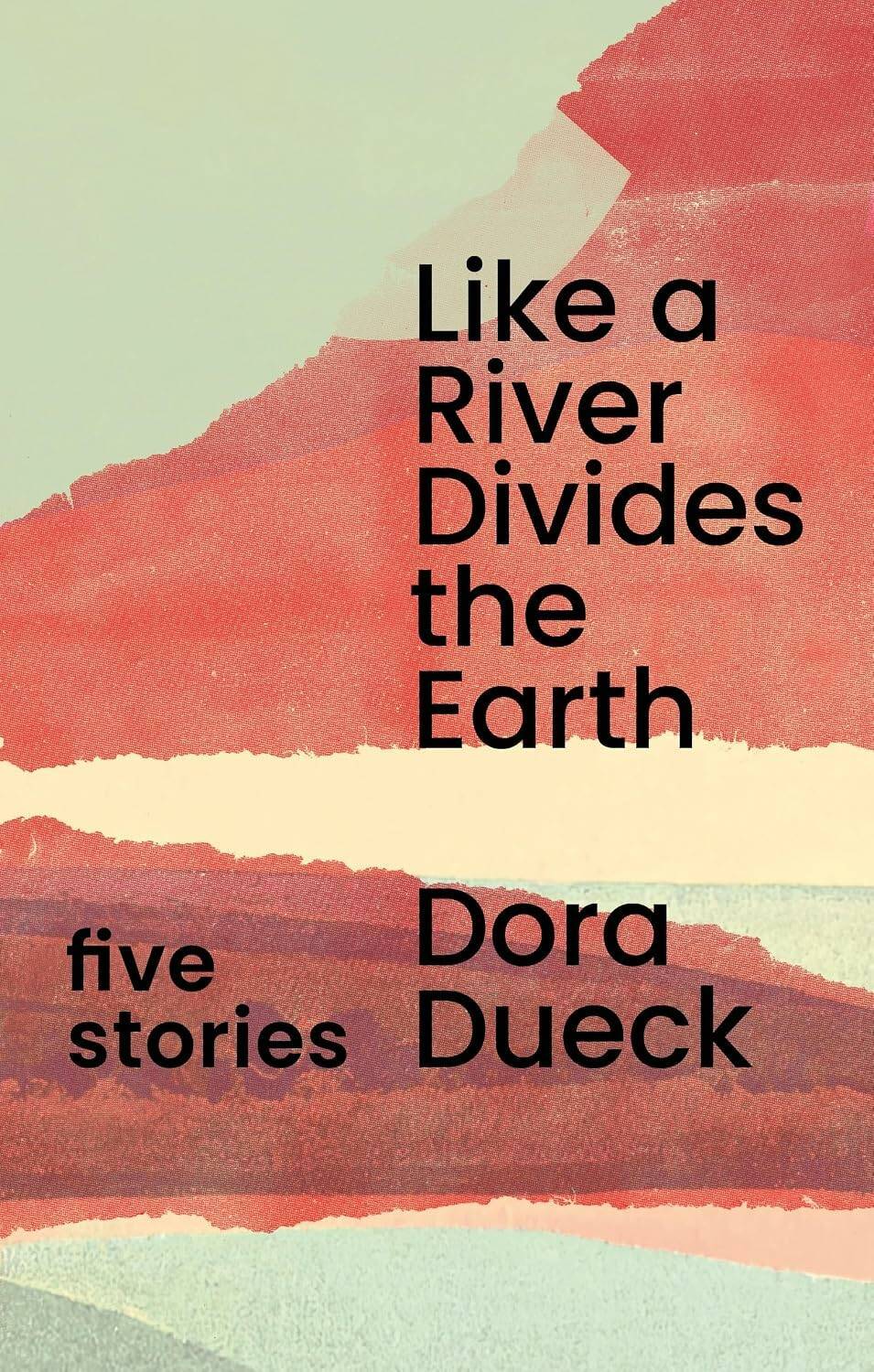
Like a River Divides the Earth
This slim collection of five short stories focuses on survival, on loss, on home and on the search for safety and family. Describing herself as a lay historian, two of Dueck’s stories appropriately concentrate on Russian Mennonite history and desperate attempts at escape and survival.
Mask, the first of the stories, is set in 1930s England. Jane, a 14-year-old girl, accidentally sees the face of her father, a former soldier, which was disfigured in war and normally hidden by a copper mask. She spends decades of her life trying to come to terms with the horrors that war had wrought, and the fear her mother might become aware of her discovery.
“The ruins, I mean, the face behind the mask. Holes instead of a nose. Dark holes in a pink crater of pulled-tight skin running front cheekbone to cheekbone, though the tip had been spared and stood there by itself, pale and hideous… And where his right eye should have been, had a crater too,” Dueck writes.
Mask spans several decades and follows the relationship between Jane and her mother Dolly, and how they both relate to the father, Charlie, who is in many ways quite the opposite of his wife.
When Jane grows up, marries a Canadian and immigrates to Winnipeg at war’s end, her mother comes to visit. In an attempt to appeal to her patriotism, Jane takes her to Brookside in Winnipeg, one of the largest cemeteries in Canada. She also takes Dolly to see Winnipeg’s war monument of an “angel lifting a soldier heavenward… a memorial to the railmen who’d served in the First World War,” which Dolly finds splendid.
Her Own Self begins with an urgent plea from Marta’s husband: “We have to leave this evening,” he whispers. “We can’t put it off.” Marta cradles the body of her newborn baby, who has just taken his last breath.
And so begins the story of thousands of Mennonites desperately attempting to flee Russia and its “grand socialist ambition.” They head to Moscow to beg for permission to leave.
After many migrations, the couple is finally allowed into Canada where their hopes had been placed years ago. This is a story of family — of Marta, her husband and her sister. There are hurts and resentments from long ago which keep cropping up and have to be dealt with.
The final story gives the book its title, and references a river in Russia which separated two Mennonite communities.
Both communities had planned to escape together from the tyrannical communist regime. But only one managed to make it across the river. The other, heartbroken and feeling betrayed, was left behind.

“It’s the morning after, that’s what he knows. The morning that divided his life like a river divides the earth, and you live on one side, or you live on the other,” Dueck writes.
This intriguing tale focuses on a father, his adult children and their guests as it goes back and forth in time to tell the tale of the river crossing.
The themes of loss and sorrow in the stories of Like a River Divides the Earth are similar to those found in the author’s story collection What You Get at Home.
Dueck’s writing is entrancing, creative and compelling. This latest book is intelligent and deeply moving, a book to be savoured.
Cheryl Girard is an Interlake writer and also a lay historian.