Reading between the lines
Exploration of Stein’s time in Paris proves wildly entertaining, defying classification
Advertisement
Read this article for free:
or
Already have an account? Log in here »
To continue reading, please subscribe:

Digital Subscription
One year of digital access for only $205*
- Enjoy unlimited reading on winnipegfreepress.com
- Read the E-Edition, our digital replica newspaper
- Access News Break, our award-winning app
- Play interactive puzzles
*First annual payment billed as $205.00 + GST for one year. This annual subscription will automatically renew at $233.00 + GST every 52 weeks (10% off the regular annual price of $259.35). Offer available to new and qualified returning subscribers only. Cancel any time.
To continue reading, please subscribe:
Add Free Press access to your Brandon Sun subscription for only an additional
$1 for the first 4 weeks*
- Enjoy unlimited reading on winnipegfreepress.com
- Read the E-Edition, our digital replica newspaper
- Access News Break, our award-winning app
- Play interactive puzzles
*Your next Brandon Sun subscription payment will increase by $1.00 and you will be charged $17.95 plus GST for four weeks. After four weeks, your payment will increase to $24.95 plus GST every four weeks.
Read unlimited articles for free today:
or
Already have an account? Log in here »
Deborah Levy is one of England’s most versatile writers. She has written highly praised novels, plays staged by the Royal Shakespeare Company and broadcast on the BBC, published works of poetry and short stories as well as three volumes of autobiography. Her last book was 2024’s The Position of Spoons, an unusual collection of essays, reviews and observations.
Her latest could be seen as a perfect follow-up. It takes a close look at the world of American writer Gertrude Stein (1874-1946), who moved to Paris in 1903 and gained fame for curating modern art and producing written works that were capped off by The Autobiography of Alice B. Toklas. (For that book, Stein wrote about herself in the voice of her partner, Alice, her lover and companion, to free up her own voice. She actually hand-wrote it at night and left the pages for Alice to gather together in the morning.)
Is Levy’s new book a non-fiction account of Stein’s life? No — Levy has subtitled it A Fiction. Readers will see right away that the book is written from the point of view of a nameless narrator who goes to Paris in 2024, hoping to learn all about Stein’s life but also getting to know contemporary Parisians. In other words, Levy has chosen to freshen up a narrative on the life of Stein with a present-day biographer’s settling into the surroundings that her subject left behind.
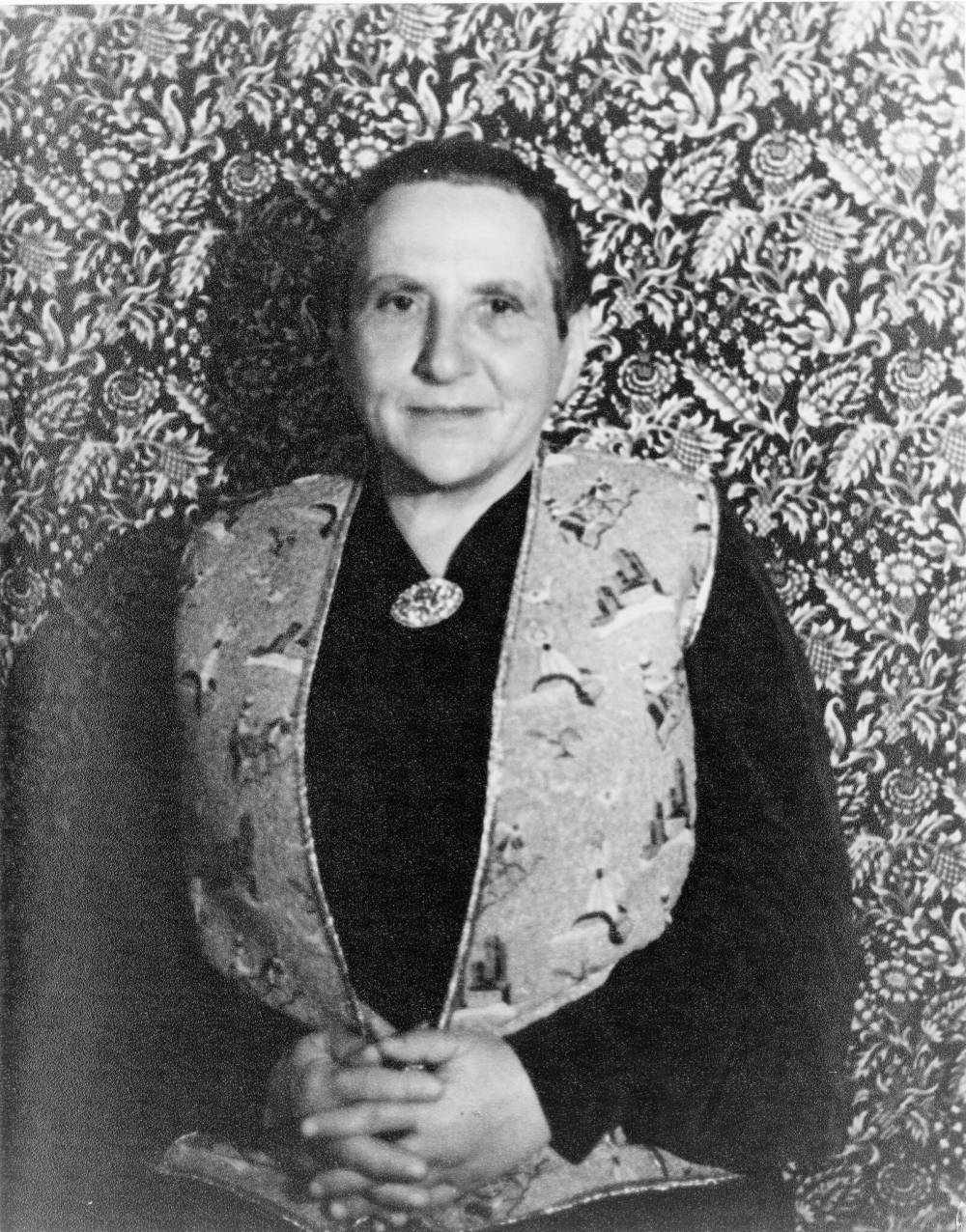
Carl Van Vechten photo / Library of Congress
Gertrude Stein moved to Paris in 1903 to pursue writing, keeping company with the likes of Pablo Picasso.
Stein gained fans through her simple but complex passages with a minimum of punctuation. An example: “They ask me to tell why an author like myself can become popular. It is very easy everybody keeps saying and writing what anybody feels that they are understanding and so they get tired of that, anybody can get tired of anything everybody can get tired of something and so they do not know it but they get tired of feeling they are understanding and so they take pleasure in having something that they feel they are not understanding.”
The narrator — let’s call her Deb — has two good women friends in Paris: Eva, a visual artist who has a husband (Hamish) living in Seattle and a cat she calls “it;” and Fanny, who has at least three female lovers and wants to call Eva’s cat “Bob.”
Deb hopes to write an essay about Stein. She learns a lot about the author, including that Stein claimed to have no interest in developing a feminine body, devoting herself to creating a body of work — one that no-one else could have written. Stein went to Paris only after giving up a potential career as a doctor; she had spent eight years in university, four in Radcliffe College and four in medicine at Johns Hopkins University in Baltimore. She left all that behind to immerse herself in the arts world in Paris.
A must for Deb is to visit the cemetery where Stein is buried. There she sees the graves of writers Oscar Wilde and Marcel Proust and thinks how much their resting places reflect their status in the literary world.
Meanwhile, as if wanting to include a thread of plot, Deb tells of Eva’s cat disappearing and the concern shown by people like Fanny about where it/Bob might have gone. Eva is working on a graphic novel about how to live without a cat while writing nothing of her separation from her husband.
What makes A Year in Paris with Gertrude Stein so stimulating is the variety. Levy gives a lively look at the Paris that Stein lived in, as well as the number of famous writers and artists that called it home. Imagine hanging out with James Joyce, Ernest Hemingway and Pablo Picasso!
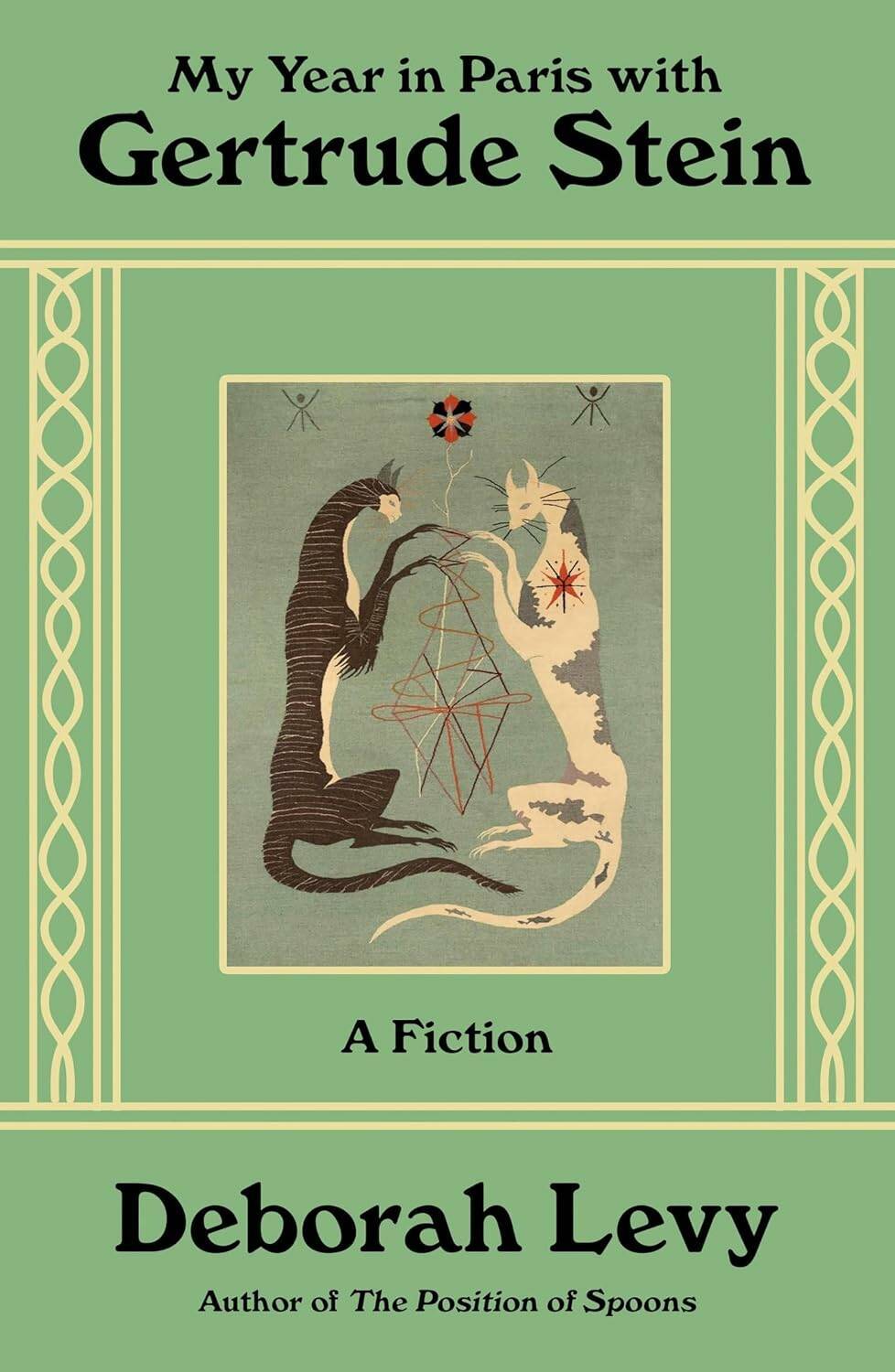
My Year in Paris with Gertrude Stein
Throughout the book there are brief ventures into Stein’s world of language as she developed her own style. Stein met Picasso when she was 31 and he was 24; while posing for him some 80 times, she made up rules about grammar and thought about the novella she was writing. She was also angry with Sylvia Beach of Shakespeare & Company for publishing Joyce’s work and not hers.
With this mixture of literary biography and present-day trivia, Deborah Levy offers an intriguing but hard-to-classify wealth of entertainment.
Dave Williamson is the Winnipeg author of six novels, a collection of short stories, a memoir, and a history of Red River College.