Winds of change
Mother-daughter trek to Sicily a chance to ponder family’s past
Advertisement
Read this article for free:
or
Already have an account? Log in here »
To continue reading, please subscribe:

Digital Subscription
One year of digital access for only $205*
- Enjoy unlimited reading on winnipegfreepress.com
- Read the E-Edition, our digital replica newspaper
- Access News Break, our award-winning app
- Play interactive puzzles
*First annual payment billed as $205.00 + GST for one year. This annual subscription will automatically renew at $233.00 + GST every 52 weeks (10% off the regular annual price of $259.35). Offer available to new and qualified returning subscribers only. Cancel any time.
To continue reading, please subscribe:
Add Free Press access to your Brandon Sun subscription for only an additional
$1 for the first 4 weeks*
- Enjoy unlimited reading on winnipegfreepress.com
- Read the E-Edition, our digital replica newspaper
- Access News Break, our award-winning app
- Play interactive puzzles
*Your next Brandon Sun subscription payment will increase by $1.00 and you will be charged $17.95 plus GST for four weeks. After four weeks, your payment will increase to $24.95 plus GST every four weeks.
Read unlimited articles for free today:
or
Already have an account? Log in here »
Valeria Luiselli draws on Greek and Roman classics to conjure present-day Sicily in her new novel, Beginning Middle End, which follows a mother-daughter pair in search of a new configuration of family after divorce — and their quest to restore an heirloom to its rightful place, the implications of which reverberate across four generations of fascinating women and through echoes of geological and mythical time.
Home has long been a moving target for Luiselli. Born in Mexico City, she spent her childhood in South Africa, South Korea and India. She now lives in New York City and teaches at Bard College and Harvard University.
A MacArthur Fellowship recipient, Luiselli has amassed numerous awards and recognitions for her fiction and non-fiction literary works, including the International Dublin Literary Award, an American Book Award and the Folio Prize.
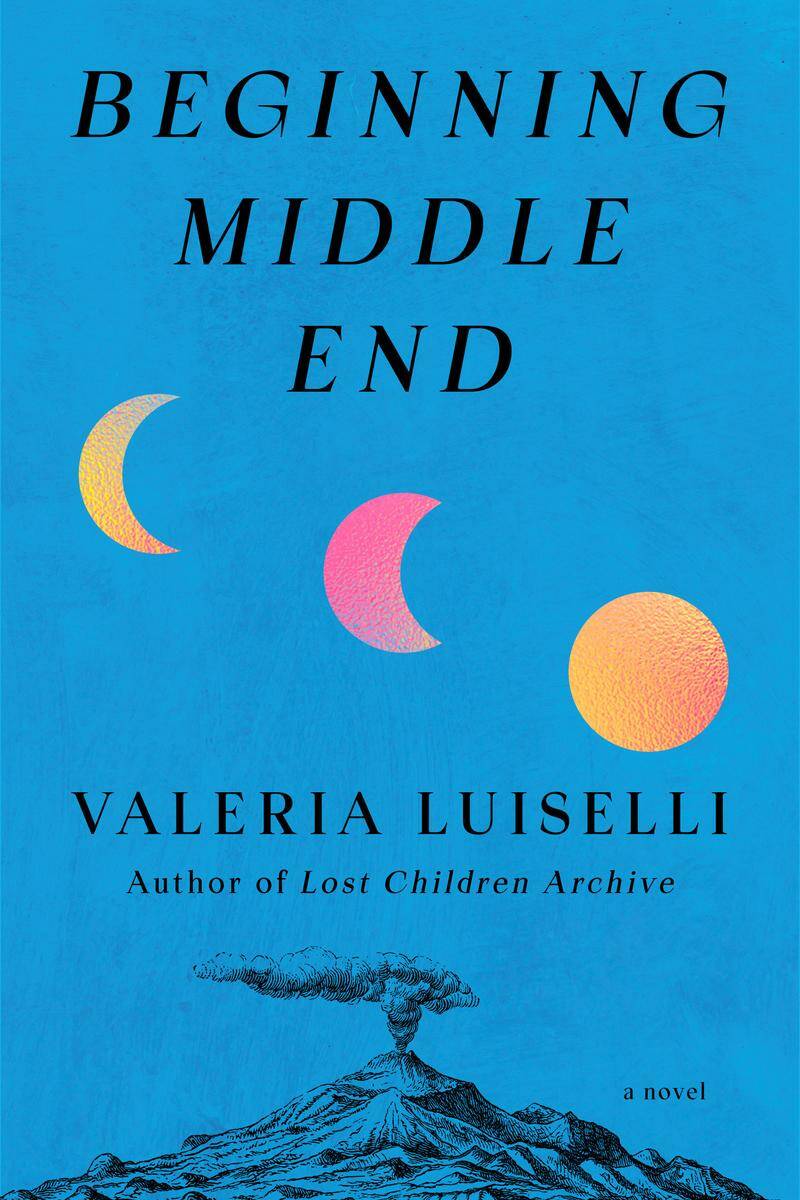
Beginning Middle End
The English translation of Luiselli’s first two books arrived in 2014: Sidewalks, a collection of essays ranging from the topic of Joseph Brodsky’s grave to Marguerite Duras’s book Écrire, to observations made while wandering the streets of Mexico City; and Faces in the Crowd, a novel about a young mother whose narrative becomes intertwined with that of a translator and the ghostly presence of Mexican poet Gilberto Owen.
The following year came Luiselli’s The Story of My Teeth, the inventive and genre-blending work that sees auctioneer Gustavo “Highway” Sanchez Sanchez spinning tales about the literary provenance of his teeth, and which draws on the author’s collaboration with staff from a juice factory in Mexico City.
Tell Me How It Ends: An Essay in Forty Questions is a short, powerful book based on Luiselli’s experience as a volunteer interpreter for children asylum seekers doing intake questionnaires for New York City’s federal immigration court. Her most recent novel, and the first to be written by her in both English and Spanish, was Lost Children Archive. The story follows a family’s road trip in the United States, the dissolution of a marriage and much crossover with the rising concerns of the immigration crisis unfolding around them.
Her years-long ongoing project Echoes from the Borderlands documents oral histories and soundscapes along both sides of the U.S.-Mexico border.
Luiselli’s fiction often resembles real-life circumstances and shares concerns with her non-fiction material, but there’s always an aspect of invention and play within those parallels, a theme which her new novel tackles directly.
In Beginning Middle End, a mother who is a writer arrives with her 12-year-old daughter in Sicily for the summer. They are beginning their life again after the breakup of their family unit; the island is filled with dramatic winds and fires, and the threat of volcanic eruptions.
The pair is in regular contact with the maternal grandmother, who lives in California and sends cryptic, signed texts with unpredictable emojis, and whose memory may or may not be failing her.
Nearby is the archeological site worked on years ago by the great-grandmother, who was fired when it was discovered she was a woman dressed as a man. She absconded with a mosaic tile of the Greek god Proteus, which becomes a treasured heirloom steeped in family lore.
Was Nanna a tombaroli, a grave robber, or was she entitled to take from the land on which she worked? This question causes turmoil in the conscience of the daughter, who begins to think and read broadly, poring over Pliny the Elder’s Natural History and Loeb Classics, which become the source of an underlying hum in the form of captions within sections of the novel.

Clayton Cubitt photo
The two main characters in Valeria Luiselli’s latest learn there are eight types of wind in Sicily, four of which govern the novel.
According to the lineage of taxi drivers “who know all the things,” as Luiselli writes, there are eight types of wind in Sicily and, like a Greek chorus, four of these winds govern the novel: the levante and ponente sections are narrated by the mother, and the scirocco and the mistral by the daughter, including images of postcards and Polaroids referenced throughout the story.

A sonic translation of the novel — how intriguing — became available on the day Beginning Middle End was released.
There are numerous passages which are utterly beautiful, including a description of the life of the great-grandmother captioned “The Planets,” requested by the daughter and narrated by the mother in what feels like one long, loving, sweeping breath.
Another passage recounts the mother’s formative memory of learning to swim in the Pacific Ocean. As she learns from her own mother how to calculate the waves and sense the current’s push or pull, something profound passes between them: “I cannot say what it is that she gave me, but everything I write is an attempt to find it again,” the mother muses.
In Beginning Middle End, Luiselli reaches into the past, reinventing form and achieving, at times, moments of the sublime.
Sara Harms is a Winnipeg editor.