A new equation

Rise of computer program Lean has changed the field of mathematics — and how we assess the truth

Advertisement

Advertise with us

There are two age-old laments about mathematics which persist to this day. The first is that either ourselves or someone we know will express that they are not a math person — an admission that we are not good at math, or that somehow we are not hardwired for it. But we don’t tend to admit the same for reading, writing, child rearing, cooking or other skills that we deem inherent to the human experience.

Read this article for free:


or

Already have an account? Log in here »

To continue reading, please subscribe:

Subscribe and receive a limited-edition Free Press branded hat or tote.

Digital Subscription

One year of digital access for only $205*

  • Enjoy unlimited reading on winnipegfreepress.com
  • Read the E-Edition, our digital replica newspaper
  • Access News Break, our award-winning app
  • Play interactive puzzles

*First annual payment billed as $205.00 + GST for one year. This annual subscription will automatically renew at $233.00 + GST every 52 weeks (10% off the regular annual price of $259.35). Offer available to new and qualified returning subscribers only. Cancel any time.

To continue reading, please subscribe:

Add Free Press access to your Brandon Sun subscription for only an additional

$1 for the first 4 weeks*

  • Enjoy unlimited reading on winnipegfreepress.com
  • Read the E-Edition, our digital replica newspaper
  • Access News Break, our award-winning app
  • Play interactive puzzles
Start now

*Your next Brandon Sun subscription payment will increase by $1.00 and you will be charged $17.95 plus GST for four weeks. After four weeks, your payment will increase to $24.95 plus GST every four weeks.

There are two age-old laments about mathematics which persist to this day. The first is that either ourselves or someone we know will express that they are not a math person — an admission that we are not good at math, or that somehow we are not hardwired for it. But we don’t tend to admit the same for reading, writing, child rearing, cooking or other skills that we deem inherent to the human experience.

The second lament is one that asks why we even learn math. “We’ll never use this in the real world,” goes the saying, particularly within the context of pre-calculus mathematics or calculus itself.

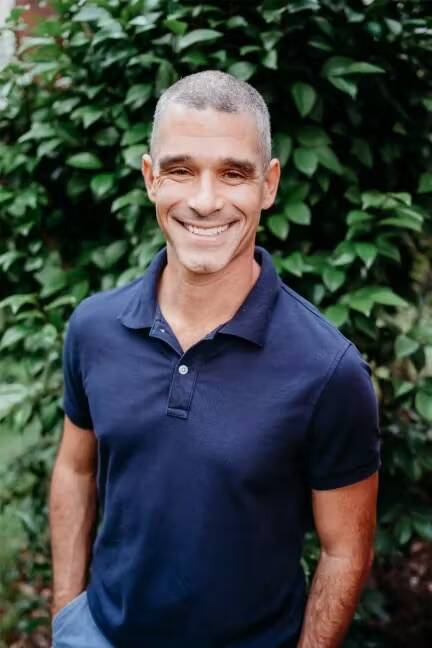
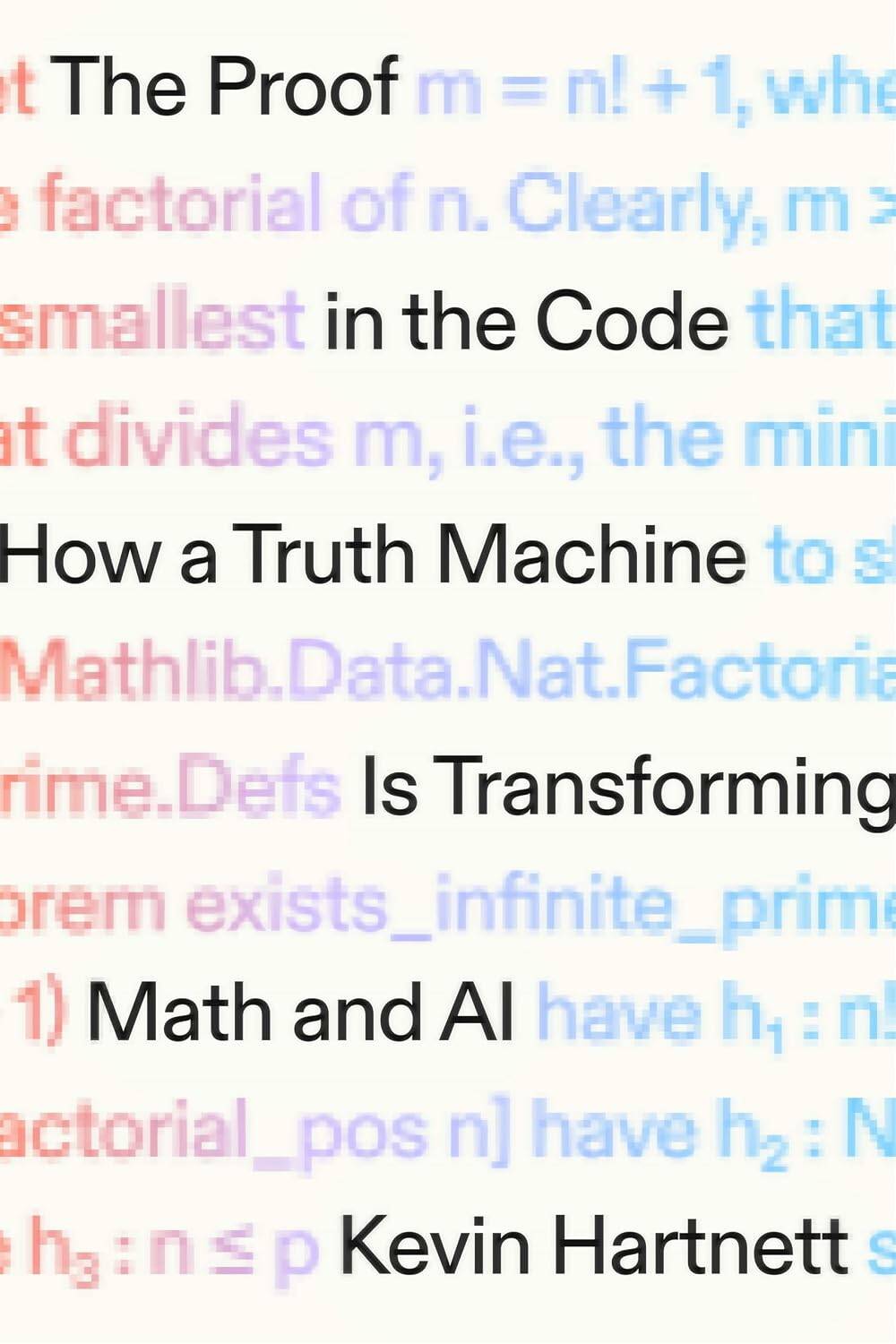
Both of these laments are regrettable, and most certainly need to be corrected by the public education system. Because, as author Kevin Hartnett argues in his latest work, The Proof in the Code: How a Truth Machine is Transforming Math and AI, mathematics is not only the language of the universe, but also a pathway to learning how to reason and seek truth.
Katie English photo
                                Kevin Hartnett

Katie English photo

Kevin Hartnett

Mathematics, ergo, is the language, both the physical and the metaphysical.

Harnett, who contributes to the Atlantic, Scientific American and the Boston Globe, sets out to tell the story of why mathematics is so critical to the human experience through the unlikely but inspiring coming together of the computer science and mathematics communities.

The story begins with Leo de Moura, a Brazilian-born computer scientist working for Microsoft over a decade ago, who wanted to build a program that would help him debug and verify developmental software.

The program was called Lean, and to de Moura’s dismay, it was mathematicians such as Tom Hales — who famously discovered a proof for Kepler’s Conjecture from 1611 (how many balls can you cram into a given space) — who saw the power of computer- assisted mathematics initially.

Hales released his massive proof in 1998, but the math community was unable to verify his results, given the complexity. Computers were needed to help confirm the results, to verify truth. Truth provers, if you will, had cracked open the door.

Over the course of the next decade, an open-source motley crew of mathematicians began to help de Moura develop Lean in order to formalize mathematical proofs and change the field. The development of Lean, an interactive theorem prover (or ITP), was not a top-down affair. Rather, it was developed democratically through contributors all over the world.

Mathematics was shifting from an isolated experience to one where thousands could contribute to MathLib, Lean’s repository for all mathematical knowledge. As Harnett highlights, the contributors were “bumping into each other almost by chance in the Gitter chat and helping each other gain a foothold in this new world.” As he posits, “Coming into the Lean community was more like entering a frontier town.”

And this serendipity created two truths. One was that de Moura began to resent the demands and often self-interested goals of PhD students or those seeking ambition. He would soon back away from the day-to-day support of Lean — not only fearing that Microsoft would clip his wings, but also because he was still clinging onto the goal of Lean as a software verifier.

The second truth, as Harnett argues, is that “people look for new tools when they have problems the old ones can’t solve.” Human mathematical reasoning has become so complex that chalkboards and scraps of paper no longer will suffice. Nor will working in solitude. As the mathematicians in The Proof in the Code contend, mathematics is not created, it is discovered.

Harnett’s inquiry highlights that as this discovery of the language of the universe becomes both broad and narrow, humans need new intellectual vessels to reach new territory.
The Proof in the Code

The Proof in the Code

Enter artificial intelligence (AI).

As the third and fourth generations of Lean were created in the early 2020s, AI companies and oligarchs began to take interest in Lean and other ITPs. DeepMind, the AI company that created the first robot to play and win at Go, picked up the torch first, entering the first AI to compete in the International Mathematics Olympiad in 2024 — and garnering a silver medal.

The trick for AI developers, however, is to create an AI that doesn’t mimic, but rather can reason, mathematically. While the integration of AI into ITPs is still in its infancy, the jury is out as to the cost-benefit analysis on the development, and the impact on our species.

But the message behind The Proof in the Code is one of hope for our species and the importance of seeking truth — hope in the sense that when humans come together with a common goal, they can achieve astounding feats.

The other message is that we all need various languages to discover the universe. We all, and particularly children, desperately need the chance to discover the language of mathematics so that we may better understand just how precious the universe, and the life within it, is.

The Proof in the Code demonstrates the power in collaboration, collective interest, intellectual rigour and the pursuit of truth — perhaps the simple ingredients for a better world.

Matt Henderson is superintendent of the Winnipeg School Division.
Report Error Submit a Tip

More Stories

New lab a win for Winnipeg’s long game

Editorial 4 minute read Preview

New lab a win for Winnipeg’s long game

Editorial 4 minute read 2:01 AM CDT

It would be easy to overlook the announcement this week that the federal government was green-lighting a quarter-billion-dollar expansion of the National Microbiology Laboratory’s Canadian Science Centre for Human and Animal Health on Arlington Street.

Easy to overlook, in part, because it will take a decade to build the new 140,000-square-foot laboratory specializing in medical countermeasures.

But make no mistake, this latest investment from Ottawa galvanizes Winnipeg’s reputation as a global leader in the research of the world’s most infectious diseases. It also confirms that a wager made by Manitoba political leaders nearly 40 years ago is paying off in spades.

The existing NML was, to be frank, hastily conceived compensation for one of the most egregious examples of political pork-barrelling ever seen in Canada.

Read
2:01 AM CDT

New sci-fi/fantasy bookstore a welcome addition

Ben Sigurdson 5 minute read Preview

New sci-fi/fantasy bookstore a welcome addition

Ben Sigurdson 5 minute read Thursday, Aug. 6, 2026

A new chapter has begun in Winnipeg’s literary landscape with the opening of science fiction and fantasy bookstore Other Places Books.

Located at 436 Graham Ave., the queer-owned and operated shop is the latest in a host of genre bookstores to have opened in the city over the last few years. In addition to longtime mainstay Whodunit? Mystery Bookstore (163 Lilac St.), the local scene now also features a horror bookstore (Raven’s End Books, which opened at 1859 Portage Ave. in 2024) and a shop focused on romance (Bound to Please, which opened at 995 McPhillips St. earlier this year).

The 900 titles currently in stock at Other Places, which opened Tuesday, span a range of sci-fi and fantasy sub-genres, with a particular focus on queer writers and storylines. The bookstore is the brainchild of Didi Chanoch, who moved to Winnipeg from Israel in 2025 after the Canadian federal government began offering work permits to those in Israel and Palestine looking to leave the area due to the conflict.

Winnipeg ended up on Chanoch’s radar in large part due to a more reasonable cost of living than other Canadian cities.

Read
Thursday, Aug. 6, 2026

Sending the wrong message

Andrea Charron 4 minute read 2:01 AM CDT

The U.S. State Department has announced plans to close five overseas diplomatic posts approved by Congress: Douala, Cameroon (a branch office); St. George’s, Grenada (an embassy); Nagoya, Japan (a consulate); Medan, Indonesia (a consulate); and Winnipeg, Canada (a consulate).

All are located in countries that are partners or allies of the United States.

It is unusual for the United States to reduce its diplomatic footprint. With the exception of some retrenchment efforts during the Trump administration, Washington has generally viewed diplomacy as a force multiplier. Diplomacy is not simply a matter of authority and leverage. It requires sustained local engagement, relationships and presence.

Consulates and branch offices are not the same as embassies. They are smaller missions, headed by consuls or consuls general rather than ambassadors and often provide a more limited range of services. Yet they play a vital political, economic and cultural role, supporting both local populations and American citizens abroad.

Marriage ‘deal’ needs some maintenance

Maureen Scurfield 4 minute read Yesterday at 2:00 AM CDT

DEAR MISS LONELYHEARTS: My wife and I, along with our kids, went on a trip to her hometown — which is situated on a lake — for a week recently. On the second day we were all on the beach, and this guy and his family showed up, and he came right over to sit with us. My wife didn’t look at all surprised. It turned out she had invited them.

I knew who he was right away — her high school boyfriend with a long red ponytail and arms full of tattoos. How could I not know?

I felt instantly suspicious as the “surprise” beach rendezvous was obviously planned ahead.

In short order, the one-on-one quiet talking between my wife and her ex was obviously too intimate. His wife then stood up. She packed up their kids and informed him he would be walking home if he didn’t come back with them ASAP. They all left abruptly.

Gilbert Plains Country Club closes for remainder of season due to flood damage

Ken Wiebe 6 minute read Preview

Gilbert Plains Country Club closes for remainder of season due to flood damage

Ken Wiebe 6 minute read Thursday, Aug. 6, 2026

Scott McCallum has made the trek to the Gilbert Plains Country Club clubhouse countless times.

But this was the first time the golf professional and general manager of the course required hip waders to get to his office.

Walking hand in hand with his wife Lindsay, McCallum didn’t need much time to see the devastation caused by the flash flooding in the Parkland region in late June.

“We’re on a river and it’s a beautiful golf course, but anytime you’re on a body of water you know that you’re taking a chance of events like this happening,” McCallum said in a telephone interview. “To this magnitude, we’ve never seen anything like it before. So, this is new to us.

Read
Thursday, Aug. 6, 2026

Survival guide offers a frightening perspective on life in U.S. prisons

Reviewed by Bill Rambo 4 minute read Preview

Survival guide offers a frightening perspective on life in U.S. prisons

Reviewed by Bill Rambo 4 minute read 2:01 AM CDT

Canadian criminal sentencing guidelines identify “three traditional utilitarian goals — deterrence … incapacitation and rehabilitation.”

In spite of lofty intentions, fiction and film have identified North American incarceration in general as largely negative, incapacitating most inmates only while they are actually behind bars. Prison often leads to more crime, teaching criminal behaviour.

Tom Nelson spent more than 17 years in medium and maximum security facilities in the U.S. for such pasttimes as auto theft, armed robbery and drug dealing. Then he turned that life of crime around and became a successful physical trainer and gym owner in Los Angeles.

Nelson met and formed a friendship with Taylor Sheridan, creator and writer of such series as Yellowstone, Landman and the prequels 1883 and 1923. When COVID devastated the gym business and Nelson’s health was failing, Sheridan suggested turning Nelson’s attempt at a screenplay about prison life into a book.

Read
2:01 AM CDT