Struggling Sri Lankan refugees swindled
Advertisement
Read this article for free:
or
Already have an account? Log in here »
To continue reading, please subscribe:

Digital Subscription
One year of digital access for only $205*
- Enjoy unlimited reading on winnipegfreepress.com
- Read the E-Edition, our digital replica newspaper
- Access News Break, our award-winning app
- Play interactive puzzles
*First annual payment billed as $205.00 + GST for one year. This annual subscription will automatically renew at $233.00 + GST every 52 weeks (10% off the regular annual price of $259.35). Offer available to new and qualified returning subscribers only. Cancel any time.
To continue reading, please subscribe:
Add Free Press access to your Brandon Sun subscription for only an additional
$1 for the first 4 weeks*
- Enjoy unlimited reading on winnipegfreepress.com
- Read the E-Edition, our digital replica newspaper
- Access News Break, our award-winning app
- Play interactive puzzles
*Your next Brandon Sun subscription payment will increase by $1.00 and you will be charged $17.95 plus GST for four weeks. After four weeks, your payment will increase to $24.95 plus GST every four weeks.
Read unlimited articles for free today:
or
Already have an account? Log in here »
The inscription at the beginning of Hustle, Baby: “Common sense will not accomplish great things. Simply become insane and desperate. — Lord Naushige, the Samurai warlord.”
And what a fitting inscription it is for the story of a family of women who fled Sri Lanka’s civil war and are struggling to survive in the relative safety of Scarborough, Ont.
Hustle, Baby is the second novel by Priya Guns, the Sri Lankan-born, Canadian-raised writer now based in London, U.K., and the Middle East. Her debut novel, Your Driver is Waiting, was lauded by critics as a satirical, gender-flipped retelling of the 1970s film Taxi Driver.
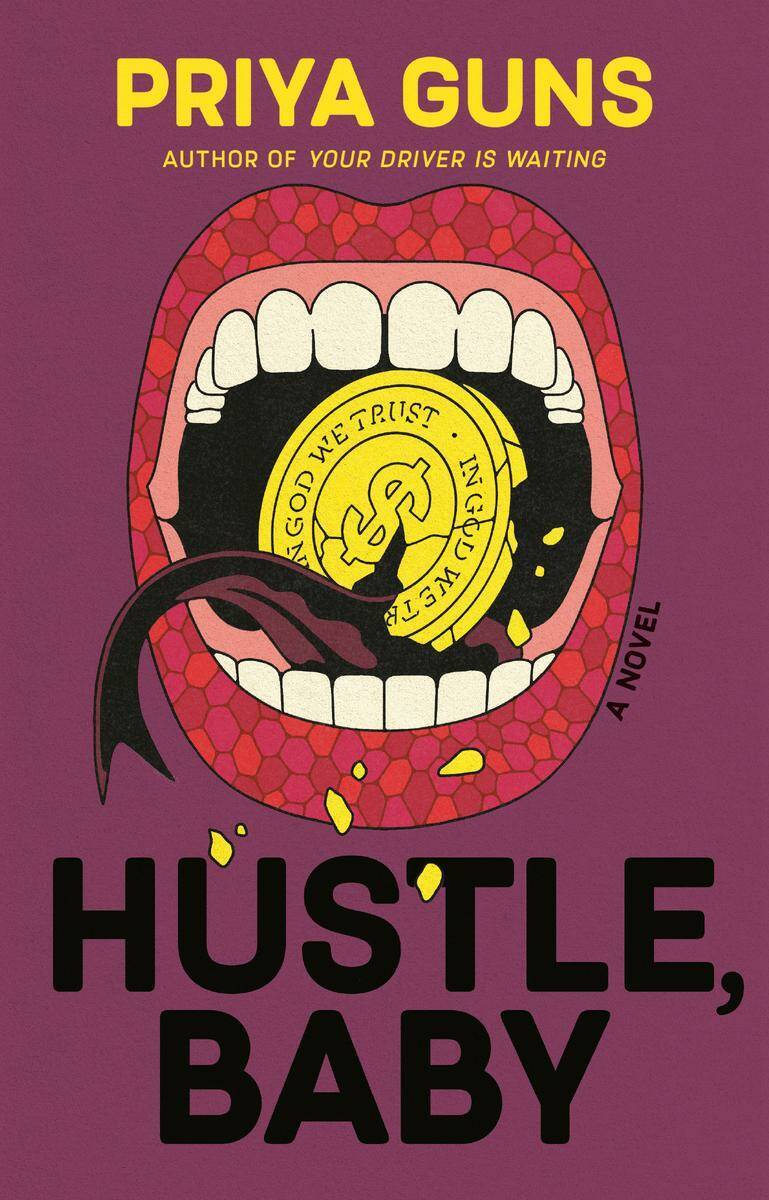
Hustle, Baby
Perhaps Naushige knew families wild with desperation in the face of eviction with the deck truly stacked against them. Maybe he witnessed the insanity with which such families responded. But it is doubtful his families rode out their crises with quite the aplomb this family does.
But then, Naushige’s families probably didn’t have a matriarch who was a God-fearing Christian woman who blows kisses to a portrait of Jesus in her kitchen and can morph into a cobra at will, as Mary does. And probably they didn’t have a family member who had been a terrorist, a member of the Tamil Tigers, like the brainy, beautiful Anji, Mary’s sister.
Dilo — the Hustle Baby of the title — is Mary’s daughter, a high school student and promising scholar who shoulders the family’s economic woes as thoroughly as the two adults do. At school, she sells weed and snacks to fatten the family’s coffers.
And lastly there’s Maysha, Anji’s young daughter.
Guns applies an interesting structure that captures the chaos of the family’s situation from all angles. Each chapter is written in the first person by one of the main characters — even tiny Maysha has a couple of short chapters. It mirrors the chaotic home environment — often too thoroughly, as the reader must keep turning back to each chapter’s opening to remember who is writing.
We first meet the family, dead broke and facing eviction, on a shoplifting trip to Z-Mart which they’ve planned with the meticulous care of a military operation. They work from a shopping list, sliding goods they need into extended coat pockets and Maysha’s blankets, finally dodging the alarms at the door by sliding a pricy perfume bottle into the bag of one of Mary’s church friends they follow to the checkout. The perfume sets off the alarm, and as the “friend” is taken away by security, the family slides out the door.
Even stocking up for free like this, the family knows they won’t be able to raise the back rent for which they are in arrears, plus months up front, by their landlord’s impossible deadline.

Enter Mark, the slick day trader who offers them hope.
It’s clear to readers what Mark is up to as he inveigles himself into the bosom of the family, wooing them with gifts and using them to access members of their evangelical church. The family doesn’t seem to see what readers do, which makes the surprise twist of an ending — actually, several twists to the ending — well, tortuous is not too strong a word, along with implausible, improbable and potentially preposterous. And so satisfying.
The family is more on the comedy end of this tragicomedy, and Guns’ writing is rife with clever, dark humour and occasional laugh-out-loud moments. The story starts off painfully slow, plodding onward for the first two-thirds before becoming lively as Mark’s role in the story heats up.
At times some passages read almost like poetry, like a veil draped over the actual meaning, making it hard to follow the plot. But by the book’s end, the novel does an entertaining job as social commentary.
Julie Carl is a freelance journalist living in Toronto.