Unravelling secrets

Aunt’s hidden, mysterious life unlocks a moving meditation on humanity and family

Advertisement

Advertise with us

Valérie Perrin is not a household name on this side of the pond, but in France her novels have garnered multiple awards. In Tata, Perrin’s fourth novel but the second translated to English, a simple but intriguing premise unfolds into a complex, multi-faceted story, one that seemingly incorporates the lessons of not only her three prior novels but also her several produced screenplays.

Read this article for free:


or

Already have an account? Log in here »

To continue reading, please subscribe:

Subscribe and receive a limited-edition Free Press branded hat or tote.

Digital Subscription

One year of digital access for only $205*

  • Enjoy unlimited reading on winnipegfreepress.com
  • Read the E-Edition, our digital replica newspaper
  • Access News Break, our award-winning app
  • Play interactive puzzles

*First annual payment billed as $205.00 + GST for one year. This annual subscription will automatically renew at $233.00 + GST every 52 weeks (10% off the regular annual price of $259.35). Offer available to new and qualified returning subscribers only. Cancel any time.

To continue reading, please subscribe:

Add Free Press access to your Brandon Sun subscription for only an additional

$1 for the first 4 weeks*

  • Enjoy unlimited reading on winnipegfreepress.com
  • Read the E-Edition, our digital replica newspaper
  • Access News Break, our award-winning app
  • Play interactive puzzles
Start now

*Your next Brandon Sun subscription payment will increase by $1.00 and you will be charged $17.95 plus GST for four weeks. After four weeks, your payment will increase to $24.95 plus GST every four weeks.

Valérie Perrin is not a household name on this side of the pond, but in France her novels have garnered multiple awards. In Tata, Perrin’s fourth novel but the second translated to English, a simple but intriguing premise unfolds into a complex, multi-faceted story, one that seemingly incorporates the lessons of not only her three prior novels but also her several produced screenplays.

Scene 1: Paris, an upscale apartment in the autumn of 2010. Agnes, a celebrated film director, is publicly lauded but privately still reeling from her divorce three years ago. The phone rings. On the other end is a provincial police officer from Gueugnon, who regretfully informs her that her aunt, Colette Septembre, was found dead in her home that morning.

But Agnes reacts with confusion, not grief — Aunt Colette died three years ago.

It’s a great set-up for a thriller, although this isn’t one.

VALENTIN LAUVERGNE PHOTO
                                French novelist and screenwriter Valérie Perrin’s complex, multi-layered plot comes together seamlessly.

VALENTIN LAUVERGNE PHOTO

French novelist and screenwriter Valérie Perrin’s complex, multi-layered plot comes together seamlessly.

It’s quickly confirmed that Colette really did pass away during the night, which raises not only the question of why Agnes’s quiet, unassuming aunt, who ran a shoe-repair shop in the same small town her entire life, would have faked her own death — and the question of the identity of the person buried three years ago.

To aid in this, Colette left her niece a gift: dozens of audio cassettes, over 100 hours’ worth, on which she unburdened herself of every secret detail of her life. As Agnes listens, she hopes to unravel the meaning of her aunt’s two deaths. But over time the focus slowly shifts to trying to understand the meaning — not of Colette’s death, but of her entire life.

Much of the novel is from Colette’s point of view, narrated in first person via these audio diaries. They take the reader from her early childhood in 1950s rural France all the way up to the three years she spent in hiding after pretending to die. There are also some sections written in screenplay form related to the life of Agnes’s mother.

But this is not a story of Agnes passively listening to cassette recordings. In between she follows leads, presses police contacts for information, interviews Colette’s neighbours and scours her own childhood memories for clues.

Life also goes on: there is a new funeral to plan, Agnes has an ex-husband to deal with and a teenage daughter to care for. And whoever Colette was hiding from may be a danger to her family.

In Gueugnon, Agnes also reconnects with childhood friends, ones she’d see during the school holidays at her aunt’s shoe-repair shop. They help with the legwork. Refreshingly, Agnes opens up to them — she’s not a hard-boiled cliché keeping everything to herself.

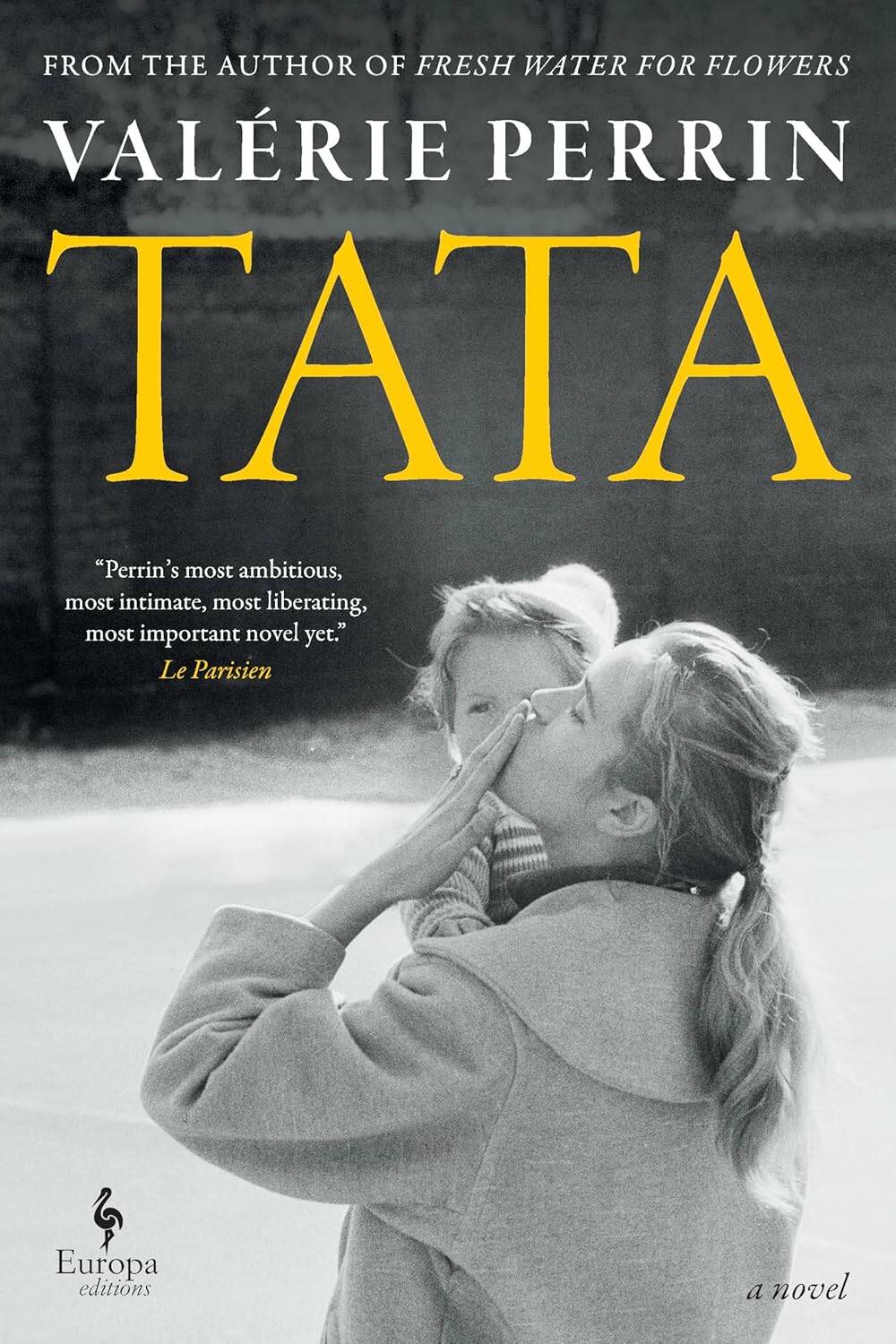
Tata
Tata

Despite the harsh, poverty-stricken life Colette and her baby brother Jean endured in the postwar period, Jean eventually became a world-renowned concert pianist and produced a child, Agnes, who was in turn spared from the same hardships. How?

Questions such as these make the book hard to put down — and along the way to getting the answer to one question, new characters and mysteries are introduced.

The story jumps backwards and forwards in time and space, between Gueugnon, Lyon and Paris, spanning almost 90 years. It jumps between circuses with abusive ringmasters to châteaus with oppressive landowners to the terror of the Nazi occupation.

But there is an undercurrent of hope in every story Perrin tells here. While some will mete out cruelty, there are always those who offer love. There are still sad endings. But kindness counts, even when found in fleeting moments.

Tata is a wonderful novel, with a complex, multi-layered plot which comes together expertly to form a beautiful meditation on humanity and the bonds of family. Special credit is also due the translator, Hildegarde Serle, who makes this read more like an English-language novel set in France than a work in translation.

Joel Boyce is a Winnipeg writer and educator.

Report Error Submit a Tip

More Stories

Puzzles Palace

1 minute read Monday, Jul. 27, 2026

To solve our puzzles, please subscribe with this special offer: |

August in the kitchen garden

Colleen Zacharias 7 minute read Preview

August in the kitchen garden

Colleen Zacharias 7 minute read 3:00 AM CDT

Lynne Hermiston is passionate about growing her own food. Her backyard food garden in south Winnipeg is an amazing example of the abundance and diversity of food that can be grown in a relatively small space. But it’s also a prime example of how a zest for learning innovative methods can make food gardening more fun.

Hermiston’s backyard is approximately 10 metres wide and 15 metres deep. The growing area consisting of raised beds and a couple of in-ground beds between her deck and back fence is about nine metres deep. There is not a single blade of turf grass in sight. The design for this attractive and productive space was created by Classic Landscaping four years ago. A series of raised wooden beds mulched with straw are neatly arranged on a light grey, slate-like surface. An inviting centre arbor acts as a focal point and supports climbing plants. The square-shaped raised-bed area receives eight to nine hours of sun daily. It is flanked on one side by a long, linear-shaped bed, planted with flowering perennials that attract and support pollinators.

The food plants Hermiston is growing this summer include tomatoes, cucumbers, squash, beets, chickpeas, beans, onions, sweet potatoes, horseradish, garlic, peppers, carrots, pumpkin and cauliflower. She is growing Chinese Pink celery, an heirloom variety with bubblegum-pink stems, for the first time, as well as eggplant.

She also grows salad greens and herbs, which have made delicious additions to her summer recipes this year. Only a few harvests remain of the spinach she planted. But, compared to last year’s growing season, some food plants are taking their time, Hermiston says.

Read
3:00 AM CDT

Aunt’s hidden, mysterious life unlocks a moving meditation on humanity and family

Reviewed by Joel Boyce 4 minute read Preview

Aunt’s hidden, mysterious life unlocks a moving meditation on humanity and family

Reviewed by Joel Boyce 4 minute read 3:00 AM CDT

Valérie Perrin is not a household name on this side of the pond, but in France her novels have garnered multiple awards. In Tata, Perrin’s fourth novel but the second translated to English, a simple but intriguing premise unfolds into a complex, multi-faceted story, one that seemingly incorporates the lessons of not only her three prior novels but also her several produced screenplays.

Scene 1: Paris, an upscale apartment in the autumn of 2010. Agnes, a celebrated film director, is publicly lauded but privately still reeling from her divorce three years ago. The phone rings. On the other end is a provincial police officer from Gueugnon, who regretfully informs her that her aunt, Colette Septembre, was found dead in her home that morning.

But Agnes reacts with confusion, not grief — Aunt Colette died three years ago.

It’s a great set-up for a thriller, although this isn’t one.

Read
3:00 AM CDT

Nola chef earns national award

Eva Wasney 2 minute read Preview

Nola chef earns national award

Eva Wasney 2 minute read Yesterday at 2:01 AM CDT

Celebrated Winnipeg chef Emily Butcher has another feather to add to her toque. The executive chef and owner of Nola and Bar Accanto in St. Boniface has received the Culinary Award of Excellence from Restaurants Canada, a national foodservice advocacy organization.

Read
Yesterday at 2:01 AM CDT

Meetings accomplish something that an email never could while respecting people’s time, building relationships

Tory McNally 7 minute read Preview

Meetings accomplish something that an email never could while respecting people’s time, building relationships

Tory McNally 7 minute read 3:00 AM CDT

There are few workplace experiences that unite employees quite like complaining about meetings. Ask almost anyone what frustrates them at work, and somewhere on the list will be the meeting that could have been an email. We’ve all been there. Thirty minutes scheduled for a simple update somehow turns into an hour. Half the attendees don’t need to be there. Someone shares their screen for ten minutes trying to find the right document. The meeting ends with everyone wondering what was actually decided.

It’s no surprise that organizations are looking for ways to reduce meeting fatigue. Every hour spent in a meeting is an hour that isn’t spent serving customers, solving problems, writing reports, or completing projects. As calendars become increasingly crowded, employees often find themselves working longer days simply to catch up on the work they couldn’t accomplish because they were in meetings.

The obvious solution seems simple: hold fewer meetings. In many cases, that’s exactly the right answer. Routine updates, policy reminders, project status reports, and information that doesn’t require discussion can often be shared through email and chat platforms. Not every piece of information deserves everyone’s calendar.

But eliminating meetings altogether would create a different problem, especially as more organizations embrace hybrid and remote work.

Read
3:00 AM CDT

Aunt’s hidden, mysterious life unlocks a moving meditation on humanity and family

Reviewed by Joel Boyce 4 minute read Preview

Aunt’s hidden, mysterious life unlocks a moving meditation on humanity and family

Reviewed by Joel Boyce 4 minute read 3:00 AM CDT

Valérie Perrin is not a household name on this side of the pond, but in France her novels have garnered multiple awards. In Tata, Perrin’s fourth novel but the second translated to English, a simple but intriguing premise unfolds into a complex, multi-faceted story, one that seemingly incorporates the lessons of not only her three prior novels but also her several produced screenplays.

Scene 1: Paris, an upscale apartment in the autumn of 2010. Agnes, a celebrated film director, is publicly lauded but privately still reeling from her divorce three years ago. The phone rings. On the other end is a provincial police officer from Gueugnon, who regretfully informs her that her aunt, Colette Septembre, was found dead in her home that morning.

But Agnes reacts with confusion, not grief — Aunt Colette died three years ago.

It’s a great set-up for a thriller, although this isn’t one.

Read
3:00 AM CDT