The devil you know
Serial con man preyed on victims along the Gulf Coast — then repeatedly duped law enforcement
Advertisement
Read this article for free:
or
Already have an account? Log in here »
To continue reading, please subscribe:
Digital Subscription
One year of digital access for only $1.44 a week*
- Enjoy unlimited reading on winnipegfreepress.com
- Read the E-Edition, our digital replica newspaper
- Access News Break, our award-winning app
- Play interactive puzzles
*Billed as $5.77 plus GST every four weeks. After 52 weeks, price increases to the regular rate of $19.95 plus GST every four weeks. Offer available to new and qualified returning subscribers only. Cancel any time.
To continue reading, please subscribe:
Add Free Press access to your Brandon Sun subscription for only an additional
$1 for the first 4 weeks*
- Enjoy unlimited reading on winnipegfreepress.com
- Read the E-Edition, our digital replica newspaper
- Access News Break, our award-winning app
- Play interactive puzzles
*Your next Brandon Sun subscription payment will increase by $1.00 and you will be charged $17.95 plus GST for four weeks. After four weeks, your payment will increase to $24.95 plus GST every four weeks.
Read unlimited articles for free today:
or
Already have an account? Log in here »
Consider the con man. What image springs to mind? A dashing, quick-witted charmer? A mischievous scoundrel?
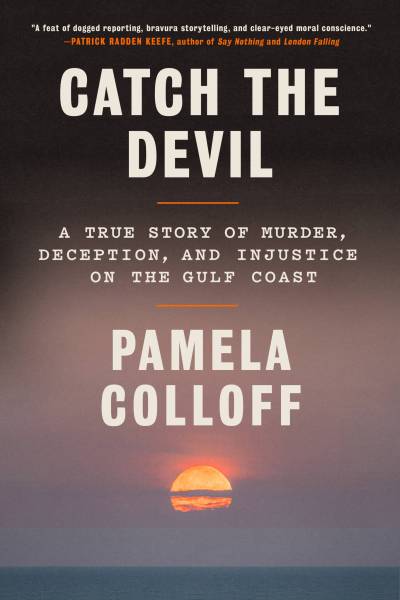
The debut book from Pamela Colloff, a Texas-based investigative reporter for ProPublica and staff writer for the New York Times Magazine, complicates romantic notions of the scam artist and invites readers to reflect on the systems that enable them.
The central figure of Catch the Devil is Paul Skalnik, a serial con man, thief, child molester and jailhouse informant whose mastery of leverage and loopholes allowed him to evade consequences in dysfunctional justice systems for decades.

Pinellas County Sheriff’s Office
Paul Skalnik, seen here in one of his many mug shots, was able to evade consequences in dysfunctional justice systems for decades.
Divided into four untitled sections, the book unfolds in Texas and Florida in the 1970s and ‘80s, against the backdrop of “tough on crime” politics and the social fallout of the Vietnam War.
Skalnik prowls the Gulf Coast like a Florida panther, preying upon victim after victim. He marries nine women, some overlapping, and seduces many more, defrauding all of them, including the single mother of a child with a developmental disability.
The sheer variety of his grift is astonishing: cheques, cars, jewelry, legal and bookkeeping services, furniture, life insurance, military medals, cancer diagnoses and more. “If he channeled his energies into something productive, it’s amazing what he could do,” a detective remarks.
But Colloff banishes any notion of genius. “What made him so dangerous was not his intelligence or cunning,” she writes, “but rather how readily the institutions that were supposed to uphold the law and protect the most vulnerable had amplified his lies.”
Once caught, Skalnik pivots to snitching to gain leniency, lying liberally on the witness stand, intuiting what lawyers and juries want to hear. Prosecutors don’t think twice when he obtains jailhouse confessions in three different murder cases in one summer.
All told, Skalnik’s testimony sends three dozen people to prison, and puts four on death row. “So potent is the power of a confession, researchers have found, that its potency does not diminish if the defendant’s alleged admission of guilt is narrated by a third party rather than the defendant himself,” Colloff writes.

Peter Yang photo
In her debut book, Pamela Colloff complicates romantic notions of the scam artist and invites readers to reflect on the systems that enable them.
The book’s other central character is Jim Dailey, a promising young man who returns from the Vietnam War beset by post-traumatic stress and alcoholism, falls in with the wrong crowd and is soon the prime suspect in the 1985 murder of a 14-year-old girl. Dailey’s conviction hinges on court testimony from Skalnik, who claims Dailey confessed to him behind bars.
Dailey spends years on death row, exhausting various avenues of appeal with help from a revolving door of public defenders. Colloff traces the history of Florida’s penchant for the death penalty, which remains undimmed to this day. More executions have occurred in Florida this year (12) than all other states combined. The book’s passages about life on death row are vivid, recalling Truman Capote’s In Cold Blood.

To write Catch the Devil, Colloff filed hundreds of public record requests and sifted through mountains of legal casework and press clippings. She conducted dozens of interviews, including two with Skalnik. The first takes place in a prison, the second in a nursing home. Her direct observations of Skalnik, who remains as sly as ever, enliven the book, as do the mugshots and press photos sprinkled throughout.
A sociological writer, Colloff excels at contextualizing people and events. One chapter opens with a succinct overview of Florida’s transformation from forests and wetlands into condos and citrus farms.
The book also highlights an impressive number of systemic issues, including prosecutorial misconduct, domestic violence, mass incarceration, capital punishment and the social psychology of jury trials.
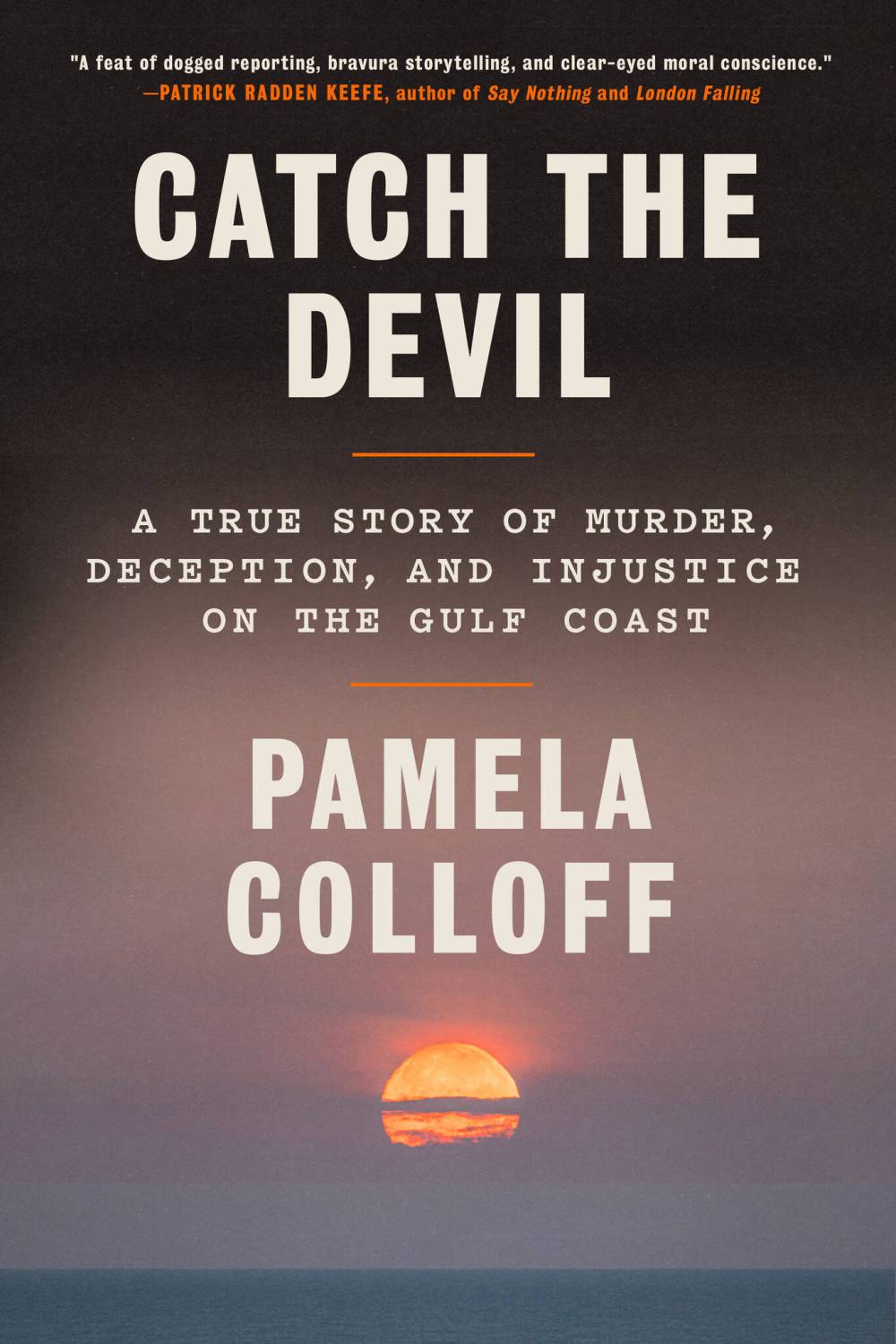
The final pages of Catch the Devil drive home the bitter irony of “tough on crime” politics. There’s an old saying: the finer the net, the easier it tears.
Jordan Ross is a writer and photographer in Winnipeg’s West End. Follow him on Bluesky at @jordanross.bsky.social.