Plotting her course
Mysterious book takes woman to pivotal moments in her past, present and future
Advertisement
Read this article for free:
or
Already have an account? Log in here »
To continue reading, please subscribe:

Digital Subscription
One year of digital access for only $205*
- Enjoy unlimited reading on winnipegfreepress.com
- Read the E-Edition, our digital replica newspaper
- Access News Break, our award-winning app
- Play interactive puzzles
*First annual payment billed as $205.00 + GST for one year. This annual subscription will automatically renew at $233.00 + GST every 52 weeks (10% off the regular annual price of $259.35). Offer available to new and qualified returning subscribers only. Cancel any time.
To continue reading, please subscribe:
Add Free Press access to your Brandon Sun subscription for only an additional
$1 for the first 4 weeks*
- Enjoy unlimited reading on winnipegfreepress.com
- Read the E-Edition, our digital replica newspaper
- Access News Break, our award-winning app
- Play interactive puzzles
*Your next Brandon Sun subscription payment will increase by $1.00 and you will be charged $17.95 plus GST for four weeks. After four weeks, your payment will increase to $24.95 plus GST every four weeks.
Read unlimited articles for free today:
or
Already have an account? Log in here »
Having the ability to see yourself in the past and future might be a blessing or a curse — you could be forced to relive transformative or traumatic incidents from your past, or discover a happy or tragic future. B.C. author Gail Anderson-Dargatz explores this cosmic dilemma in her new novel, The Atlas Keeper.
Anderson-Dargatz won acclaim for both her first novel, The Cure for Death by Lightning, and her second, A Recipe for Bees, both of which were Giller Prize finalists. The Cure for Death by Lightning won the U.K.’s Betty Trask Award, the B.C. Book Prize for Fiction and the Vancity Book Prize. Among her other work, she’s also written thrillers, including The Almost Wife, a Canadian bestseller, and The Almost Widow.
The life changes in The Atlas Keeper’s protagonist are reflected in her first name, as she cycles through calling herself Ellie, Elsie, Beth, Eliza, Lizzy, Ziz, Liz and finally Elizabeth. When the story begins, she’s almost 28, living in a moldy basement suite in a house rented by her sister Bailey, and working as a mapper at her father’s forestry consulting company. She’s barely recovered from a severe depression caused by witnessing her mother’s accidental death on a mountainside. Feeling trapped in her dull life, she doesn’t see a bright future ahead.
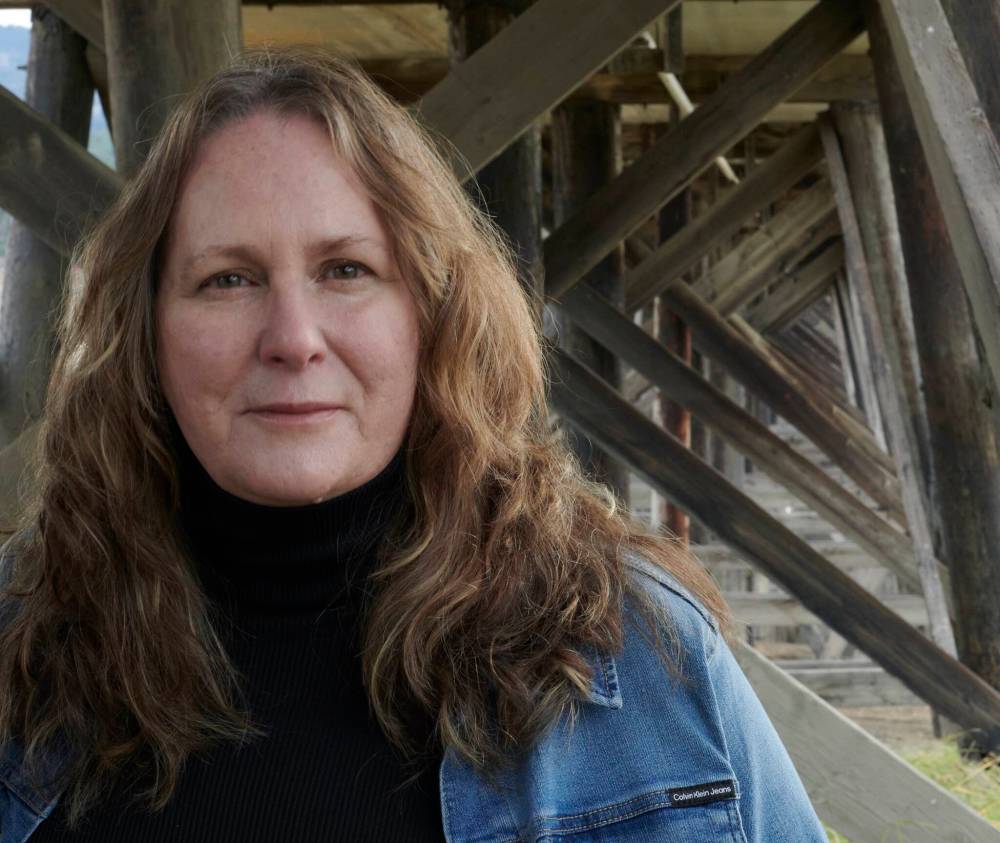
Mitch Krupp photo
Gail Anderson-Dargatz’s 1996 debut novel The Cure for Death By Lightning and 1998’s A Recipe for Bees were both finalists for the Giller Prize.
However, Elsie’s life takes a major turn during a hike with attractive astrologist Zander to mark the fifth anniversary of her mother’s death. Upon reaching the plateau where her mother fell, she sees an old woman in a white nightgown who appears to vanish into thin air. The geocache left on the plateau includes a strange-looking book titled The Pocket Atlas of Nostalgia and Longing which is decorated with the phases of the moon and contains astrological charts.
Back at home, upon opening the book to the first page which reads “The First House: Self,” Elsie finds herself reliving the moment her mother fell down the cliff while she grabs her younger self’s ankles to stop herself from sliding over the edge. Believing she had a vivid flashback, Elsie is stunned.
Elsie and Bailey look through the atlas and see it’s divided into 12 houses and features Elsie’s birth chart along with a geographic location for each house. Elsie realizes most of these locations are familiar, such as her father’s and Bailey’s houses, a favourite café and her office, while others, including a beach, a school and an airport in Victoria, are unknown to her. She suspects Zander might have created the book, but Zander doesn’t know her well enough to make it so personal.
Elsie seeks Zander’s help in interpreting the atlas to anticipate which aspects of her life will be highlighted within each of the upcoming houses. When she triggers the atlas’ time-travel magic, allowing her to return to her mother’s house on Christmas Day 2002, she’s able to speak to her mother and see herself as a seven-year-old. Elsie has to convince her skeptical mother that she really is her daughter, at age 27; she tries to warn her mother about the accident that will claim her life in 15 years, but her mother refuses to consider playing it safe. Elsie is able to find Polaroid photos taken of her visit that day and uses them to show her sister that she’s not going crazy and just imagining she’s travelling through time.
Some of the events Elsie participates in are surprisingly joyful, while others are upsetting as she sees her father’s and Zander’s health deteriorate in the coming years. As she reaches the final house and completes her journey, she’s able to view her life in its entirety and find comfort in her relationships.
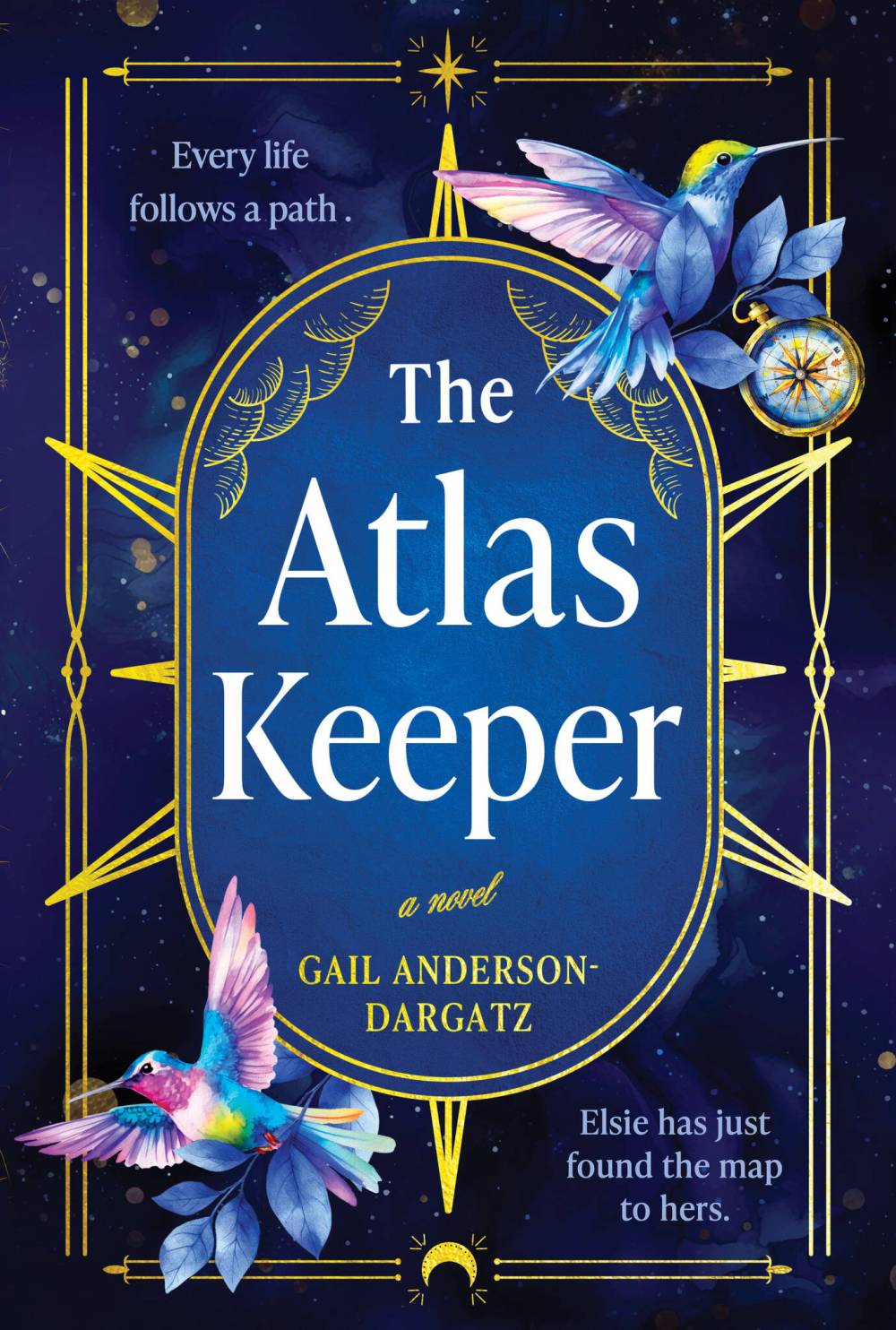
The Atlas Keeper

While time travel adventures have been featured in previous fiction, Anderson-Dargatz gives the theme an enjoyable modern twist in The Atlas Keeper.
Andrea Geary is a freelance writer in Selkirk.