Unity-based worldview key to good leadership
Advertisement
Read this article for free:
or
Already have an account? Log in here »
To continue reading, please subscribe:

Digital Subscription
One year of digital access for only $205*
- Enjoy unlimited reading on winnipegfreepress.com
- Read the E-Edition, our digital replica newspaper
- Access News Break, our award-winning app
- Play interactive puzzles
*First annual payment billed as $205.00 + GST for one year. This annual subscription will automatically renew at $233.00 + GST every 52 weeks (10% off the regular annual price of $259.35). Offer available to new and qualified returning subscribers only. Cancel any time.
To continue reading, please subscribe:
Add Free Press access to your Brandon Sun subscription for only an additional
$1 for the first 4 weeks*
- Enjoy unlimited reading on winnipegfreepress.com
- Read the E-Edition, our digital replica newspaper
- Access News Break, our award-winning app
- Play interactive puzzles
*Your next Brandon Sun subscription payment will increase by $1.00 and you will be charged $17.95 plus GST for four weeks. After four weeks, your payment will increase to $24.95 plus GST every four weeks.
Read unlimited articles for free today:
or
Already have an account? Log in here »
Indigenous leader and former justice minister and attorney general of Canada Jody Wilson-Raybould knows first-hand what courageous leadership looks like. As a politician operating in an adversarial and competitive partisan system that favours winning over good public policy, she once took a stand against a leader and his style that was contrary to her values. The move cost her her job. The public fallout was immense as she was removed from cabinet and, later, the caucus.
Now, she’s co-written a book on leadership — one that should be mandatory reading for everyone who wants to advance the state of leadership within themselves and their community.
In The Inbetween Leader, Wilson-Raybould and co-author (and B.C. lawyer and educator) Roshan Danesh advocate for what they call an “inbetween” leadership style. It involves meeting people where they are at, breaking down silos that separate us and being a bridge between different views and opinions.
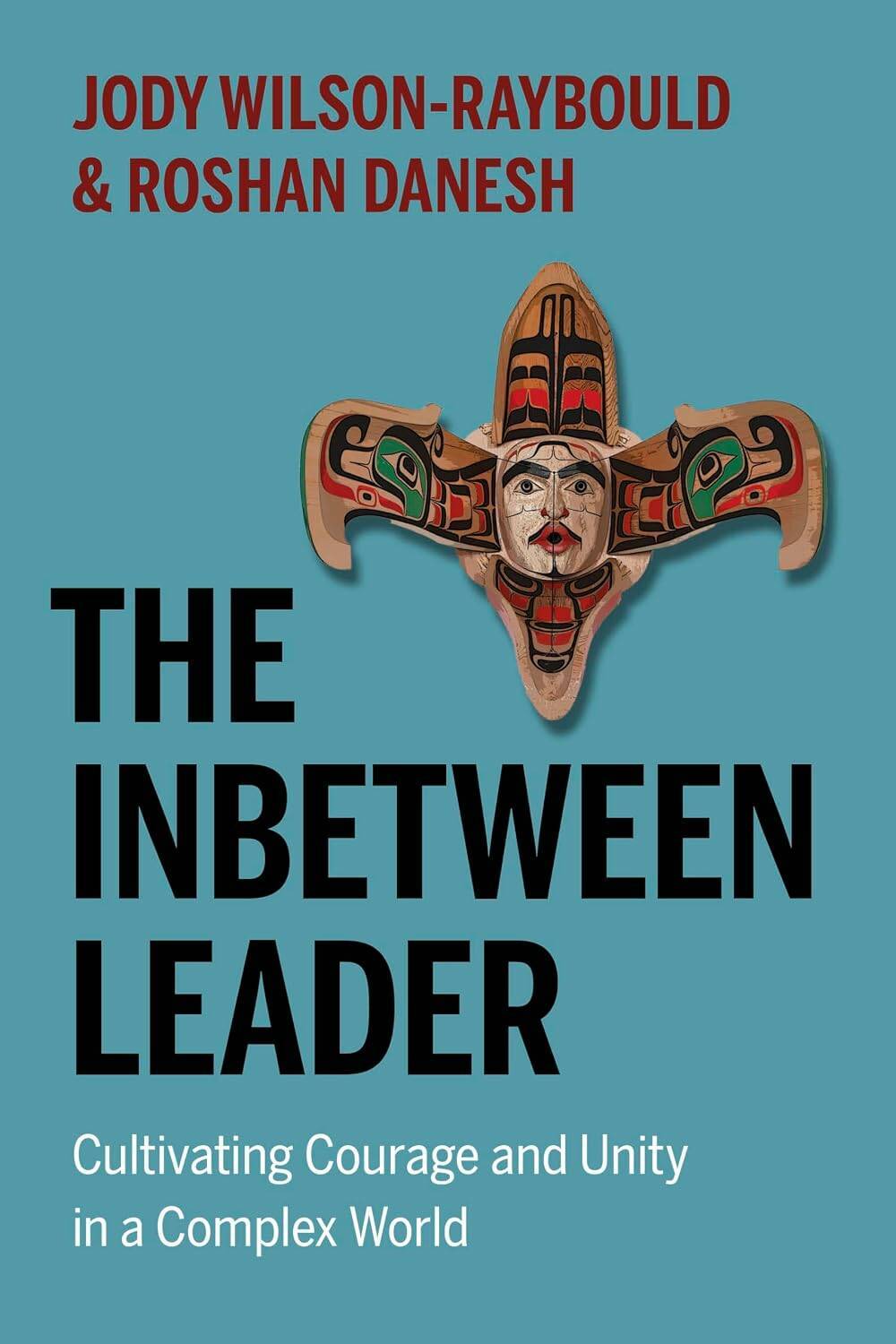
The Inbetween Leader
“A strong leader is also one who can engender respect and be seen as an authority through their ability to be unifying,” Wilson-Raybould writes. “If one divides, one is not a leader. If one promotes conflict, one is not a leader. If one tries to force people to bend to one’s own will, one is not a leader.”
In recognizing every person has internal biases and blinders, the book offers practical solutions to help readers check their assumptions. Exercises and questions are provided at the end of each chapter to enhance the learning experience about the leadership style promoted within the pages.
Wilson-Raybould credits the experience of being raised in two worlds — one where she grew up “on the Rez,” and the other attending school “off the Rez” — with expanding her worldview, a fundamental component to shaping how she makes sense of the world.
A worldview is also a key feature in determining how leaders govern, which often falls into one of three categories: authoritarian, competitive or unity-based.
The competitive worldview is rampant in political leadership, and the authoritarian worldview led to, among other things, the destructive colonization of Indigenous Peoples, the book explains.

Developing a unity-based worldview is essential in becoming an inbetween leader.
In advancing a unity-based worldview as an alternative to the competitive and authoritarian ones, Wilson-Raybould and Danesh illustrate a scenario in the former Yugoslavia, where students were enrolled in a peace education program that promoted unity. It resulted in them acting in ways that disrupted the cycle of violence.
“From a unity-based perspective, the world is not fundamentally threatening or conflict-ridden. Rather, we see a fundamental connection and interdependence that underlies the fabric of our lives, as individuals and collectively,” the pair write.
In sharing their knowledge on how to build a unity-based worldview and become an inbetween leader, Wilson-Raybould and Danesh are helping create environments that respect and value diversity and differences. It’s encouraging for anyone weary of a fractured world.
Rochelle Squires is a lifelong reader with a particular interest in leadership, public life and the stories that shape how we understand the world.