Brilliant deductions
Doyle took inspiration from Scottish surgeon in crafting his legendary sleuth
Advertisement
Read this article for free:
or
Already have an account? Log in here »
To continue reading, please subscribe:
Digital Subscription
One year of digital access for only $1.44 a week*
- Enjoy unlimited reading on winnipegfreepress.com
- Read the E-Edition, our digital replica newspaper
- Access News Break, our award-winning app
- Play interactive puzzles
*Billed as $5.77 plus GST every four weeks. After 52 weeks, price increases to the regular rate of $19.95 plus GST every four weeks. Offer available to new and qualified returning subscribers only. Cancel any time.
To continue reading, please subscribe:
Add Free Press access to your Brandon Sun subscription for only an additional
$1 for the first 4 weeks*
- Enjoy unlimited reading on winnipegfreepress.com
- Read the E-Edition, our digital replica newspaper
- Access News Break, our award-winning app
- Play interactive puzzles
*Your next Brandon Sun subscription payment will increase by $1.00 and you will be charged $17.95 plus GST for four weeks. After four weeks, your payment will increase to $24.95 plus GST every four weeks.
Read unlimited articles for free today:
or
Already have an account? Log in here »
He’s such a symbol of invincibility that if a bullet was coming his way, he’d simply tell it to go home.
Sleuth-Hound is the charming tale of how one serendipity after another led to the birth of the world’s most brilliant detective: Sherlock Holmes.
Take away any one of the factors involved that led to the creation of Sherlock, and it’s safe to say he wouldn’t be.
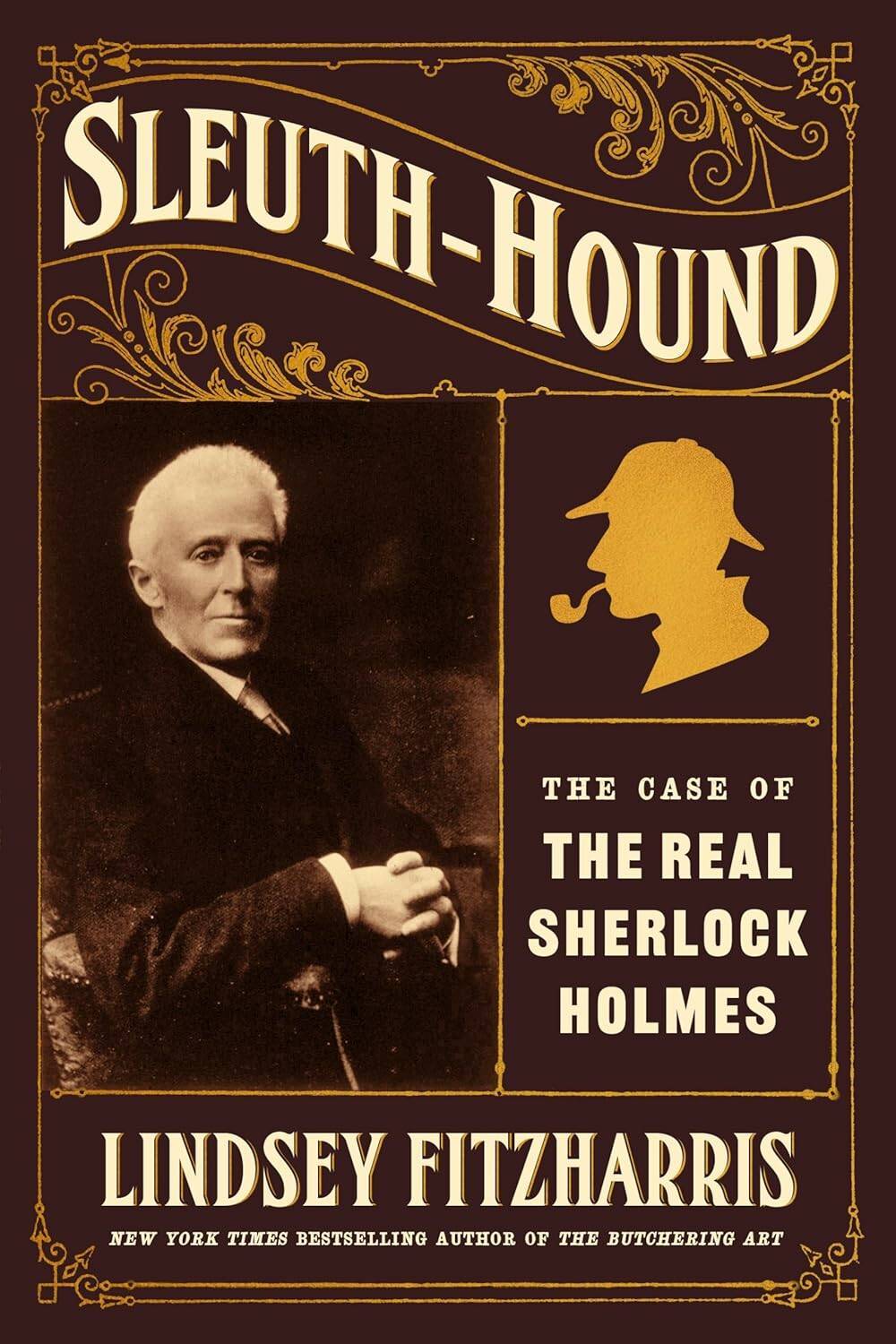
Sleuth-Hound
Sleuth-Hound is the exciting story of one Scotsman who saw things others did not. His skills inspired a second Scot to create the world’s greatest make-believe detective, so convincing that some people believe Sherlock was real.
Veteran author Lindsey Fitzharris spends more time than anyone detailing the life of the man who unknowingly started it all: Dr. Joseph Bell, a surgeon in the Royal Infirmary and professor at the University of Edinburgh, where Holmes’ creator Arthur Conan Doyle was a med student.
“The history of the man whom Conan Doyle identified… as the inspiration for Holmes is far from well-known,” writes Fitzharris. She seeks in Sleuth-Hound to rectify that.
Fitzharris holds a PhD in the history of science and medicine from Oxford and is the author of The Butchering Art, about Victorian surgery, and The Facemaker, about a First World War surgeon. In Sleuth-Hound she explains in fascinating detail how Dr. Bell was known far and wide for his unrivalled analytical skills and admired by Conan Doyle for them. Bell’s way of thinking at a crime scene was magic.
Fitzharris says that during his time at the University of Edinburgh, from 1876 to 1881, Doyle was published in the British Medical Journal and also wrote short stories. So he was already a capable writer when he saw Bell at work as a medical detective at crime scenes and as an expert witness in court cases. He was awestruck by Bell’s genius.
Bell could look at a person and tell what kind of work they did, their personal habits and history and, in hospital, even why they needed a doctor. It was what Holmes, in Doyle’s writing, described as “reasoning backwards.”
Holmes described his (and Bell’s) investigatory methods in A Study in Scarlet: “Let me see if I can make it clearer. Most people, if you describe a train of events to them, will tell you what the result would be. They can put those events together in their minds and argue from them that something will come to pass. There are few people, however, who, if you told them a result, would be able to evolve from their own inner consciousness what the steps were which led up to that result. This power is what I mean when I talk about reasoning backwards.”
Shortly after Doyle graduated and was practising medicine, detective fiction had yet to gain widespread popularity in Britain. Fitzharris said Doyle wanted to discard the typical detective story in which cases were solved by pure chance. Doyle wanted stories in which the detective’s success depended “on method, analysis, and the careful weighing of evidence.
Free Press files / PBS
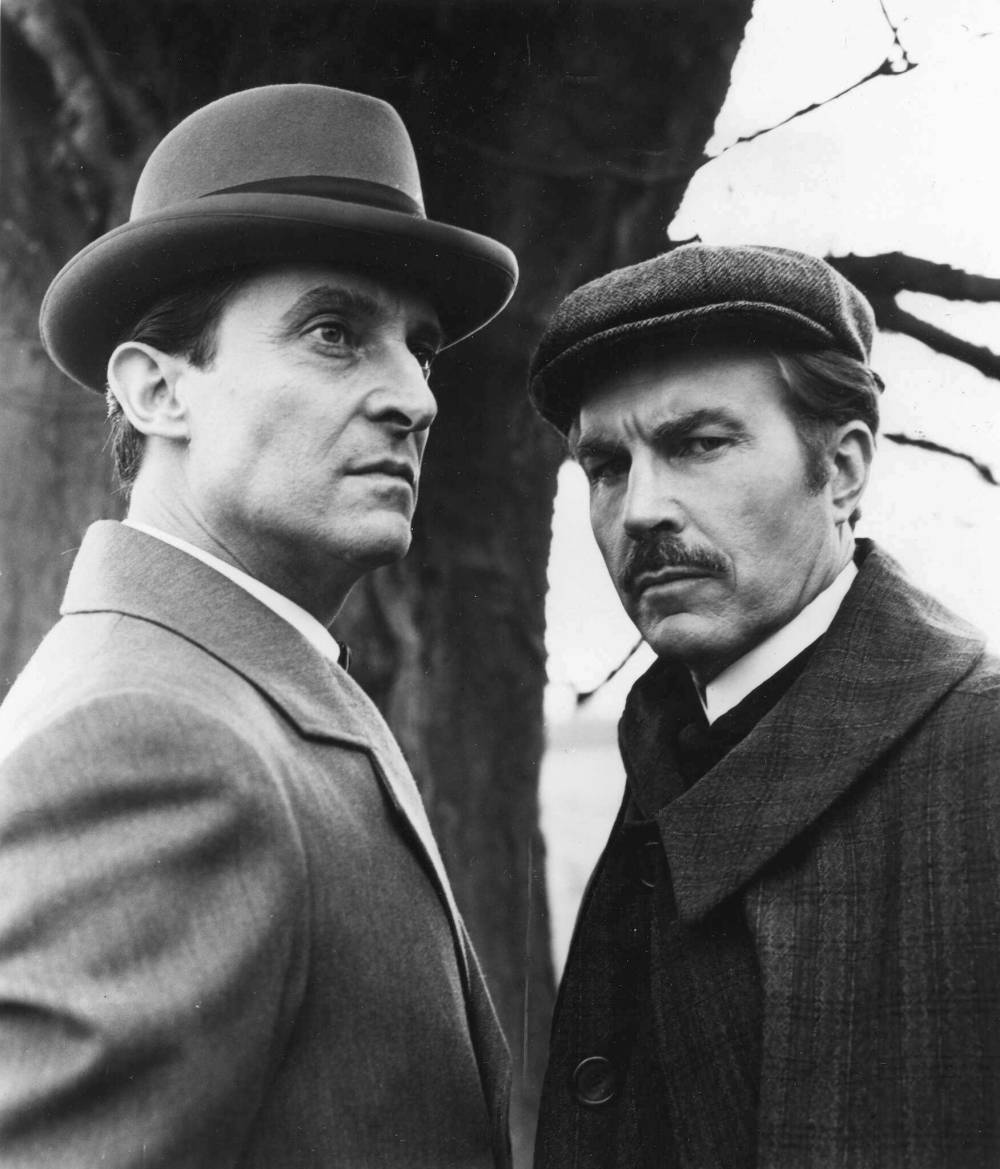
Jeremy Brett (left) played Sherlock Holmes alongside David Burke as Dr. Watson in the British TV production that ran from 1984 to 1994.
“I thought of my old teacher, Joe Bell, of his eagle face, of his curious ways, of his eerie trick of spotting details. If he were a detective he would surely reduce this fascinating but unorganized business to something nearer to an exact science,” Doyle said.
At first Doyle’s Sherlock Holmes writing didn’t sell well, but when it was taken up by the Strand magazine, Holmes became a household name on both sides of the Atlantic.
Writes Fitzharris: “Holmes embodies the observational immediacy and flair that Conan Doyle had so often observed in Joe Bell.”
Doyle was concerned the press would find out about Dr. Bell and his effect on Doyle’s writing. They did.
When the news finally broke that he was the model for Sherlock Holmes, the world suddenly wished to speak to him, says Fitzharris.
“Doyle’s the clever man. It’s nothing to do with me,” said Bell.
Recorded history now largely fails to mention Joe Bell, but Fitzharris knows his fingerprints are all over today’s detective work. They linger upon “the way investigators now approach crime, not with conjecture, but with rigor, method and science,” says Fitzharris.
Bell’s way of thinking lives on, says Fitzharris, “in the hush of a pathology lab, in the tense arena of a courtroom, in the ordered chaos of a sealed crime scene, the sleuth-hound still hunts.”

Lindsey Fitzharris photo
Lindsey Fitzharris
Doyle featured Sherlock in four novels and 56 short stories, beginning in 1887.
The public wouldn’t have it when Doyle grew tired of Sherlock and killed him off in The Final Problem. The public reaction was massive. The Royal Family was upset, 20,000 people cancelled their subscription to the Strand magazine, men were said to have worn black armbands in London. Doyle relented, by bringing back Sherlock in 1903 in The Adventure of the Empty House.
Holmes, according to the Guinness Book of World Records, is the most widely portrayed character in the history of film and television.
Take that, Agatha Christie.
Barry Craig is a retired journalist.