City visionaries

For decades, architectural firm GBR transformed Winnipeg's skyline and neighbourhoods

Advertisement

Advertise with us

An excerpt from GBR — Green Blankstein Russell and Associates: An Architectural Legacy, by Jeffrey Thorsteinson and Brennan Smith, commissioned by the Winnipeg Architecture Foundation.

Read this article for free:


or

Already have an account? Log in here »

To continue reading, please subscribe:

Subscribe and receive a limited-edition Free Press branded hat or tote.

Digital Subscription

One year of digital access for only $205*

  • Enjoy unlimited reading on winnipegfreepress.com
  • Read the E-Edition, our digital replica newspaper
  • Access News Break, our award-winning app
  • Play interactive puzzles

*First annual payment billed as $205.00 + GST for one year. This annual subscription will automatically renew at $233.00 + GST every 52 weeks (10% off the regular annual price of $259.35). Offer available to new and qualified returning subscribers only. Cancel any time.

To continue reading, please subscribe:

Add Free Press access to your Brandon Sun subscription for only an additional

$1 for the first 4 weeks*

  • Enjoy unlimited reading on winnipegfreepress.com
  • Read the E-Edition, our digital replica newspaper
  • Access News Break, our award-winning app
  • Play interactive puzzles
Start now

*Your next Brandon Sun subscription payment will increase by $1.00 and you will be charged $17.95 plus GST for four weeks. After four weeks, your payment will increase to $24.95 plus GST every four weeks.

Hey there, time traveller!
This article was published 12/05/2018 (3019 days ago), so information in it may no longer be current.

An excerpt from GBR — Green Blankstein Russell and Associates: An Architectural Legacy, by Jeffrey Thorsteinson and Brennan Smith, commissioned by the Winnipeg Architecture Foundation.

Throughout its over 70-year existence, Green Blankstein Russell and Associates (GBR) made a massive mark on Winnipeg, the city it called home, as well as across Canada. Beginning in the slow years of the Great Depression, the firm grew to become, by the middle of the century, a major player on the Canadian architectural scene — the largest architectural firm between Ontario and British Columbia — with seven branch offices spanning from Ottawa to Edmonton.

GBR was a significant contributor to the growth of Canadian Modernist architectural practice in the post-war period. At the height of this approach’s popularity in North America during the 1950s and ’60s, GBR was known for its expert application of the principles of Modernist architecture and its emphasis on elegant detail. These qualities were applied to the design of everything from skyscrapers to synagogues, town halls to terminals. The sophistication of GBR’s buildings of this era is comparable to many of the best international examples of modern architecture.

Over its lengthy existence, GBR integrated an extensive cast of characters, moments, and places. The firm was also a kind of engine: an institution through which many of Canada’s notable architects, designers, and engineers came through on their paths to prominence. In this respect, too, the office was pioneering, deliberately functioning as one of the first offices to bring women and individuals belonging to minority groups into architectural practice.
photos supplied by WINNIPEG ARCHITECTURE FOUNDATION
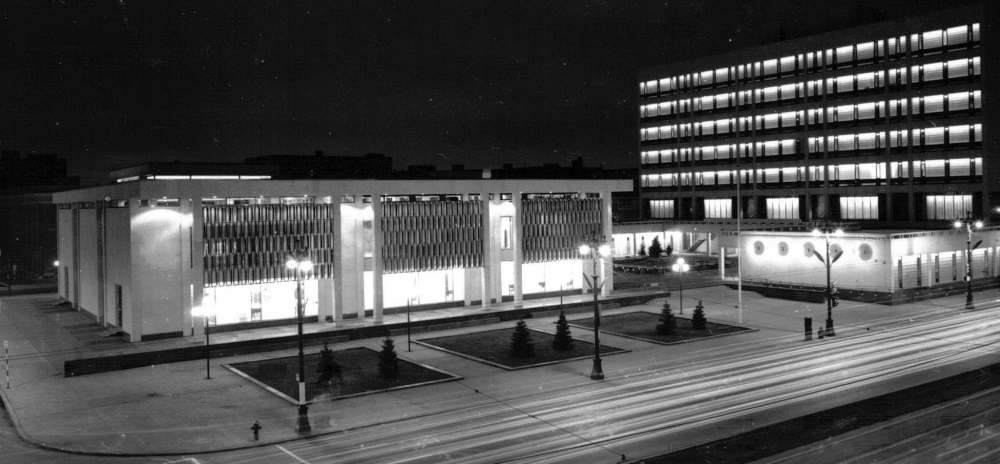
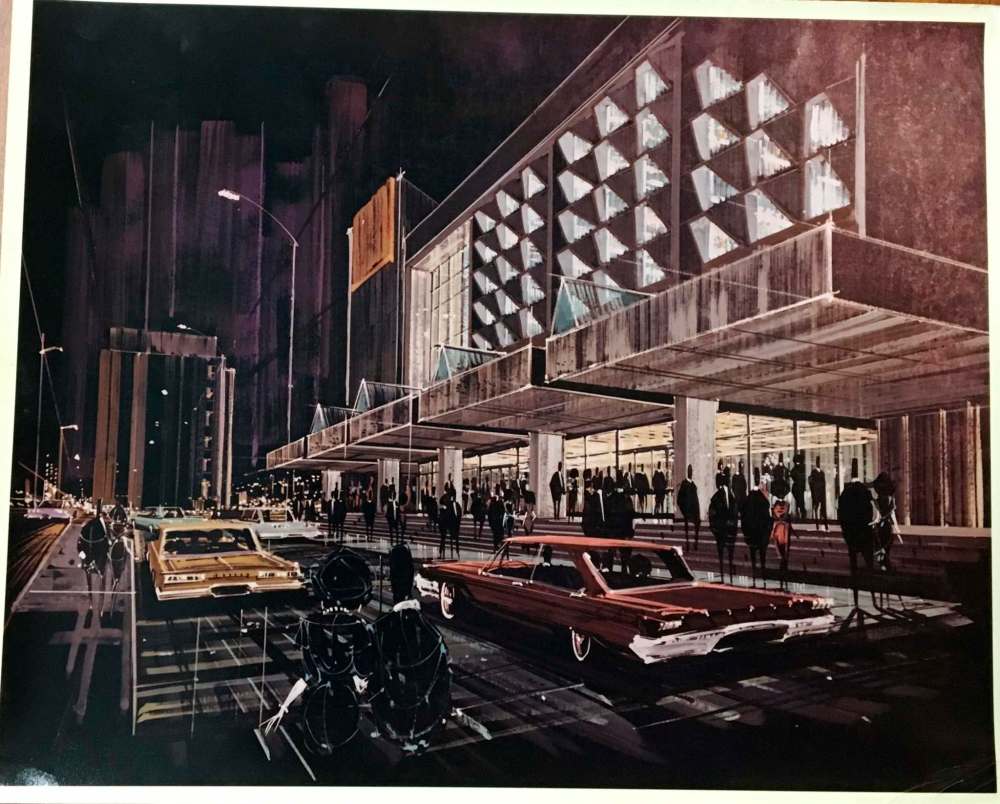
Rendering of Centennial Concert Hall, circa late 1960s. GBR worked in tandem with Winnipeg’s Moody Moore and Partners and Smith Carter Searle to complete the design.
photos supplied by WINNIPEG ARCHITECTURE FOUNDATION Rendering of Centennial Concert Hall, circa late 1960s. GBR worked in tandem with Winnipeg’s Moody Moore and Partners and Smith Carter Searle to complete the design.

GBR was founded in 1932 by Lawrence Green and Cecil Blankstein. Not long after forming their office, Green and Blankstein were joined by fellow University of Manitoba graduates Leslie Russell, Ralph Ham, and Herbert Moody.

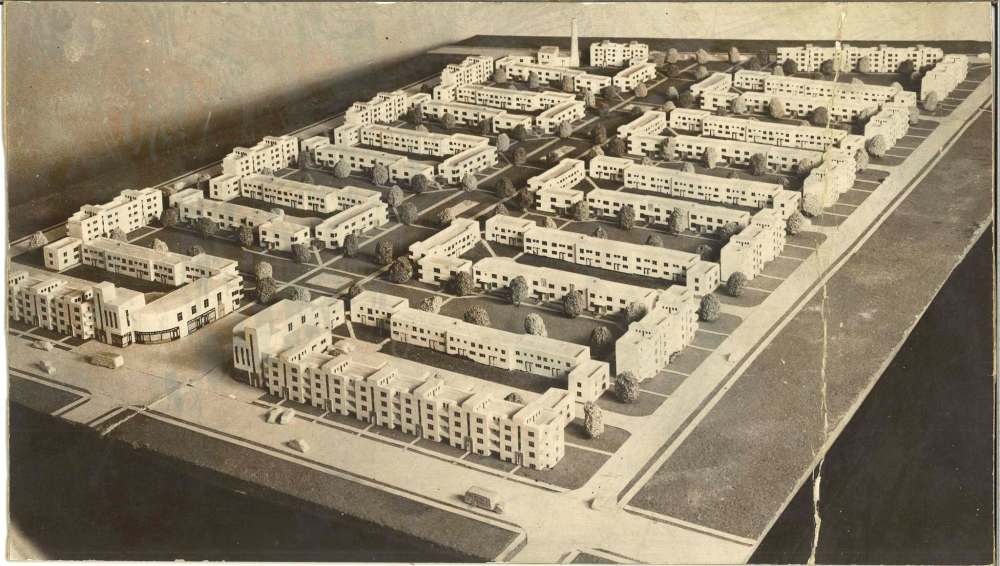
In 1934, all five graduates of the School of Architecture at the University of Manitoba faced the prospect of forging architectural careers in this difficult period, some turning to odd jobs in other fields to make ends meet. But the downturn would also be the source of inspiration. That year the firm proposed what would have been its inaugural large-scale project: an affordable, high-quality rental housing development in central Winnipeg on a largely vacant multi-block site between Arlington and McPhillips Streets and McDermot and William Avenues. The plan was conceived to relieve unemployment in the building trades and was a thoughtful response to contemporary challenges. In the words of Ralph Ham, it aimed at remedying the “deplorable conditions of overcrowding” experienced by “an income earning class of people who could never afford to build and keep up individual houses on individual lots.” The area was conceived to house 588 families in an orderly array of twisting low-rise blocks clad in commercial clay brick, allowing for easy access to green space and natural light. Notwithstanding accolades from many, including federal government officials, the scheme was criticized by some city officials for its costs and its socialist intentions, faced delays, and ultimately went unbuilt.
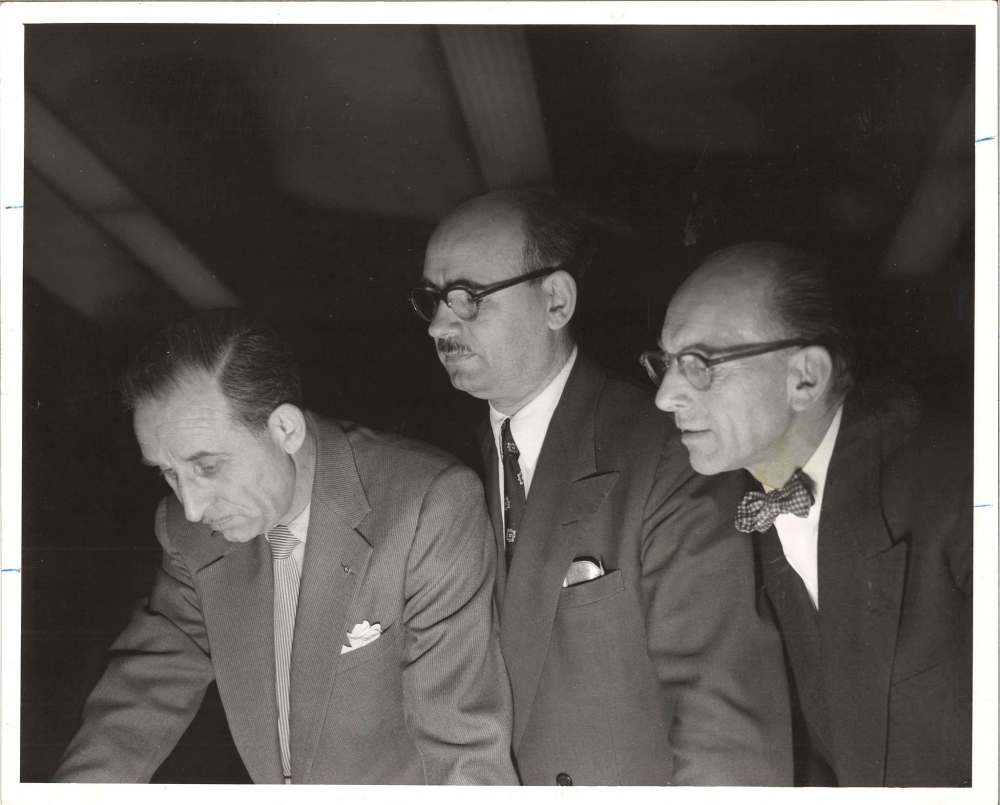
Leslie Russell (from left), Cecil Blankstein and Lawrence Green.

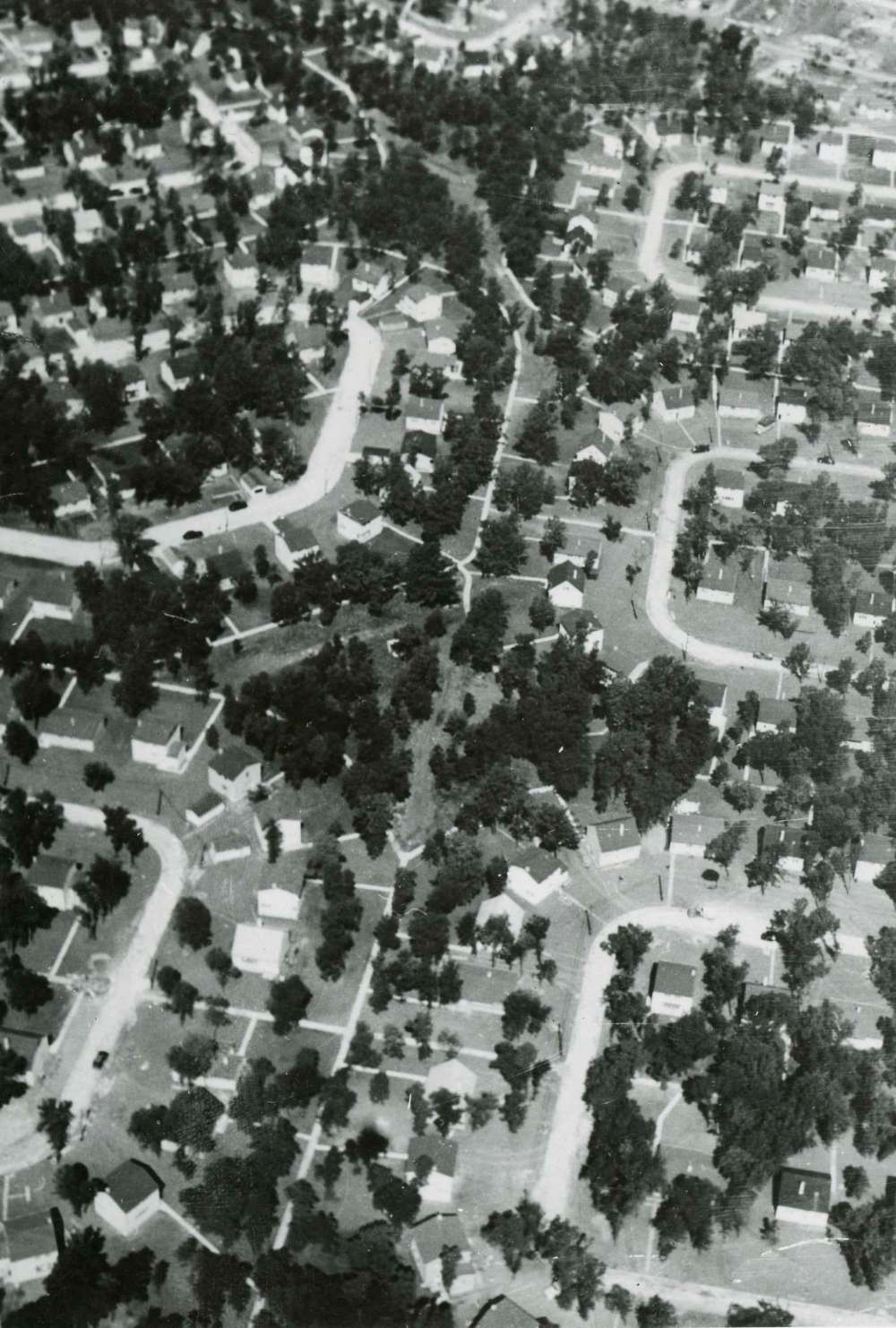
The post-war years would prove fruitful. Building on the office’s 1934 housing plan, which had been repeatedly refined and remained in play as late as 1940, GBR’s interest in community design would come to fruition with its design of Fort Garry’s Wildwood Park. Marketed as “Canada’s outstanding planned residential development,” the project was a unique example of experimental suburb designs, defined by its green space, separation of pedestrians and automobiles, and construction using methods of prefabrication. This project was to be followed up with suburb design in St. Boniface and across the Prairies.

Its principals clearly supported the explorations in modern design that were a predominant aspect of GBR’s work during these years. This crucial period would commence a time of triumph when the firm would become nearly synonymous with a unique, Manitoban approach to Modernist architecture. Signature buildings from this period include Shaarey Zedek Synagogue, constructed in 1949, and the University of Manitoba’s Engineering Building addition and main library, of 1949 and 1953, respectively. These buildings are typified by clean lines, a sculptural treatment of form, and the use of Manitoba limestone.

Soon after would come greater success: first place in the coast-to-coast competition for the design of the National Gallery of Art in Ottawa; the design of the Winnipeg General Post Office Building; the remarkable retail design of Polo Park Shopping Centre; and such singular, large projects as Winnipeg’s Norquay Building, Air Terminal, and City Hall.

Working with fellow Winnipeg firms Moody Moore and Partners and Smith Carter Architects, the office would complete the design of the Manitoba Centennial Centre, 1968-70, a Lincoln Centre-like arts complex on a large scale. At the same time, GBR would play a role in the genesis of Canada’s first housing co-operative (Willow Park).

Following the 1960s, GBR continued to practise actively and created designs that paralleled the architectural vanguard. Projects would take the firm from Baker Lake, NWT, to Antigua and Trinidad. The office would complete multiple national research centres and welcoming community hubs. As the decades passed, GBR, which has continued as part of Stantec Architecture, continued to explore new genres of building and new aesthetic approaches, while maintaining its status as an organization that served as a home and way station for many aspiring architects and designers. Once again operating exclusively from Winnipeg — the city that shaped the firm that in turn shaped it — GBR continued to transform Canada’s built environment into the next millennium.
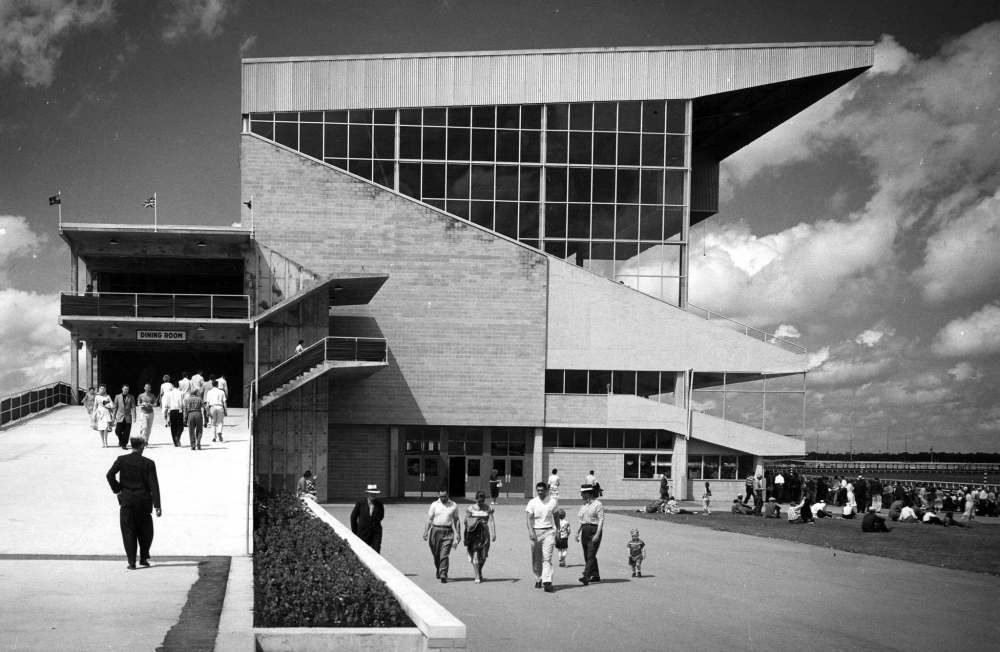
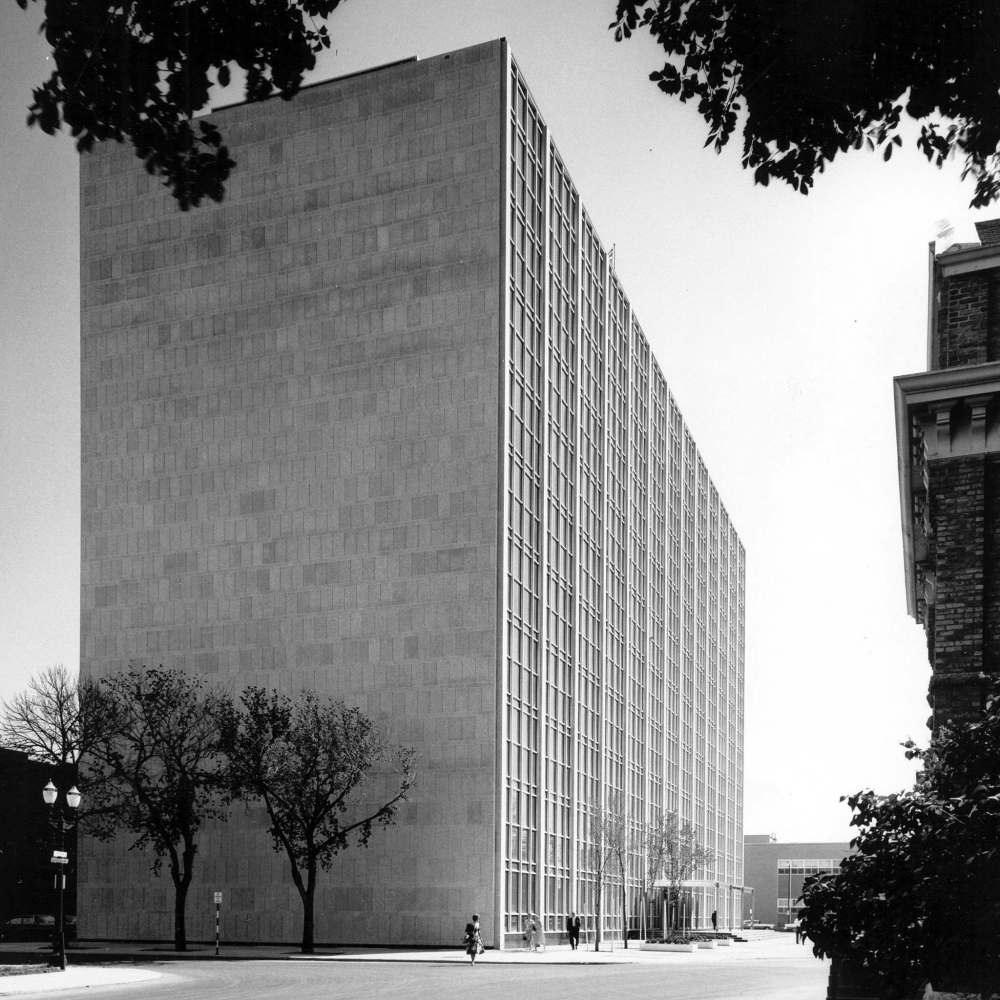
HENRY KALEN
The firm designed Assiniboia Downs (1958), which replaced the Polo Park Racetrack.
HENRY KALEN The firm designed Assiniboia Downs (1958), which replaced the Polo Park Racetrack.
HENRY KALEN
Norquay Building, built in 1958-1960, is a sleek rectangle with clean Modernist lines.
HENRY KALEN Norquay Building, built in 1958-1960, is a sleek rectangle with clean Modernist lines.
HENRY KALEN
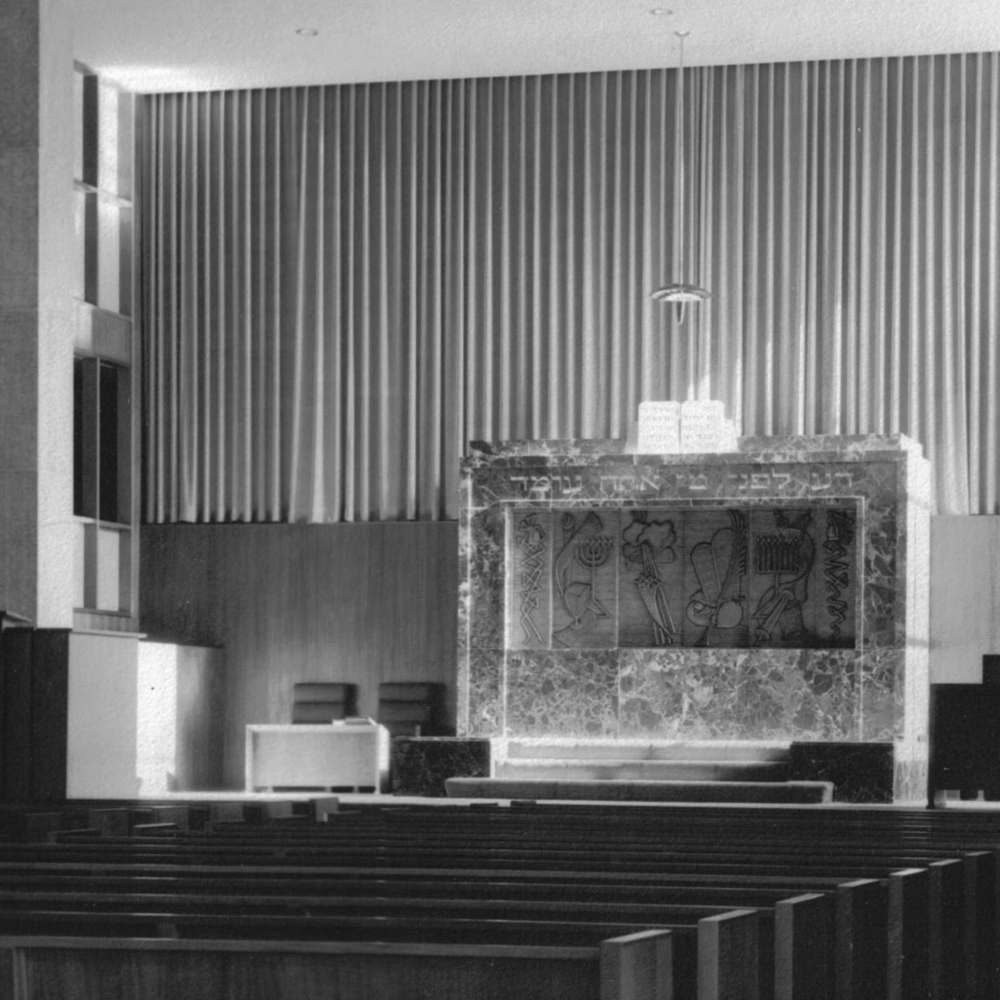
The interior of Shaarey Zedek Synagogue. The building is distinctly Modernist in character.
HENRY KALEN The interior of Shaarey Zedek Synagogue. The building is distinctly Modernist in character.
GBR
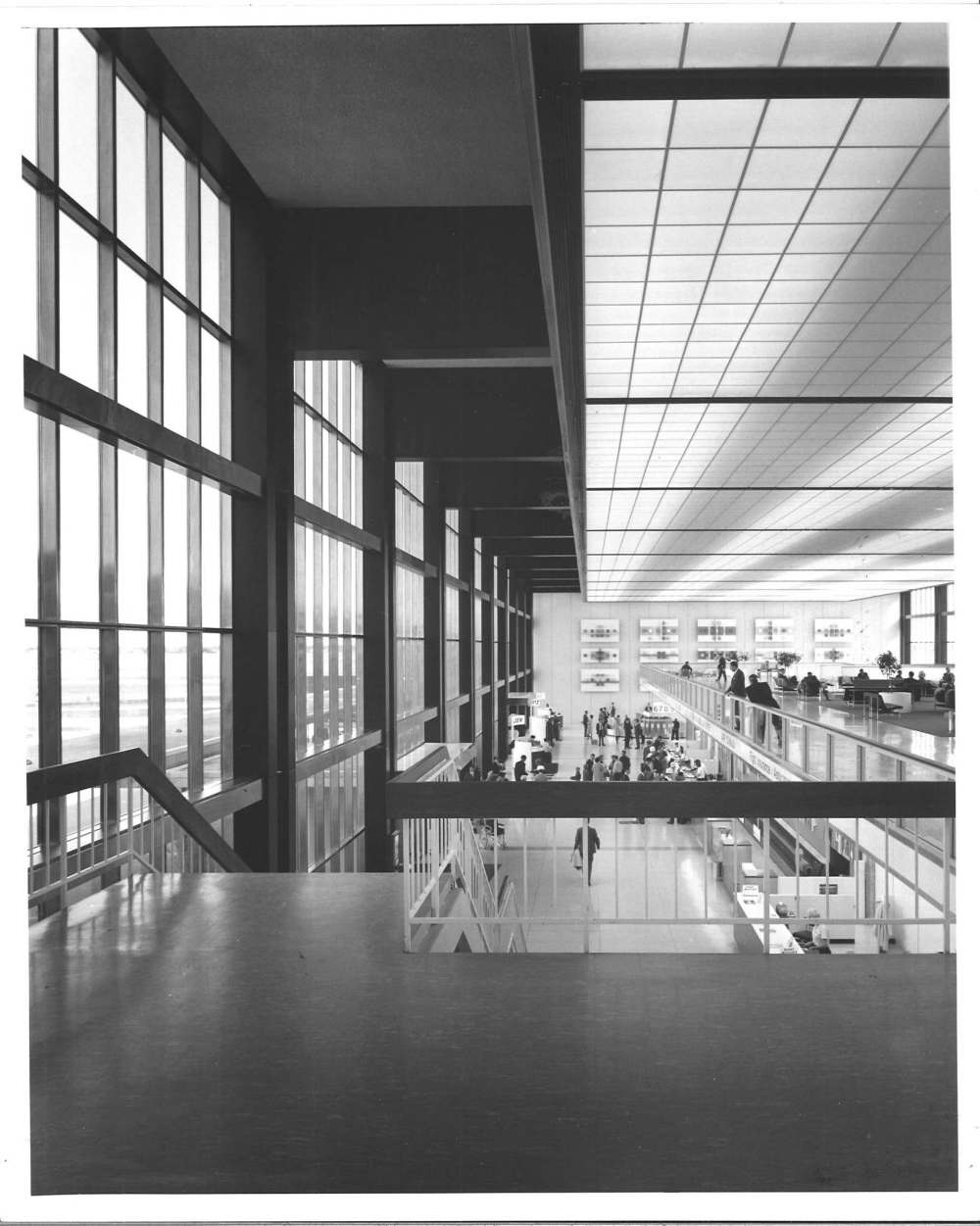
Winnipeg International Airport (1964). The architects sought to create a calm environment to offset the “rush” of travel.
GBR Winnipeg International Airport (1964). The architects sought to create a calm environment to offset the “rush” of travel.
HENRY KALEN
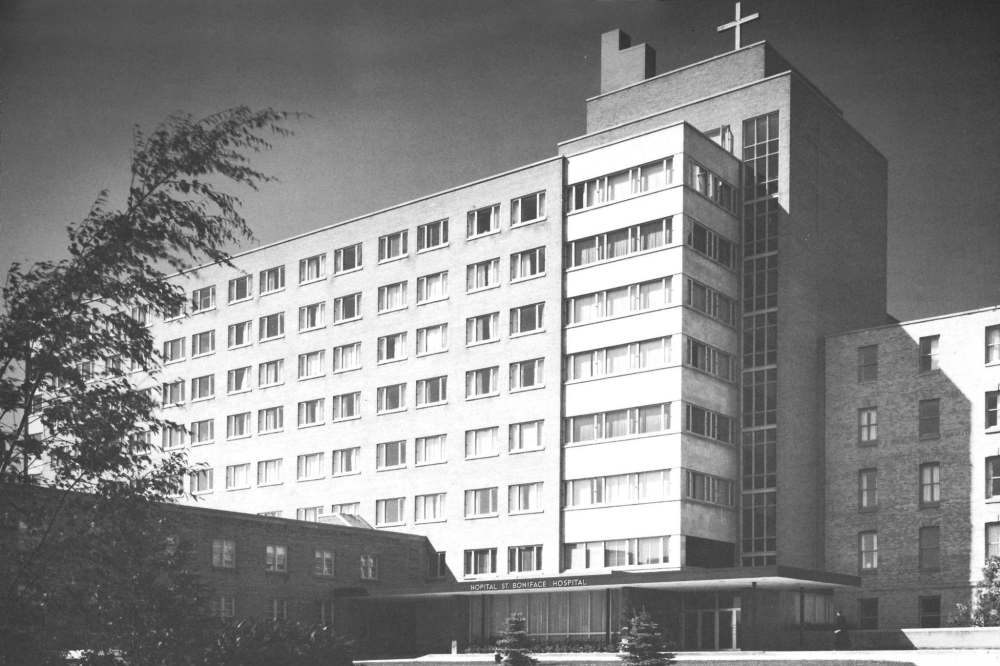
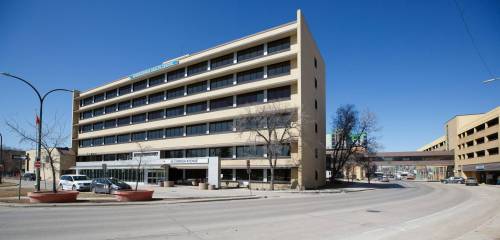
The St. Boniface Hospital upgrade was a major commission for the firm and is credited with leading to hospital designs in several provinces.
HENRY KALEN The St. Boniface Hospital upgrade was a major commission for the firm and is credited with leading to hospital designs in several provinces.
GBR
In the firm’s early days, the architects boldly envisioned an affordable, high quality housing development. Though widely praised, it never came to fruition.
GBR In the firm’s early days, the architects boldly envisioned an affordable, high quality housing development. Though widely praised, it never came to fruition.
WINNIPEG ARCHITECTURE FOUNDATION
Green space and neighbourhood interaction were critical in the firm’s vision for Wildwood.
WINNIPEG ARCHITECTURE FOUNDATION Green space and neighbourhood interaction were critical in the firm’s vision for Wildwood.
WINNIPEG ARCHITECTURE FOUNDATION
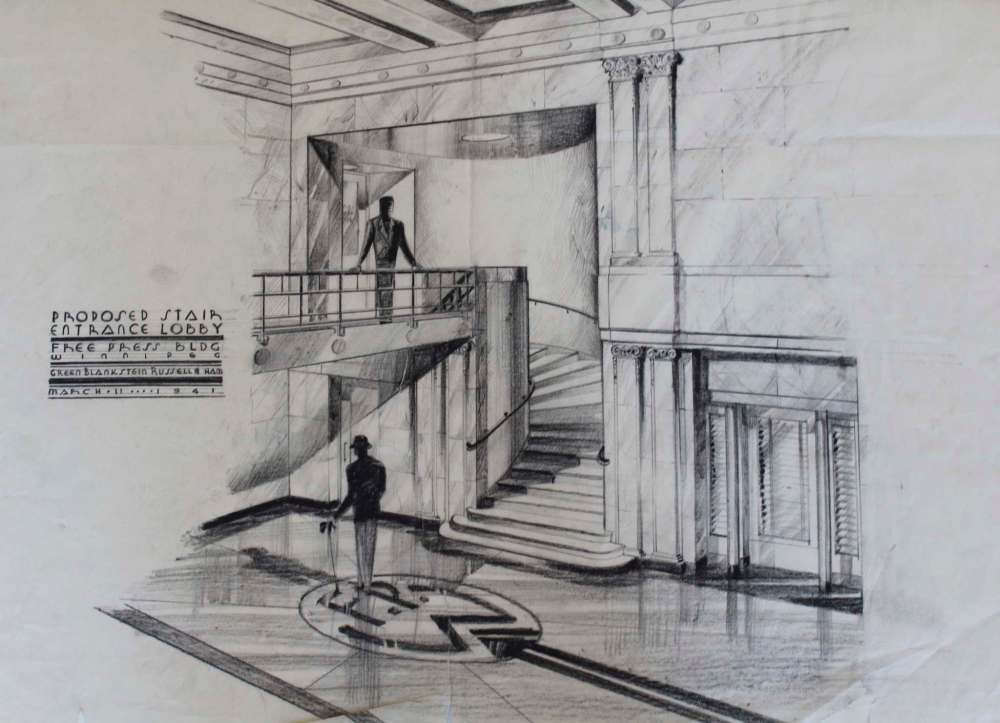
A 1941 drawing of the proposed entrance of the Free Press building. Their designs at that time embraced the use of curved forms and abstractions.
WINNIPEG ARCHITECTURE FOUNDATION A 1941 drawing of the proposed entrance of the Free Press building. Their designs at that time embraced the use of curved forms and abstractions.
BERNARD BROWN
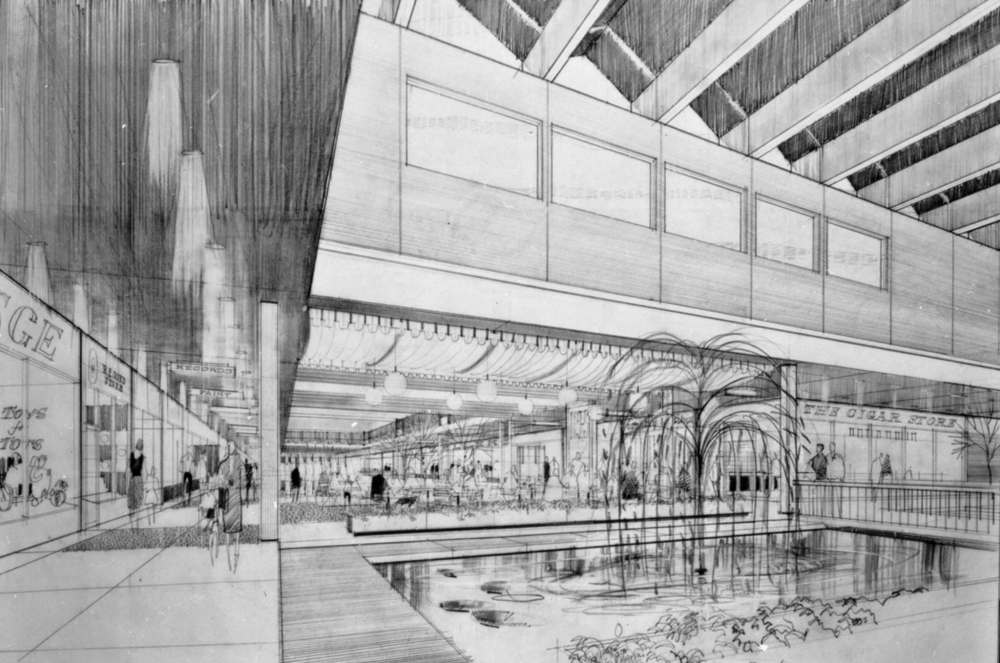
A 1963 drawing of Polo Park with a roof enclosure.
BERNARD BROWN A 1963 drawing of Polo Park with a roof enclosure.
HENRY KALEN
In 1959, the firm won a national competition to design Winnipeg’s Civic Centre, which included city hall and administration building.
HENRY KALEN In 1959, the firm won a national competition to design Winnipeg’s Civic Centre, which included city hall and administration building.
HENRY KALEN
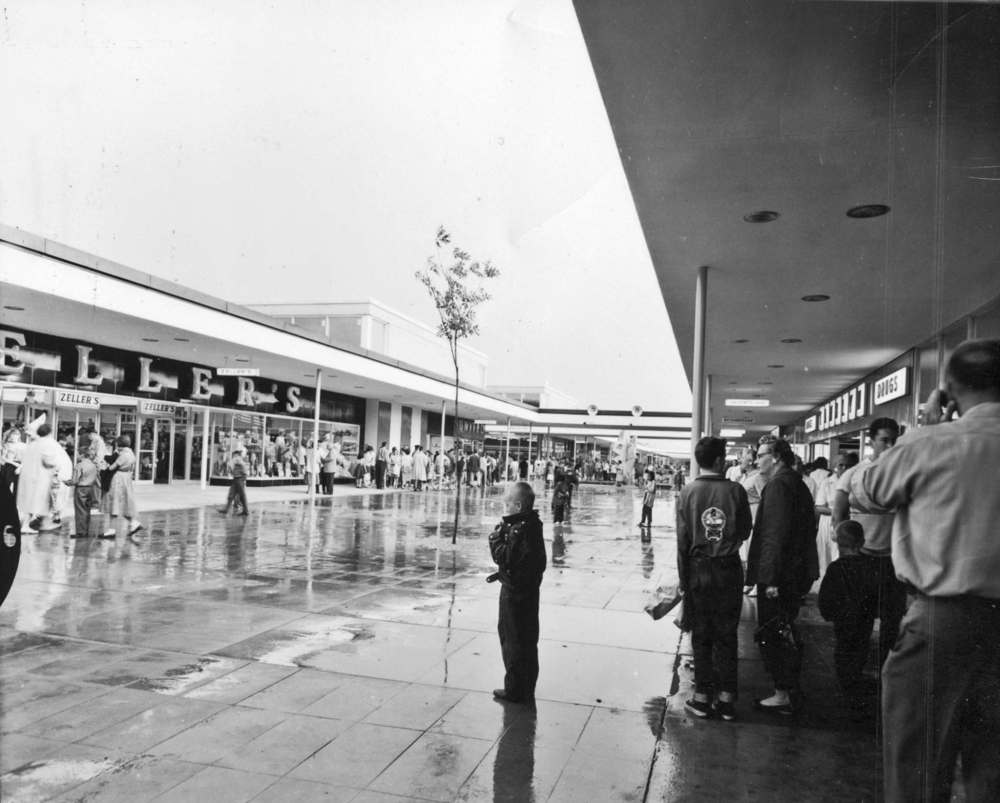
The open-air Polo Park (in 1959) was a rethink of the suburban shopping experience.
HENRY KALEN The open-air Polo Park (in 1959) was a rethink of the suburban shopping experience.
The five-dome Holy Trinity Ukrainian Orthodox Metropolitan Cathedral on Main Street took nearly 14 years to build.
Report Error Submit a Tip

More Stories

Firefighter’s death fuels cancer fight

Zoe Pierce 5 minute read Preview

Firefighter’s death fuels cancer fight

Zoe Pierce 5 minute read Saturday, Aug. 15, 2026

The United Fire Fighters of Winnipeg is mourning the loss of Winnipeg firefighter Darrel Maynard while continuing its work to raise awareness of occupational cancer and improve health protections for firefighters.

Maynard, a senior firefighter II and acting lieutenant with the Winnipeg Fire Paramedic Service, died Aug. 5 at age 41 after a three-year battle with occupational cancer.

He served Winnipeg for nearly two decades and leaves behind his wife Francine and sons Colin and Christian.

“Darrel was an incredible, incredible person, an incredible firefighter, and really, really special to all of us,” said Nick Kasper, president of UFFW.

Read
Saturday, Aug. 15, 2026

West Kildonan Industrial residents call for speed bumps after child hit by truck

Morgan Modjeski 3 minute read Preview

West Kildonan Industrial residents call for speed bumps after child hit by truck

Morgan Modjeski 3 minute read Saturday, Aug. 15, 2026

Residents in the West Kildonan Industrial neighbourhood are calling on the city to install speed bumps in their area after a child was hit and dragged by a vehicle Thursday.

Katelyn Bemister lives near the area where the child — who was hospitalized as a result of the incident and has been upgraded to stable condition — was struck. She says people frequently speed in the area.

“They’re going really fast, and they’re not really paying attention at all to the pedestrians in the area,” says Bemister.

In video supplied to the Free Press by a resident, the child can be seen riding a bike down a sidewalk along the 500 block of North Point Boulevard.

Read
Saturday, Aug. 15, 2026

WRHA directs three care homes to accommodate surge of hospital patients

Malak Abas 5 minute read Preview

WRHA directs three care homes to accommodate surge of hospital patients

Malak Abas 5 minute read Friday, Aug. 14, 2026

The Winnipeg Regional Health Authority has directed three long-term care centres to make space for hospital patients, citing “exceptionally high demand for care across the health-care system.”

Read
Friday, Aug. 14, 2026

Could renewed interest in strategically critical rare earth elements finally make sub-sector profitable?

Joel Schlesinger 6 minute read Preview

Could renewed interest in strategically critical rare earth elements finally make sub-sector profitable?

Joel Schlesinger 6 minute read Saturday, Aug. 15, 2026

Rare earth elements are among the most critical of mined resources for modern economies.

They’re essential in manufacturing specialized magnets used in a host of technologies from wind turbines and electric vehicles to hard drives, smartphones, television screens, and fibre optics. Most notably, however, rare earth minerals are increasingly vital to the defence industry.

These 17 elements — closely related chemically and usually found all together in mineral deposits — have indeed been growing in geopolitical importance as the United States, Canada and other Western nations recognize their dependence on production from China.

It is the world’s largest producer and processor of rare earths, including the most in-demand elements neodymium and praseodymium used to manufacture very light and powerful magnets for an array of technologies, including the most advanced weapons of modern warfare.

Read
Saturday, Aug. 15, 2026

Manitoba family finalist for cattle producers environmental award

Aaron Epp 4 minute read Preview

Manitoba family finalist for cattle producers environmental award

Aaron Epp 4 minute read Saturday, Aug. 15, 2026

A family in western Manitoba is one of seven finalists for a national environmental award honouring beef cattle producers.

Connor and Kyla English, alongside Connor’s parents, Brian and Leanne English, are nominated for the Canadian Cattle Association’s Environmental Stewardship Award. The 30-year-old award is presented to beef farmers and ranchers who explore innovative ways to protect, preserve and enhance their operations and the environment simultaneously.

This year’s recipient will be announced on Wednesday during a banquet at the Canadian Beef Industry Conference in Winnipeg.

The English family’s roots near Bradwardine — about 265 kilometres west of Winnipeg — date back to 1898. Today, Connor, Kyla, Brian and Leanne manage a herd of about 320 breeding cows on nearly 445 hectares (1,100 acres) of owned and rented pasture and forage land.

Read
Saturday, Aug. 15, 2026

Sea Bears finish on top

Joshua Frey-Sam 7 minute read Preview

Sea Bears finish on top

Joshua Frey-Sam 7 minute read Saturday, Aug. 15, 2026

Beauty. Bliss. Ecstasy.

That is how Aug. 15, 2026 will be remembered in Winnipeg.

What was once a pipe dream in the city’s hoops community became an epic reality on Saturday, when Simon Hildebrandt, who grew up playing on the courts of this very town, made good on a three-pointer from the wing to crown the Winnipeg Sea Bears Canadian Elite Basketball League champions.

A storybook ending to a 98-84 victory over the Brampton Honey Badgers sent a CEBL attendance record of 12,519 fans into pandemonium at Canada Life Centre and capped a Finals run for the ages — one that was fraught with injury, impromptu player exits and unprecedented circumstances.

Read
Saturday, Aug. 15, 2026