WEATHER ALERT

Dammed if you do

Transformation of Winnipeg River system had profound impact on Indigenous community

Advertisement

Advertise with us

As a white settler male in Treaty 1 territory, I am highly aware that each time I turn on a light or use an appliance I am contributing to the degradation of the land and the peoples who have relied and thrived on this land for millenia. This realization runs parallel with my immense privilege, where I can pontificate about reconciliation and decolonization in theory. In the abstract.

Read this article for free:

or

Already have an account? Log in here »

To continue reading, please subscribe:

Subscribe and receive a limited-edition Free Press branded hat or tote.

Digital Subscription

One year of digital access for only $205*

  • Enjoy unlimited reading on winnipegfreepress.com
  • Read the E-Edition, our digital replica newspaper
  • Access News Break, our award-winning app
  • Play interactive puzzles

*First annual payment billed as $205.00 + GST for one year. This annual subscription will automatically renew at $233.00 + GST every 52 weeks (10% off the regular annual price of $259.35). Offer available to new and qualified returning subscribers only. Cancel any time.

To continue reading, please subscribe:

Add Free Press access to your Brandon Sun subscription for only an additional

$1 for the first 4 weeks*

  • Enjoy unlimited reading on winnipegfreepress.com
  • Read the E-Edition, our digital replica newspaper
  • Access News Break, our award-winning app
  • Play interactive puzzles
Start now

*Your next Brandon Sun subscription payment will increase by $1.00 and you will be charged $17.95 plus GST for four weeks. After four weeks, your payment will increase to $24.95 plus GST every four weeks.

Hey there, time traveller!
This article was published 23/01/2021 (1995 days ago), so information in it may no longer be current.

As a white settler male in Treaty 1 territory, I am highly aware that each time I turn on a light or use an appliance I am contributing to the degradation of the land and the peoples who have relied and thrived on this land for millenia. This realization runs parallel with my immense privilege, where I can pontificate about reconciliation and decolonization in theory. In the abstract.

But Anishinaabeg and University of Guelph scholar Brittany Luby forces the issue and compels settlers in Canada to think critically about the consequences of, in her words, “industrial enthusiasm and poor planning” in Treaty 3.

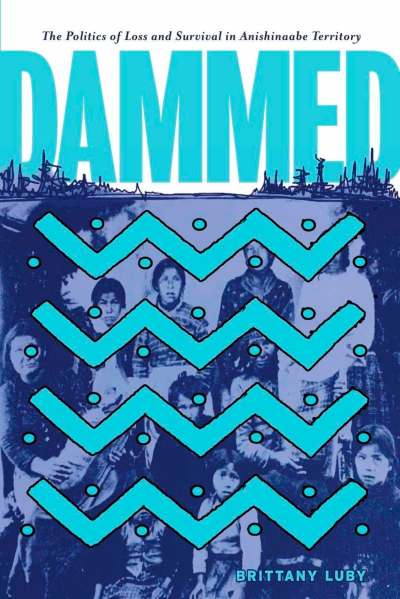
In Dammed: The Politics of Loss and Survival in Anishinaabe Territory, Luby offers a history, based on archival and oral resources, of the damming and transformation of the Winnipeg River system, all to the detriment of Indigenous people. A history of race, class, gender and labour, Dammed is also a compelling argument for an increased ability to think in systems and to think deeply about how a pathway to reconciliation needs to be bathed in historical reciprocity.

KEN GIGLIOTTI / WINNIPEG FREE PRESS FILES
Dams along the Winnipeg River, such as the one located in Pointe du Bois which was built in the early 1900s, fundamentally changed the ecosystem as well as altering the way of life of Indigenous peoples in the area.
KEN GIGLIOTTI / WINNIPEG FREE PRESS FILES Dams along the Winnipeg River, such as the one located in Pointe du Bois which was built in the early 1900s, fundamentally changed the ecosystem as well as altering the way of life of Indigenous peoples in the area.

Drawing from archival work principally from the Kenora Daily Miner & News, church archives, autobiographical offerings, oral archives from elders from Dalles 38C (the author’s home reserve) and her own family, Luby surfaces how the damming of the Winnipeg River changed water levels, traditional ice roads, wild rice harvesting, family connection, labour practices and the toxicity of the water itself.

Through this, Luby dispels two myths. The first is one purported by historians such as Desmond Morton, Michael Bliss and J.M. Bumsted — that the postwar era was one of affluence for all Canadians. “Indigenous peoples did not form part of Canada’s affluent society after 1945,” Luby argues.

The second myth that is obliterated in Dammed is that the Anishinaabeg simply rolled over and submitted to colonization — that because there was no opportunity on the reserve, they succumbed to life in Kenora. According to Luby, her family and community not only sustained themselves on the land, even up to the 1950s, but also resisted colonization, despite being considered on the periphery by Ontario and Canada. Prior to major development in the mid 20th century, she writes, “[f]amilies responded creatively to settler-colonial activity, preserving the Anishinaabe Nation along a changed system until settler-colonists remodelled the river in 1950s.”

And it was in the 1950s, with the development of major hydroelectric projects along the Winnipeg River, that brought massive changes to the subsistence lifestyle that had existed for time immemorial. Not only did fish stocks begin to dwindle, but more industrialization raised mercury levels, forced men to work for HEPCO (Hydro-electric Power Commision of Ontario) and even altered the manner in which women could breastfeed. This resulted in the abandonment of reserves, such as Luby’s home of Dalles 38C, and the perpetual issues at Grassy Narrows due to critical levels of mercury.

And this is nothing new. Luby argues that in the 20th century, Anishinaabe world views were not taken into consideration, that “Anishinaabe men and women were to function as auxiliary — not foundational — members of national plans for economic growth.” We see this in the Canadian government’s present doublespeak when it comes to reconciliation and fossil fuel extractions. When Indigenous peoples resist in Canada, they are met with violence, while trivialized apologies are offered in posh and gilded cathedrals of justice.

Reconciliation is simply as a buzzword if settlers are not actively engaged in providing everyone with the means for a decent life. As Luby argues, “[u]nless we think critically about how continued energy use floods reserve lands, we risk thinking an apology is a cure.” Land grabs, poisoning, industrialization and ignorance have all benefited white settlers around Lake of the Woods and those who benefit from the “clean energy.”

Coming to terms with reconciliation means truly understanding the causes and consequences of western racial capital coupled with a desire on the part of settlers to remove barriers towards Indigenous reclamation. In Dammed, Brittany Luby illuminates the reality that settlers then and now “sought to harness the water for hydroelectricity, whereas the Anishinaabeg worked to uphold Treaty 3 and protect the environmental relationships that it guaranteed.”

Perhaps our work is to be accomplices in the upholding of all treaties. Now and forever.

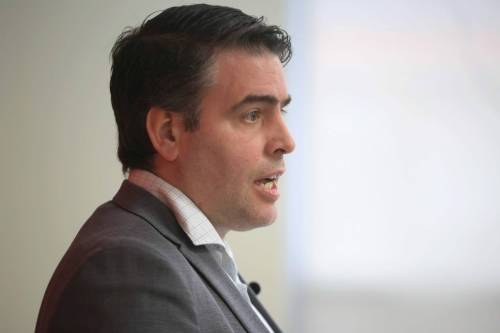
Matt Henderson is assistant superintendent of Seven Oaks School Division.

Sweetmoon photography
Author Brittany Luby
Sweetmoon photography Author Brittany Luby
Report Error Submit a Tip

More Stories

Bombers backup Brown takes the reins in clash against Argos

Ken Wiebe 7 minute read Preview

Bombers backup Brown takes the reins in clash against Argos

Ken Wiebe 7 minute read Thursday, Jul. 9, 2026

Mike O’Shea isn’t a big fan of letting reporters under the hood when it comes to how certain decisions get made.

Yet, as the head coach of the Winnipeg Blue Bombers was pressed for information on how he came to his final conclusion before naming Dru Brown his starting quarterback for Friday’s showdown with the Toronto Argonauts, O’Shea worked through a number of questions before revealing this decision eventually made itself.

“We brought Dru in for a reason. We brought Dru in for this reason,” said O’Shea, noting the final call wasn’t made until Thursday morning. “So, you execute the plan as it was laid out.”

Asked a follow-up question for clarification, O’Shea made it clear that he prefers not to deal with hypotheticals, even if precautions are made to cover all of the bases.

Read
Thursday, Jul. 9, 2026

Police can’t arrest away city drug crisis

Tom Brodbeck 5 minute read 2:02 AM CDT

Winnipeggers have debated how to respond to the city’s worsening drug crisis for years.

There has never been much disagreement that open drug use, trafficking and disorder in public spaces are serious problems. The disagreement has been about how to respond without making a deadly crisis even worse.

The Winnipeg Police Service’s recent 10-day crackdown on open drug use has made one thing abundantly clear: while enforcing the law is entirely appropriate, the operation appears to have been poorly planned and insufficiently co-ordinated with the people who understand the crisis best.

Police have every right — and indeed an obligation — to enforce laws on drug trafficking and other criminal activity. Nobody should expect officers to simply ignore illegal behaviour on city streets.

‘Sorry’ just won’t atone for tactless ‘tank’ talk

Maureen Scurfield 5 minute read Yesterday at 2:01 AM CDT

DEAR MISS LONELYHEARTS: I didn’t know my wife was in the house when I was talking to my brother on the phone about her new bathing suit “which makes her look like a tank.”

She walked up behind me while I was on the phone and said loudly, “I guess you won’t want to be having sex with a tank at the lake then!” No amount of apologizing is getting me past this one, it seems.

The temperature is rather frosty in our bedroom, and we leave for the lake in two weeks. Should I invite her to criticize my imperfect body? I don’t want to do that, or I’ll never be able to sleep with her again. Please help!

— Big Mouth, East Kildonan

Mayor flip-flops on cutting tree-planting budget after intense criticism

Joyanne Pursaga 4 minute read Preview

Mayor flip-flops on cutting tree-planting budget after intense criticism

Joyanne Pursaga 4 minute read Thursday, Jul. 9, 2026

Public opposition has prompted Mayor Scott Gillingham to change his mind about chopping $1.2 million from the city’s tree-planting program.

Read
Thursday, Jul. 9, 2026

Province has ‘serious concerns’ with Winnipeg personal care home

Tyler Searle 5 minute read Preview

Province has ‘serious concerns’ with Winnipeg personal care home

Tyler Searle 5 minute read Yesterday at 5:51 PM CDT

The Manitoba government has placed licensing conditions on a Winnipeg personal care home after an inspection uncovered “serious concerns” related to the safety of senior residents.

Health Minister Uzoma Asagwara confirmed the province issued the order against the Extendicare Heritage Lodge — an 86-bed nursing home at 3555 Portage Ave. — effective June 9.

“This is an important oversight tool, and it is not used lightly. Conditions are imposed when there are serious concerns that require enhanced oversight and clear, corrective action,” Asagwara said in a statement.

“Our expectation is simple: Extendicare must meet the standards Manitoba seniors and families deserve. We will continue working with the (Winnipeg Regional Health Authority) to monitor this facility closely and ensure the required improvements are made.”

Read
Yesterday at 5:51 PM CDT

Fort Garry Hotel on Métis federation’s radar

Scott Billeck 4 minute read Preview

Fort Garry Hotel on Métis federation’s radar

Scott Billeck 4 minute read Updated: Yesterday at 3:51 PM CDT

One of Winnipeg’s most iconic buildings, the Fort Garry Hotel on Broadway, is next on the Manitoba Métis Federation’s list of acquisitions.

“We are not done with our commitment to investing in Winnipeg’s downtown,” president David Chartrand said Friday, the same day the federation announced it has purchased the former National Research Council property on Ellice Avenue downtown.

“One potential new acquisition we’re considering, if the price is right and the partnership is positive, is the Fort Garry Hotel. It is an iconic part of Winnipeg’s history and its future, just like the Red River Métis,” Chartrand said.

The 113-year-old hotel was co-listed for sale in May by real estate brokerage firms Avison Young and Cushman & Wakefield Winnipeg, but doesn’t have a list price.

Read
Updated: Yesterday at 3:51 PM CDT