Depth of field
Books marrying written, visual components offer a thought-provoking feast for the senses

Advertisement
Read this article for free:
or
Already have an account? Log in here »
To continue reading, please subscribe:
Digital Subscription
One year of digital access for only $1.44 a week*
- Enjoy unlimited reading on winnipegfreepress.com
- Read the E-Edition, our digital replica newspaper
- Access News Break, our award-winning app
- Play interactive puzzles
*Billed as $5.77 plus GST every four weeks. After 52 weeks, price increases to the regular rate of $19.95 plus GST every four weeks. Offer available to new and qualified returning subscribers only. Cancel any time.
To continue reading, please subscribe:
Add Free Press access to your Brandon Sun subscription for only an additional
$1 for the first 4 weeks*
- Enjoy unlimited reading on winnipegfreepress.com
- Read the E-Edition, our digital replica newspaper
- Access News Break, our award-winning app
- Play interactive puzzles
*Your next Brandon Sun subscription payment will increase by $1.00 and you will be charged $17.95 plus GST for four weeks. After four weeks, your payment will increase to $24.95 plus GST every four weeks.
Read unlimited articles for free today:
or
Already have an account? Log in here »
Hey there, time traveller!
This article was published 24/12/2021 (1766 days ago), so information in it may no longer be current.
At times a simple image or images can convey more emotion or information than the written word. Similarly, words bring a depth of meaning and feeling that can’t always be conveyed in a picture, painting or drawing. Which is why, when the two are skillfully combined, the experience can be nothing short of transcendent.
Normally at this time of the year, the Free Press books section features a roundup of coffee-table books from all manner of contributors. For whatever reason—call it supply chain issues, changing trends or whatever—nearly none these showed up this year.
Here instead are 10 engaging and visually appealing books that merge all manner of words and images. From graphic novels to coffee-table books, illustrated texts and beyond, they’re ideal candidates to display on your coffee table, tuck into your bookcase or sneak under a tree (or into a stocking) as a last-minute gift.
Library
By Michael Dumontier and Neil Farber
(Drawn & Quarterly, 108 pages, $22)

Winnipeg artists Michael Dumontier and Neil Farber, once members of the local Royal Art Lodge collective, have continued collaborating on all manner of projects, both online and in print. For Library, the pair teamd up on bringing a collection of imagined books, painted in a myriad of colours, with text adorning the jackets that alternates between poignant, heartfelt, unexplained, surreal or just plain chuckle-worthy. Some pages feature a single, larger image, while others bring up to nine colourful, imaginative images. Readers will be tempted to keep it nearby, as every look at the book offers some new discovery. You’ll be wishing many of the books actually existed.
The Montague Twins: The Witch’s Hand
By Nathan Page and Drew Shannon
(Random House, 352 pages, $24)

This first instalment of a new graphic novel series for teens introduces readers to brothers Pete and Alastair Montague, a pair of orphaned teen boys living in a 1960s small town with a guardian who, after a mysterious storm at the beach, discover there’s more to their parents than they have been told. With the guardian’s daughter Charlie, they set out to solve a missing person/murder mystery using their supernatural powers. The story, by Kingston’s Nathan Page, works well with Toronto illustrator Drew Shannon’s deep colours and angular drawings. Echoes of Scooby-Doo and the Hardy Boys run throughout, but in a far more thoughtful way that will leave readers eager for the next instalment.
Grain Elevators: Beacons of the Prairies
By Chris Attrell, text by Christine Hanlon
(MacIntyre Purcell, 128 pages, $30)

Saskatchewan-based Chris Attrell has an eye for capturing the beauty of Canadian Prairie landscapes; his 2019 bestseller Forgotten Saskatchewan was a national bestseller. In Grain Elevators he turns his eye and camera to the iconic structures that have towered over Western Canada for over a century. Where there were once thousands of grain elevators sprinkled from Manitoba to B.C., only a few hundred remain, ranging from lovingly restored to teetering on the brink of collapse, alone on the Prairies. Attrell’s stunning photography is accompanied by insightful text from Christine Hanlon, who also wrote 2020’s Old Winnipeg and Everything Manitoba: The Ultimate Book of Lists.
Oddball: A ‘Sarah’s Scribbles’ Collection
By Sarah Andersen
(Andrews McMeel, 112 pages, $20)

Cartoonist/illustrator Sarah Andersen’s series Sarah’s Scribbles has earned the New England artist three consecutive Goodreads Choice Awards. The latest, Oddball, continues the plight of her semi-autobiographical protagonist as she struggles with fitting in, creativity, productivity and inter-generational communication. In turns touching and hilarious, each page of Oddball features four- or five-panel comics that will appeal to Gen Z and Millennial types who relish in the awkwardness of human interaction, the unspoken bond with pets and a good meme. It also includes a set of cute stickers.
Stuntboy, in the Meantime
By Jason Reynolds and Raúl the Third
(Atheneum, 272 pages, $17)

Portico Reeves lives in apartment 4D of a sprawling building he thinks of as a castle. With his neighbour/best pal Zola, he develops his alter-ego, Stuntboy, whose super power is to keep the other folks in the building he thinks of as superheroes — namely, his parents — safe. Stuntboy’s nemesis is schoolmate Herbert Singletary the Worst, who pesters Portico and Zola and induces in Portico what he calls “the frets” — a serious feeling of anxiety, which is heightened by his parents’ impending separation. Reynolds does great work unpacking how family issues can impact kids, while Raúl the Third’s fun and clever illustrations punctuate the text nicely. A nice choice for kids age 8-12.
Inked: Cartoons, Confessions, Rejected Ideas, and Secret Sketches from the New Yorker’s Joe Dator
By Joe Dator
(Goose Lane, 176 pages, $25)

For the better part of 15 years, New York’s Joe Dator has been hawking his cartoons to the New Yorker (as well as Mad magazine and Esquire). In Inked he pulls back the curtains for readers, showing how the proverbial sausage is made. Dator details initial ideas for cartoons and shows early drafts, the process of revision and the final product. Many of the cartoons here have never seen the light of day before — some rejected, others not suitable for New Yorker types, but almost all worthy of at least a chuckle.
The City of Belgium
By Brecht Evans
(Drawn & Quarterly, 336 pages, $35)
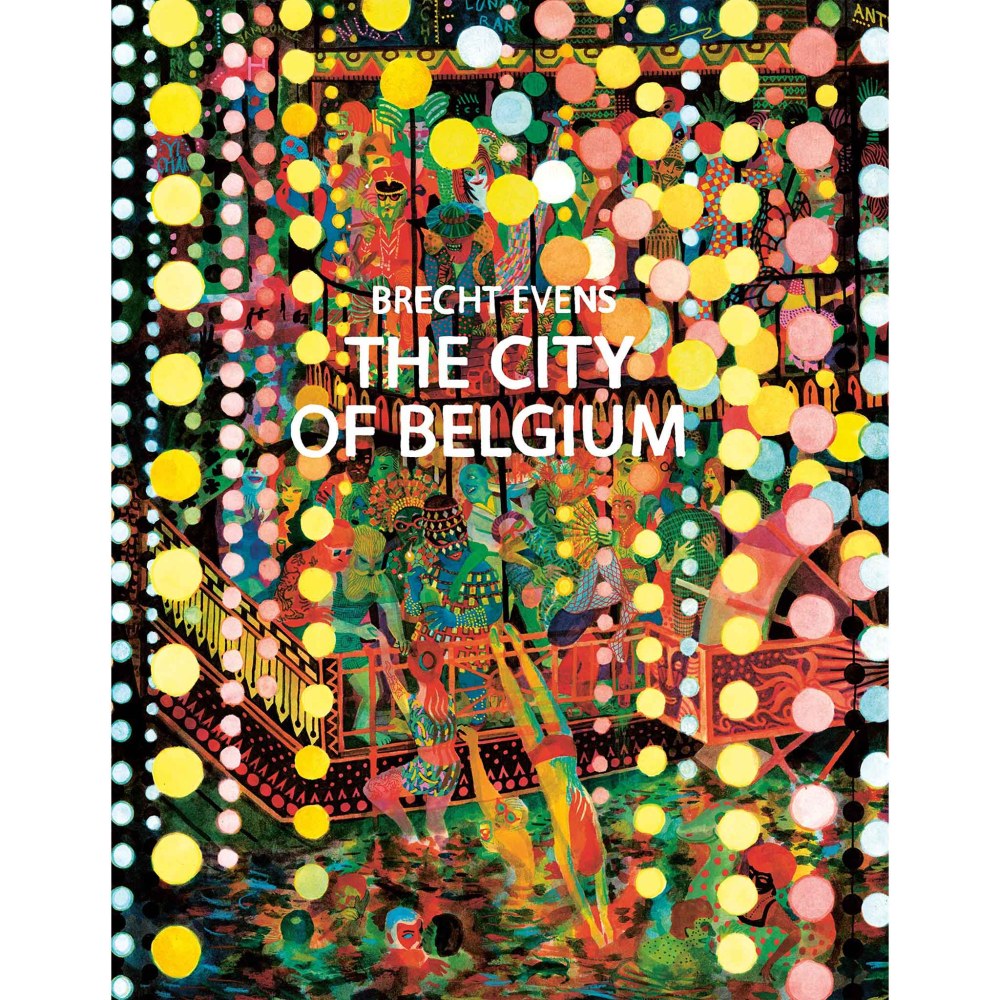
Some graphic novels beautifully convey a story with simple, stark images and words. Brecht Evens’ sprawling The City of Belgium is stunning for the opposite reason. Practically every page explodes with bursts of colour, as the narrative follows a trio of storylines through busy social scenes — characters dining at a restaurant, having drinks, cavorting through the night and more. The rich tapestry of colours, stunning contrasts between light and dark and the busy groups of people flitting from table to table chattering away provide a welcome, dazzling reminder of what life was like in the Before Times.
Borders
Story by Thomas King, illustration by Natasha Donovan
(HarperCollins, 192 pages, $22)

In Borders, prolific Guelph author Thomas King (The Inconvenient Indian, The Back of the Turtle) sees his short story of the same name (from his collection One Good Story, That One) adapted to graphic novel format courtesy of Washington-based Métis illustrator Natasha Donovan. When a young Blackfoot boy and his mom set out by car from their family home on a reserve to visit his sister in Salt Lake City, the border guard asks if they’re Canadian or American. When the mom replies “Blackfoot,” the pair are held in limbo at the border; despite pressure from guards, mom refuses to change her answer. Donovan’s illustrations of the pair and their temporary captors are evocative and touching. Kids age 8-12 may be left with some questions, as King offers no easy answers here, but will be compelled to learn more on their own about Indigenous communities, identity and concepts of nation.
Work for a Million: The Graphic Novel
By Amanda Deibert, illustrated by Selena Goulding
(McClelland & Stewart, 128 pages, $25)

Amanda Deibert has adapted Eve Zaremba’s groundbreaking 1987 book Work for a Million from her series featuring detective Helen Keremos — one of the first lesbian private eyes portrayed in fiction. Keremos is hired by up-and-coming singer (and recent lottery winner) Sonia Deerfield to investigate a series of increasingly grave threats. Lawyers, agents, an ex-boyfriend, a creepy uncle, old friends and more are all suspects for Keremos, whose tough exterior begins to crack as the chemistry with Deerfield heats up. Deibert’s text and Goulding’s detailed panels bring 1970s Toronto to life — sometimes it’s shown in stark black and white, at other times with bright splashes of colour, all of which help successfully bring Zaremba’s pulp noir to a whole new audience.
Taming Fruit: How Orchards Have Transformed the Land, Offered Sanctuary, and Inspired Creativity
By Bernd Brunner, translated by Lori Lantz
(Greystone, 304 pages, $40)

For as long as we’ve been walking upright, humans have been plucking fruit from trees for sustenance. In Taming Fruit, Bernd Brunner (Winterlust, Birdmania) offers a scientific and cultural history of how we’ve come to cultivate fruit in orchards. It may sound dry on first glance, but Brunner’s engaging, accessible text does a fine job of exploring all manner of fruit-bearing flora, the ways in which humans have shaped the agricultural landscape and how fruit has been depicted in art, literature and culture. Supporting his text is a wide range of fascinating paintings, illustrations and photographs showing all manner of humans, animals and fruit through the centuries.
books@freepress.mb.ca
Ben Sigurdson
Literary editor, drinks writer
Ben Sigurdson is the Free Press‘s literary editor and drinks writer. He graduated with a master of arts degree in English from the University of Manitoba in 2005, the same year he began writing Uncorked, the weekly Free Press drinks column. He joined the Free Press full time in 2013 as a copy editor before being appointed literary editor in 2014. Read more about Ben.
In addition to providing opinions and analysis on wine and drinks, Ben oversees a team of freelance book reviewers and produces content for the arts and life section, all of which is reviewed by the Free Press’s editing team before being posted online or published in print. It’s part of the Free Press‘s tradition, since 1872, of producing reliable independent journalism. Read more about Free Press’s history and mandate, and learn how our newsroom operates.
Our newsroom depends on a growing audience of readers to power our journalism. If you are not a paid reader, please consider becoming a subscriber.
Our newsroom depends on its audience of readers to power our journalism. Thank you for your support.
Advertisement Advertise With Us
Advertisement Advertise With Us