Mechanics of civil wars masterfully detailed

Advertisement

Advertise with us

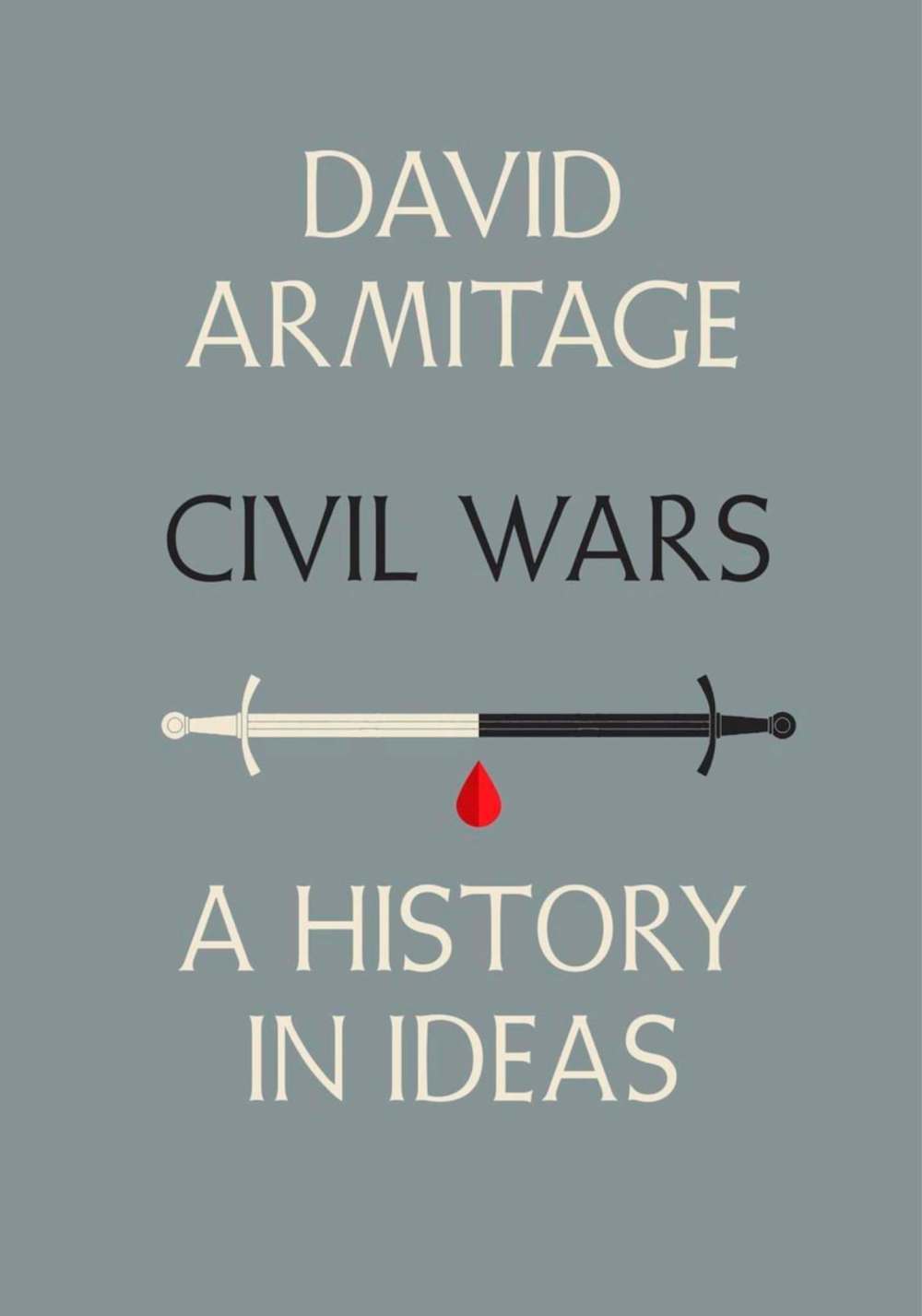
AS is now so often the case with a work of excellent, earnest scholarship, the key is found in David Armitage’s book’s subtitle: A History in Ideas. This is not an intellectual history “of” ideas, it is an intellectual history of a slippery political concept — civil war — as bandied about “in” the minds of select, brilliant, dazzling writers over the centuries.

Read this article for free:


or

Already have an account? Log in here »

To continue reading, please subscribe:

Subscribe and receive a limited-edition Free Press branded hat or tote.

Digital Subscription

One year of digital access for only $205*

  • Enjoy unlimited reading on winnipegfreepress.com
  • Read the E-Edition, our digital replica newspaper
  • Access News Break, our award-winning app
  • Play interactive puzzles

*First annual payment billed as $205.00 + GST for one year. This annual subscription will automatically renew at $233.00 + GST every 52 weeks (10% off the regular annual price of $259.35). Offer available to new and qualified returning subscribers only. Cancel any time.

To continue reading, please subscribe:

Add Free Press access to your Brandon Sun subscription for only an additional

$1 for the first 4 weeks*

  • Enjoy unlimited reading on winnipegfreepress.com
  • Read the E-Edition, our digital replica newspaper
  • Access News Break, our award-winning app
  • Play interactive puzzles
Start now

*Your next Brandon Sun subscription payment will increase by $1.00 and you will be charged $17.95 plus GST for four weeks. After four weeks, your payment will increase to $24.95 plus GST every four weeks.

Hey there, time traveller!
This article was published 19/08/2017 (3286 days ago), so information in it may no longer be current.

AS is now so often the case with a work of excellent, earnest scholarship, the key is found in David Armitage’s book’s subtitle: A History in Ideas. This is not an intellectual history “of” ideas, it is an intellectual history of a slippery political concept — civil war — as bandied about “in” the minds of select, brilliant, dazzling writers over the centuries.

Armitage, born, raised and trained in England, is a professor and the former chair of history at Harvard, having meandered to the field of sprawling intellectual histories from English literature (especially through John Milton). His work, as is the case with this book, typically involves peering painstakingly at the political underpinnings of great works of western literature and history.

This exhaustively researched and documented book is a desperately welcoming and frequently gripping read. Writing in graceful, easy prose, Armitage admits a comprehensive history of this curious political label “civil war” is impossible in a single book or even career, and so aptly opts for an eclectic threefold focus. First, the ancient roots of the term in the Classical world, paying attention to the Greeks but homing in on the Romans (who both engaged more addictively in civil war and wrote more ruefully and obsessively about it). Second, early modern Europe and its dark habit of civil war and more auspicious tendency toward “revolution,” concentrating here especially on the English Civil Wars (1642-51), the American Revolution (1765-83) and the French Revolution (1789-99). Finally, the 19th century and beyond, with an expected and climactic focus on the U.S. Civil War (1861-65).
Throughout, Armitage is careful to trace, with persistent pause and elegant elaboration, the contours of the ways “civil war” has been deployed as a descriptive category by keenly thinking intellects. One would guess the adjective “civil” wants simply and plainly to refer to “within a particular city-state” (or corresponding discrete political unit), but it is more complicated and tricky than that. At various points, for just one example, historians and theorists have understood “civil” to mean “within one’s own religion.” In that line of thinking, any Christian nation-state that engages in armed conflict with another Christian nation-state is embroiled, technically, in a “civil war.” Throw in haphazardly deployed and differently connoting terms such as “revolution” and “rebellion” and “insurrection” and “secession” and you have waters thoroughly muddied.

Despite these (intriguing) bits of semantic minutiae, Armitage lays out and clings to a few resounding points. The most arresting one is cynically ironic: Those states beset and hounded by civil war are invariably horrified by it, and by themselves, and therefore seek to make amends by documenting it carefully, even celebrating lessons to be learned painfully from it.

But the rub is right there: the more a state retells and remains conscious of its own civilly bellicose past, the more it is likely to descend once again into its awful snare. The Romans learned this. The Early Modern Europeans knew this. Americans ought to know this, but have perhaps not quite caught that point yet. To escape the crippling contagion of “civil war,” one must wilfully stop shining a beacon on it. The choking dust is churned up too easily.

It takes a busy, productive, deft mind to craft a timely history book such as this — and, even more, to deliver it in a form that both experts and lay people alike can absorb handily.

Laurence Broadhurst teaches English, history and religion at St. Paul’s High School in Winnipeg.

Report Error Submit a Tip

More Stories

Paralyzed foster girl has system under a microscope

Chris Kitching 6 minute read Preview

Paralyzed foster girl has system under a microscope

Chris Kitching 6 minute read 2:00 AM CDT

An internal investigation by Manitoba’s Families Department is nearly complete in the case of a six-year-old girl who is paralyzed after being assaulted by her foster mother in Winnipeg.

The review by child-welfare officials is intended to prevent similar incidents, but it’s unlikely the public will learn the findings or recommendations.

“We’re working closely with the (child and family services) authority to make sure that every recommendation is taken seriously and implemented,” Families Minister Nahanni Fontaine said Monday.

“They’re important (investigations) because they help us identify what went wrong so we can make those changes to ensure something like this tragedy never happens again.”

Read
2:00 AM CDT

Liquor authority fines True North $12K after minors with fake ID served at Jets White Out party

Nicole Buffie 5 minute read Preview

Liquor authority fines True North $12K after minors with fake ID served at Jets White Out party

Nicole Buffie 5 minute read Yesterday at 6:17 PM CDT

True North Sports and Entertainment was hit with a $12,000 fine for serving minors with fake IDs during a Winnipeg Jets White Out street party in 2025.

The company was fined by the Liquor, Gaming & Cannabis Authority of Manitoba on May 13, 2025 after liquor inspectors attended the May 9 street party and witnessed two two minors in possession of and consuming liquor. One was visibly intoxicated, according to a compliance order dated May 15, 2025.

Both minors had security-issued “18+” wristbands and were using identification that was expired and “clearly not their image.”

The compliance order, provided to the Free Press by the LGCA, said inspectors also noticed inadequate identification checking by security before issuing the wristbands, which identify the people wearing them as being of legal drinking age.

Read
Yesterday at 6:17 PM CDT

Letters, Aug. 18

7 minute read 2:01 AM CDT

In support of real engineering

Jerry Storie’s op-ed Take advantage of hydroelectric potential and Laura Cameron’s op-ed Lasting legacy or pining for a pipe dream, both in the Free Press Aug. 17, provide quite different perspectives on what should be done to provide reliable power to Manitoba residents in the future.

Mr. Storie advocates construction of more hydroelectric projects rather than new natural gas generated capacity to offset looming power shortages. He argues that these hydroelectric projects will benefit Manitoba for the next century, and observes there will be significant increases in the demand for electricity in upcoming years. He is not wrong in any of these observations. However, hydroelectric developments are very capital intensive and have long lead development periods. Natural gas generation can be brought on line far more quickly with less investment. And perhaps Mr. Storie’s minimization of the environmental impacts of these developments deserves more scrutiny. Any First Nations impacted by development deserve to be consulted and participate in any benefits. Having said this, Mr. Storie is a former minister responsible for Manitoba Hydro, and thus has a fairly deep understanding of the issues at hand.

Laura Cameron advocates against construction of the LNG pipeline and terminal at Churchill, citing “the technical challenges of building a pipeline over thawing permafrost; the prohibitive cost of ice-breaking tankers that move LNG through the Arctic; and a forecasted global oversupply of LNG and uncertain long-term export markets.” These would all be persuasive arguments if Ms Cameron possessed any credentials indicating an expertise in engineering or economics. She does not. The balance of Ms Cameron’s op-ed focuses on ways for Manitoba to reduce its carbon footprint while taking a few shots at the proposed LNG pipeline to B.C. Her opposition to the pipeline to Churchill is almost a Trojan horse.

Kinew pledges temporary ER in Dauphin by Labour Day

Free Press staff 2 minute read 2:01 AM CDT

Dauphin’s 8,400 residents, ravaged by floodwaters from unprecedented rainfall in June that has left the city without its hospital for the entire summer, will have a temporary but functioning ER shortly, Premier Wab Kinew promised Monday.

“We’ve heard you loud and clear Dauphin,” Kinew said in a post on X on Monday. “You need these services close to home, you’ll have an emergency department working by Labour Day.”

Dauphin Mayor David Bosiak was elated after hearing the news. “We’re tickled in town,” Bosiak said, adding he has faith the premier will deliver.

Kinew is expected to provide further details Tuesday.

Shelters overwhelmed as rising vet costs forcing some owners to surrender pets

Tiago Resko 4 minute read Preview

Shelters overwhelmed as rising vet costs forcing some owners to surrender pets

Tiago Resko 4 minute read Yesterday at 6:00 AM CDT

In the fall of 2022, Tara Miller was faced with a difficult decision: keep her car or sell it to pay for a second knee surgery for her dog.

Ultimately, she needed her car to commute during the winter and decided to manage her dog Corby’s arthritis with medication and home therapy.

“Mentally it probably broke me,” said the 54-year-old.

While insurance covered two-thirds of the dog’s initial $6,000 surgery, Miller had to pay the remaining $2,000. That was on top of the $500 checkup before the surgery and the monthly $175 pet insurance premium.

Read
Yesterday at 6:00 AM CDT

Mechanics of civil wars masterfully detailed

Reviewed by Laurence Broadhurst 4 minute read Preview

Mechanics of civil wars masterfully detailed

Reviewed by Laurence Broadhurst 4 minute read Saturday, Aug. 19, 2017

AS is now so often the case with a work of excellent, earnest scholarship, the key is found in David Armitage’s book’s subtitle: A History in Ideas. This is not an intellectual history “of” ideas, it is an intellectual history of a slippery political concept — civil war — as bandied about “in” the minds of select, brilliant, dazzling writers over the centuries.

Armitage, born, raised and trained in England, is a professor and the former chair of history at Harvard, having meandered to the field of sprawling intellectual histories from English literature (especially through John Milton). His work, as is the case with this book, typically involves peering painstakingly at the political underpinnings of great works of western literature and history.

This exhaustively researched and documented book is a desperately welcoming and frequently gripping read. Writing in graceful, easy prose, Armitage admits a comprehensive history of this curious political label “civil war” is impossible in a single book or even career, and so aptly opts for an eclectic threefold focus. First, the ancient roots of the term in the Classical world, paying attention to the Greeks but homing in on the Romans (who both engaged more addictively in civil war and wrote more ruefully and obsessively about it). Second, early modern Europe and its dark habit of civil war and more auspicious tendency toward “revolution,” concentrating here especially on the English Civil Wars (1642-51), the American Revolution (1765-83) and the French Revolution (1789-99). Finally, the 19th century and beyond, with an expected and climactic focus on the U.S. Civil War (1861-65).

Throughout, Armitage is careful to trace, with persistent pause and elegant elaboration, the contours of the ways “civil war” has been deployed as a descriptive category by keenly thinking intellects. One would guess the adjective “civil” wants simply and plainly to refer to “within a particular city-state” (or corresponding discrete political unit), but it is more complicated and tricky than that. At various points, for just one example, historians and theorists have understood “civil” to mean “within one’s own religion.” In that line of thinking, any Christian nation-state that engages in armed conflict with another Christian nation-state is embroiled, technically, in a “civil war.” Throw in haphazardly deployed and differently connoting terms such as “revolution” and “rebellion” and “insurrection” and “secession” and you have waters thoroughly muddied.

Read
Saturday, Aug. 19, 2017