Plenty of questions plague space colony’s plight
Advertisement
Read this article for free:
or
Already have an account? Log in here »
To continue reading, please subscribe:

Digital Subscription
One year of digital access for only $205*
- Enjoy unlimited reading on winnipegfreepress.com
- Read the E-Edition, our digital replica newspaper
- Access News Break, our award-winning app
- Play interactive puzzles
*First annual payment billed as $205.00 + GST for one year. This annual subscription will automatically renew at $233.00 + GST every 52 weeks (10% off the regular annual price of $259.35). Offer available to new and qualified returning subscribers only. Cancel any time.
To continue reading, please subscribe:
Add Free Press access to your Brandon Sun subscription for only an additional
$1 for the first 4 weeks*
- Enjoy unlimited reading on winnipegfreepress.com
- Read the E-Edition, our digital replica newspaper
- Access News Break, our award-winning app
- Play interactive puzzles
*Your next Brandon Sun subscription payment will increase by $1.00 and you will be charged $17.95 plus GST for four weeks. After four weeks, your payment will increase to $24.95 plus GST every four weeks.
Read unlimited articles for free today:
or
Already have an account? Log in here »
Hey there, time traveller!
This article was published 23/11/2019 (2508 days ago), so information in it may no longer be current.
Despite the industry shakeups in music and film and television media, the internet has only rarely allowed a book author to make an end run around traditional publishers in the same way some musicians and content creators have gotten their work directly to fans. Pieces of Mark Danielewski’s experimental House of Leaves floated around as text files from 1993 on, building up a cult following until the book was published in hardcover and paperback in 2000.
In 1999, John Scalzi published his first novel on his personal blog, Whatever, asking readers who enjoyed it to mail him a dollar in the mail — he now has a multimillion-dollar publishing contract.
Hugh Howey’s Wool, a 2011 post-apocolyptic tale released on Amazon’s then-new digital self-publishing platform, is another of these few cases. It became a cult phenomenon because of its ability to convert new readers to fans and then evangelists.
This reviewer remembers word of mouth among friends and casual acquaintances, those who had read Wool pressing others to give the odd tale a read, until enough buzz had built to net Howey a seven-figure offer from a Big Five publisher.
In another odd turn, the newbie author took a much smaller deal in order to retain the digital rights.
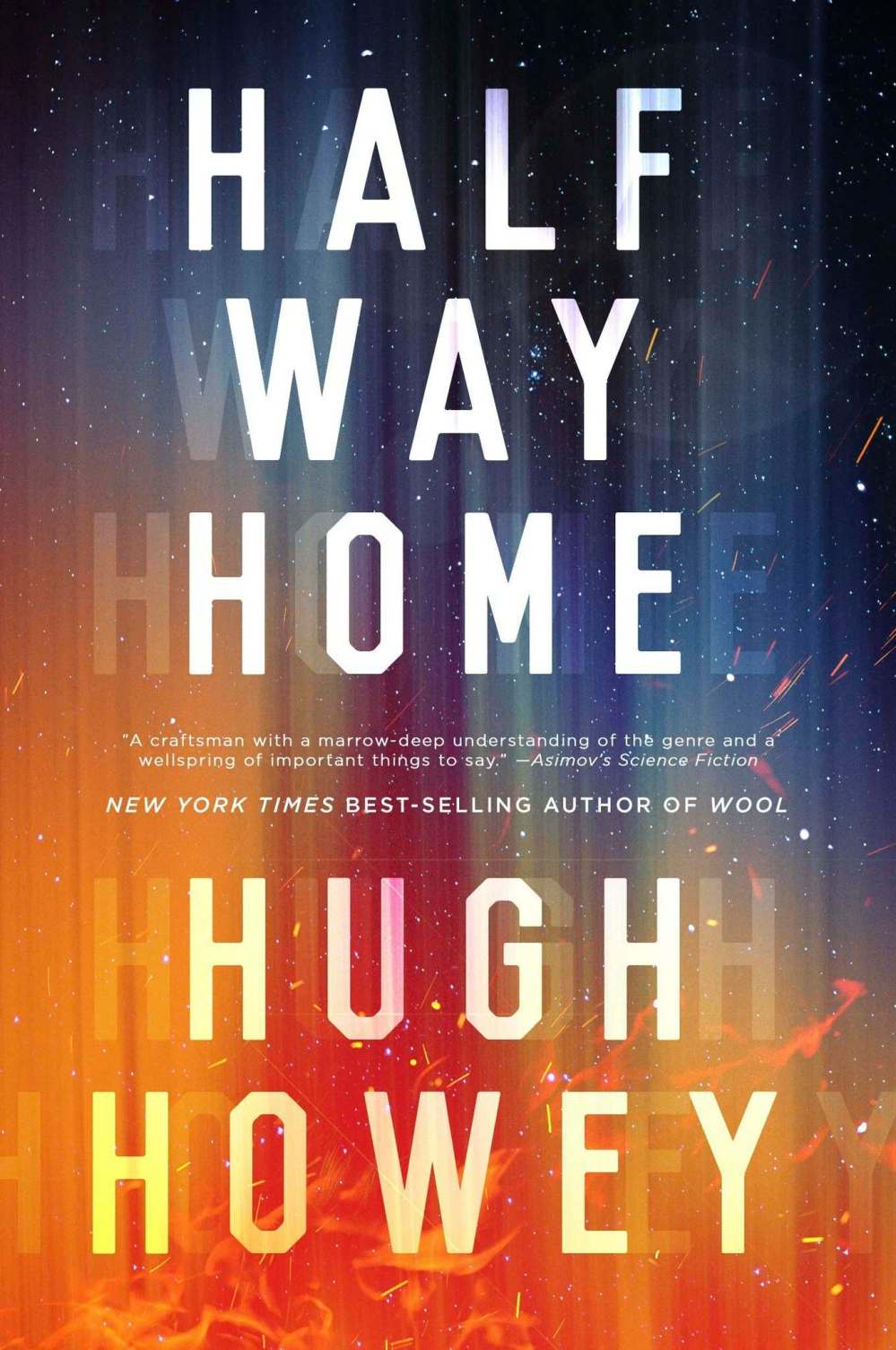
Wool ended up on store shelves and the New York Times bestseller list in short order. But just one year prior, Howey had also turned out and digitally released a short novel called Half Way Home, which publishers have overlooked until now. It, too, is deserving of its cult status.
The set up is simple but unique — on a remote planet, a human colony ship has experienced a disaster.
Vat-grown humans, designed to travel to distant stars as embryonic forms in suspended animation, have been brought down to the planet’s surface and begun their growing process, learning everything about colony life and their own professional roles through virtual-reality lessons wired directly into their brains as their bodies slowly grow.
They were meant to be awakened at 30, fully trained and physically ready. Instead, the novel opens with 15-year-olds waking up to fire and chaos, half-trained and half-grown, with 90 per cent of their compatriots destroyed in the womb. And because the destruction originated at the head of the hierarchically ordered vats, it’s the 50 least-essential personnel that are left to try and form a workable colony — or die.
Between the hidden motivations of the would-be colony’s artificial intelligence, the alien setting and the unique concept of a cast of characters each being simultaneously a newborn, a teenager and a half-trained professional, there is a lot going on here. But Howey keeps it from getting muddied.
A tight first-person perspective and a plot-focused narrative keep things moving, even as several additional narrative threads are unspooled along the way.
Howey’s narrator and main protagonist — an uncertain, partly trained psychologist with more questions than answers — is also the perfect introspective social observer to mull the many unanswered questions that make the story.

The mystery that acts as the novel’s through line, however, is why 450 colonists were killed in the creche, and why the remaining 50 weren’t killed along with them.
Half Way Home is not Howey’s most wildly experimental work, but it doesn’t go quite where the reader would expect, either.
There is an element of thoughtfulness here — not tacked on in long expository sections, but implicit in the structure of the narrative — that makes this work something more than a classic sort of adventure tale competently told.
With the benefit of hindsight, this short novel, easy to devour in a night, might have provided early glimmers of what strange and wonderful things were to come.
Joel Boyce is a Winnipeg writer and educator.