Shades of reality in cyber-junk sci-fi story
Advertisement
Read this article for free:
or
Already have an account? Log in here »
To continue reading, please subscribe:

Digital Subscription
One year of digital access for only $205*
- Enjoy unlimited reading on winnipegfreepress.com
- Read the E-Edition, our digital replica newspaper
- Access News Break, our award-winning app
- Play interactive puzzles
*First annual payment billed as $205.00 + GST for one year. This annual subscription will automatically renew at $233.00 + GST every 52 weeks (10% off the regular annual price of $259.35). Offer available to new and qualified returning subscribers only. Cancel any time.
To continue reading, please subscribe:
Add Free Press access to your Brandon Sun subscription for only an additional
$1 for the first 4 weeks*
- Enjoy unlimited reading on winnipegfreepress.com
- Read the E-Edition, our digital replica newspaper
- Access News Break, our award-winning app
- Play interactive puzzles
*Your next Brandon Sun subscription payment will increase by $1.00 and you will be charged $17.95 plus GST for four weeks. After four weeks, your payment will increase to $24.95 plus GST every four weeks.
Read unlimited articles for free today:
or
Already have an account? Log in here »
Hey there, time traveller!
This article was published 15/06/2019 (2652 days ago), so information in it may no longer be current.
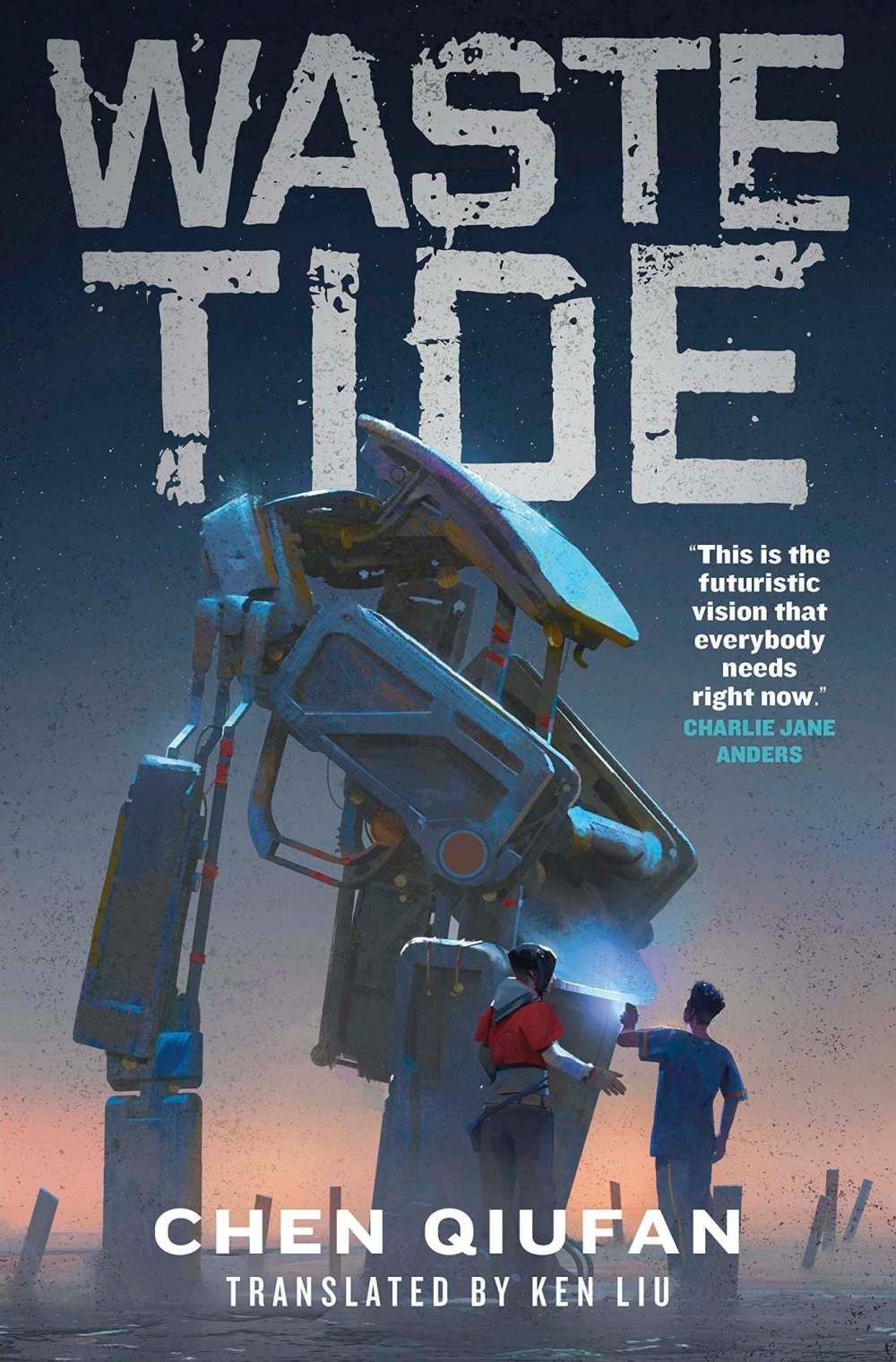
American writer Ken Liu is fast becoming the de facto translator for Chinese science fiction, perhaps to the detriment of his own writing output. Over the past few years, he has been working to pry open the floodgates of the People’s Republic of China, a country whose current fascination with all things science and science fiction mirrors American and Soviet culture during the space race.
Having introduced Cixin Liu — China’s equivalent of Arthur C. Clarke — to the English-speaking world, Ken Liu is now on to the next generation, starting with Chen Qiufan, China’s answer to William Gibson, the Canadian founder of the cyberpunk genre back in the 1980s.
Qiufan has been read in English before. The Year of the Rat is a dark novelette that combines millennial economic angst with technological nihilism. In it, unemployed college students entering a severely saturated job market have no choice but to sign up for the government’s rat-killing corps, attempting futilely to wipe out the roving bands of escaped, genetically modified rodents.
The cyberpunk label is apt, which is not to say the author is simply rehashing what came before. Works such as Gibson’s Neuromancer or the film Blade Runner were a dark and dirty Gen-X contrast to the idealism of Isaac Asimov’s novels or Gene Roddenberry’s Star Trek series in the 1950s and ’60s. Now another generation later, Qiufan suggests there is still precious little light on the horizon.
The entire story of Waste Tide takes place on the fictional Silicon Isle, a Chinese town whose economy is built not on tech innovation, but on the dirty and toxic job of electronic waste recycling. China is the recipient of about 70 per cent of the world’s e-waste, and it’s an army of extremely poor rural workers who make the entire enterprise economically viable.
Qiufan himself grew up near the world’s largest e-recycling centre, and quotes the United Nations’ assessment of the site — “an environmental calamity.” While this novel fast-forwards us a few decades into the future — a time when the waste in question includes discarded robot limbs and the junkyard dogs now come complete with programmable brain chips that put Pavlov to shame — it is still very much a contemporary story.

The relationship between the wealthy owners of Silicon Isle and the poor migrant workers, “waste people,” mirrors the relationship between the West and the developing world. The continued excess and waste of Western tech consumerism is made possible only by a downstream economy where health and safety standards are nominal at best, and life is cheap compared to the valuable yet toxic materials that might be harvested.
Qiufan makes the contrast only slightly starker with the perverse imagery of designer robot body parts for the wealthy elite — a bizarre melding of cosmetic surgery, sexual aids, and smart technology — to be used and then discarded. No one — not the vapid Western consumers, the corrupt Chinese officials, nor the multinational executives — comes off well here.
The story’s theme centres on the question of how long this situation can go on, with the narrative switching regularly between three major characters: an American vulture capitalist serving corporate masters, a young Silicon Isle native raised in America for the second half of his childhood and returning now to find he belongs to neither culture, and a waste girl whose unexpected encounter with a frightening technology may give her leverage over everyone.
As the environmental situation approaches a point of no return, likewise the ever-increasing social inequality seems to be approaching a breaking point of either cultural genocide, political revolution or international incident. Amidst all this, human decency, hope and even love still seem possible, but by no means certain. This, too, seems very contemporary.
Joel Boyce is a Winnipeg writer and educator.