Writing his own chapter
Wente recalls early-year obstacles, emphasizes power of Indigenous storytelling in memoir
Advertisement
Read this article for free:
or
Already have an account? Log in here »
To continue reading, please subscribe:

Digital Subscription
One year of digital access for only $205*
- Enjoy unlimited reading on winnipegfreepress.com
- Read the E-Edition, our digital replica newspaper
- Access News Break, our award-winning app
- Play interactive puzzles
*First annual payment billed as $205.00 + GST for one year. This annual subscription will automatically renew at $233.00 + GST every 52 weeks (10% off the regular annual price of $259.35). Offer available to new and qualified returning subscribers only. Cancel any time.
To continue reading, please subscribe:
Add Free Press access to your Brandon Sun subscription for only an additional
$1 for the first 4 weeks*
- Enjoy unlimited reading on winnipegfreepress.com
- Read the E-Edition, our digital replica newspaper
- Access News Break, our award-winning app
- Play interactive puzzles
*Your next Brandon Sun subscription payment will increase by $1.00 and you will be charged $17.95 plus GST for four weeks. After four weeks, your payment will increase to $24.95 plus GST every four weeks.
Read unlimited articles for free today:
or
Already have an account? Log in here »
Hey there, time traveller!
This article was published 11/12/2021 (1741 days ago), so information in it may no longer be current.
If there is an overarching theme that has permeated Canadian conversations in recent years, it’s reconciliation. There is a desire by government and citizens to achieve reconciliation between Canada’s colonial past and the resulting relationship with Indigenous peoples.
But Jesse Wente doesn’t think it’s possible. An Anishinaabe writer, broadcaster and arts leader, Wente says “reconciliation” is the wrong word for both the situation and the goal. “To reconcile in this context would be to repair a once functional relationship. No such thing ever meaningfully existed between Indigenous nations in the state of Canada.”
Wente was born and raised in Toronto and his family comes from Chicago and Genaabaajing Anishinaabek (Serpent River First Nation). A long-time columnist for CBC Radio’s Metro Morning, he also worked at the Toronto International Film Festival for several years. In February 2018 he was named the first executive director of the Indigenous Screen Office and in 2020, Wente was appointed chair of the Canada Council for the Arts, the only First Nations person to ever hold the position. Unreconciled: Family, Truth, and Indigenous Resistance is his first book.

Wente’s memoir begins with a childhood recollection of watching cartoons: Bugs Bunny singing Ten Little Indians while shooting them. The violence and racism, including the term “half-breed,” is jarring. (Looney Tunes didn’t pull the cartoon until 2001).
Unreconciled is the result of Wente’s lifelong interest in storytelling — from being glued to television as a child to learning about his family’s history through stories passed on by his grandmother. The mash-up of the “Hollywood Indian” trope with Wente’s experience as an Indigenous person is thought-provoking.
“Storytelling is one of the key methods used by colonizers to explain and obscure their lawless treatment of the lands and peoples over which they claim dominion,” he writes. “But storytelling is also one of our best weapons in the fight to reclaim our rightful place.”
The most heartfelt parts of Unreconciled are about Wente’s love and respect for his nookomis (grandmother). She was forced to attend residential school in Spanish, Ont. “The curriculum had been aimed at training Indigenous girls to work as domestics and cleaners in white households and businesses, the only careers to which the architects of that racist school felt First Nations, Métis, and Inuit girls should aspire.”
His grandmother ended up working at The Albany Club in Toronto, the oldest private club in Canada. “Separated from her family, her language, our stories, and our land, living with a white man, and spending her days waiting on colonial elites, my grandmother was in many ways a victory for residential schools. She was the exact type of Indian they had hoped to produce,” writes Wente.
While Unreconciled shares important information and historical facts, it’s balanced with Wente’s humour and awareness of his own privilege.
He recalls applying for private school in grade 7: “The interview, presumably meant to determine whether I was worthy of donning the uniform, had gone well enough to establish that I’d fit in — even despite the, you know, 75 years of Indigenous exclusion.”
His guilt about accessing post-secondary funding because of having treaty status (while others were stripped of this right by racial and patriarchal colonial systems) is a poignant section.
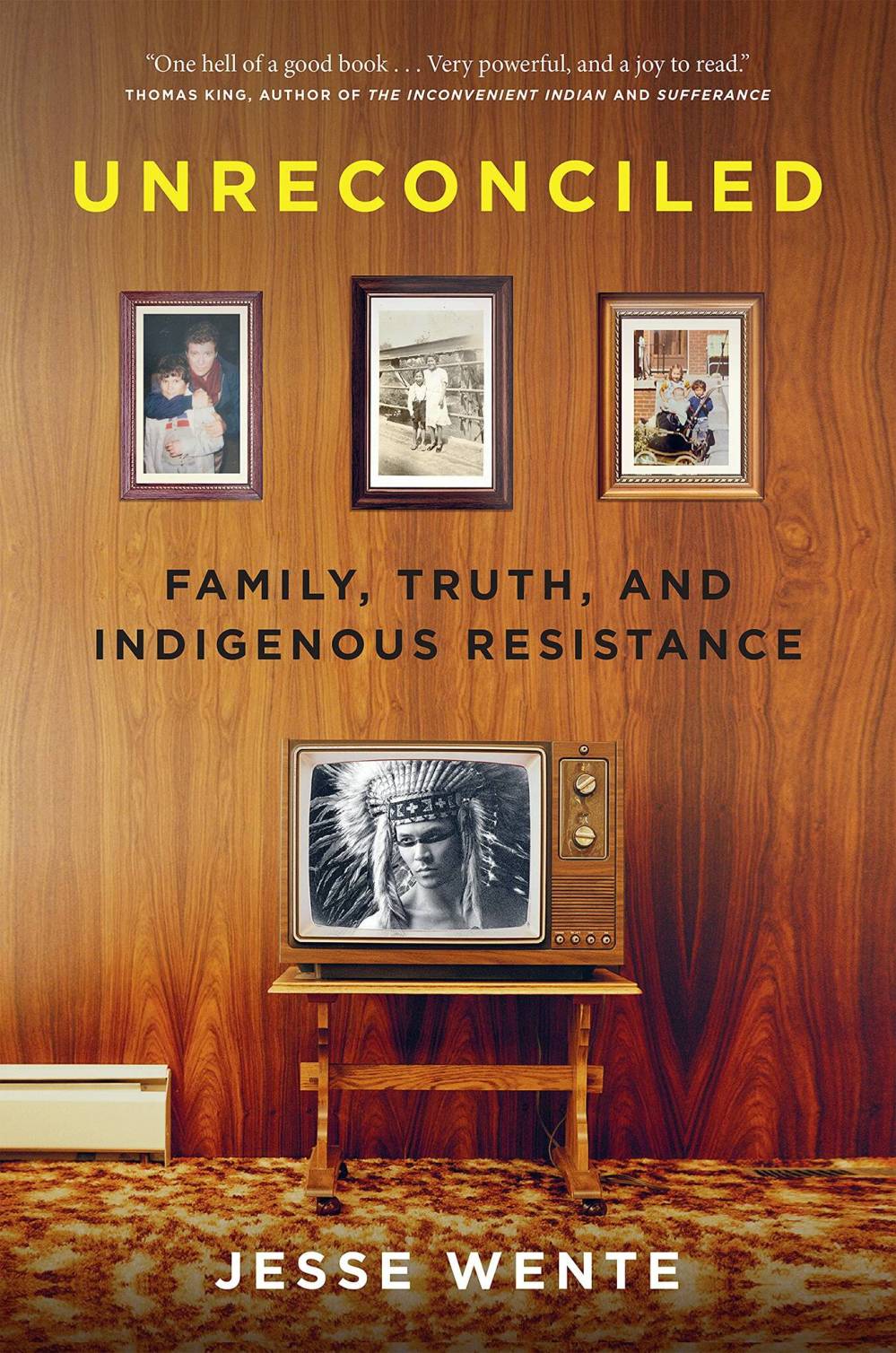
When looking at solutions to bridge the gap between reconciliation and reality, Wente credits Murray Sinclair, Commissioner of the Truth and Reconciliation Commission of Canada, who said education was used to attack Indigenous sovereignty, so it should also be used to reinforce it.
Building on Sinclair’s recommendation, Wente says narrative sovereignty is the key to bridging the gap of understanding between Indigenous and non-Indigenous Canadians. He believes Indigenous people should control their own stories, as well as the tools used to tell those stories.
That’s exactly what Wente has accomplished with Unreconciled.
Deborah Bowers is Red River Métis and walks in two worlds every day.