‘Killing Patient Zero’ profiles Quebec man unfairly targeted in AIDS epidemic

Advertisement

Advertise with us

TORONTO - In the late 1970s, Quebecois flight attendant Gaetan Dugas was openly and proudly gay, described by friends as flamboyant, sexual and generous, with a supportive family and penchant for makeup.

Read this article for free:


or

Already have an account? Log in here »

To continue reading, please subscribe:

Subscribe and receive a limited-edition Free Press branded hat or tote.

Digital Subscription

One year of digital access for only $205*

  • Enjoy unlimited reading on winnipegfreepress.com
  • Read the E-Edition, our digital replica newspaper
  • Access News Break, our award-winning app
  • Play interactive puzzles

*First annual payment billed as $205.00 + GST for one year. This annual subscription will automatically renew at $233.00 + GST every 52 weeks (10% off the regular annual price of $259.35). Offer available to new and qualified returning subscribers only. Cancel any time.

To continue reading, please subscribe:

Add Free Press access to your Brandon Sun subscription for only an additional

$1 for the first 4 weeks*

  • Enjoy unlimited reading on winnipegfreepress.com
  • Read the E-Edition, our digital replica newspaper
  • Access News Break, our award-winning app
  • Play interactive puzzles
Start now

*Your next Brandon Sun subscription payment will increase by $1.00 and you will be charged $17.95 plus GST for four weeks. After four weeks, your payment will increase to $24.95 plus GST every four weeks.

Hey there, time traveller!
This article was published 24/04/2019 (2705 days ago), so information in it may no longer be current.

TORONTO – In the late 1970s, Quebecois flight attendant Gaetan Dugas was openly and proudly gay, described by friends as flamboyant, sexual and generous, with a supportive family and penchant for makeup.

Unashamed of his lifestyle despite lingering societal stigmas, he co-operated with the U.S. Centers for Disease Control and Prevention in the early 1980s after he contracted what was initially called “gay cancer” in the media, providing blood samples and the names of 72 of his former sex partners.

Dugas played a key role in contributing to a study that helped prove HIV/AIDS was sexually transmitted.
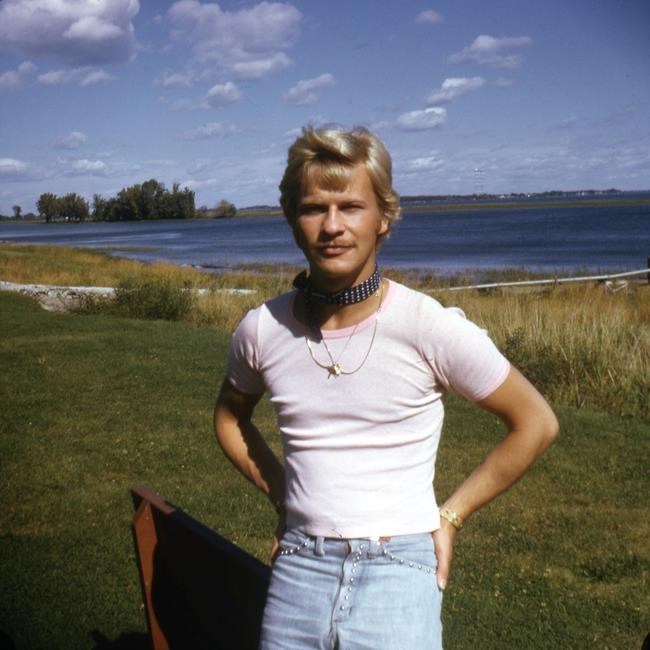
Gaetan Dugas is shown in this undated handout photo from the documentary
Gaetan Dugas is shown in this undated handout photo from the documentary "Killing Patient Zero" by director Laurie Lynd. n the late 1970s, Quebecois flight attendant Gaetan Dugas was openly and proudly gay, described by friends as flamboyant, sexual and generous, with a supportive family and penchant for makeup. Unashamed of his lifestyle despite lingering societal stigmas, he co-operated with the U.S. Centers for Disease Control and Prevention in the early 1980s after he contracted what was initially called "gay cancer" in the media, providing blood samples and the names of 72 of his former sex partners. Dugas played a key role in contributing to a study that helped prove HIV/AIDS was sexually transmitted. But as the new documentary "Killing Patient Zero" notes, he became demonized because of his promiscuity -- and a typographical error. THE CANADIAN PRESS/HO - Fadoo Productions

But as the new documentary “Killing Patient Zero” notes, he became demonized because of his promiscuity — and a typographical error.

In the CDC study, Dugas was labelled “patient O,” as in the letter “O,” representing “Out-of-California Case,” a state where researchers began to look for links.

However, some misinterpreted the “O” as the number “0,” as in “patient zero,” leading to the long-standing and incorrect implication that Dugas brought AIDS to North America.

“He really should be thought of as a hero of the fight against AIDS,” said Laurie Lynd, the doc’s Toronto-based director.

“For him to have been vilified, it’s like the classic ‘No good deed goes unpunished.'”

Making its world premiere Friday at the Hot Docs Canadian International Documentary Festival, “Killing Patient Zero” details Dugas’ life as well as the homophobia and prejudice surrounding the AIDS epidemic. American author Fran Lebowitz is among the 40 interviewees in the film, which is based on Richard McKay’s book “Patient Zero and the Making of the AIDS Epidemic.”

Dugas, who grew up in Quebec City, was one of the first 57 AIDS cases reported to CDC and was part of its cluster study in Atlanta.

He died on March 30, 1984 but became an international name in ’87, when American journalist Randy Shilts published his book on the AIDS epidemic, “And The Band Played On.”

In the book and a feature in the New York Post titled “The Man Who Gave Us AIDS,” Shilts identified Dugas as “patient zero” and accused him of being the source of the U.S. outbreak.

Shilts, who died in 1994, maintained Dugas wasn’t singled out and noted many others were also named in the book.

The 60-year-old Lynd, who is openly gay, said he read Shilts’s story about Dugas in 1990 and thought it was correct until he saw the 1993 John Greyson film “Zero Patience,” which debunks the myth.

“It was a real gift to be able to revisit this story, just personally, to look at those years again and to be able to rehabilitate Gaetan’s name,” said Lynd.

“I think he’s a gay everyman. I think what he did was heroic with the CDC.”

Still, Shilts’s book also drew attention to the epidemic at a time when many politicians weren’t talking about it, added Lynd, noting it woke him up politically and prompted him to make his short film “RSVP,” about a man who loses his partner to AIDS.

“It’s hard for us to realize how little traction it had gained in public attention. Randy’s book was a kind of wakeup call,” Lynd said.

“In a way, Randy did the wrong thing for the right reasons.”

Lynd said he worried his film would open old wounds for Dugas’ family, but they’ve seen the trailer and will get a link to the doc through McKay, who is in touch with them.

“I also hope they will feel it’s … worth it,” said Lynd, “because it so thoroughly, I hope, and finally rehabilitates Gaetan’s name.”

Lynd also hopes the film will be “healing” for gay men and women and serve as a reminder that the fight against HIV/AIDS isn’t over — and that homophobia is still around.

“You need look no further than the gay serial killer in Toronto, where it seems fairly clear that had those victims been straight white men, it would have been handled very differently, and how so many of that killer’s victims clearly had to live on the down-low because of the homophobia in their communities,” Lynd said.

“And we need look no further than our neighbours to the south. I feel homophobia is on the rise again in some ways in this populous climate.”

Report Error Submit a Tip

More Stories

Grieving child builds backyard rocket ship

Harriet Zaidman 4 minute read 2:01 AM CDT

I Built a Rocket Ship (Kids Can Press, 32 pages, hardcover, $22) by Winnipegger Anna Lazowski is a tender story for children ages 4-8 about a little girl trying to make sense of her mother’s death. The child engages in conversation with her late mom, agreeing and disagreeing about things said as she carries objects (and of course, the cat) to the backyard. There, she is building a rocket ship she will pilot into the skies to find her mom again.

Jennica Lounsbury’s varied perspectives show the range of emotions the little girl experiences.

● ● ●

Northwoods Lullaby by Mary Casanova (University of Minnesota Press, 32 pages, hardover, $25) is a bedtime book for readers up to age eight, perfect to bring a busy, happy day to a close. Just like children who are listening to adults reading the book, all the animal babies are being tucked into their nests and burrows by loving parents: “Thump and scamper,/nimble clover./ Soon it’s time to rest. Baby loon/ nestles in/as Papa floats along.”

Manitoba abandoning spring, fall clock changes

Carol Sanders 8 minute read Preview

Manitoba abandoning spring, fall clock changes

Carol Sanders 8 minute read Updated: Yesterday at 8:48 AM CDT

Time’s up for the time change in Manitoba.

Manitobans won’t be setting their clocks back an hour in November. The province has decided to permanently stay on daylight time after surveying residents on the twice annual clock adjustment.

“We heard from Manitobans loud and clear — no more changing the clocks in Manitoba,” Premier Wab Kinew said in a news release Thursday.

Most of the 72,000 votes submitted in an online EngageMB survey — 92 per cent — said they would like to see the practice end. The survey asked if they preferred earlier sunrises in winter with standard time or the later sunsets in summer with daylight time. More than half of survey participants (58 per cent) indicated a preference to stay on permanent daylight time; 34 per cent voted to eliminate the time change but stay on standard time.

Read
Updated: Yesterday at 8:48 AM CDT

Jets GM insists club’s not working under any deadline in netminder’s trade request

Mike McIntyre 7 minute read Preview

Jets GM insists club’s not working under any deadline in netminder’s trade request

Mike McIntyre 7 minute read Thursday, Sep. 17, 2026

Connor Hellebuyck and his family were subject to so much post-Olympic vitriol that both the Winnipeg Jets security team and even police had to get involved.

Read
Thursday, Sep. 17, 2026

Near-future U.S. the setting for surreal dual-world storyline

Reviewed by Morley Walker 4 minute read Preview

Near-future U.S. the setting for surreal dual-world storyline

Reviewed by Morley Walker 4 minute read 2:01 AM CDT

It’s not every day you encounter a seriously intended literary novel that attempts to dramatize a mind-bending physics theory like quantum entanglement.

But then the B.C.-born-and-raised Emily St. John Mandel is not your everyday Canadian literary writer.

In her late 40s, she has lived in the U.S. for her entire writing career. She is best known for her 2014 dystopian novel Station Eleven, about a Shakespearean acting troupe navigating a pandemic-ravaged America.

Her new outing, her seventh, Exit Party, shares DNA with detective and sci-fi genres more than with conventional literary fiction.

Read
2:01 AM CDT

Gillingham in lead with decided voters

Nicole Buffie 6 minute read Preview

Gillingham in lead with decided voters

Nicole Buffie 6 minute read Yesterday at 6:55 PM CDT

A cloud of uncertainty is hanging over Winnipeg as October’s municipal election nears.

Three months after a poll showed more than 40 per cent of Winnipeggers wanted to see someone other than current mayor Scott Gillingham elected, a new Abacus Data poll indicates more than half of Winnipeg voters are undecided heading into next month’s civic election.

Of decided voters, 55 per cent favour Gillingham compared to 23 per cent for former councillor and provincial cabinet minister Kevin Klein and 11 per cent for funeral director Mike Vogiatzakis.

Of all respondents, just over 50 per cent said they were unsure while 13 per cent said they will not vote.

Read
Yesterday at 6:55 PM CDT

Canada must not accept another Iranian autocracy

David Matas 5 minute read 2:01 AM CDT

Iran is a state run by a radical government victimizing its citizens and its neighbours. How do we change that? Any regime change that repeats the mistakes of the past is not a solution.

What went wrong in the past which led to the current regime? One answer is the U.K. and American aided coup which led to the ouster in 1953 of a democratically elected government headed at the time by Mohammad Mossadegh and its replacement with an American friendly autocrat, the Shah of Iran, Mohammad Reza Pahlavi.

The Shah imposed his rule through the Iranian National Intelligence and Security Organization — SAVAK, the acronym of its Persian name. SAVAK systematically inflicted torture, arbitrary killings and extra-judicial killings on perceived opponents of the regime. It was only a matter of time before repression of a regime directed to serving foreign interests would be overthrown.

What replaced the regime of the Shah, in 1979, the current regime of the mullahs, is a regime as intolerant and violent as the regime of the Shah and then some. That was not inevitable. But neither was it surprising. The vicious nature of the current regime, following the example set by the Shah, and its hatred for the United States, reacting to the U.S. aided imposition of the Shah, both echoes and reacts to the past. In 1979, the U.S. reaped what it sowed in 1953.