Review: New story collection by Danish writer Dorthe Nors
Advertisement
Read this article for free:
or
Already have an account? Log in here »
To continue reading, please subscribe:

Digital Subscription
One year of digital access for only $205*
- Enjoy unlimited reading on winnipegfreepress.com
- Read the E-Edition, our digital replica newspaper
- Access News Break, our award-winning app
- Play interactive puzzles
*First annual payment billed as $205.00 + GST for one year. This annual subscription will automatically renew at $233.00 + GST every 52 weeks (10% off the regular annual price of $259.35). Offer available to new and qualified returning subscribers only. Cancel any time.
To continue reading, please subscribe:
Add Free Press access to your Brandon Sun subscription for only an additional
$1 for the first 4 weeks*
- Enjoy unlimited reading on winnipegfreepress.com
- Read the E-Edition, our digital replica newspaper
- Access News Break, our award-winning app
- Play interactive puzzles
*Your next Brandon Sun subscription payment will increase by $1.00 and you will be charged $17.95 plus GST for four weeks. After four weeks, your payment will increase to $24.95 plus GST every four weeks.
Read unlimited articles for free today:
or
Already have an account? Log in here »
Hey there, time traveller!
This article was published 01/02/2021 (2079 days ago), so information in it may no longer be current.
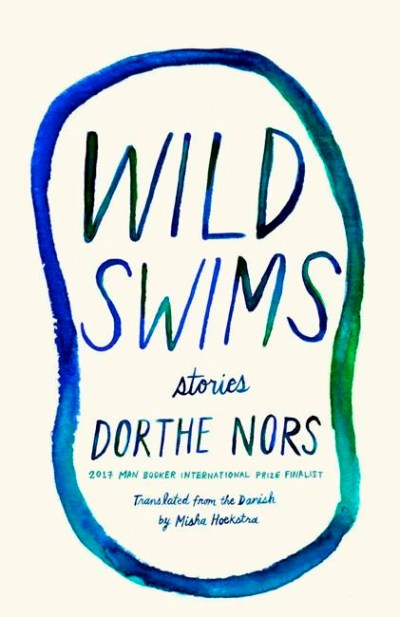
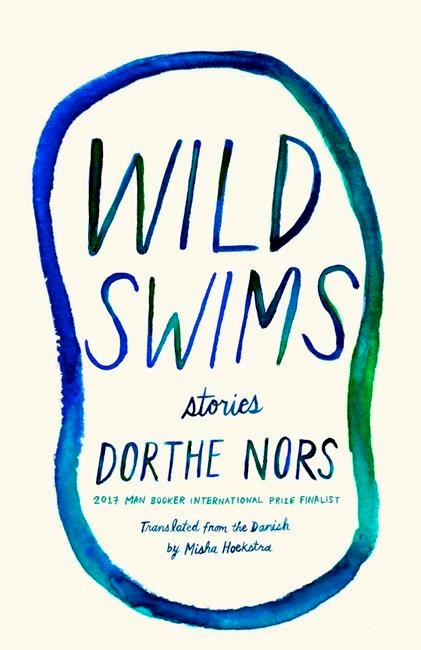
“Wild Swims,” by Dorthe Nors (Graywolf Press)
“Hygge” is the Danish word for a sense of coziness and comfort that is supposedly characteristic of that Scandinavian country. In her latest collection of short stories, “Wild Swims,” the Danish writer Dorthe Nors puts to rest any notion that her compatriots are happier or more content than the rest of us.
Indeed, the story titled “Hygge” starts out in a cozy sort of way with a woman making coffee and “one of those chocolate cakes that are soft in the middle.” But it quickly turns dark when the sneering, arrogant narrator fumes to himself about his decision to join the senior club where he met her because “as a bachelor I had to place my body at the disposal of all the cast-off women and their expectations.”
Like the narrator, the men in these stories tend to be aggrieved, misogynistic and in one or two cases, just this side of perverted. The women are often nursing a broken heart. Other characters are dying, demented, alcoholic or depressed. In short, the whole sorry human spectacle of us.
Yet the 14 stories in the book are mesmerizing, addictive. Each one is just a few pages, written in an oblique, poetic style that arrives at its conclusion through indirection.
Nors, who became better known to American readers when her novel “Mirror, Shoulder, Signal” was shortlisted for the 2017 Man Booker International Prize, has an uncanny ability to capture the way the human mind works, with disparate memories and ideas running simultaneously along different tracks. She even has a signature grammatical style for it: two wildly different clauses linked together with an ordinary “and.”
So, for instance, in the story “Compaction Birds,” a man looks at the yellow flowers on a woman’s dress, which remind him of a creeping shrub that his late wife loved. “It blossoms abundantly in the groundcover, and there was something about her face, especially her mouth.”
Characters are haunted and consoled by nature. The narrator of “Between Offices” lies down on a hotel bed and feels as though he’s being swallowed up by the earth — but he likes it. In “Manitoba” the main character lives in a village but wants to escape to an even more remote hunting cabin because “you can always withdraw a little bit further” — a line that becomes the epigraph of the book.
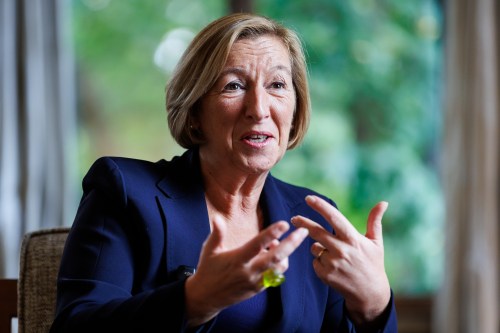
Nors, who spent years in Copenhagen and New York, now lives in a remote part of Denmark’s Jutland peninsula. “I need the landscape, the horizon, the absolute solitude,” she told an interviewer recently. All those things figure prominently in these captivating stories.