UK: Climate protesters throw soup on Van Gogh’s ‘Sunflowers’
Advertisement
Read this article for free:
or
Already have an account? Log in here »
To continue reading, please subscribe:

Digital Subscription
One year of digital access for only $205*
- Enjoy unlimited reading on winnipegfreepress.com
- Read the E-Edition, our digital replica newspaper
- Access News Break, our award-winning app
- Play interactive puzzles
*First annual payment billed as $205.00 + GST for one year. This annual subscription will automatically renew at $233.00 + GST every 52 weeks (10% off the regular annual price of $259.35). Offer available to new and qualified returning subscribers only. Cancel any time.
To continue reading, please subscribe:
Add Free Press access to your Brandon Sun subscription for only an additional
$1 for the first 4 weeks*
- Enjoy unlimited reading on winnipegfreepress.com
- Read the E-Edition, our digital replica newspaper
- Access News Break, our award-winning app
- Play interactive puzzles
*Your next Brandon Sun subscription payment will increase by $1.00 and you will be charged $17.95 plus GST for four weeks. After four weeks, your payment will increase to $24.95 plus GST every four weeks.
Read unlimited articles for free today:
or
Already have an account? Log in here »
Hey there, time traveller!
This article was published 14/10/2022 (1459 days ago), so information in it may no longer be current.
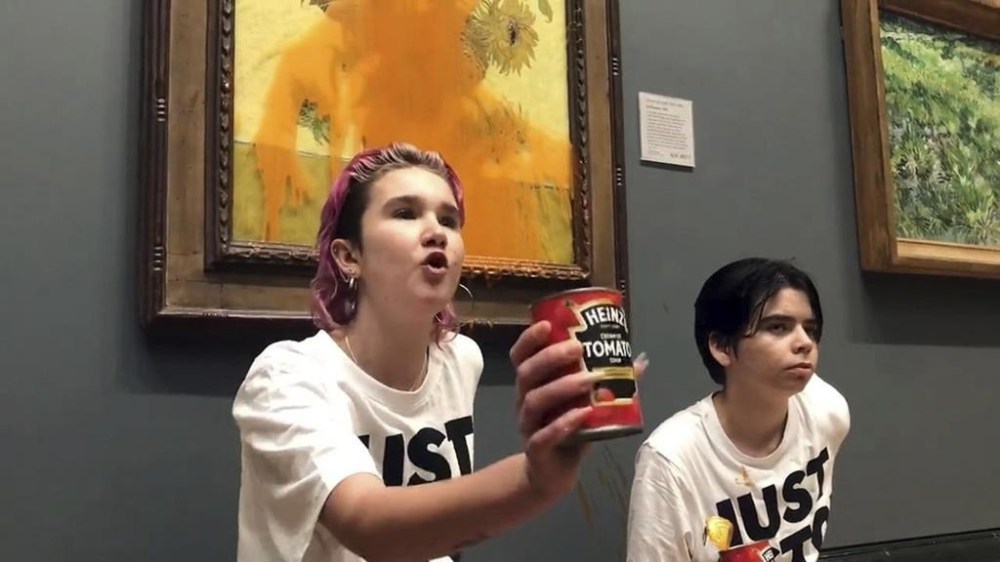
LONDON (AP) — Climate protesters threw soup over Vincent van Gogh’s “Sunflowers” in London’s National Gallery on Friday to protest fossil fuel extraction, but caused no damage to the glass-covered painting.
The group Just Stop Oil, which wants the British government to halt new oil and gas projects, said activists dumped two cans of tomato soup over the oil painting, one of the Dutch artist’s most iconic works. The two protesters also glued themselves to the gallery wall.
The soup splashed across the glass covering the painting and its gilded frame. The gallery said “there is some minor damage to the frame but the painting is unharmed.” It was cleaned and returned to its place in the gallery on Friday afternoon.
The work is one of several versions of “Sunflowers” that Van Gogh painted in the late 1880s.
London’s Metropolitan Police said officers arrested two people on suspicion of criminal damage and aggravated trespass.
“Specialist officers have now un-glued them and they have been taken into custody to a central London police station,” the force said in a statement.
A group of protesters from the same group later gathered at police headquarters and sprayed yellow paint over the rotating “New Scotland Yard” sign in front of it. Several also glued themselves to the road, blocking traffic. Police said 24 people were arrested.
Just Stop Oil has drawn attention, and criticism, for targeting artworks in museums. In July, Just Stop Oil activists glued themselves to the frame of an early copy of Leonardo da Vinci’s “The Last Supper” at London’s Royal Academy of Arts, and to John Constable’s “The Hay Wain” in the National Gallery.

Activists have also blocked bridges and intersections across London during two weeks of protests.
The protesters were part of a “new radical flank” of the environmental movement that University of Maryland social scientist Dana Fisher calls “the disruptors.”
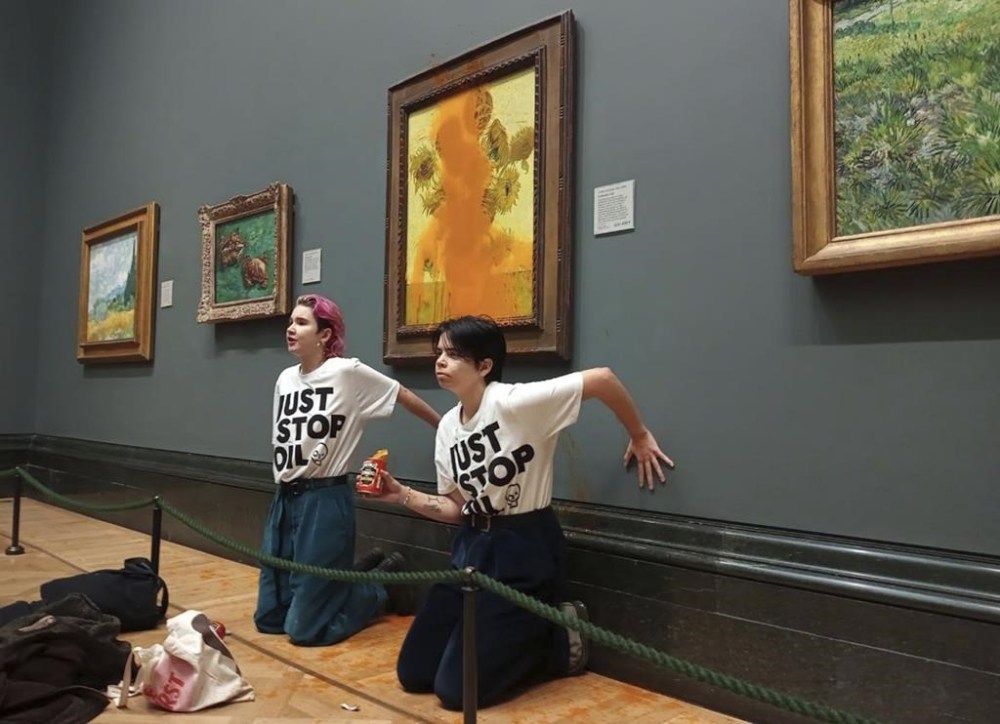
“These tactics are specifically geared toward getting media attention,” said Fisher, who studies activists. She said they seemed to have targeted a painting that had a glass cover to cause minimum damage but get more attention than previous activists who had been gluing themselves to art. Throwing tomato soup “is an escalation of a tactic,” she said.
University of Pennsylvania climate scientist Michael Mann said he worries that the vandalism “alienates many people we need to bring into the fold. People who are natural allies in the climate battle but will draw negative associations with climate advocacy and activism from such acts.”
The wave of demonstrations comes as the British government opens a new licensing round for North Sea oil and gas exploration, despite criticism from environmentalists and scientists who say the move undermines the country’s commitment to fighting climate change.
Related Articles
If art is worth protecting, so is the future of Earth
Advertisement Advertise With Us
Advertisement Advertise With Us