Review: A harrowing shipwreck and mutiny in ‘The Wager’
Advertisement
Read this article for free:
or
Already have an account? Log in here »
To continue reading, please subscribe:

Digital Subscription
One year of digital access for only $205*
- Enjoy unlimited reading on winnipegfreepress.com
- Read the E-Edition, our digital replica newspaper
- Access News Break, our award-winning app
- Play interactive puzzles
*First annual payment billed as $205.00 + GST for one year. This annual subscription will automatically renew at $233.00 + GST every 52 weeks (10% off the regular annual price of $259.35). Offer available to new and qualified returning subscribers only. Cancel any time.
To continue reading, please subscribe:
Add Free Press access to your Brandon Sun subscription for only an additional
$1 for the first 4 weeks*
- Enjoy unlimited reading on winnipegfreepress.com
- Read the E-Edition, our digital replica newspaper
- Access News Break, our award-winning app
- Play interactive puzzles
*Your next Brandon Sun subscription payment will increase by $1.00 and you will be charged $17.95 plus GST for four weeks. After four weeks, your payment will increase to $24.95 plus GST every four weeks.
Read unlimited articles for free today:
or
Already have an account? Log in here »
Hey there, time traveller!
This article was published 17/04/2023 (1267 days ago), so information in it may no longer be current.
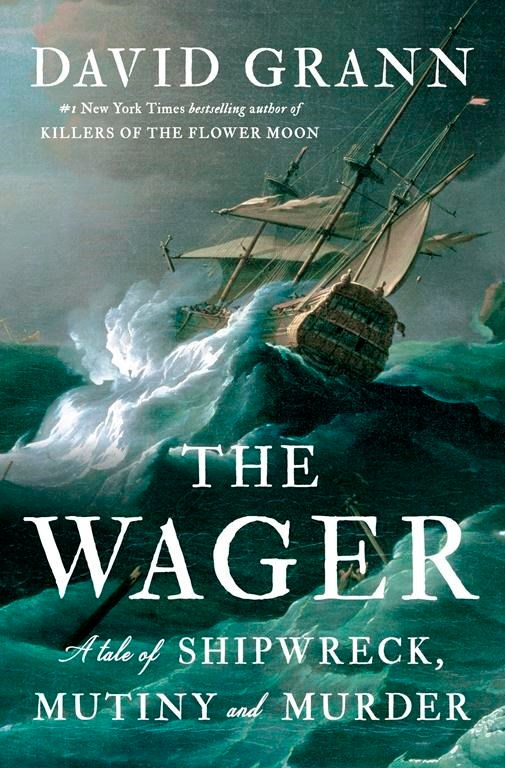
“The Wager: A Take of Shipwreck, Mutiny and Murder,” by David Grann (Doubleday)
The Wager, a British war ship, crashed onto rocks amid stormy seas off the coast of Patagonia in 1741. Sailors on a secret wartime mission had already dealt with typhus, lice, blinding squalls, frostbite, worm-eaten biscuits, scurvy and the death of comrades since they set sail months earlier.
It would get much worse.
Stranded on a cold, deserted island, shipwreck survivors scraped seaweed off rocks to boil and eat. Some ate the dead. Crew members blamed their imperious captain for their fate and rigid naval order broke down. Mutineers abandoned their captain on the island after he fatally shot an unruly crew member in the head.
The story of the shipwreck and its aftermath features scenery-chewing characters, unexpected twists and an almost unimaginable amount of human misery. Grann, the author of the acclaimed “Killers of the Flower Moon,” tells it with style. He manages to wring maximum drama out of the events and sketch out nuanced portraits of key players on the doomed ship. Journal entries made on the voyage gave Grann a window into their thoughts and fears.
In a large part, this is the tale of two strong-willed characters on a collision course.

At the helm is David Cheap, who became the ship’s captain after a death at sea. Cheap, new to command, was an authoritarian with a relentless drive to prove his worthiness to superiors. His vainglorious manner and “stubborn defiance of all difficulties” grated on the crew, most notably gunner John Bulkeley.
Bulkeley, a sailor to his bones, was highly competent and increasingly doubtful of Cheap’s judgment as their mission to the Pacific progressed. After the shipwreck, he wrote in his journal that if the captain had only conferred with his officers they “might probably have escaped our present unhappy condition.”
Bulkeley led the group of mutineers off the island, leaving Cheap behind with a small group of loyalists. Bulkeley’s party of barely-alive men landed on the coast of Brazil in January 1742. The story might have ended there, except Cheap and a two other bedraggled souls washed up on the coast of Chile six months later.
Cheap denounced Bulkeley’s party as mutineers. Bulkeley called Cheap a murderer. A court martial was convened to sort out the competing stories.
After defying death in stormy seas and on a cold island, Bulkeley and his mates faced the possible threat of the hangman’s noose.