This Ohio museum shows that TV is older than you might think
Advertisement
Read this article for free:
or
Already have an account? Log in here »
To continue reading, please subscribe:

Digital Subscription
One year of digital access for only $205*
- Enjoy unlimited reading on winnipegfreepress.com
- Read the E-Edition, our digital replica newspaper
- Access News Break, our award-winning app
- Play interactive puzzles
*First annual payment billed as $205.00 + GST for one year. This annual subscription will automatically renew at $233.00 + GST every 52 weeks (10% off the regular annual price of $259.35). Offer available to new and qualified returning subscribers only. Cancel any time.
To continue reading, please subscribe:
Add Free Press access to your Brandon Sun subscription for only an additional
$1 for the first 4 weeks*
- Enjoy unlimited reading on winnipegfreepress.com
- Read the E-Edition, our digital replica newspaper
- Access News Break, our award-winning app
- Play interactive puzzles
*Your next Brandon Sun subscription payment will increase by $1.00 and you will be charged $17.95 plus GST for four weeks. After four weeks, your payment will increase to $24.95 plus GST every four weeks.
Read unlimited articles for free today:
or
Already have an account? Log in here »
Hey there, time traveller!
This article was published 03/07/2023 (1181 days ago), so information in it may no longer be current.
The history of television began long before millions of people gathered in front of their black-and-white sets and fiddled with the antenna and horizontal hold to watch Lucy, Uncle Miltie and Howdy Doodie.
“Everybody thinks TV started in the ‘50s or the late ’40s. Almost nobody knows it existed before World War II and even goes back to the ’20s,” said Steve McVoy, 80, the founder and president of the Early Television Museum in Hilliard, Ohio, a suburb of Columbus.
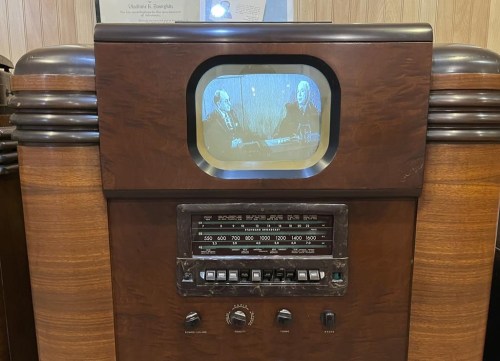
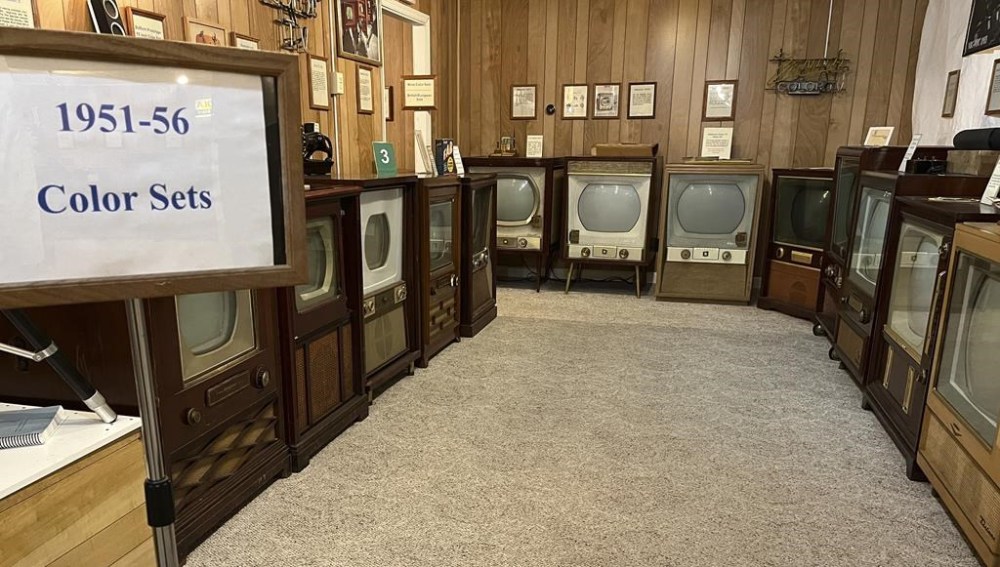
The museum holds a large collection of televisions from the 1920s and 1930s, and scores of the much-improved, post-World War II, black-and-white sets that changed the entertainment landscape. There are also several of the first-generation color sets developed in the early 1950s.
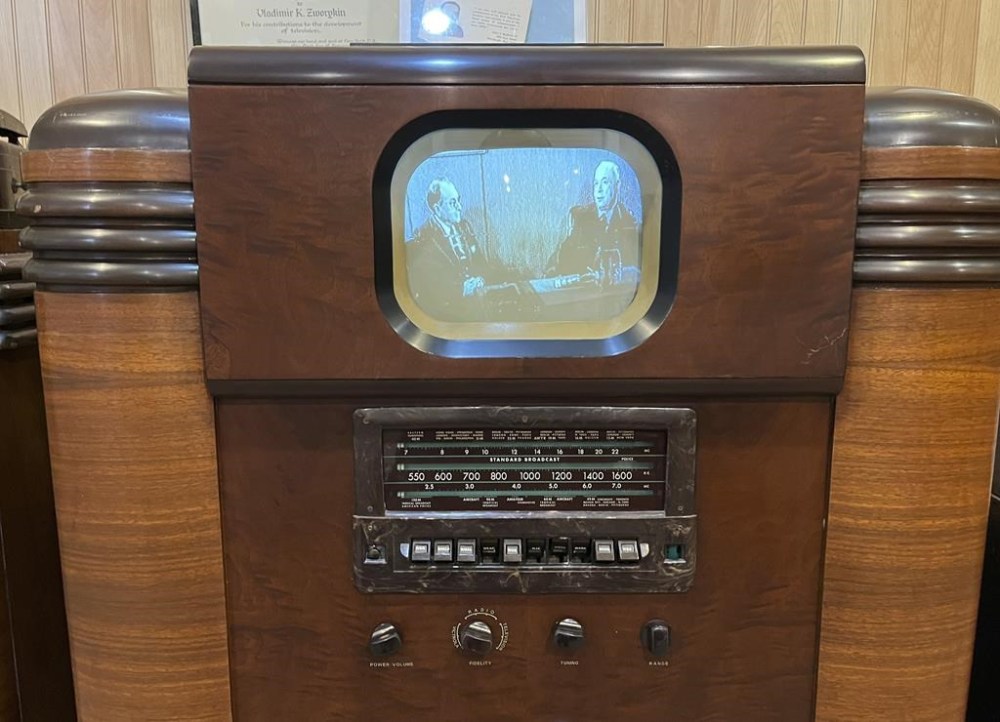
“The original idea for the museum was to deal with the earliest television technology,” McVoy said. “The sets got pretty boring after 1960, just these big things in plastic cabinets.”
The collection is one of the world’s largest, rivaled in North America only by the MZTV Museum of Toronto. About 180 television sets are on exhibit, arranged in chronological order, with another 50 in storage.
“So many of the sets were incredible to see in their original form,” said Doron Galili, a research fellow in media studies at Stockholm University and author of “Seeing by Electricity: The Emergence of Television, 1878 – 1939” (Duke University Press).
He visited in 2016, and said the museum gives visitors “a better sense not only of the technological aspects of television history but also of its place within popular culture, and modern design and material culture.”
THE BACKSTORY
McVoy’s personal history with television also goes back many years. When he was 10 and living in Gainesville, Florida, he was fascinated by his family’s first set. “I tinkered with it, much to my parent’s dismay,” he said.
He pulled a little red wagon around the neighborhood with a sign that advertised free television repairs.
“Nobody accepted my offer,” McVoy said, adding it was unlikely he could have repaired a set if anyone had asked.
A few years later, he began working in a television repair shop and learned those skills. He opened his own shop, Freedom TV, in the mid-1960s, repairing sets and installing antennas atop apartment buildings and motels. Soon after, he formed his first cable-television business, Micanopy Cable TV, followed by Coaxial Communications and Telecinema. McVoy sold his cable holdings in 1999 and, looking for something to do, decided to start collecting old television sets.
“I never collected anything before,” he said.
The first set he bought, on eBay, was an RCA TRK 12, which was introduced at the 1939 World’s Fair and retailed at $600, a princely sum at the time.
“I think I paid about a thousand bucks for it,” McVoy said, adding that it was in disrepair and missing several parts. “A complete one would have cost five or six thousand; the pre-war sets are very valuable.”
He refurbished the TRK 12, and began collecting more old sets and visiting other collectors who shared his growing passion.
“All their collections were in their basements and attics,” McVoy said. This, plus his wife’s annoyance at all the old sets cluttering up their living room, hatched the idea to start a museum.
The Early Television Museum opened in 2002 as a non-profit foundation. It’s housed in a large former warehouse. Each room features an audio guide, narrated by McVoy. Press another button on some of the sets and and a few old shows appear.
Until a few years ago, McVoy helped restore many of the museum’s televisions himself. “My eyesight and the stability of my hands makes it difficult now,” he said.
HOW TV BEGAN
The idea for transmitting pictures goes back to the 1880s. “The problem of television … has not yet been solved,” The New York Times reported on Nov. 24, 1907.
The first crude mechanical televisions were developed in the mid 1920s by John Logie Baird in England and Charles Jenkins in the United States, and relied on rotating discs to transmit pictures. According to the museum, by 1930, “television was being broadcast from over a dozen stations in the U.S., not only in the major cities such as New York and Boston, but also from Iowa and Kansas. Several manufacturers were selling sets and kits.”
The screens were small and the picture quality extremely poor, with lots of “fading and ghosting.” Programming was limited.
Television made what McVoy calls its “formal debut” on April 30, 1939, at that World’s Fair in New York. President Roosevelt’s speech to open the fair was broadcast live, as an NBC mobile unit sent signals to a transmitter atop the Empire State Building. From there, the signals “went out to visual receivers within a fifty-mile radius in the metropolitan area,” reported the New York Daily News.
RCA and General Electric introduced television models at the World’s Fair. A total of about 7,000 sets were made in the United States in 1939 and 1940, and only about 350 still exist, according to the museum.
World War II halted the production of TV sets in the United States. Engineers who learned about radar and aircraft communications then applied that knowledge to TV technology after the war, when a boom in sales and programming began.
There were about 200,000 sets in the U.S. in 1947, and 18 million by the end of 1953, according to McVoy’s research. Audiences loved “I Love Lucy” (which began airing in 1951) and “The Honeymooners” (began 1955).
The color revolution came in 1954. Sales were initially slow, due in part to cost. It wasn’t until the early 1970s that color sets outsold black-and-white ones.
“We have (an example of) virtually every set that is available,” McVoy said.
SEEKING PHILO FARNSWORTH
At the top of his wish list? A set made by electronic-television pioneer Philo Farnsworth in the late 1920s or early 1930s.
“Only three still survive as far as we know and they’re all already in other museums,” McVoy said. “If a fourth ever shows up, we’d go to our donors and would be able to get it.”
—-
For more AP Travel stories, go to https://apnews.com/lifestyle.