Book Review: John McPhee delivers a lovely ‘reminiscence montage’ in ’Tabula Rasa’
Advertisement
Read this article for free:
or
Already have an account? Log in here »
To continue reading, please subscribe:

Digital Subscription
One year of digital access for only $205*
- Enjoy unlimited reading on winnipegfreepress.com
- Read the E-Edition, our digital replica newspaper
- Access News Break, our award-winning app
- Play interactive puzzles
*First annual payment billed as $205.00 + GST for one year. This annual subscription will automatically renew at $233.00 + GST every 52 weeks (10% off the regular annual price of $259.35). Offer available to new and qualified returning subscribers only. Cancel any time.
To continue reading, please subscribe:
Add Free Press access to your Brandon Sun subscription for only an additional
$1 for the first 4 weeks*
- Enjoy unlimited reading on winnipegfreepress.com
- Read the E-Edition, our digital replica newspaper
- Access News Break, our award-winning app
- Play interactive puzzles
*Your next Brandon Sun subscription payment will increase by $1.00 and you will be charged $17.95 plus GST for four weeks. After four weeks, your payment will increase to $24.95 plus GST every four weeks.
Read unlimited articles for free today:
or
Already have an account? Log in here »
Hey there, time traveller!
This article was published 10/07/2023 (1184 days ago), so information in it may no longer be current.
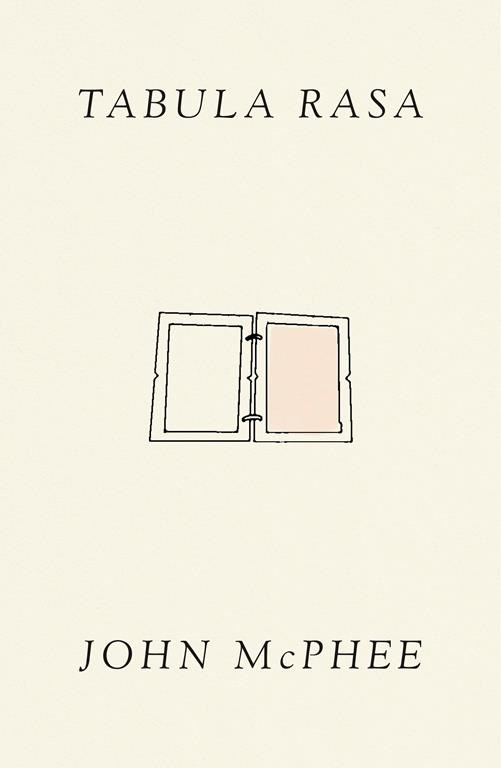
“Tabula Rasa, Volume 1” by John McPhee (Farrar, Straus and Giroux)
What do you do when your writing career lasts seven decades but you haven’t said everything you once thought about saying? If you’re John McPhee, you crack open your notebooks and give fans a taste of the stories you never wrote.
That’s the premise behind “Tabula Rasa,” which the 92-year-old McPhee wryly indicates is “Volume 1” because “the purpose of (the project) is to keep the old writer alive by never coming to an end.”
There are plenty of snippets here that will make readers wish McPhee had indeed delved deeper into particular topics. A longer profile of fellow writer Edward Abbey would have been nice after hearing him recount the stoning of a rabbit at a Princeton colloquium. Or more color from a 1979 Independence Day fireworks party aboard Malcolm Forbes’ yacht in New York’s East River.
Some of the best writing in this collection could be considered memoir — from McPhee’s high school job as a billy club- and flashlight-toting night watchman at the Institute for Advanced Study in Princeton, to finding one-sentence and three-page autobiographies written by his late parents among their possessions.
Most of the writing is no more than vignettes, as in “Back up the Riverbank,” which lists the 19 species of fish McPhee has caught on the Delaware River. He chose to write about only one, the American shad, in his book “The Founding Fish.”
“Tabula Rasa” demonstrates just how broad McPhee’s “tabula” has always been. He’s like an NBA star who always has the green light to shoot. His career as a contributor and staff writer at The New Yorker, begun in 1963 and still going, allows him to pitch editors on topics that interest him, then travel to where those stories are. Sometimes even after all that effort the words never get published, and we’re left with the mere promise of a longer piece, as in the essay called “Beelining.”
“The longest beeline distance in the forty-eight contiguous United States runs from Bellingham, Washington, to Boca Raton, Florida, two thousand seven hundred miles and change.” I don’t know about you, but I’d buy a McPhee book featuring the characters he’d meet along the way. Instead, all we can do is wait for “Volume 2.”