Remembering SARSfest, the concert that revived Toronto, 20 years later
Advertisement
Read this article for free:
or
Already have an account? Log in here »
To continue reading, please subscribe:

Digital Subscription
One year of digital access for only $205*
- Enjoy unlimited reading on winnipegfreepress.com
- Read the E-Edition, our digital replica newspaper
- Access News Break, our award-winning app
- Play interactive puzzles
*First annual payment billed as $205.00 + GST for one year. This annual subscription will automatically renew at $233.00 + GST every 52 weeks (10% off the regular annual price of $259.35). Offer available to new and qualified returning subscribers only. Cancel any time.
To continue reading, please subscribe:
Add Free Press access to your Brandon Sun subscription for only an additional
$1 for the first 4 weeks*
- Enjoy unlimited reading on winnipegfreepress.com
- Read the E-Edition, our digital replica newspaper
- Access News Break, our award-winning app
- Play interactive puzzles
*Your next Brandon Sun subscription payment will increase by $1.00 and you will be charged $17.95 plus GST for four weeks. After four weeks, your payment will increase to $24.95 plus GST every four weeks.
Read unlimited articles for free today:
or
Already have an account? Log in here »
Hey there, time traveller!
This article was published 30/07/2023 (1156 days ago), so information in it may no longer be current.
Twenty years ago, Toronto was reeling from the deadly SARS epidemic that severely impacted the local economy.
As the World Health Organization declared the global outbreak contained and travel advisories for Canada’s largest city were lifted, efforts immediately began to bring people back to Toronto — and one of the country’s biggest music events was born.
On July 30, 2003, an estimated 450,000 to 500,000 people descended on Downsview Park for what was officially called the Molson Canadian Rocks for Toronto concert, but more commonly known as SARSstock or SARSfest.
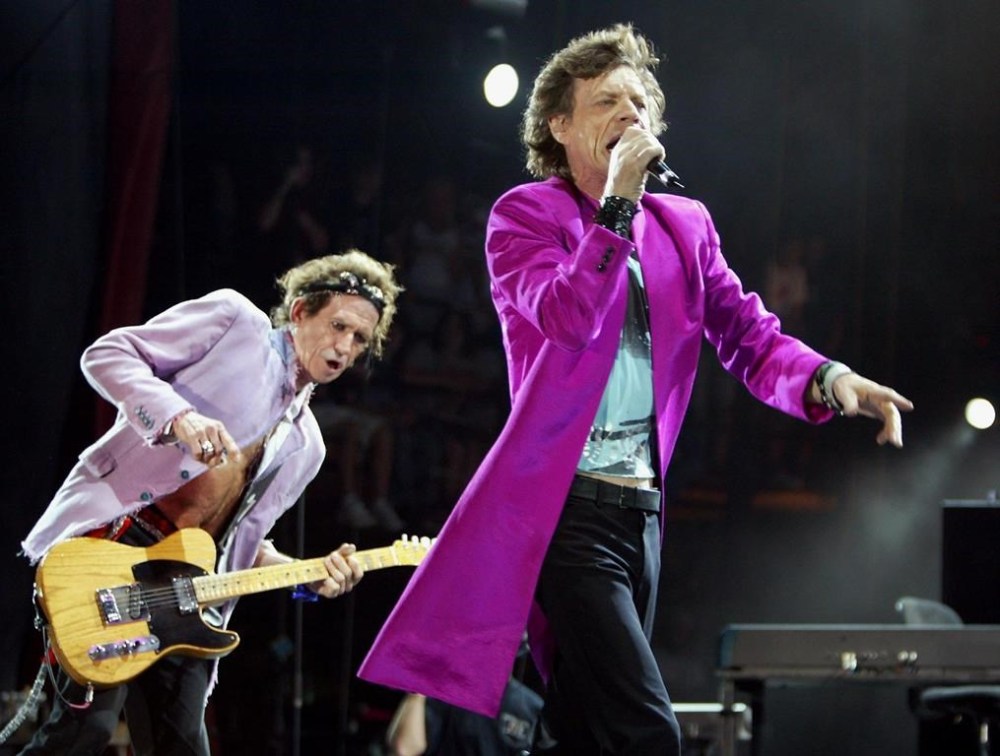
With that attendance, it was the largest concert in Canadian history.
The concert was a fundraiser for health-care and hospitality workers and featured an all-star lineup with The Rolling Stones as the headline act along with AC/DC, Justin Timberlake and Canadian acts such as Rush, The Guess Who, Kathleen Edwards and Blue Rodeo. The tickets were sold for as little as $21.50.
With the gates opening at 8 a.m. and the concert lasting through the early hours of the next morning, attendees of all ages braved the hot weather and crowds. The show was also broadcast countrywide.
Canadian actor Dan Aykroyd hosted the event, with actors Jim Belushi and Catherine O’Hara also making appearances.
SARSfest snowballed into one of the most significant events in Toronto’s history, giving residents and tourists assurance that normal life in the city was back.
The Canadian Press spoke to an organizer, a performer and attendees about their reflections on the event 20 years later.
Dennis Mills
The idea for SARSfest was conceived by then-TorontoMP Dennis Mills, who had beenbrainstorming with the city on how to revive Toronto’s economy following SARS — severe acute respiratory syndrome.
After Mills spoke with Toronto concert promoter and former Rolling Stones manager Michael Cohl, The Rolling Stones quickly agreed to reschedule their European tour to play the show.
But SARSfest was not an easy event to pull off by any means. Mills, who partnered with then-Sen.Jerry Grafstein to organize the concert, says it was successful through co-operation by many levels of government and a series of “lucky breaks.”
Initially, the concert was pitched as a government-funded event, which was heavily criticized at the time.
“Initially, most people in the city wanted to stone me,” Mills said.
“They wanted no part of me because I was suggesting that we the government step up. And then finally when we got Molson’s involved, everybody came on side.”
Once private funding was secured to pay the artists, Mills still had to convince the Toronto police chief, the city and the provincial and federal governments to back the idea of a massive festival being organized in 10 weeks.
“But what happened was the will of our entire community came together and held each other’s hands,” Mills said.
Mills recalls many people pitching in to help with various logistical challenges in organizing the event.
This included convincing Bombardier, which owned the airstrip at the concert grounds, to hold off on shipping their planes out because organizers required an extra day to build the sound infrastructure.
Mills said it was this spirit of collaboration that made the event so successful.
“Here it is 20 years later, and people come up to me and say: ‘I was there, I had a great time,’” he said.
“The people that went to that event by and large had a lasting memory.”
Jim Cuddy
One of the performers at SARSfest was Toronto-based country rockband Blue Rodeo. The band’s frontman Jim Cuddy recalls getting the phone call asking them to perform five days before the concert.
After a performance in Vancouver the evening before,they had to be escorted from the venue in rickshaws, with police running alongside them, so they could make their red-eye flight to Toronto.
Once they arrived, he recalls The Rolling Stones’ guitarist Keith Richards and members of AC/DC walking around backstage, where they all took pictures together.
“A remarkable thing was just the camaraderie among all the bands,” he said.
When Blue Rodeo took to the stage in the late afternoon, Cuddy said he had never seen such a big crowd in his life.
“It was just people as far as you could see,” he said. “Sometimes across a large crowd you feel like there’s whole other satellites of interest, but this felt like everybody was attuned to the stage.”
Cuddy has since looked back at broadcasts of the event and has vivid memories of looking out at the crowd and the energy the bandreceived during their approximately 20-minute set.
“There’s so many moments in my work life that I’ve just had to just open my eyes and just absorb where I am and that was certainly one of them,” he said.
Cuddy said he would have liked to see something similar for the country to unite around – especially following the COVID-19 pandemic.
“I think to celebrate our country, our city, to celebrate music and to give people a thrill, especially now that they’ve had really tough times for two or three years – I think it would be great,” he said.
Dara Avenius and Ashley Castle
Dara Avenius and her friend Ashley Castle have fond memories of the concert. The pair, who were in their early 20s at the time, drove eight hours with Castle’s mom from Upstate New York — their first trip to Canada.
They had heard about the concert only days before and felt they had to go because of the cheap ticket prices and the prospect of seeing AC/DC and The Rolling Stones.
“They were fantastic” Castle said, recalling The Rolling Stones’ performance. “It was incredible. We made our way down as close to the front as we could get and got fairly close to the stage actually.”
Avenius was a fan of AC/DC and recalls the heat of prop flames coming from the stage.
“It was in the centre of summer, so it was really hot,” Avenius said, “I don’t think I’ve ever been to a festival that big ever before.”
The two remember Justin Timberlake’s performance, where anotherwise calm and polite crowd booed him and threw bottles of urine on stage during both his own performance and when he was invited on stage by The Rolling Stones.
“It was like one massive wave of people booing him,” Castle said.
Timberlake told a U.K. talk show in 2020 that he still had a lot of “trauma” from the performance.
But overall, both Castle and Avenius said it was a relatively peaceful environment for a crowd of that size.
Their only complaint was the difficulty they had in finding water throughout the day as they were not allowed to bring a water bottle with them.
“I think for the most part people were, you know, very civilized,” Castle said. “There wasn’t like a lot of, pushing and shoving. I mean, hey, you guys are Canadian. That’s not really your thing.”
Allison Dubé
Allison Dubé from Hamilton, Ont., was 17 years old when she went to SARSfest with her father and brother. She recalls taking a crowded GO train early in the morning to get to the concert. She remembers the day as an exhausting one but unlike anything she has experienced since with the energy of the crowd and performers.
“We grew up listening to classic rock,” she said, adding that she was excited for the “once-in-a-lifetime lineup” of that music genre.
“And that was really cool.”
She said SARS had been a stressful experience, especially for her mom who was a nurse at the time. For her, the concert marked the closing of a chapter in the SARS epidemic.

“It really seemed to put Toronto on the map,” she said.
“Looking at the star power of the people we got to see in one place, like, we’ll never match that again, especially for the price. I think the tickets were like 20 bucks. You can’t buy a beer at a concert anywhere for 20 bucks,” she said.
She has held onto a black T-shirt that she got from the event with a Molson logo and the artistlineup on the back, which serves as a souvenir from an era when many people didn’t have cameras with them.
“I think that’s been a big change in concert going. Like with phones and recording – there wasn’t any so you really had to be there.”
This report by The Canadian Press was first published July 30, 2023.
Related Articles
Brain fog and other long COVID symptoms affect millions. New treatment studies bring hope
Advertisement Advertise With Us
Advertisement Advertise With Us