A rare Truman Capote story from the early 1950s is being published for the first time

Advertisement

Advertise with us

NEW YORK (AP) — Along with such classics as “In Cold Blood” and “Breakfast at Tiffany's,” Truman Capote had a history of work left uncompleted and unpublished.

Read this article for free:


or

Already have an account? Log in here »

To continue reading, please subscribe:

Subscribe and receive a limited-edition Free Press branded hat or tote.

Digital Subscription

One year of digital access for only $205*

  • Enjoy unlimited reading on winnipegfreepress.com
  • Read the E-Edition, our digital replica newspaper
  • Access News Break, our award-winning app
  • Play interactive puzzles

*First annual payment billed as $205.00 + GST for one year. This annual subscription will automatically renew at $233.00 + GST every 52 weeks (10% off the regular annual price of $259.35). Offer available to new and qualified returning subscribers only. Cancel any time.

To continue reading, please subscribe:

Add Free Press access to your Brandon Sun subscription for only an additional

$1 for the first 4 weeks*

  • Enjoy unlimited reading on winnipegfreepress.com
  • Read the E-Edition, our digital replica newspaper
  • Access News Break, our award-winning app
  • Play interactive puzzles
Start now

*Your next Brandon Sun subscription payment will increase by $1.00 and you will be charged $17.95 plus GST for four weeks. After four weeks, your payment will increase to $24.95 plus GST every four weeks.

Hey there, time traveller!
This article was published 21/09/2023 (1109 days ago), so information in it may no longer be current.

NEW YORK (AP) — Along with such classics as “In Cold Blood” and “Breakfast at Tiffany’s,” Truman Capote had a history of work left uncompleted and unpublished.

Capote, who died in 1984 shortly before his 60th birthday, spent much of his latter years struggling to write his planned Proustian masterpiece “Answered Prayers,” of which only excerpts were released. As a young man, he wrote a novel about a love affair between a socialite and a parking lot attendant that was published posthumously under the title “Summer Crossing.”

Shorter work, too, was sometimes set aside, including a piece released this week for the first time.
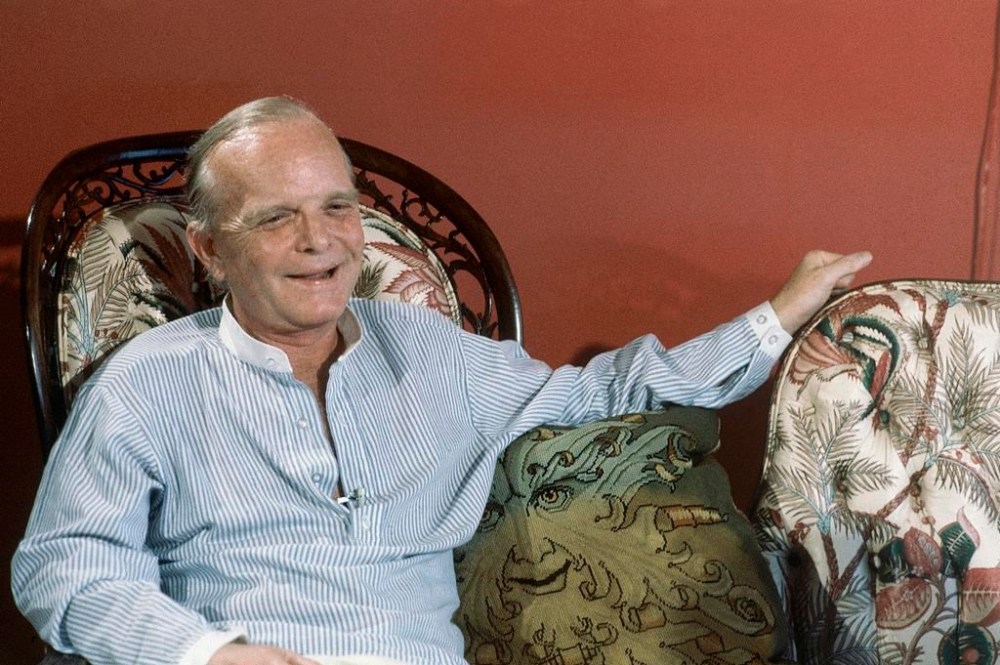
FILE - Author Truman Capote, shown in his apartment on July, 23, 1980. (AP Photo/Nancy Kaye, File)

Capote was in his mid-20s and a rising star when he moved from New York City to Taormina, Sicily, in 1950 and settled in a scenic villa named Fontana Vecchia, once occupied by D.H. Lawrence. Acclaimed for his debut novel, “Other Voices, Other Rooms,” and for his eerie short story “Miriam,” Capote would describe the move to Europe as a needed escape from the American literary scene, which he likened to living inside a light bulb, and an ideal setting to get work done: He wrote the novel “The Grass Harp” in Sicily and worked on numerous short stories.

“I am so happy to be writing stories again — they are my great love,” he wrote to a friend.

One story from Sicily, “Another Day In Paradise,” is a vignette that appears in the new issue of The Strand Magazine. Written at a time of relative contentment for Capote, “Another Day” is a narrative of disillusion and entrapment: The middle-aged American heiress Iris Greentree has used her inheritance — a small one because her mother didn’t trust her with money — to buy a villa in Sicily. She will end up betrayed by the local man who persuaded to invest her money, Signor Carlo Petruzzi, and too broke to sell the home and return to the U.S.

“The past had trained her to envision an affair from a futureless angle; at the most, she hoped such episodes would end in friendship. It was so humiliating that Carlo should have turned out not to be a friend. She’d trusted him to the extent of her capital: let him sell her the land, allowed him to build the villa, supply, at pirate prices, the native paraphernalia that furnished it,” Capote wrote.

“He was an emotional crook and, beyond that, a common gangster who’d pocketed at least half the money supposedly spent on Belle Vista. All this she could forgive him — could, but didn’t. The unforgivable aspect of the ghastly man’s behavior was that it had destroyed the meaning of these lines in her journal: `I belong. At last, somewhere.’”

Much of Capote’s fiction was set in New York or in the American South, but “Another Day in Paradise” has the easy pace, decorative language and cutting — sometimes cruel — humor of his best known work, and the themes of loneliness, fear and regret. Thomas Fahy, author of “Understanding Truman Capote,” says that the author likely related to Iris Greentree’s sense of displacement and alienation.

“He was constantly moving around as a child, from New Orleans to Alabama to New York to Connecticut,” Fahy says. “You could see how his life became very lonely and isolated.”

The Strand has published rare works by Ernest Hemingway, John Steinbeck and many others. Managing editor Andrew Gulli found the Capote story in the Library of Congress, inside an “old red- and gold-scrolled Florentine notebook,” he writes on the Strand editorial page. The handwritten manuscript, worked in pencil, was at times so hard to make out that Gulli needed a transcriber to help prepare it for publication.

Fahy says that Capote’s time in Sicily, where he remained for just over a year, left him with the kind of feelings many authors have when away from their native countries — a heightened sense of distance from home that likely helped inspire “Another Day in Paradise,” and a heightened clarity, which he drew upon for “The Grass Harp” and its memories of his years in Monroeville, Alabama.

Capote biographer Gerard Clarke says that the author moved to Sicily in part because his partner, Jack Dunphy, wanted to live overseas, and because the strong American dollar made Italy more affordable than New York. Neither Clarke nor Fahy could cite a specific real-life model for Iris Greentree, but Capote does refer to a possible inspiration — the aunt of a boy who delivers ice — in his essay “Fontana Vecchia,” written in the early 1950s.

“Blond, witty, the ice boy is a scholarly-looking child of eleven. He has a beautiful young aunt, one of the most attractive girls I have ever known, and I often talk to him about her,” Capote writes. “Why, I wanted to know, does A., the aunt, have no beau? Why is she all alone, never at the dances or the Sunday promenades? The ice boy says it is because his aunt has no use for the local men, that she is very unhappy and longs only to go to America.”

Report Error Submit a Tip

More Stories

Broadening prediction-market gambling a bad idea

Editorial 4 minute read Preview

Broadening prediction-market gambling a bad idea

Editorial 4 minute read Yesterday at 2:01 AM CDT

Let’s make a prediction: sooner or later, when Canadian governments find a way to take their own cut of the action, prediction-contract gambling on everything from sports to entertainment to political decisions is going to come to Canada.

And that’s a horrible, dangerous, pernicious idea.

Unless you have particular access to information — either inside information or strategic information based on skills or education — you’re not likely to make money at it. In fact, structurally, you’re likely to lose. In prediction markets, you basically pay an amount, plus fees from the company involved, to bet on whether something will or will not happen within a certain time frame. The amount you pay for your contract depends on how other people are also betting.

As Wealthsimple describes it, “You buy whichever side you think is right. Prices move with demand, so if the market leans towards one outcome, the more that side costs. If a lot of people are backing the TSX to finish above 38,000, yes gets more expensive and no gets cheaper.”

Read
Yesterday at 2:01 AM CDT

A rare Truman Capote story from the early 1950s is being published for the first time

Hillel Italie, The Associated Press 5 minute read Preview

A rare Truman Capote story from the early 1950s is being published for the first time

Hillel Italie, The Associated Press 5 minute read Friday, Sep. 22, 2023

NEW YORK (AP) — Along with such classics as “In Cold Blood” and “Breakfast at Tiffany's,” Truman Capote had a history of work left uncompleted and unpublished.

Capote, who died in 1984 shortly before his 60th birthday, spent much of his latter years struggling to write his planned Proustian masterpiece “Answered Prayers,” of which only excerpts were released. As a young man, he wrote a novel about a love affair between a socialite and a parking lot attendant that was published posthumously under the title “Summer Crossing.”

Shorter work, too, was sometimes set aside, including a piece released this week for the first time.

Capote was in his mid-20s and a rising star when he moved from New York City to Taormina, Sicily, in 1950 and settled in a scenic villa named Fontana Vecchia, once occupied by D.H. Lawrence. Acclaimed for his debut novel, “Other Voices, Other Rooms,” and for his eerie short story “Miriam,” Capote would describe the move to Europe as a needed escape from the American literary scene, which he likened to living inside a light bulb, and an ideal setting to get work done: He wrote the novel “The Grass Harp” in Sicily and worked on numerous short stories.

Read
Friday, Sep. 22, 2023

Province looks to seize notorious drug den

Erik Pindera 5 minute read Preview

Province looks to seize notorious drug den

Erik Pindera 5 minute read Yesterday at 12:00 PM CDT

Provincial justice officials are trying to seize a Dominion Street drug den that has been the source of trouble in the West End for years.

The owner of 982 Dominion St., 45-year-old Robert Edward Johnson, was most recently arrested in June along with several others after a lengthy Winnipeg Police investigation into thefts and illicit drug sales connected to the house.

“The residence has a reputation within the neighbourhood as being a location where individuals habitually attend for the purpose of purchasing and/or consuming controlled substances,” reads a statement of claim filed by the province’s director of civil forfeiture in the Court of King’s Bench last week.

“For several years, the residence has been associated with criminal activity, violence, and disorder, resulting in numerous police attendances and complaints from members of the surrounding community.”

Read
Yesterday at 12:00 PM CDT

Board game company charts winning path

Aaron Epp 5 minute read Preview

Board game company charts winning path

Aaron Epp 5 minute read Friday, Oct. 2, 2026

Dennis Northcott has launched a game without frontiers.

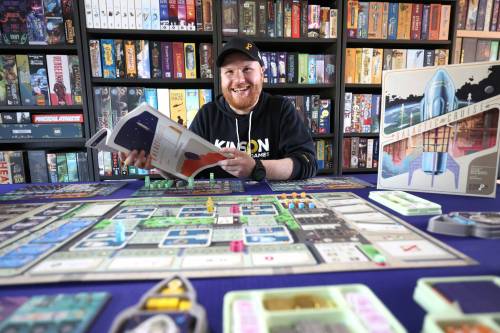
The Winnipeg entrepreneur is the co-designer of Galactic Cruise, a board game published last year by Kinson Key Games LLC, the business he co-founded. Since its release, Galactic Cruise has been translated into 11 languages and sold around 50,000 copies worldwide.

It’s also one of three finalists for this year’s Deutsche Spiele Preis, a prestigious community-voted board game award. Northcott will travel to Essen, Germany, later this month, where the winner will be announced at Spiel Essen, an annual board game trade fair.

“It’s been amazing,” Northcott said of the response to Galactic Cruise during an interview in his Island Lakes neighbourhood home earlier this week. “The sales have been great, but it’s also been amazing in terms of people giving their reviews.”

Read
Friday, Oct. 2, 2026

’Disgusting’ posters being investigated by police

Morgan Modjeski 4 minute read Yesterday at 2:22 PM CDT

The Winnipeg Police Service major crimes unit is investigating what some have labelled offensive and hateful posters on full-display at a Winnipeg home.

One of the people irked by the display is Gracie Garrett. She’s has lived on Ashburn Street in Winnipeg’s Minto neighbourhood for almost ten years. She’s never felt unsafe in the neighbourhood before, but now, a set of posters plastered on a nearby house are making her feel uneasy.

The five signs, posted facing the street prominently on a front window, contain a slur, refer to Nazis as “heroes” and call Muslims, Christians and other groups “evil.”

Learning of the signs Friday, Garrett said she’ll be reporting the posters to police, as she worries they incite and promote violence.

Gordon Bell rings in a century

Maggie Macintosh 13 minute read Preview

Gordon Bell rings in a century

Maggie Macintosh 13 minute read Friday, Oct. 2, 2026

Mischka Valencia had gotten used to the hum of heavy machinery at Gordon Bell High School.

“Ever since I’ve been here, it’s all been under construction,” the Grade 12 student said, standing on the sidelines of the brightly painted revamped outdoor basketball court. “I had no idea this was a court.”

The Filipina teenager landed in Winnipeg several months after the inner-city campus had transformed into a construction site.

It was the fall of 2023 and Mischka’s priorities were fitting in, befriending classmates and learning a third language via first-period French.

Read
Friday, Oct. 2, 2026