Scientists pry a secret from the `Mona Lisa’ about how Leonardo painted the masterpiece

Advertisement

Advertise with us

PARIS (AP) — The “Mona Lisa” has given up another secret.

Read this article for free:


or

Already have an account? Log in here »

To continue reading, please subscribe:

Subscribe and receive a limited-edition Free Press branded hat or tote.

Digital Subscription

One year of digital access for only $205*

  • Enjoy unlimited reading on winnipegfreepress.com
  • Read the E-Edition, our digital replica newspaper
  • Access News Break, our award-winning app
  • Play interactive puzzles

*First annual payment billed as $205.00 + GST for one year. This annual subscription will automatically renew at $233.00 + GST every 52 weeks (10% off the regular annual price of $259.35). Offer available to new and qualified returning subscribers only. Cancel any time.

To continue reading, please subscribe:

Add Free Press access to your Brandon Sun subscription for only an additional

$1 for the first 4 weeks*

  • Enjoy unlimited reading on winnipegfreepress.com
  • Read the E-Edition, our digital replica newspaper
  • Access News Break, our award-winning app
  • Play interactive puzzles
Start now

*Your next Brandon Sun subscription payment will increase by $1.00 and you will be charged $17.95 plus GST for four weeks. After four weeks, your payment will increase to $24.95 plus GST every four weeks.

Hey there, time traveller!
This article was published 11/10/2023 (1087 days ago), so information in it may no longer be current.

PARIS (AP) — The “Mona Lisa” has given up another secret.

Using X-rays to peer into the chemical structure of a tiny speck of the celebrated work of art, scientists have gained new insight into the techniques that Leonardo da Vinci used to paint his groundbreaking portrait of the woman with the exquisitely enigmatic smile.

The research, published Wednesday in the Journal of the American Chemical Society, suggests that the famously curious, learned and inventive Italian Renaissance master may have been in a particularly experimental mood when he set to work on the “Mona Lisa” early in the 16th century.
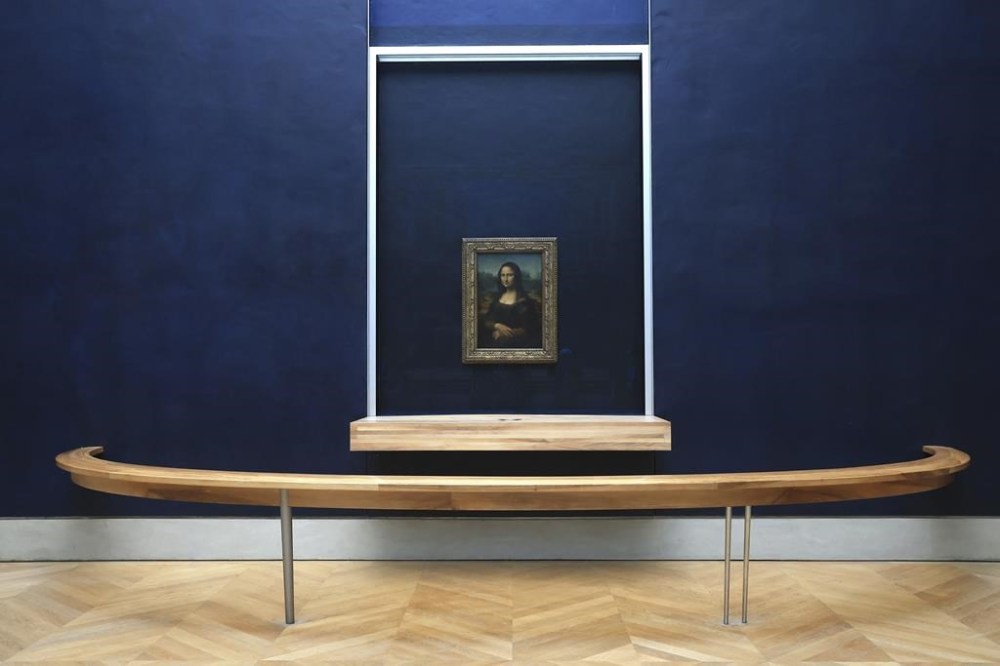
FILE - The Mona Lisa by Leornado da Vinci is pictured at the Louvre museum Wednesday, June 7, 2023 in Paris. Using X-rays to peer into the chemical structure of a tiny speck of the celebrated work of art, scientists have gained new insight into the techniques that Leonardo da Vinci used to paint his groundbreaking portrait of the woman with the exquisitely enigmatic smile. (AP Photo/Aurelien Morissard, Pool, File)

The oil-paint recipe that Leonardo used as his base layer to prepare the panel of poplar wood appears to have been different for the “Mona Lisa,” with its own distinctive chemical signature, the team of scientists and art historians in France and Britain discovered.

“He was someone who loved to experiment, and each of his paintings is completely different technically,” said Victor Gonzalez, the study’s lead author and a chemist at France’s top research body, the CNRS. Gonzalez has studied the chemical compositions of dozens of works by Leonardo, Rembrandt and other artists.

“In this case, it’s interesting to see that indeed there is a specific technique for the ground layer of ‘Mona Lisa,’” he said in an interview with The Associated Press.

Specifically, the researchers found a rare compound, plumbonacrite, in Leonardo’s first layer of paint. The discovery, Gonzalez said, confirmed for the first time what art historians had previously only hypothesized: that Leonardo most likely used lead oxide powder to thicken and help dry his paint as he began working on the portrait that now stares out from behind protective glass in the Louvre Museum in Paris.

Carmen Bambach, a specialist in Italian art and curator at New York’s Metropolitan Museum of Art, who was not involved in the study, called the research “very exciting” and said any scientifically proven new insights into Leonardo’s painting techniques are “extremely important news for the art world and our larger global society.”

Finding plumbonacrite in the “Mona Lisa” attests “to Leonardo’s spirit of passionate and constant experimentation as a painter – it is what renders him timeless and modern,” Bambach said by email.

The paint fragment from the base layer of the “Mona Lisa” that was analyzed was barely visible to the naked eye, no larger than the diameter of a human hair, and came from the top right-hand edge of the painting.

The scientists peered into its atomic structure using X-rays in a synchrotron, a large machine that accelerates particles to almost the speed of light. That allowed them to unravel the speck’s chemical make-up. Plumbonacrite is a byproduct of lead oxide, allowing the researchers to say with more certainty that Leonardo likely used the powder in his paint recipe.

“Plumbonacrite is really a fingerprint of his recipe,” Gonzalez said. “It’s the first time we can actually chemically confirm it.”

After Leonardo, Dutch master Rembrandt may have used a similar recipe when he was painting in the 17th century; Gonzalez and other researchers have previously found plumbonacrite in his work, too.

“It tells us also that those recipes were passed on for centuries,” Gonzalez said. “It was a very good recipe.”

Leonardo is thought to have dissolved lead oxide powder, which has an orange color, in linseed or walnut oil by heating the mixture to make a thicker, faster-drying paste.

“What you will obtain is an oil that has a very nice golden color,” Gonzalez said. “It flows more like honey.”

But the “Mona Lisa” — said by the Louvre to be a portrait of Lisa Gherardini, the wife of a Florentine silk merchant — and other works by Leonardo still have other secrets to tell.

“There are plenty, plenty more things to discover, for sure. We are barely scratching the surface,” Gonzalez said. “What we are saying is just a little brick more in the knowledge.”


Report Error Submit a Tip

More Stories

Sisters relieved hospital takes accountability after mother’s death

Scott Billeck 5 minute read Preview

Sisters relieved hospital takes accountability after mother’s death

Scott Billeck 5 minute read Yesterday at 6:39 PM CDT

Eight months after losing their mother, two Winnipeg sisters say an internal hospital review has finally given them something they had been seeking since her death: accountability.

Chelsea Mann and Samantha Burns said St. Boniface Hospital officials acknowledged mistakes were made in the care of their mother, Judy Burns, during a recent meeting to discuss the findings of a critical incident review into her death.

The acknowledgement marked a significant departure from an earlier meeting with hospital officials, when they felt their concerns were largely dismissed.

Burns, 68, died on Jan. 21, three days after being admitted, after experiencing rectal bleeding.

Read
Yesterday at 6:39 PM CDT

Face up to fact you blew it with ex-wife

Maureen Scurfield 4 minute read Yesterday at 2:01 AM CDT

DEAR MISS LONELYHEARTS: My ex-wife just moved back to town and looks like a changed woman. She spent years married to me, and our kids just graduated in a city where we once lived together. That was without help from me, other than minor financial stuff.

She has found a great new job back in Winnipeg and she’ll do very well. I admire her more than any other woman I ever met, but she’s not interested in me at all.

I once had a solid, responsible job and then got into drinking, and I cheated on her. That’s why she left town. Now I’ve been sober and sorry for many years.

I asked her last weekend if I could take her out to dinner and she said no and changed the subject.

There’s fast and then there’s this

Kelly Taylor 5 minute read Preview

There’s fast and then there’s this

Kelly Taylor 5 minute read 2:00 AM CDT

The advice was not unexpected but it was surprising considering it applied to a vehicle weighing almost 6,000 pounds.

“Before you let off the brake, put your head against the headrest,” the instructor said.

We — myself and a handful of Porsche customers gathered at Red River Exhibition Park — were about to experience launch control on the 2027 Porsche Cayenne Turbo Electric.

Launch control works like this: you put the vehicle in Drive, hold the brake as hard as you can with your left foot and quickly depress the accelerator pedal as far as it goes and hold it.

Read
2:00 AM CDT

Today’s horoscope

Georgia Nicols 4 minute read Preview

Today’s horoscope

Georgia Nicols 4 minute read 2:00 AM CDT

MOON ALERT: Caution! Avoid shopping (except food and gas) and important decisions until after 3:30 p.m. today. After that, the moon moves from Gemini into Cancer.

ARIES (March 21-April 19)

This is a creative day for you. Because you’re the artisan of the zodiac, tap into your talents and make some art or explore one of your many hobbies. However, avoid intense discussions with partners, spouses and friends. Keep things light.

TAURUS (April 20-May 20)

Read
2:00 AM CDT

As political jockeying begins, don’t forget job No. 1

Editorial 4 minute read Preview

As political jockeying begins, don’t forget job No. 1

Editorial 4 minute read Yesterday at 2:01 AM CDT

The goal, for all parties in a democracy, is to make the best legislation and bring in the strongest policy forward for voters and citizens.

Read
Yesterday at 2:01 AM CDT

Time for AI guardrails is right now

Editorial 4 minute read Preview

Time for AI guardrails is right now

Editorial 4 minute read 2:00 AM CDT

The genie is most definitely out of the bottle.

And while there’s little chance of putting it back in, we should be very concerned that the people who released it from the bottle are now frantically warning us that it has become disinclined to do their — or our — bidding and seems instead to be increasingly intent on following its own whims and granting wishes to itself.

The figurative genie, in this case, is artificial intelligence, or AI, and in recent weeks many of the tech geniuses responsible for its development and introduction into the digital-information realm have begun asking the U.S. government and even the United Nations to impose limits on the pace and breadth of its growth.

Their fear is that, as AI very quickly continues to advance and develops the ability to make independent decisions and essentially think for itself, it will cease to be a tool controlled by its creators and instead will become a species unto itself that might eventually decide it’s better off without humans continually messing things up.

Read
2:00 AM CDT