Denmark’s queen is abdicating the throne. More royals have been doing that lately
Advertisement
Read this article for free:
or
Already have an account? Log in here »
To continue reading, please subscribe:

Digital Subscription
One year of digital access for only $205*
- Enjoy unlimited reading on winnipegfreepress.com
- Read the E-Edition, our digital replica newspaper
- Access News Break, our award-winning app
- Play interactive puzzles
*First annual payment billed as $205.00 + GST for one year. This annual subscription will automatically renew at $233.00 + GST every 52 weeks (10% off the regular annual price of $259.35). Offer available to new and qualified returning subscribers only. Cancel any time.
To continue reading, please subscribe:
Add Free Press access to your Brandon Sun subscription for only an additional
$1 for the first 4 weeks*
- Enjoy unlimited reading on winnipegfreepress.com
- Read the E-Edition, our digital replica newspaper
- Access News Break, our award-winning app
- Play interactive puzzles
*Your next Brandon Sun subscription payment will increase by $1.00 and you will be charged $17.95 plus GST for four weeks. After four weeks, your payment will increase to $24.95 plus GST every four weeks.
Read unlimited articles for free today:
or
Already have an account? Log in here »
Hey there, time traveller!
This article was published 13/01/2024 (998 days ago), so information in it may no longer be current.
Queen Margrethe II will become Denmark’s first monarch to abdicate in nearly 900 years when she hands over the throne to her son, Crown Prince Frederik, on Sunday. Margrethe always maintained during her 52-year-reign that she wouldn’t quit, but back surgery and other ailments left her unable to undertake as much as she could in the past. “Time takes its toll,” she said, announcing her plans to abdicate in a New Year’s address that stunned the kingdom.
For centuries monarchs were far more likely to die from disease or violence than to hand over titles that carried real power before the democratic era of constitutional monarchies.
But as life expectancy grows ever longer, even a schedule of symbolic duties can be exhausting in a monarch’s later years. Britain’s Queen Elizabeth II stuck by a commitment she made as a young woman to devote her life to service — and reigned 70 years before dying on the throne at the age of 96 in 2022.
“Abdication has become more common because people are becoming older and older,” said Lars Hovbakke Sørensen, a Danish historian and lecturer. “Therefore, we have more old monarchs in Europe and (thus) older crown princes and crown princesses.”
He cited as an example Britain’s King Charles III who took over after his mother, Queen Elizabeth II, died when he was 74.
Here is a look at some sovereigns who have handed over their thrones to their younger and more energetic heirs in the past years.
AKIHITO OF JAPAN
Emperor Akihito abdicated in 2019 at the age of 85, citing age and declining health in his decision to hand over the throne to his son Emperor Naruhito. It was Japan’s first abdication in two centuries.
Akihito had devoted his three-decades long reign to making amends for a war fought in his father’s name while bringing the aloof monarchy closer to the people. His era was the first in Japan’s modern history without war.
Akihito prepared his nation for the step by expressing a wish years earlier to abdicate while he was still well and capable. He won overwhelming public support for stepping down from a role with symbolic but no real political power, and the nation celebrated the imperial succession.
The emperor emeritus is 90 years old.
JUAN CARLOS OF SPAIN
Juan Carlos I, now 86, abdicated in disgrace in 2014. He had once been so popular that many Spaniards would say that they were “not monarchists, but Juan Carlists.” Those who remember him in his younger years recall the key role he played in ensuring Spain’s safe transition from decades of Francisco Franco’s dictatorship to a modern constitutional monarchy.
It helped that a pliant press covered up his long history of affairs and indiscretions.
His relations with the Spanish public began to crack in 2012, when the former patron of the World Wide Fund for Nature injured himself on an elephant hunting trip in Botswana while his subjects back home were living through a full-blown economic crisis.
Some Spaniards began to wonder if it was time for Spain’s third republic of the past 150 years.
Juan Carlos left Spain in August 2020 amid investigations into his involvement in alleged financial wrongdoings. Spanish prosecutors had to shelve their case after concluding that the alleged misbehavior, involving millions of euros in undeclared accounts, happened when Juan Carlos had legal immunity as king.
His behavior is widely viewed as a public embarrassment that tarnished the crown, and King Felipe has tried to rebuild the reputation of the House of Bourbon. Felipe renounced his inheritance from Juan Carlos and stripped him of his state-provided subsidy in 2020 in a groundbreaking move to distance himself from his father.
BEATRIX OF THE NETHERLANDS
Queen Beatrix of the Netherlands may have started a trend toward royals retiring when she announced her abdication in 2013, shortly before turning 75 and after a 33-year reign. In explaining her decision to hand over the throne to her son, King Willem-Alexander, she said she believed it was time to pass responsibility to a new generation.
Beatrix was quickly followed in her abdication by her Belgian counterpart, King Albert II, and not long after that by Spain’s Juan Carlos.
Abdication is the norm at the egalitarian House of Orange. Beatrix’s mother — Juliana — and her mother’s mother — Wilhelmina — all stood down and eased into retirement.
ALBERT II OF BELGIUM
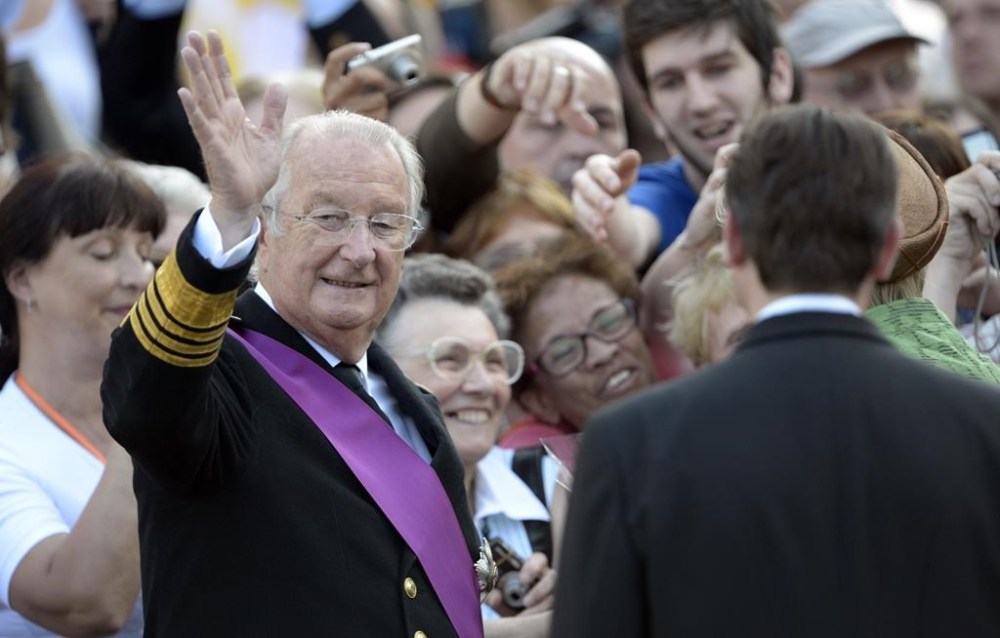
Three months after Beatrix’ abdication, King Albert II decided to hand over the throne of his fractious kingdom to his son, Philippe. At 79, Albert said his age and health no longer allowed him to fulfill all of his duties.
The step in 2013 ended nearly two decades of steady reign over a country divided between northern Dutch-speaking Flanders and French-speaking southern Wallonia.
He was the first king to voluntarily abdicate since Belgium gained its independence in 1830.
Before his abdication, King Albert II fought rumors that he had fathered a daughter out of wedlock, though several years after his retirement he recognized the artist formerly known as Delphine Boël as his daughter and she became recognized as Her Royal Highness Princess Delphine.
SHEIK HAMAD BIN KHALIFA AL THANI OF QATAR
Sheik Hamad bin Khalifa Al Thani of Qatar was also among the rash of royals who retired in 2013, handing over power to his fourth son.
At age 61, he stressed the importance of shifting leadership to more youthful hands. The move was viewed as an indirect acknowledgment of the demands for reforms opened by the Arab Spring, which began in 2011 with successful revolutions ousting leaders in Tunisia and Egypt and spread across the Arab world.
His decision to retire went counter a tradition among the Gulf’s other ruling dynasties of power being surrendered through death or palace coup.
POPE BENEDICT
Pope Benedict XVI shocked the Catholic world in 2013 by becoming the first pontiff in 600 years to step down. Though he wasn’t a king, a pope has the robes and many other trappings of royalty — and more real power than many monarchs in the world today.
Benedict cited declining health due to old age when he took that step at the age of 85. He lived another decade, dying just over a year ago at age 95.
Benedict chose Feb. 11, 2013 — a Vatican holiday, with a routine audience with his cardinals — to make the historic announcement in Latin that he would become the first pope since Gregory XII in 1415 to resign.
He largely lived out his pledge to spend the rest of his life in prayer and meditation in a monastery in the Vatican gardens.