How Chinese science fiction went from underground magazines to Netflix extravaganza
Advertisement
Read this article for free:
or
Already have an account? Log in here »
To continue reading, please subscribe:

Digital Subscription
One year of digital access for only $205*
- Enjoy unlimited reading on winnipegfreepress.com
- Read the E-Edition, our digital replica newspaper
- Access News Break, our award-winning app
- Play interactive puzzles
*First annual payment billed as $205.00 + GST for one year. This annual subscription will automatically renew at $233.00 + GST every 52 weeks (10% off the regular annual price of $259.35). Offer available to new and qualified returning subscribers only. Cancel any time.
To continue reading, please subscribe:
Add Free Press access to your Brandon Sun subscription for only an additional
$1 for the first 4 weeks*
- Enjoy unlimited reading on winnipegfreepress.com
- Read the E-Edition, our digital replica newspaper
- Access News Break, our award-winning app
- Play interactive puzzles
*Your next Brandon Sun subscription payment will increase by $1.00 and you will be charged $17.95 plus GST for four weeks. After four weeks, your payment will increase to $24.95 plus GST every four weeks.
Read unlimited articles for free today:
or
Already have an account? Log in here »
Hey there, time traveller!
This article was published 28/02/2024 (951 days ago), so information in it may no longer be current.
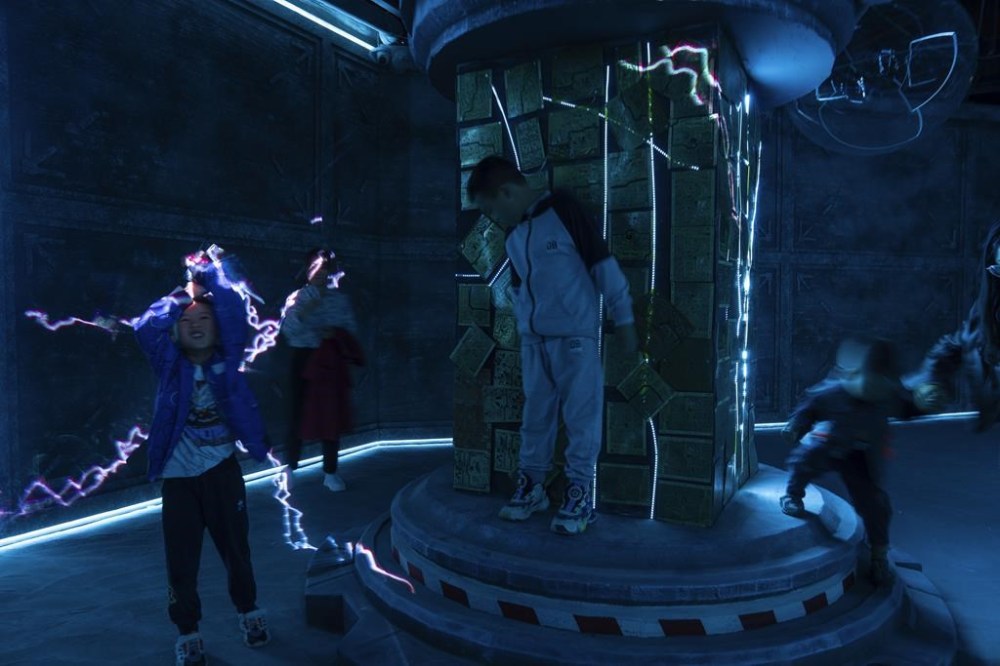
CHENGDU, China (AP) — For a few days in October 2023, the capital of the science fiction world was Chengdu, China. Fans traveled from around the world as Worldcon, sci-fi’s biggest annual event, was held in the country for the first time.
It was a rare moment when Chinese and international fans could get together without worrying about the increasingly fraught politics of China’s relationship with the West or Beijing’s tightening grip on expression.
For Chinese fans like Tao Bolin, an influencer who flew from the southern province of Guangdong for the event, it felt like the world finally wanted to read Chinese literature. Fans and authors mingled in a brand new Science Fiction Museum, designed by the prestigious Zaha Hadid Architects in the shape of a huge steel starburst over a lake.
But three months later, much of that goodwill turned sour as a scandal erupted over allegations that organizers of the Hugo awards — sci-fi’s biggest prize, awarded at Worldcon — disqualified candidates to placate Chinese censors.
The event embodied the contradictions that Chinese science fiction has faced for decades. In 40 years, it’s gone from a politically suspect niche to one of China’s most successful cultural exports, with author Liu Cixin gaining an international following that includes fans like Barack Obama and Mark Zuckerberg. But it’s had to overcome obstacles created by geopolitics for just as long.
With a big-budget Netflix adaptation of his “The Three-Body Problem” set to drop in March, produced by the same showrunners as “Game of Thrones,” Chinese sci-fi could reach its biggest audience yet.
Getting there took decades of work by dedicated authors, editors and cultural bureaucrats who believed that science fiction could bring people together.
“Sci-fi has always been a bridge between different cultures and countries,” says Yao Haijun, the editor-in-chief of Science Fiction World, China’s oldest sci-fi magazine.
A SMALL STEP FOR A PROVINCIAL BUREAUCRAT
Chinese sci-fi’s journey abroad started with another convention in Chengdu three decades ago, but politics nearly derailed that one before it could get off the ground.
Science Fiction World planned to host a writers’ conference in the city in 1991. But as news of the brutal crackdown on student protesters in Beijing’s Tiananmen Square circled the globe in 1989, foreign speakers were dropping out.
The magazine sent a small delegation to Worldcon 1990, hosted in The Hague, to save the conference.
Its leader was Shen Zaiwang, an English translator in Sichuan province’s Foreign Affairs Department who fell in love with sci-fi as a child. He packed instant noodles for the weeks-long train journey across China and the fragmenting Soviet Union.
In The Hague, Shen used toy pandas and postcards of Chengdu to make the case that the city — more than 1,800 kilometers (1,000 miles) from Beijing — was friendly and safe to visit.
“We tried to introduce our province as a safe place, and that the people in Sichuan really hope the foreign science fiction writers can come and have a look and encourage Chinese young people to read more science fiction novels,” Shen says.
In the end, a dozen foreign authors attended the conference. It was a small start, but it was more than anyone could have imagined a few years earlier.
A GIANT LEAP FOR THE GENRE
China’s science fiction community faced suspicion at home as well.
Science fiction magazines such as Chengdu’s Science Fiction World started being launched in the late 1970s and early 1980s, as China began opening to the world after the Mao era.
But in the early 1980s, Beijing initiated a nationwide “spiritual pollution cleaning” campaign to quash the influence of the decadent West, and sci-fi was accused of being unscientific and out of line with official ideology. Most of the young publications were shuttered.
Science Fiction World’s editors kept going.
“They believed if China wanted to develop, it needed to be an innovative country — it needed science fiction,” Yao, the editor, said in a recorded public address in 2017.
In 1997, the magazine organized another international event in Beijing, headlined by U.S. and Russian astronauts. The conference got attention in the Chinese press, giving sci-fi a cool new aura of innovation, exploration and imagination, Yao says.
LIU CIXIN’S BIG BANG
China’s growing sci-fi fandom was devouring translated works from abroad, but few people abroad were reading Chinese stories. Liu Cixin was going to change that.
A soft-spoken engineer at a power plant in the coal-dominated province of Shanxi, his stories were hits with genre fans.
But “The Three-Body Problem,” first serialized by Science Fiction World in 2006, reached a new level of popularity, says Yao.
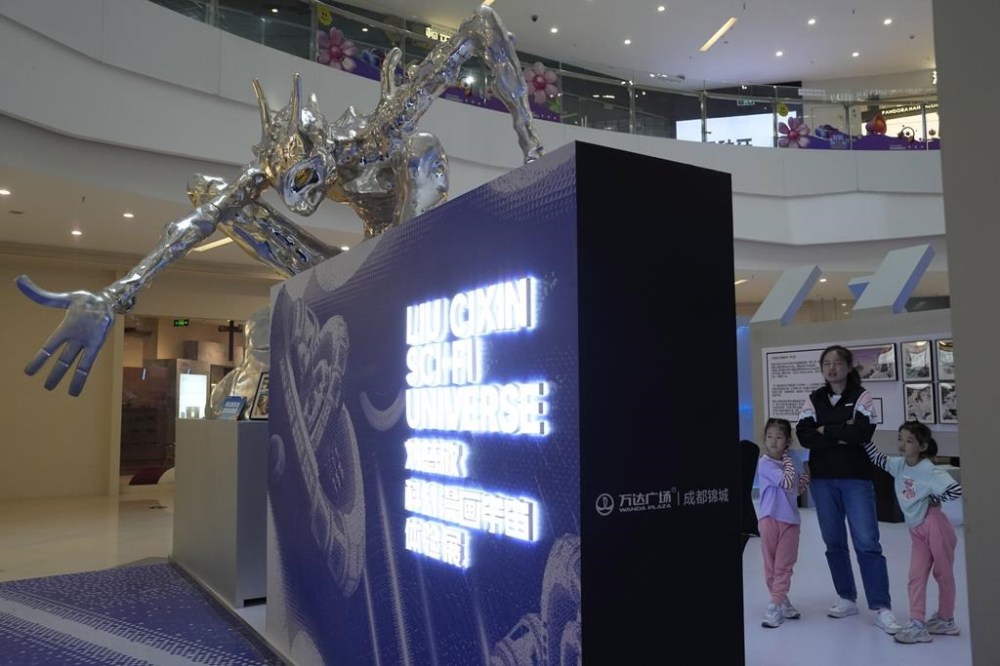
Authorities took note. The China Educational Publications Import & Export Corporation, the state-owned publications exporter, picked up the novel and its two sequels.
The translations were intended from the start as “a big cultural export from China to the world, something very highly visible,” says Joel Martinsen, who translated the trilogy’s second volume, “The Dark Forest.”
But no one could have anticipated the critical and popular success: In 2015, Liu became the first Asian author to win a Hugo Award for a novel.
“There was something quite fresh and raw and eye-catching, and even sometimes very dark and ruthless in his work,” says Song Mingwei, a professor of Chinese literature at Wellesley College.
The next year, Beijing-based writer Hao Jingfang beat Stephen King to win a Hugo for short fiction with a story about social inequality in a surreal version of China’s capital.
INTERCEPTED BY BEIJING
Liu’s translations were also a political breakthrough for the genre: In two decades, it had gone from barely tolerated to a flagship export of China’s official cultural machine.
The government encouraged the growth of an “industry” spanning movies, video games, books, magazines and exhibits, and set up an official research center in 2020 to track its rise.
Worldcon Chengdu was to be the crowning achievement of these efforts.
The event itself was seen as a success. But in January, when the Hugo committee disclosed vote totals, the critics’ suspicions seemed to be confirmed. It turned out several candidates had been disqualified, raising censorship concerns. They included New York Times bestselling authors R. F. Kuang and Xiran Jay Zhao, both politically active writers with family ties to China.
Leaked internal emails — which The Associated Press could not independently verify — appeared to show that the awards committee spent weeks checking nominees’ works and social media profiles for statements that could offend Beijing, and sent reports on these to Chinese counterparts, according to an investigation by two sci-fi authors and journalists. They don’t show how the reports were used or who made the decisions about disqualification.
The Hugo awards organizers did not respond to requests for comment by the AP.
A NEW HOPE?
Despite the frictions, Chinese sci-fi remains poised to continue its international rise. Netflix’s adaptation of the “The Three-Body Problem” could bring it to a vast new audience, a coming-out orders of magnitude bigger than Shen Zaiwang’s trip to The Hague.
And insiders like Song and Yao are looking forward to a new generation of Chinese sci-fi authors that’s starting to be translated into English now.
It’s led by younger, female writers who were educated abroad such as Regina Kanyu Wang and Tang Fei. Their works explore themes that resonate with younger audiences, Song says, such as gender fluidity and climate catastrophes.

“When doing anything with the endorsement of either the market or the government, imagination can dry up very quickly,” Song says. “I think often the important thing happens on the margin.”
Yao continues to believe in sci-fi’s role as a bridge between cultures, even in turbulent times.
“As long as there is communication,” he says, “we’ll be able to find some things in common.”
___
AP researcher Wanqing Chen contributed to this report.