Montreal artists and venue owners support 24-hour party district — with reservations
Advertisement
Read this article for free:
or
Already have an account? Log in here »
To continue reading, please subscribe:

Digital Subscription
One year of digital access for only $205*
- Enjoy unlimited reading on winnipegfreepress.com
- Read the E-Edition, our digital replica newspaper
- Access News Break, our award-winning app
- Play interactive puzzles
*First annual payment billed as $205.00 + GST for one year. This annual subscription will automatically renew at $233.00 + GST every 52 weeks (10% off the regular annual price of $259.35). Offer available to new and qualified returning subscribers only. Cancel any time.
To continue reading, please subscribe:
Add Free Press access to your Brandon Sun subscription for only an additional
$1 for the first 4 weeks*
- Enjoy unlimited reading on winnipegfreepress.com
- Read the E-Edition, our digital replica newspaper
- Access News Break, our award-winning app
- Play interactive puzzles
*Your next Brandon Sun subscription payment will increase by $1.00 and you will be charged $17.95 plus GST for four weeks. After four weeks, your payment will increase to $24.95 plus GST every four weeks.
Read unlimited articles for free today:
or
Already have an account? Log in here »
Hey there, time traveller!
This article was published 18/05/2024 (869 days ago), so information in it may no longer be current.
MONTREAL – It’s 2:55 a.m. on a recent evening at Blue Dog bar, in Montreal’s Plateau district. A bell rings, the bartender shouts, “last call,” and a handful of people wander to the bar for one more drink.
Slight variations of this scene occur across the city every night, as bars and venues are prohibited — most of the time — from selling alcohol past 3 a.m. But with an eye to attracting nocturnal tourists and boosting the local economy, the City of Montreal is looking to change that.
Earlier this year, the administration of Mayor Valérie Plante held public consultations for a 24-hour nightlife district to be created in a still-undetermined sector of downtown. Also under consultation was Plante’s plan for pockets of “nocturnal zones” across the city, where specific venues can stay open all night under certain conditions.

And while artists and venue owners are interested in the idea, they have some reservations. Some worry whether staying open all night is worth the trouble; others question whether city-sanctioned 24-hour events will be expensive and crowd out the underground parties for which Montreal is famous.
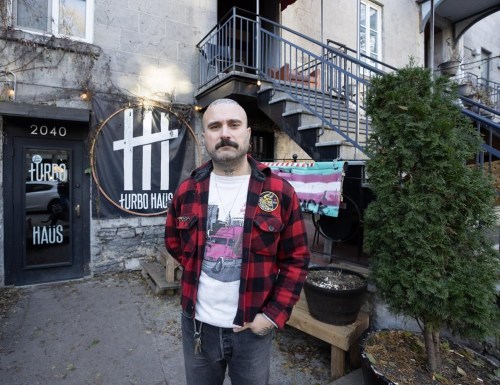
“There’s not a lot that is good that happens after 5 a.m.,” said Sergio Da Silva, owner of popular bar and venue Turbo Haus, located in Montreal’s entertainment district.
On some occasions over the years, the city has permitted Turbo Haus and other bars to sell alcohol early into the morning hours, and during those times he and his employees have made more money. Having the option to stay open later can be a fun way to extend the night “when the moment calls for it,” he said.
But Da Silva doesn’t want to regularly stay open past 3 a.m. because by that time “people have already done what they’re going to be doing. They’re either a little too high, or a little too drunk, and it’s just time to get everybody home and be done with it.”
Over the years Montreal has experimented with legal late-night parties, including during the annual Nuit Blanche, one night a year when some bars and venues can stay open after 3 a.m.
Casa del Popolo, two kilometres north of Turbo Haus, on St-Laurent Boulevard, closed at 5 a.m. last February for Nuit Blanche. Owner Mauro Pezzente said he didn’t make much more money, but closing up was easier because by that time everyone was ready to leave.
“There’s no one sticking around, no one complaining, asking for that one more drink,” Pezzente said.
An open secret in Montreal is that all-night parties have been happening for decades, but they are illegal — and cheap.
Da Silva says he worries that if city-sanctioned 24-hours events become more common, they would threaten the underground parties.
“Once there’s money behind it, that’s when they start calling the cops on somebody else,” he said.
“When someone else has an investment in it, they’re going to be like, ‘Well, I don’t want you throwing these authentic, cool, underground raves. I want you to come to my (corporate-funded) rave.’”
Tara Halkiw, a 19-year-old DJ, says many young people can’t go out often because they don’t have enough money. If all-night events are affordable and accessible, she added, the demand would be there.
“But if it’s city-sanctioned, it probably won’t be more affordable,” she said.
Many of Montreal’s first forays into all-night parties, including Nuit Blanche, wouldn’t have been possible without Mathieu Grondin and his non-profit organization MTL 24/24, which received city funding between 2020 and 2023. Founded in 2017 by Grondin, along with Alexis Simoneau and Guy Vincent Melo, the organization studied how to make Montreal a nightlife mecca.
Grondin’s non-profit released a report in 2022 comparing Montreal with Berlin and Amsterdam — two cities famous for their nightlife, and where about 33 per cent of tourists visit specifically for nocturnal events. The report says that if Montreal increases its percentage of night-seeking tourists to 33 per cent — it was 22 per cent in 2019 — that would inject up to $676 million extra into the city’s economy every year.

Halkiw says Montreal has enough of a cultural pull to succeed in attracting more night tourists. “Montreal is a city where so many people come to party … I kind of view it as the New York (City) of Canada.”
Liz Houle, with show promoter KickDrum Montreal, said the supply of venues is much lower than demand. As well, if venues schedule two events in one night, it can be hard to get people in the doors for the earlier shows, which start around 6 p.m., she said.
“If nightlife was pushed a little later, and the late show could run until four, five, six in the morning, there would be more space to split the night in a way that makes more sense,” Houle said.
A spokesperson for the Plante administration says it’s scheduled to release a report on the results of public consultations on its nightlife plan in June, and added that the city believes all consulted stakeholders will be satisfied.
This report by The Canadian Press was first published May 18, 2024.