Small fashion houses sowing sustainability with sewing pattern releases
Advertisement
Read this article for free:
or
Already have an account? Log in here »
To continue reading, please subscribe:
Digital Subscription
One year of digital access for only $1.44 a week*
- Enjoy unlimited reading on winnipegfreepress.com
- Read the E-Edition, our digital replica newspaper
- Access News Break, our award-winning app
- Play interactive puzzles
*Billed as $5.77 plus GST every four weeks. After 52 weeks, price increases to the regular rate of $19.95 plus GST every four weeks. Offer available to new and qualified returning subscribers only. Cancel any time.
To continue reading, please subscribe:
Add Free Press access to your Brandon Sun subscription for only an additional
$1 for the first 4 weeks*
- Enjoy unlimited reading on winnipegfreepress.com
- Read the E-Edition, our digital replica newspaper
- Access News Break, our award-winning app
- Play interactive puzzles
*Your next Brandon Sun subscription payment will increase by $1.00 and you will be charged $17.95 plus GST for four weeks. After four weeks, your payment will increase to $24.95 plus GST every four weeks.
Read unlimited articles for free today:
or
Already have an account? Log in here »
Hey there, time traveller!
This article was published 21/07/2024 (821 days ago), so information in it may no longer be current.
When Michelle Larsen started her fashion brand, she planned on making each item herself, with an eye to transparency, sustainability and fair labour practices.
She held fast to those principles as her brand evolved over the years, but she recently flipped her original vision on its head: many people are now making one of her designs.
Larsen’s line, Fortiv, is one of a handful of small fashion brands that have started selling PDF sewing patterns — blueprints for cutting and marking fabric, and instructions on how to sew those pieces into a garment — in addition to, or instead of, ready-to-wear clothes.
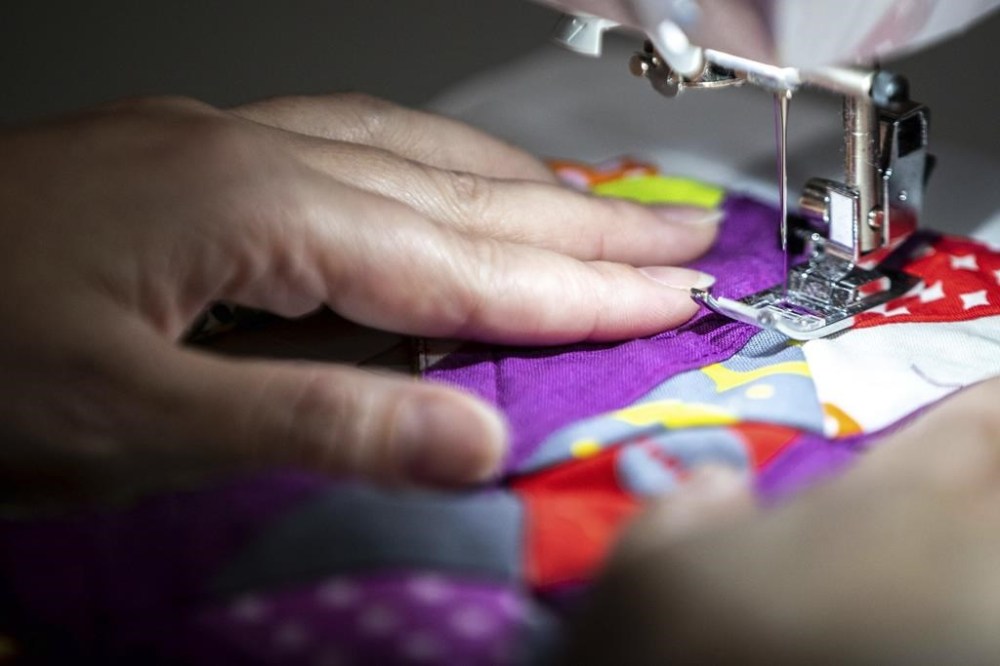
“I had this connection a couple of years ago that it really aligned with my values to make sewing patterns, because it was giving other people the possibility to make things,” she said from Vancouver. “There’s a layer of accessibility there that I really value.”
Larsen and her peers see the sewing pattern model as a continuation of their “slow fashion” mission — in contrast to fast fashion companies such as Zara and Shein — to reduce their industry’s negative impact on people and the planet.
But slow fashion is often pricey, because in addition to reducing the number of designs released per season and garments made per design, a pillar of the model is paying a fair wage to everyone involved in the process.
“There are many people, including myself, honestly, that can’t afford higher priced items,” Larsen said. “It feels really nice to be able to say to someone, ‘Hey, if you can’t afford this $240 tulip top that I make, you can sew it.'”
Larsen has so far released only that pattern: a corset-style sleeveless shirt with lace-up sides and wide scallops at the hem.
A second pattern, an elastic-waist skirt with gathered side panels, is entering testing and should be available to customers soon.
The tulip top PDF will cost you $22 before tax, and it requires only a metre or so of fabric, which Larsen noted is easy to find at a thrift store for just a few dollars.
The pattern pieces are narrow, so they fit easily into offcuts for those who already sew. That’s part of why she designed the shirt that way.
“I’m constantly aware of my own usage of resources as I go about my business,” she said.
But beyond reducing waste, the move also makes good business sense.
Though the number of people who know how to sew is lower than the number who need to wear clothes (a designation that encompasses nearly everybody), Larsen doesn’t see the move as shrinking her customer base, since she will continue to sell made-to-order pieces.
“It’s coming full circle in a way,” said Leah Barrett, a fashion professor at Toronto’s George Brown College. “I am old enough to remember a time when clothing was made at home.”
Much of the fashion industry’s environmental impact comes from overproduction, said Barrett, who specializes in sustainability in apparel manufacturing.
It’s possible home sewists — a preferred term for many, given sewer’s unfortunate homonym — may make mistakes that lead to inadvertent waste, or make more garments than they need. But the scale of that waste would pale in comparison to that of fast fashion brands, which have to guess how much to produce to satisfy customers.
“There’s a lot of that prediction of demand that goes wrong and leaves designers with serious inventory issues,” Barrett said. “There’s no way around it.”
Except, perhaps, selling patterns.
Though there’s still prediction involved — will customers like a garment enough to buy the pattern and take the time to sew it? — there isn’t much waste if designers guess wrong.
Barrett pointed to another Canadian clothing company that’s expanded into the sewing market, Weyburn, Sask.-based Cedar & Vine, which is selling 100 per cent linen fabric that sewists can use to make the patterns it recently released.
“A style can fail if it’s not in the right fabric,” she said, so offering fabric — or at the very least fabric suggestions — will “minimize failure,” and therefore waste.
Pivoting to patternmaking seemed like a good solution to designer Brooke Cannon, who has long felt torn. She wants to create, but the world is already overflowing with stuff.
“It’s like a negotiation with myself,” she said. “I would tell myself, ‘it’s just a small amount and I would rather people invest in my brand and my artwork rather than a fast fashion brand.’ But at the end of the day, it’s still participating in it.”
She and business partner Katie Beaton decided to shutter their respective online shops — accessories line Never Ending Weekend for Cannon and cult favourite slow-fashion line Beaton Linen in Beaton’s case — and start something new together.
The result is the B.C.-based Beaton Weekend, which will soon release patterns of some of Beaton’s best-loved designs.

Cannon has spent the last several months sketching the designs and writing and illustrating the sewing instructions.
“I’m basically spending all my time doing very nerdy and not very dopamine-driven work,” she said.
Ultimately, she hopes it will be worth it.
“The thing about creating patterns is that once they’re made and they’re out in the world, it’s passive income. It’s done. You’ve created something, and it’s digital,” she said. “It just kind of takes care of itself.”
This report by The Canadian Press was first published July 21, 2024.